Roti Making: How to Make Perfect Indian Flatbread Every Time
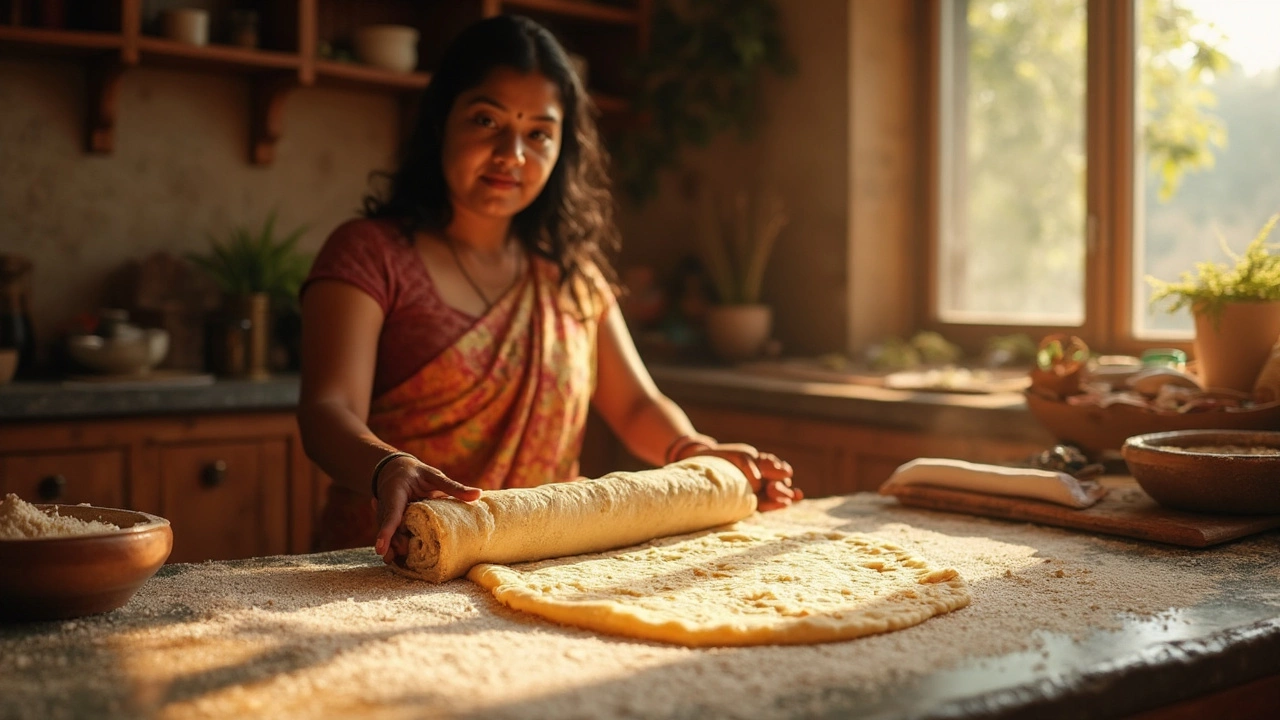
When you think of roti making, a daily staple in Indian homes that’s simple, nutritious, and made with just flour, water, and salt. Also known as chapati, it’s the backbone of countless meals across India—from breakfast to dinner, served with dal, curry, or just ghee. It’s not fancy. But getting it right? That’s where most people struggle.
Why does roti have to be round? It’s not tradition—it’s physics. A round shape lets heat spread evenly across the surface, which means the dough puffs up properly instead of staying flat and tough. If you roll it unevenly, one side burns while the other stays doughy. And if you skip the right pressure when rolling, the roti won’t puff at all. You don’t need a tawa from India or a special roller. Just a clean surface, a little flour to prevent sticking, and the right amount of pressure. The Indian flatbread, a basic unleavened bread made from whole wheat flour and cooked on a hot griddle is all about rhythm, not recipe.
What makes roti different from naan? No yeast. No dairy. No oven. Just flour, water, and fire. That’s why it’s lighter, healthier, and cooks in under a minute. But here’s the catch: if your roti is hard or chewy, it’s not the flour—it’s the water. Too little, and it cracks. Too much, and it sticks. Most people use about 1 cup of water for 2 cups of flour, but humidity changes everything. In monsoon season, you might need less. In winter, a splash more. And don’t over-knead. Twenty strokes is enough. Let it rest for 20 minutes, and you’ll see the difference.
Heat matters too. The tawa has to be hot—really hot—but not smoking. Test it with a drop of water. If it sizzles and vanishes, you’re good. Place the roti, wait five seconds, then flip. Press gently with a cloth. Watch for bubbles. That’s the sign it’s starting to puff. Don’t push it. Don’t rush it. Let the steam do the work. If it doesn’t puff, it’s not burnt—it’s undercooked or rolled too thin. Flip it back, press again, and give it another 10 seconds. That’s how you get that perfect, airy roti.
And yes, you can make it without a rolling pin. A bottle works. A glass works. Even your palm, if you’re patient. The goal isn’t perfection—it’s consistency. A few imperfect rotis are better than never trying. Once you get the feel for the dough, the shape, the heat, you’ll start making them without thinking. That’s when roti making stops being a chore and becomes part of the rhythm of home.
Below, you’ll find real tips from people who’ve made thousands of rotis—some from villages, some from city kitchens, all of them learned by trial and error. No theory. No fluff. Just what works.