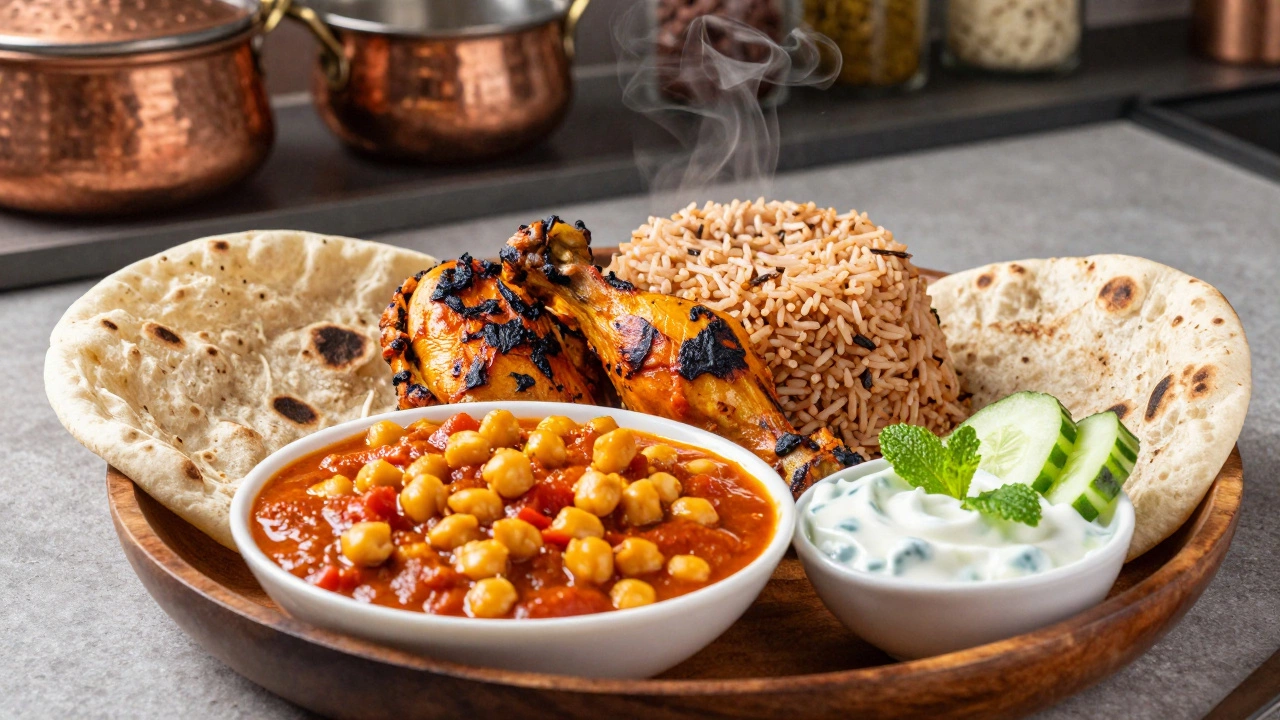
Indian Takeaway Health Calculator
Build Your Healthy Order
Select your choices from the options below to see estimated calories and nutrition.
Unhealthy Tip: Avoid items with "butter," "cream," or "makhani" for lower calories.
If you’ve ever ordered Indian takeaway after a long day, you know the struggle: the aromas are irresistible, but you also know that fried samosas, creamy kormas, and buttery naan can turn a quick meal into a calorie bomb. The good news? You don’t have to choose between flavor and feeling good. There are plenty of healthy options at Indian takeaways that are packed with protein, fiber, and spices that actually help your body-not hurt it.
Start with Tandoori Chicken
Tandoori chicken is one of the cleanest, most nutritious choices on any Indian takeaway menu. The chicken is marinated in yogurt, lemon juice, garlic, ginger, and a blend of spices like turmeric, cumin, and paprika, then cooked in a clay oven called a tandoor. No deep-frying. No heavy cream. Just lean protein and natural flavor.
A typical serving (about 150g) has around 180-220 calories, 25-30g of protein, and less than 5g of fat. The yogurt marinade also adds probiotics, which support gut health. Skip the extra naan and pair it with a side of cucumber raita or a simple salad. You’ll feel full, satisfied, and light.
Choose Chana Masala Over Creamy Curries
Chana masala-chickpeas cooked in a tomato-based sauce with onions, garlic, ginger, and spices like cumin, coriander, and garam masala-is a powerhouse of nutrition. Chickpeas are rich in plant-based protein and fiber. One cup gives you nearly 15g of fiber and 14g of protein, which helps stabilize blood sugar and keeps you full longer.
Compare that to chicken korma or butter chicken, which often use heavy cream, butter, and sugar to create their rich texture. A single serving of butter chicken can easily hit 500-700 calories, with 30-40g of fat. Chana masala, on the other hand, runs around 200-250 calories per serving and has almost no saturated fat. It’s also naturally vegan, making it a great option if you’re cutting dairy.
Go for Brown Rice Instead of White
Most Indian takeaways serve white basmati rice by default. It’s soft, fragrant, and pairs well with curries-but it’s also a refined carbohydrate that spikes blood sugar and offers little fiber. Ask for brown rice instead. It’s often available, even if it’s not listed on the menu.
Brown rice has three times more fiber than white rice and a lower glycemic index, meaning it digests slowly and keeps energy levels steady. A cup of brown rice adds about 215 calories and 3.5g of fiber to your meal, compared to 205 calories and just 0.6g of fiber in white rice. That small swap makes a real difference in how you feel an hour later.
Skip the Naan, Try Roti or Bhatura (if you must)
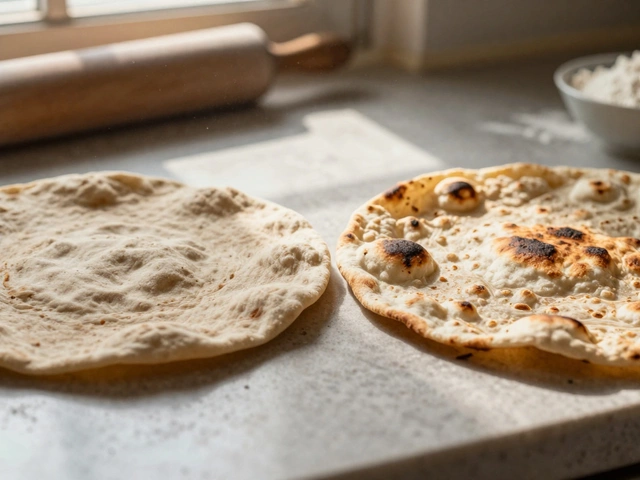
Naan is delicious, but it’s usually made with refined flour, ghee (clarified butter), and sometimes sugar. One piece can be 200-300 calories, mostly from carbs and fat. Roti, on the other hand, is a simple flatbread made with whole wheat flour, water, and a touch of oil. It’s thinner, less greasy, and has more fiber.
If you’re craving bread, ask for two rotis instead of one naan. You’ll get the same satisfaction with about half the calories and a third of the fat. Bhatura (fried bread) is even worse-deep-fried and dense. Avoid it unless you’re treating yourself once a month.
Vegetable Dishes: Pick the Right Ones
Not all vegetable dishes are created equal. Baingan bharta (roasted eggplant mashed with tomatoes and spices) is a great pick. Eggplant is low in calories and high in antioxidants. Palak paneer, though popular, can be tricky. If the paneer is fried or the sauce is loaded with cream and butter, it’s not healthy. Ask how it’s made. If they use fresh spinach and minimal cream, it’s okay in moderation.
Instead, go for mixed vegetable curry (subji) cooked in tomato-onion gravy with minimal oil. Look for dishes labeled “dry” or “tadka”-they’re usually less saucy and use less fat. Avoid anything with “butter,” “cream,” or “makhani” in the name. Those are red flags.
Watch Out for Hidden Sugar and Oil
Many Indian takeaway dishes sneak in sugar and oil to balance flavors. Tamarind chutney? Often loaded with sugar. Sweet mango lassi? Could have 20g of sugar in one cup. Even some dal recipes use ghee or butter to finish the dish.
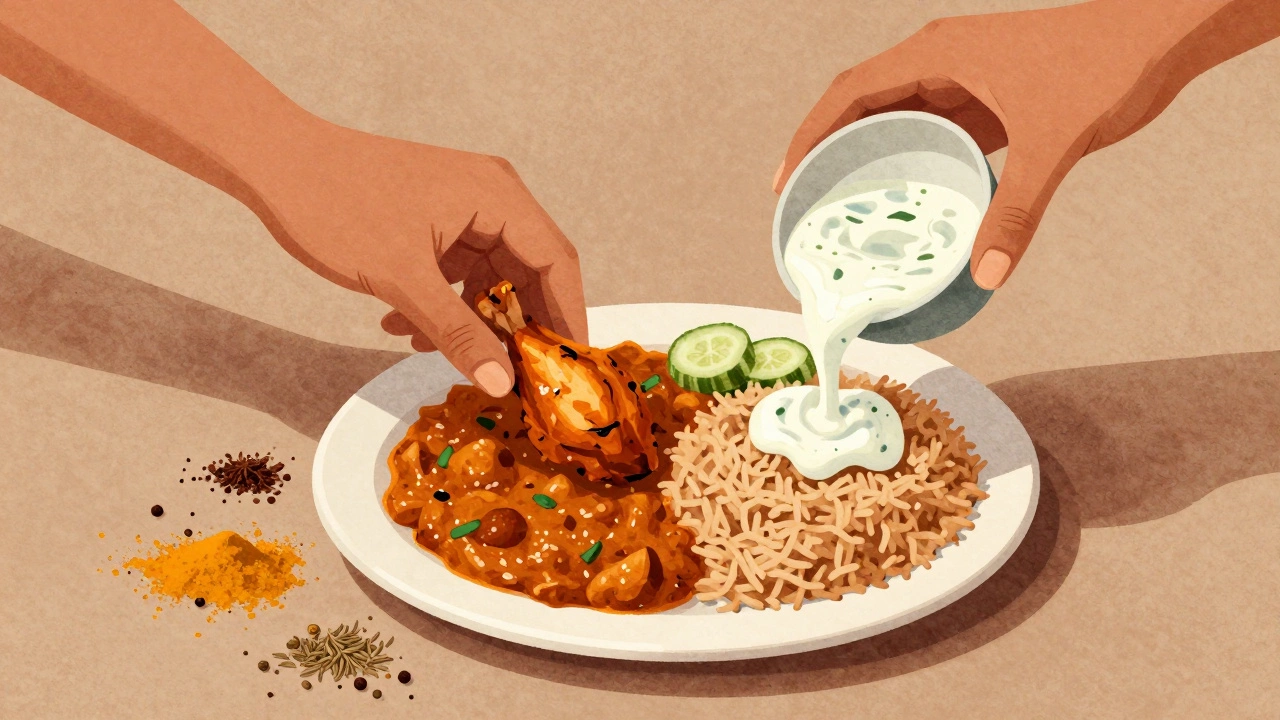
Ask for sauces on the side. That way, you control how much you use. Skip the sweet chutneys and lassis. Opt for plain yogurt or a small bowl of cucumber raita instead. It’s cooling, refreshing, and has probiotics without the sugar crash.
Build Your Healthy Plate
Here’s a simple formula for a balanced, healthy Indian takeaway meal:
- Protein: Tandoori chicken, chana masala, or grilled fish
- Vegetables: Mixed subji, baingan bharta, or sautéed spinach
- Grain: Brown rice or two rotis
- Side: Cucumber raita or plain yogurt
- Skip: Naan, fried snacks, creamy curries, sugary drinks
This combo will give you about 450-600 calories, 30-40g of protein, and 10-15g of fiber. That’s more satisfying than a 900-calorie plate of fried food-and you’ll still have energy for your evening.
What to Avoid Completely
Some items are best left on the menu. These are the worst offenders:
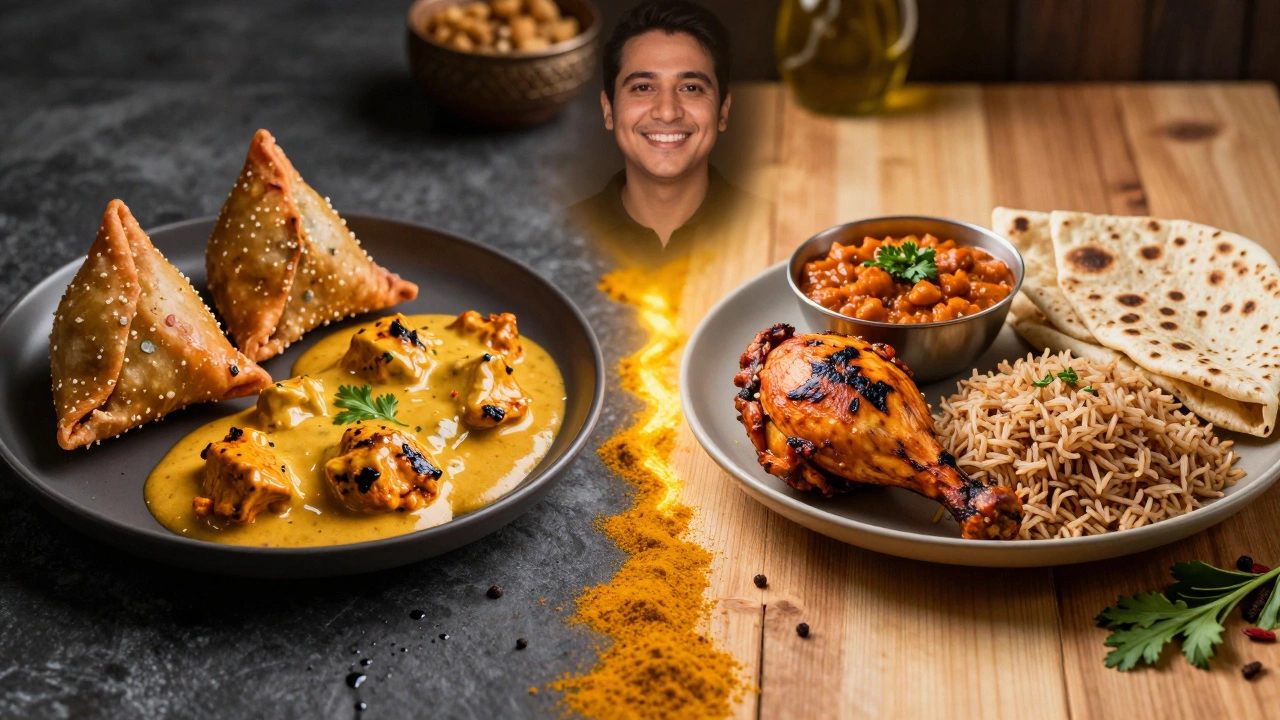
- Samosas: Deep-fried pastry stuffed with spiced potatoes and peas. One piece can have 250+ calories, mostly from oil and refined flour.
- Pakoras: Fritters made with chickpea batter and fried in oil. Even if they’re veggie, they’re still fried and high in fat.
- Butter chicken: Cream, butter, sugar, and chicken. A single serving can be 700 calories.
- Chicken tikka masala: Often made with the same cream-heavy sauce as butter chicken.
- Mango lassi: Blended yogurt and sugar-sometimes more sugar than a soda.
These aren’t evil. They’re just not part of a healthy meal plan. Save them for special occasions.
Real-Life Example: A Healthy Takeaway Order
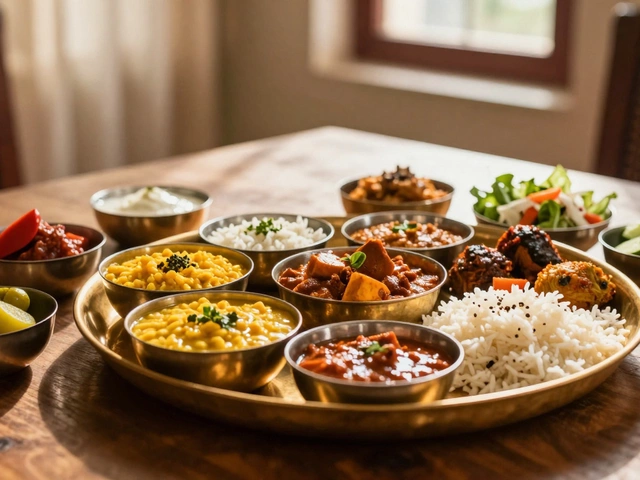
Imagine you’re tired, hungry, and craving something flavorful. Here’s what a smart order looks like:
- Grilled tandoori chicken (150g)
- Chana masala (1 cup)
- Steamed brown rice (1 cup)
- Two small rotis
- Cucumber raita (½ cup)
- Small side of mixed vegetable subji
Total calories: ~550
Protein: 38g
Fiber: 16g
That’s a complete, balanced meal that fills you up without weighing you down. You won’t feel sluggish afterward. You’ll actually feel energized.
Why This Works: The Science Behind the Spices
Indian cuisine isn’t just about taste-it’s about function. Turmeric contains curcumin, a powerful anti-inflammatory compound. Cumin aids digestion. Coriander helps regulate blood sugar. Fenugreek seeds can improve insulin sensitivity. When you eat whole, spiced foods instead of processed ones, your body benefits even more.
Studies show that people who regularly eat meals with Indian spices have better blood sugar control and lower markers of inflammation. That’s not magic. It’s chemistry. And it’s why choosing the right Indian takeaway isn’t just a dietary choice-it’s a health strategy.
Final Tip: Ask Questions
Most Indian takeaways are happy to accommodate requests. Don’t be shy. Ask:
- “Can you make this with less oil?”
- “Is the chicken grilled or fried?”
- “Can I get brown rice instead of white?”
- “Is the paneer fried or just cooked in the sauce?”
Knowing what’s in your food gives you power. And you don’t have to sacrifice flavor to eat well.
Is Indian takeaway ever healthy?
Yes, absolutely. Many Indian dishes are naturally healthy-especially those based on grilled proteins, legumes, vegetables, and whole grains. It’s the fried snacks, creamy sauces, and refined carbs that make takeaway unhealthy. By choosing wisely, you can enjoy flavorful, satisfying meals without the guilt.
What’s the lowest-calorie Indian takeaway dish?
The lowest-calorie options are grilled tandoori chicken (without skin), chana masala, or mixed vegetable subji cooked in minimal oil. A serving of any of these can be under 250 calories. Pair them with brown rice or roti for a balanced, filling meal.
Can I eat Indian takeaway while trying to lose weight?
Yes, if you focus on lean proteins, legumes, vegetables, and whole grains-and avoid fried items and creamy sauces. A well-chosen takeaway meal can easily fit into a weight-loss plan. Just watch portions and skip the naan and sugary drinks.
Is brown rice available at most Indian takeaways?
Many Indian takeaways offer brown rice, but it’s not always listed. Always ask. It’s a simple swap that adds fiber and keeps you full longer. If they don’t have it, request it anyway-most places will make it if you ask.
Are vegetarian Indian takeaway options healthier?
Not automatically. While vegetables are healthy, many vegetarian dishes like paneer tikka masala or vegetable korma are loaded with cream, butter, and oil. Stick to chana masala, dal, baingan bharta, or mixed subji with minimal sauce. Protein from legumes is often better for you than dairy-heavy vegetarian dishes.