Tribal Breakfast Finder
Select Region
Traditional Breakfasts
Select a region above to see what Native American tribes ate for breakfast in that area.
When people think of breakfast, they often picture cereal, toast, or pancakes. But for Native American communities across the U.S. and Canada, breakfast has never been about convenience-it’s been about connection. To the Lakota, the Navajo, the Ojibwe, and dozens of other nations, morning meals are rooted in seasons, land, and ancestral knowledge. These aren’t just recipes. They’re living traditions passed down through generations, shaped by geography, climate, and deep respect for the natural world.
What Did Native Americans Actually Eat in the Morning?
There’s no single answer. Over 570 federally recognized tribes in the U.S. alone each developed their own foodways. What one group ate at sunrise might be completely foreign to another. But there are patterns. Corn, beans, squash, wild game, fish, berries, nuts, and wild greens formed the backbone of most morning meals.
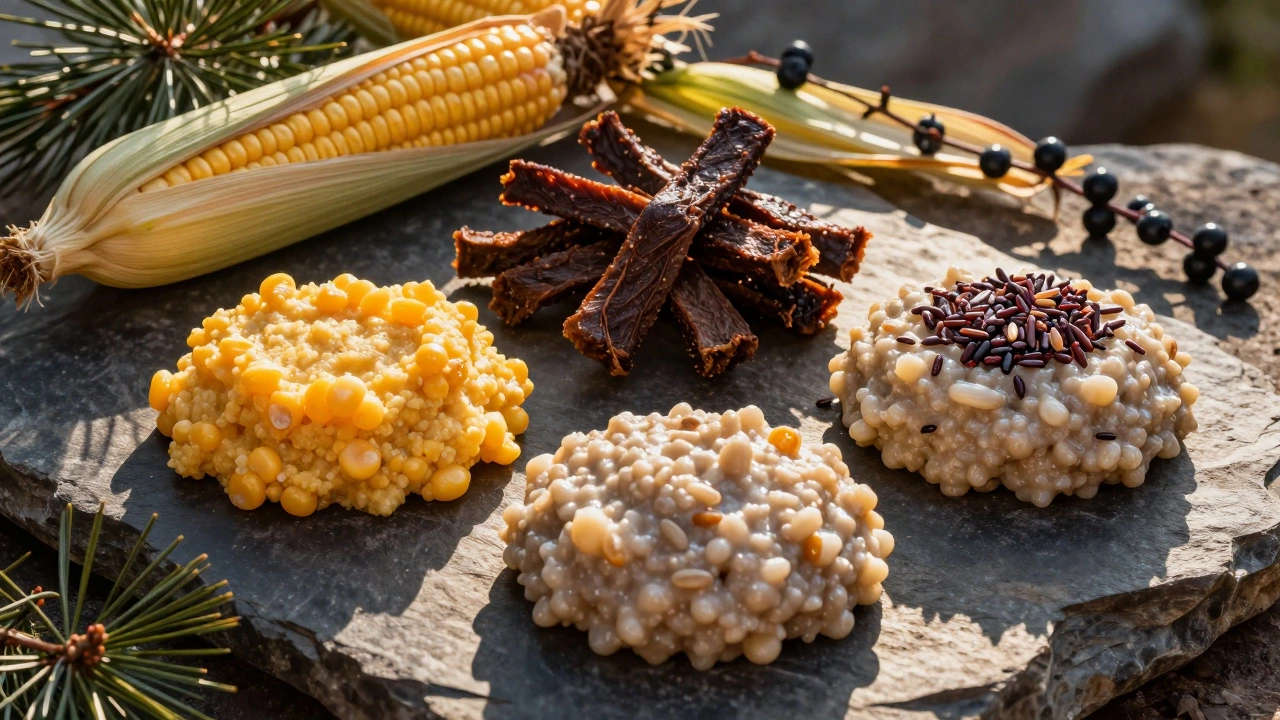
In the Southwest, the Navajo started their day with corn-ground into meal, mixed with water, and cooked into thin cakes called ash cakes. These were baked in hot ashes or on flat stones over an open fire. Sometimes they’d add pinon nuts or dried berries for flavor. Corn wasn’t just food; it was sacred. The Hopi still believe corn contains the breath of life.
On the Great Plains, the Lakota and Cheyenne relied on bison. Morning meals often included dried bison meat, thinly sliced and eaten cold, or rehydrated and simmered with wild turnips and prairie turnips-starchy tubers gathered in spring and stored for winter. These were paired with dried chokecherries, which added tartness and vitamin C.
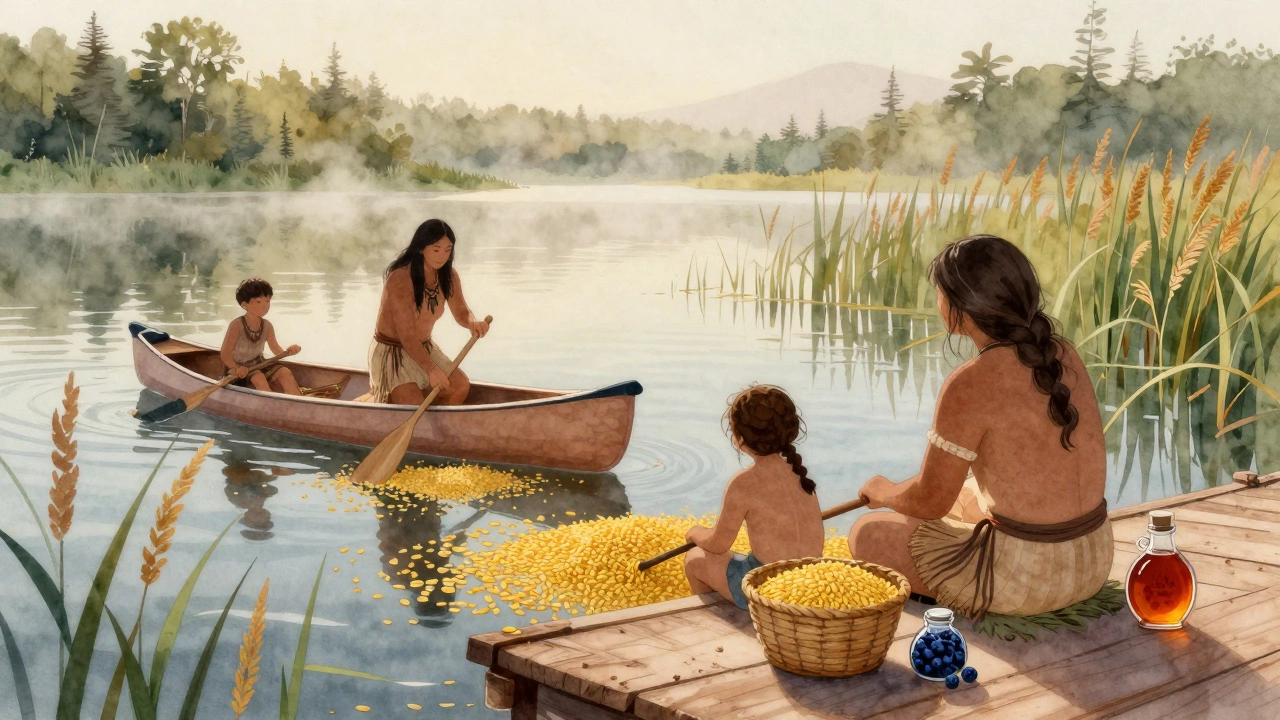
In the Northeast, the Ojibwe and Haudenosaunee (Iroquois) ate wild rice porridge. Wild rice wasn’t cultivated like paddy rice-it was hand-harvested from lakes in late summer, then dried and pounded. In the morning, it was boiled with water, sometimes with maple syrup or dried blueberries. Maple syrup, made by boiling sap from sugar maple trees, was one of the few natural sweeteners available before European contact.
Along the Pacific Coast, tribes like the Tlingit and Haida ate smoked salmon strips with crushed acorns or seaweed cakes. Salmon was dried and smoked in large quantities during summer runs, then eaten year-round. Breakfast might be a few strips of fish, some roasted camas bulbs, and a handful of huckleberries picked the day before.
Why These Foods Made Sense
Native breakfasts weren’t random. They were perfectly adapted to the environment. Corn, beans, and squash-the Three Sisters-grew well together and provided complete protein and fiber. Wild game was lean and nutrient-dense. Berries and nuts offered antioxidants and healthy fats. No one needed sugar, milk, or processed grains because nature already provided what the body needed.
These meals also required no refrigeration. Drying, smoking, and fermenting were the original food preservation methods. A bag of dried venison, a pouch of wild rice, and a jar of dried berries could last months. That’s why morning meals were often simple: quick to prepare, easy to carry, and packed with energy for the day ahead.
Even today, many Native families still eat this way. In rural communities where grocery stores are hours away, traditional foods remain the most reliable source of nutrition. A study from the University of Minnesota in 2023 found that Native children who ate traditional foods like wild rice, bison, and berries had lower rates of obesity and type 2 diabetes than those who ate store-bought breakfasts.
Modern Native Breakfasts: Blending Tradition and Reality
Not everyone has access to wild game or can harvest corn from their own fields. But many Native families today blend old and new. You’ll find fry bread tacos with scrambled eggs in Navajo homes. Ojibwe elders serve wild rice pancakes with maple syrup. Some tribes have revived community gardens that grow heirloom corn varieties like ‘Pueblo Blue’ or ‘Cherokee White Eagle’.
Organizations like the Native American Food Sovereignty Alliance work to restore access to traditional foods. They train tribal members in seed saving, hunting ethics, and food preparation. In places like the Standing Rock Reservation, schools now serve bison stew and corn mush for breakfast instead of sugary cereal.
One woman from the Pueblo of Acoma told a reporter in 2024: “My grandma taught me to make corn mush with water and a pinch of salt. I used to think it was boring. Now I know it’s the most powerful thing I eat. It reminds me where I come from.”
Common Misconceptions
Many people think Native Americans ate only meat or only plants. That’s not true. Their diets were balanced and varied. Others assume all tribes ate the same thing. But the foods of the Inuit in Alaska-seal blubber, whale meat, frozen berries-are nothing like the corn-based meals of the Cherokee in the Southeast.
Another myth is that fry bread is a traditional Native food. It’s not. Fry bread was created in the 1860s when the U.S. government forced the Navajo to walk hundreds of miles to a reservation and gave them flour, lard, and sugar instead of their traditional foods. It’s now a symbol of survival, but it’s not ancestral.
How to Respect and Learn From Native Breakfast Traditions
If you want to try Native-inspired breakfasts, start by learning from Native sources. Buy wild rice from Ojibwe-owned businesses. Get cornmeal from the Hopi or Zuni. Support Native chefs and food writers. Don’t call these dishes “ethnic” or “exotic”-they’re cultural heritage.
Don’t appropriate. Don’t sell “Native breakfast bowls” on your food truck without crediting the source. Instead, ask: Who grew this? Who harvested this? Who taught this recipe?
Even small steps matter. Try making corn mush. It’s simple: one part cornmeal to four parts water, simmered slowly for 30 minutes. Add a little salt. Eat it warm. It won’t taste like cereal. But it might taste like something deeper.
Why This Matters Today
Native American food systems were some of the most sustainable on the planet. They didn’t rely on fossil fuels, monocrops, or chemical fertilizers. They worked with the land, not against it. In a time of climate crisis and diet-related disease, these traditions offer real solutions.
When you eat a meal made from wild rice, bison, or dried berries, you’re not just feeding your body. You’re honoring a way of life that survived colonization, displacement, and erasure. That’s more than breakfast. It’s resistance. It’s resilience. And it’s still here.