Tandoori Chicken Moisture Diagnostic Tool
Is your tandoori chicken coming out dry? Use this tool to analyze your preparation steps and get tailored advice to achieve a juicy interior with a smoky crust.
Diagnostic Result
Specific Fixes for Your Setup:
You spent hours marinating the chicken. You mixed the yogurt, spices, and lemon juice perfectly. But when you pulled those skewers out of the oven or grill, they looked like leather scraps. The meat was tough, chewy, and completely devoid of that juicy interior you see in restaurant photos. It’s frustrating, right? Most people blame the oven temperature, but that’s rarely the whole story. Tandoori chicken is a dish defined by its intense heat and unique cooking method, which makes it incredibly unforgiving if your prep isn't spot on.
The core issue usually isn't what happens during the last five minutes of cooking. It’s what happened in the twenty-four hours before that. If you’re dealing with dry tandoori chicken, you need to look at three specific areas: the science of the marinade, the quality of your protein, and the mechanics of high-heat cooking. Let’s break down exactly where things go wrong and how to fix them so your next batch is succulent, not sad.
The Marinade Isn't Just Flavor, It's Chemistry
Many home cooks treat the marinade as a flavor vehicle only. They think, "I want it spicy, so I add chili powder." While true, the yogurt base in traditional tandoori marinades acts as a tenderizing agent through enzymatic action and acid breakdown. If your chicken comes out dry, your marinade might be failing to protect the meat proteins from tightening up under heat.
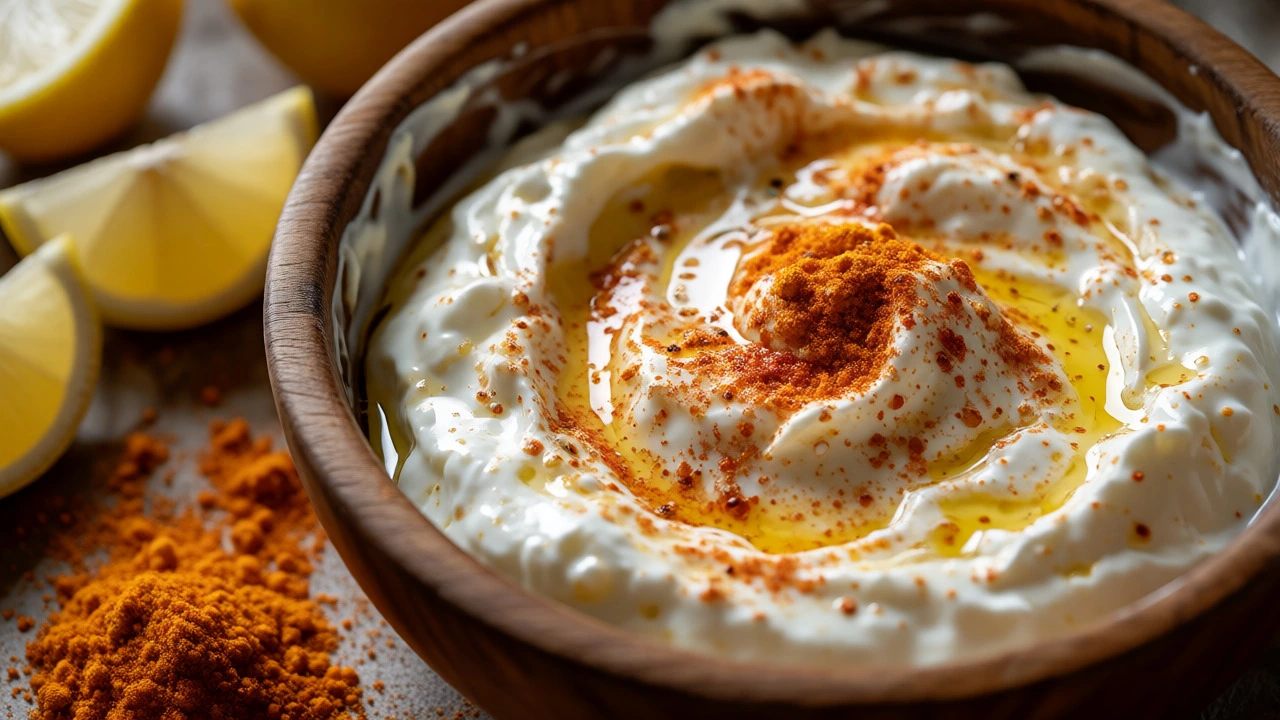
Here is the common mistake: using low-fat yogurt. Full-fat Greek yogurt or thick curd is essential. The fat content coats the muscle fibers, providing a buffer against the drying effect of high heat. Low-fat versions are too watery; they dilute the spice paste and fail to create that protective layer. When the water evaporates rapidly in a hot oven, there’s nothing left to hold moisture inside the meat.
- Acidity Balance: Lemon juice or vinegar helps denature surface proteins, allowing flavors to penetrate. But too much acid, especially for long durations (over 24 hours), can actually "cook" the outside of the chicken prematurely, turning it mushy then dry. Stick to 12-24 hours max.
- Salt Timing: Salt draws out moisture via osmosis initially, but over time, it breaks down muscle proteins, allowing them to reabsorb liquid. If you salt right before cooking, the juices run out. If you salt in the marinade, it works deeper into the tissue.
- Oil Content: Adding a tablespoon of mustard oil or ghee to the marinade adds another layer of insulation. This fat doesn't just add taste; it conducts heat more evenly than water-based components, preventing localized scorching that leads to dry patches.
Your Chicken Cut Matters More Than You Think
Not all chicken pieces are created equal for this style of cooking. In India, tandoori chicken often uses bone-in, skin-on pieces because the bone insulates the meat, keeping it cooler than the surrounding flesh. The skin also renders fat that bastes the meat from the outside. If you are using boneless, skinless breast meat, you are playing a dangerous game.
Breast meat has very little intramuscular fat. Once it hits an internal temperature of about 165°F (74°C), the proteins contract tightly, squeezing out every drop of moisture. Thighs and drumsticks have higher collagen and fat content. As they cook, collagen melts into gelatin, which keeps the meat feeling moist even if some water evaporates. If you must use breasts, cut them into uniform chunks no larger than two inches. Smaller pieces cook faster, reducing the window of opportunity for them to dry out.
| Cut Type | Fat Content | Risk of Drying | Best Cooking Time |
|---|---|---|---|
| Chicken Breast (Boneless) | Low | High | 8-10 Minutes |
| Chicken Thigh (Bone-in) | Medium-High | Low | 15-20 Minutes |
| Drumstick | Medium | Moderate | 18-22 Minutes |
| Wings | Low-Medium | High | 10-12 Minutes |
The Temperature Trap: Too Hot vs. Not Hot Enough
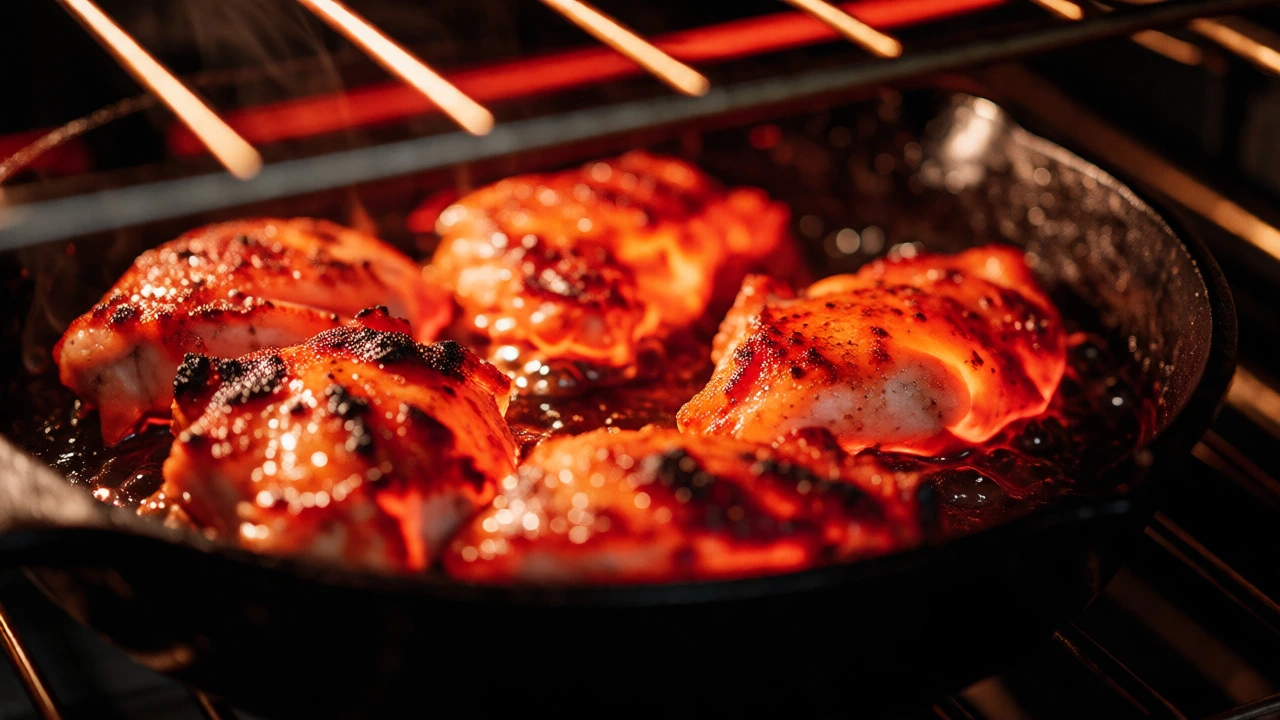
A real Tandoor reaches temperatures between 800°F and 900°F (425°C-480°C). This extreme heat sears the outside instantly, locking in juices while cooking the inside relatively quickly. Home ovens rarely get above 550°F (290°C) unless you have a specialized setup. This discrepancy causes problems.
If your oven isn't hot enough, the chicken spends too long in the "danger zone" of cooking where moisture evaporates slowly rather than being sealed in. You end up baking the chicken rather than roasting it. Conversely, if you crank the heat but leave the door open frequently, you lose thermal mass, causing uneven cooking.
To mimic tandoor conditions at home:
- Preheat your oven to its highest setting (usually 500°F-550°F).
- Use a pizza stone or cast-iron skillet placed on the top rack. These retain heat and radiate it upward, simulating the clay walls of a tandoor.
- Cook the chicken close to the heating element, but watch closely. You want charred spots, not burnt edges.
- If you have a broiler, use it for the last 2-3 minutes to replicate the radiant heat intensity.
Another trick used by street vendors in Cape Town and Mumbai alike is pre-cooking partially. Some cooks parboil or steam the chicken for 5-10 minutes before marinating and grilling. This ensures the inside is cooked through without needing prolonged exposure to direct flame, significantly reducing the risk of dryness. However, be careful not to over-boil, or you’ll lose flavor and texture.
Overcrowding and Airflow Issues
Have you ever noticed your chicken steaming instead of roasting? That’s overcrowding. When pieces touch each other on the tray, they release steam that gets trapped between them. Instead of getting that crisp, smoky exterior, you get a soggy, pale mess that eventually dries out once the steam escapes.
Leave space between each piece. At least half an inch. If you have a lot of chicken, cook in batches. Yes, it takes longer, but the result will be vastly superior. Also, consider airflow. A convection fan helps circulate hot air, removing moisture from the surface faster so the Maillard reaction (browning) can occur. Without browning, the surface stays wet longer, leading to excessive internal moisture loss.
Resting Is Non-Negotiable
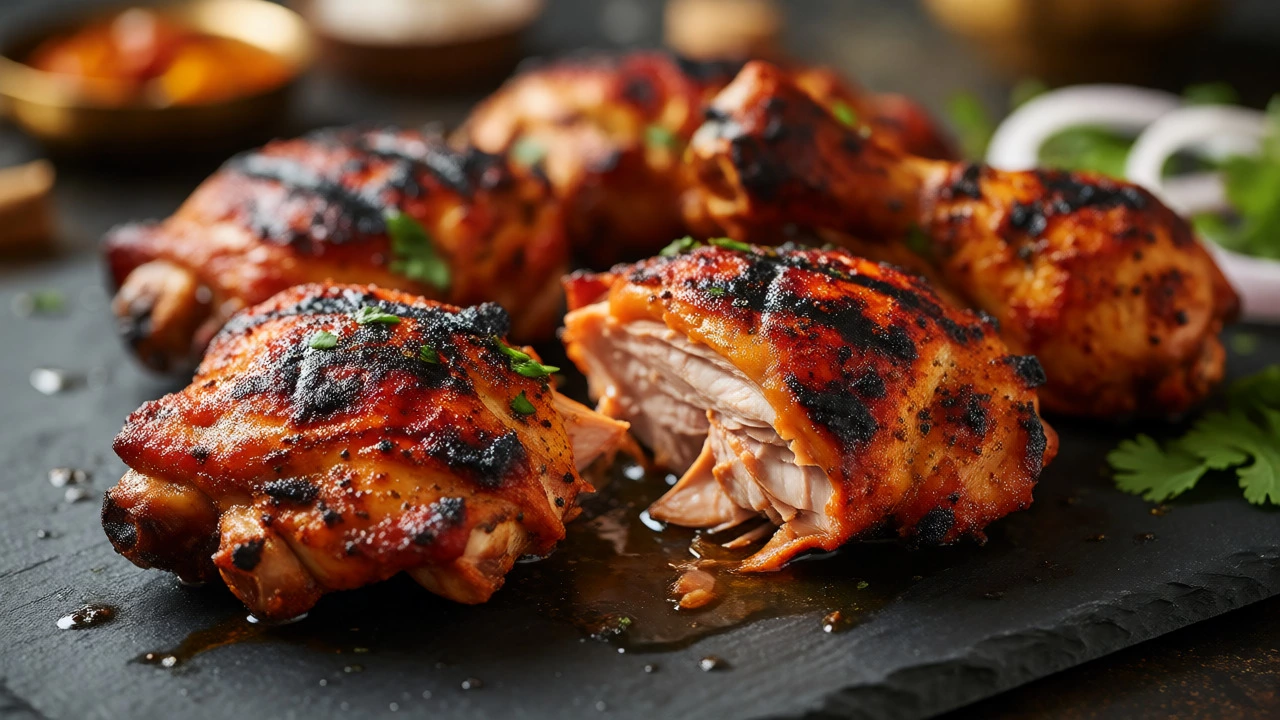
This is the most skipped step in home kitchens. When you pull chicken off the heat, the juices are concentrated in the center due to the contraction of proteins. If you cut into it immediately, those juices spill onto the plate, leaving the meat dry. Resting allows the proteins to relax slightly, redistributing the fluids throughout the muscle fibers.
Let your tandoori chicken rest for 5-10 minutes after cooking. Tent it loosely with foil-not tight, or it will steam and lose its crispiness. This simple pause can make the difference between "okay" and "amazing." Trust me, the aroma alone during this rest period builds anticipation, making the first bite feel even more rewarding.
Troubleshooting Checklist
If you’re still struggling, run through this quick diagnostic list:
- Did you pat the chicken dry before marinating? Excess water prevents marinade adhesion and creates steam.
- Is your yogurt strained? Watery yogurt leads to a thin marinade that slides off. Hang it in cheesecloth for an hour if needed.
- Are you using fresh spices? Old paprika or turmeric won’t brown properly, affecting visual cues for doneness.
- Did you score the meat? Making shallow cuts on thick pieces helps heat penetrate evenly, preventing the outside from burning while the inside remains raw (and thus overcooked later).
Remember, tandoori chicken is supposed to have a bit of char and a robust texture. It’s not meant to be soft like poached chicken. But "robust" doesn't mean "dry." By adjusting your fat content, choosing the right cuts, and managing your heat source, you can achieve that perfect balance of smoky crust and juicy interior.
Can I use milk instead of yogurt in tandoori marinade?
You can, but it changes the outcome significantly. Milk lacks the thickness and acidity of yogurt, which means it won't cling to the chicken as well. It also doesn't tenderize the meat effectively. If you must use milk, thicken it with cornstarch or reduce it heavily, but expect less flavor penetration and a softer, less textured crust compared to traditional yogurt-based marinades.
How do I keep chicken moist on a charcoal BBQ?
On a charcoal grill, manage your zones. Keep one side with hot coals for searing and the other side empty for indirect heat. Start the chicken on the hot side to get char marks, then move it to the cool side to finish cooking gently. This prevents the exterior from burning before the interior is done, which is a primary cause of dryness. Additionally, brush with oil frequently during the indirect phase to seal in moisture.
Does marinating time affect dryness?
Yes, excessively long marination can dry out chicken. Acidic ingredients like lemon juice continue to break down protein structures. Beyond 24 hours, the outer layer of the meat can become chalky and lose its ability to retain moisture during cooking. For best results, marinate bone-in pieces for 12-24 hours and boneless pieces for 4-6 hours.
Why is my tandoori chicken rubbery?
Rubberiness usually indicates overcooking or using old, frozen chicken that has lost cell integrity. Freezing damages muscle cells, causing them to leak moisture upon thawing. If you use frozen chicken, ensure it is fully thawed and patted extremely dry before marinating. Overcooking beyond 165°F also causes proteins to tighten excessively, resulting in a rubbery texture rather than a tender one.
Should I remove the skin before cooking?
No, keeping the skin on is highly recommended for moisture retention. The skin renders fat during cooking, which bastes the meat underneath. It also provides a barrier against direct heat, slowing down moisture loss. If you prefer skinless chicken, increase the amount of oil in your marinade and consider brining the chicken beforehand to compensate for the lack of natural fat protection.
- Poplular Tags
- tandoori chicken
- dry chicken
- marinade tips
- tandoor oven
- cooking mistakes