Snack Swap Calculator
Swap Unhealthy Snacks for Healthier Options
See the nutritional differences between your favorite unhealthy snack and a healthier alternative. Make informed choices for better health.
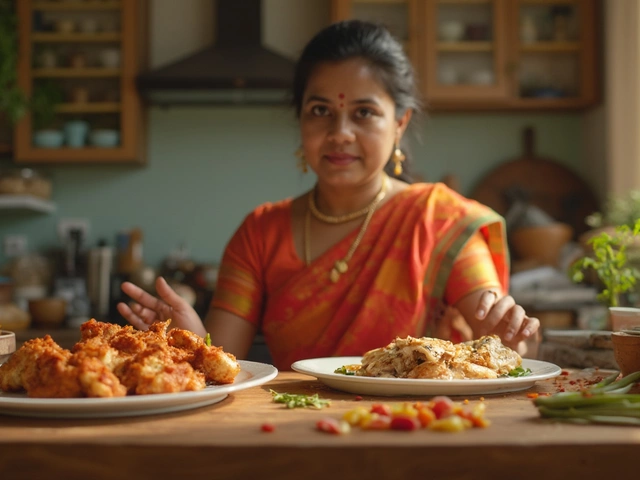
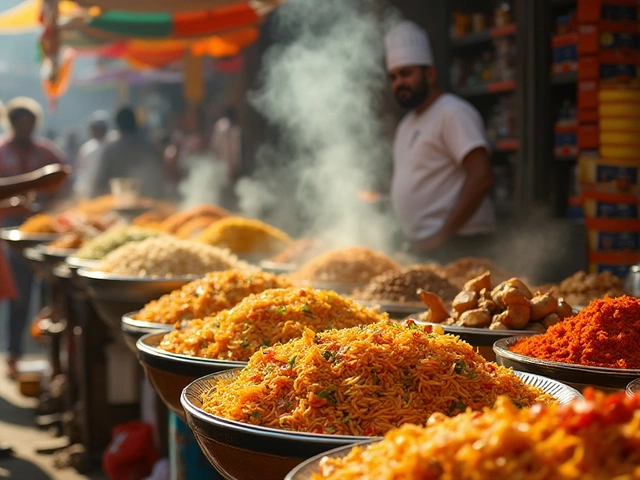
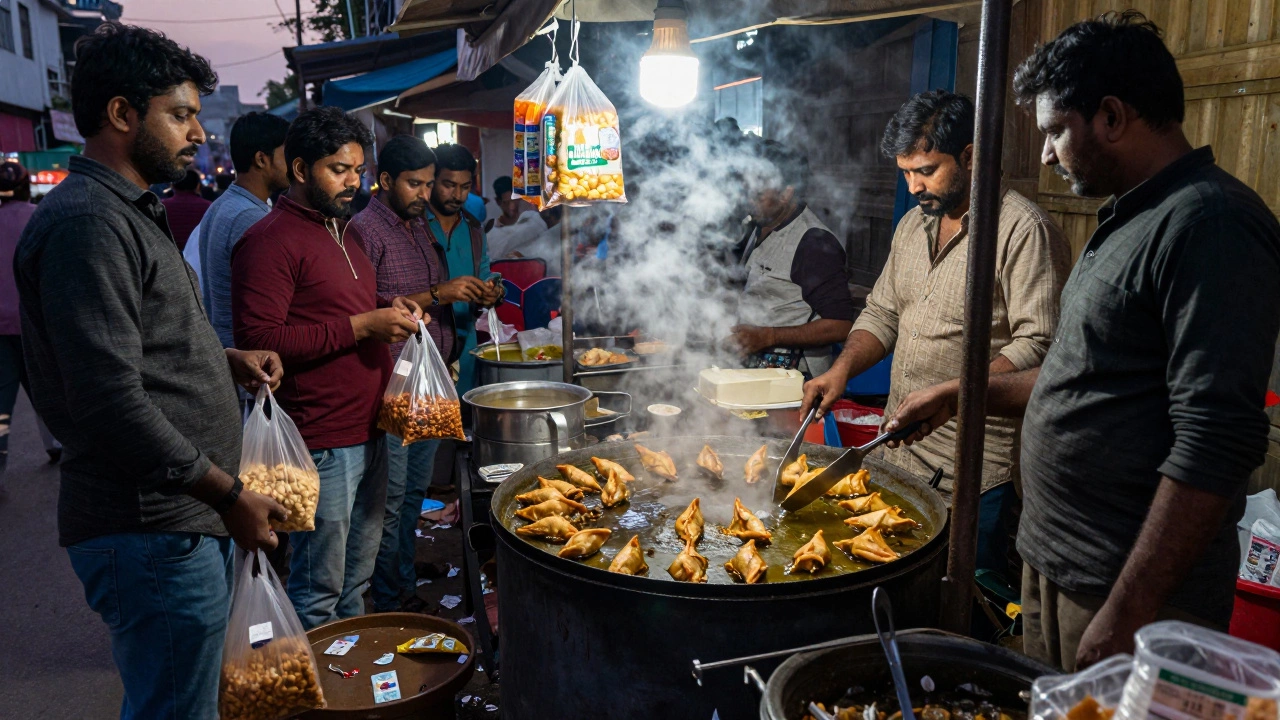
There’s no mystery to what the number one unhealthy food in the world is-it’s not some exotic delicacy or rare treat. It’s the kind of snack you can find in every corner store, gas station, and street vendor stall across the globe: deep-fried, breaded, sugar-coated processed snacks. In India, that means samosas fried in reused oil, packaged namkeen loaded with trans fats, and those bright orange, crunchy chivdas you grab without thinking. These aren’t occasional treats-they’re daily habits. And they’re slowly wrecking health across households.
Why Deep-Fried Snacks Are the Worst
Deep-fried foods aren’t just high in calories. They’re soaked in oxidized oils that turn rancid under high heat. When oil is reused again and again-common in street food stalls and even home kitchens-it breaks down into harmful compounds like acrylamide and polar compounds. The World Health Organization lists acrylamide as a probable human carcinogen. That’s not a scare tactic. It’s a lab-tested fact.
Take a single serving of packaged bhujia. It might look like a light crunch, but it contains up to 40% fat, mostly from palm oil or hydrogenated vegetable oil. That’s not butter. That’s industrial fat designed to extend shelf life, not nourish your body. And the salt? Often over 500mg per 30g serving-nearly a quarter of your daily limit in one handful.
What makes these snacks dangerous isn’t just what’s in them-it’s how often people eat them. In urban India, kids snack on these before school. Office workers grab them for lunch. Grandparents eat them with chai. They’re cheap, convenient, and marketed as ‘traditional.’ But tradition doesn’t make them healthy.
The Myth of ‘Traditional’ Snacks
Many people think fried snacks like samosas or kachoris are part of India’s culinary heritage-and they’re right. But heritage doesn’t mean daily consumption. A samosa eaten once a week during Diwali is different from one eaten every evening with tea. The problem isn’t the snack itself. It’s the frequency and the quality of ingredients.
Traditional recipes used ghee, fresh spices, and minimal frying. Today, most commercial versions use low-cost, recycled oil and artificial flavoring. A 2023 study by the Indian Council of Medical Research found that 78% of packaged savory snacks sold in metro cities contained trans fats above the recommended limit of 2% per 100g. Some hit 8%. That’s not tradition. That’s negligence.
What Replaces These Snacks?
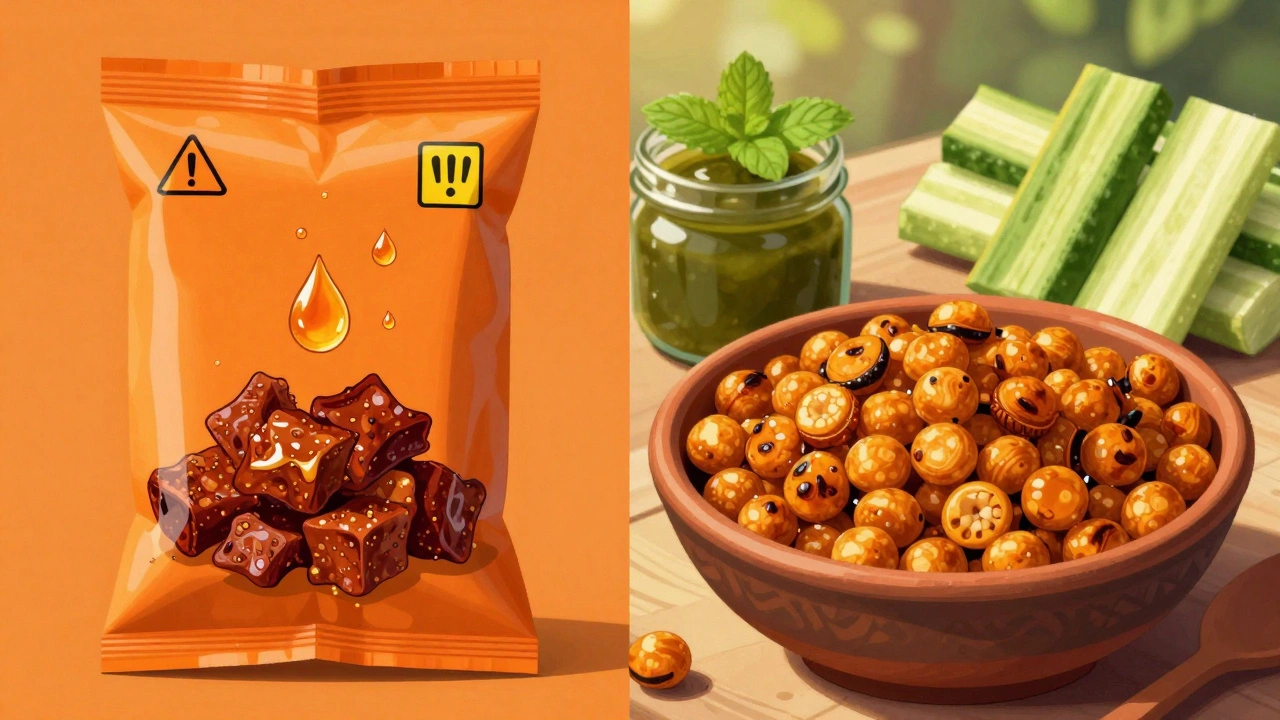
You don’t need to give up snacks. You just need to swap them. Here are five real, easy, and tasty alternatives that are actually good for you:
- Roasted chana-high in protein, fiber, and iron. Toss with a little cumin and black salt for flavor.
- Makhana (fox nuts)-naturally low-calorie, crunchy, and rich in magnesium. Roast them with turmeric and a dash of lemon.
- Vegetable sticks with mint chutney-carrots, cucumber, and bell peppers dipped in fresh, homemade chutney beat any packaged dip.
- Whole grain poha upma-a warm, savory breakfast snack made with flattened rice, peas, and curry leaves. No oil needed if you steam it.
- Homemade baked bhel puri-skip the fried sev. Use roasted puffed rice, chopped veggies, and tamarind chutney. Crunchy, fresh, and guilt-free.
These aren’t fancy. They don’t need special equipment. And they cost less than buying a packet of chips. The key? Prep them ahead. Keep a container of roasted chana in your bag. Have chopped veggies ready in the fridge. Make a big batch of makhana on Sunday and store it in an airtight jar.
Why Your Body Reacts So Badly
When you eat fried snacks daily, your body doesn’t just gain weight. It gets confused. The high salt and fat trigger dopamine spikes-your brain’s reward system-making you crave more. Over time, your taste buds reset. You start thinking bland food tastes like nothing. That’s why salads feel boring and sugary drinks feel normal.
Long-term, this pattern leads to insulin resistance, fatty liver, and high blood pressure. A 2024 study from AIIMS Delhi tracked 5,000 adults who ate fried snacks five or more times a week. After three years, 62% showed signs of metabolic syndrome. That’s not aging. That’s diet.
It’s not about being perfect. It’s about breaking the cycle. One less fried snack a day. One swapped snack a week. That’s how habits change.
What to Look for on Labels
If you must buy packaged snacks, check these three things:
- Trans fats-if it says ‘hydrogenated’ or ‘partially hydrogenated oil,’ walk away.
- Sodium-aim for under 200mg per 30g serving.
- Ingredients list-if it’s longer than 5 items and includes E-numbers you can’t pronounce, it’s not food. It’s chemical engineering.
Brands like Patanjali, Yummi, and even local brands like ‘Desi Crunch’ now offer versions made with sunflower oil, no trans fats, and less salt. They’re not perfect-but they’re better. And they’re getting cheaper every year.

Real People, Real Changes
Meena, 58, from Jaipur, stopped eating fried samosas after her doctor told her her cholesterol was 280. She started making baked chana instead. Now she eats a bowl every afternoon with green tea. Her cholesterol dropped to 180 in six months.
Rahul, 24, a software engineer in Bangalore, used to eat 3 packets of chips a week. He replaced them with roasted makhana. He lost 7kg in four months-not by dieting, but by stopping the snack that was quietly sabotaging him.
These aren’t extreme stories. They’re simple. The number one unhealthy food isn’t some foreign invention. It’s the snack you’ve been eating without thinking. And replacing it doesn’t require willpower. It just requires awareness.
Final Thought: It’s Not About Perfection
You don’t have to quit fried snacks forever. But if you eat them daily, you’re not eating food. You’re eating a slow-acting toxin. The goal isn’t to be flawless. It’s to be intentional. Ask yourself before reaching for that packet: ‘Is this giving me energy-or draining it?’
India has some of the most nutritious, flavorful snacks in the world. Why settle for the worst version of them?
Is Indian street food always unhealthy?
Not always. Street food like fresh dahi bhalla, grilled corn, or masala chai with jaggery can be healthy. The problem isn’t the street-it’s the oil. Many vendors reuse oil dozens of times, which turns it toxic. Look for vendors who fry in fresh oil and use minimal salt. Ask if they use fresh ingredients. Most will say yes.
Are packaged Indian snacks like Kurkure or Lays really that bad?
Yes. Kurkure, Lays, and similar snacks are made with refined flour, palm oil, and artificial flavors. Even the ‘masala’ flavor contains MSG and preservatives. A single 30g bag has more sodium than a full meal and nearly half your daily fat limit. They’re designed to be addictive, not nutritious.
Can I still eat samosas if I make them at home?
Absolutely-but make them right. Use whole wheat dough, bake instead of fry, and use fresh oil only once. Fill them with spiced lentils or vegetables, not mashed potatoes and peas soaked in oil. A baked samosa with 1 tsp of oil is a world apart from a fried one with 3 tbsp.
Why do I crave fried snacks so much?
Fried snacks trigger dopamine, the brain’s pleasure chemical. They’re also high in salt and fat, which your body evolved to crave because they were rare in nature. Now they’re everywhere. That’s why you feel like you can’t stop. It’s not weakness-it’s biology. The fix? Replace them with crunchy, savory alternatives like roasted chana or makhana. They satisfy the same urge without the crash.
How long does it take to stop craving junk snacks?
Most people notice a drop in cravings after 7-10 days of consistent replacement. Your taste buds reset faster than you think. After two weeks, you’ll start enjoying the natural flavors of food again. That spicy chutney? It’ll taste brighter. That roasted chana? It’ll feel satisfying. It’s not about willpower. It’s about rewiring your habits.
If you’ve been eating fried snacks daily, start by swapping just one. Swap your evening bhujia for roasted chana. Swap your afternoon chips for makhana. Small changes add up. And in a year, you won’t just feel better-you’ll wonder why you ever thought those snacks were worth it.
- Poplular Tags
- unhealthy food
- junk food
- processed snacks
- Indian snacks
- fried snacks