Street Food Consumption Calculator
Daily Street Food Consumption Calculator
See how many pani puris, samosas, and vada pavs are eaten daily across India
India's Street Food Landscape
Based on 2024 data: 78% of urban Indians eat street food daily. Pani puri, samosa, and vada pav make up 82% of street food consumption.
Daily Street Food Eaters
Urban residents who eat street food daily
Pani Puri
India's most consumed street food
Samosa
India's second most consumed street food
Vada Pav
Mumbai's daily powerhouse
Consumption Comparison
Ask anyone in India what they eat every day, and they won’t tell you about fancy biryanis or elaborate thalis. They’ll tell you about the food they grab on the way to work, the snack that costs less than a rupee, the thing that’s hot, spicy, and always there-no matter the city or the season. That food isn’t served on fine china. It’s handed over in a paper cone or wrapped in a banana leaf. And if you want to know what’s truly most eaten in India, you don’t look at restaurants. You look at the streets.
Pani Puri: The Unofficial National Snack
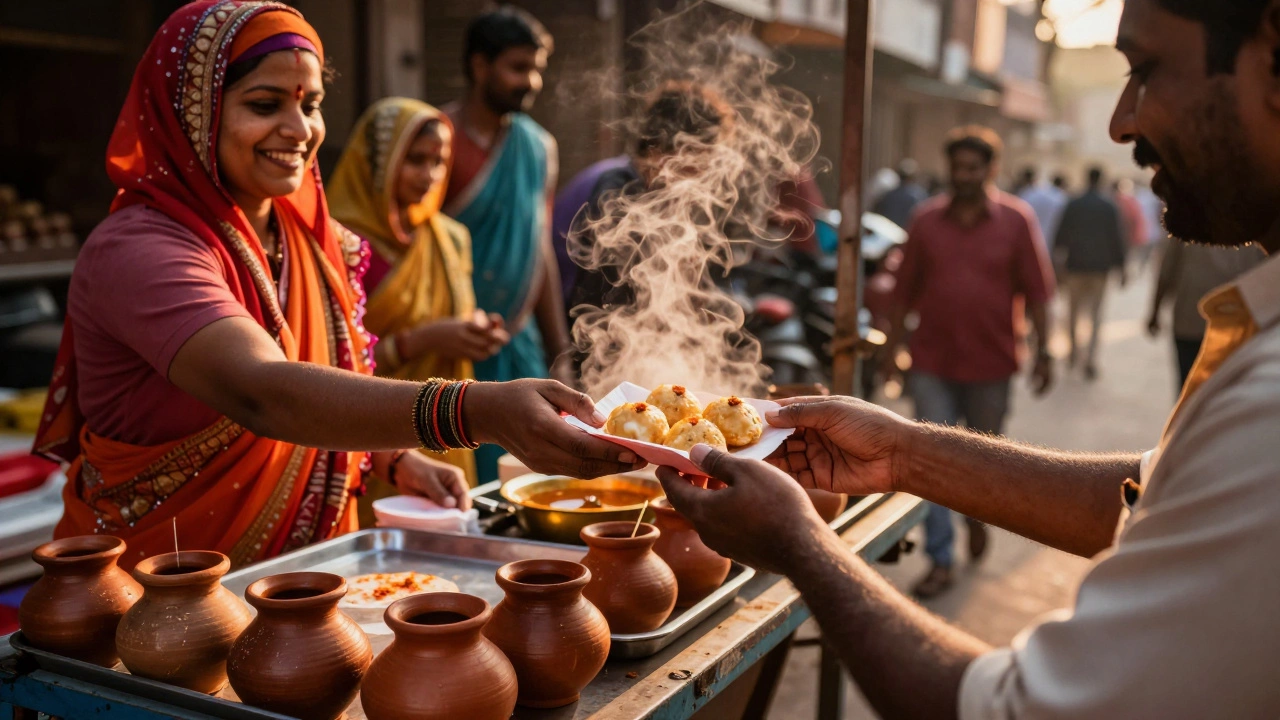
If you had to pick one food that’s eaten more than any other across India, it’s pani puri. Also called golgappa, puff puff, or phuchka depending on where you are, this tiny, crispy shell filled with spiced potato, chickpeas, and tangy tamarind water is a daily ritual for millions. It’s not a weekend treat. It’s breakfast for office workers in Delhi, a midday pick-me-up for students in Mumbai, and an evening snack for families in Kolkata. You’ll find vendors on every corner-from bustling bazaars to quiet neighborhood lanes. A single plate of six to eight puris costs as little as ₹15 ($0.18). That’s why an estimated 50 million pani puris are sold daily across the country, according to a 2024 survey by the Indian Street Food Association.
What makes it so popular? It’s fast, cheap, and customizable. The water can be sweet, spicy, or sour. The filling can be mashed potato, sprouts, or even minced meat in some regions. The crunch of the shell, the burst of flavor when you bite-it’s addictive. And unlike other snacks, pani puri doesn’t require utensils. You eat it with your hands, right there on the sidewalk. No plates, no napkins, no waiting. That’s the real reason it wins.
Samosa: The Constant Companion
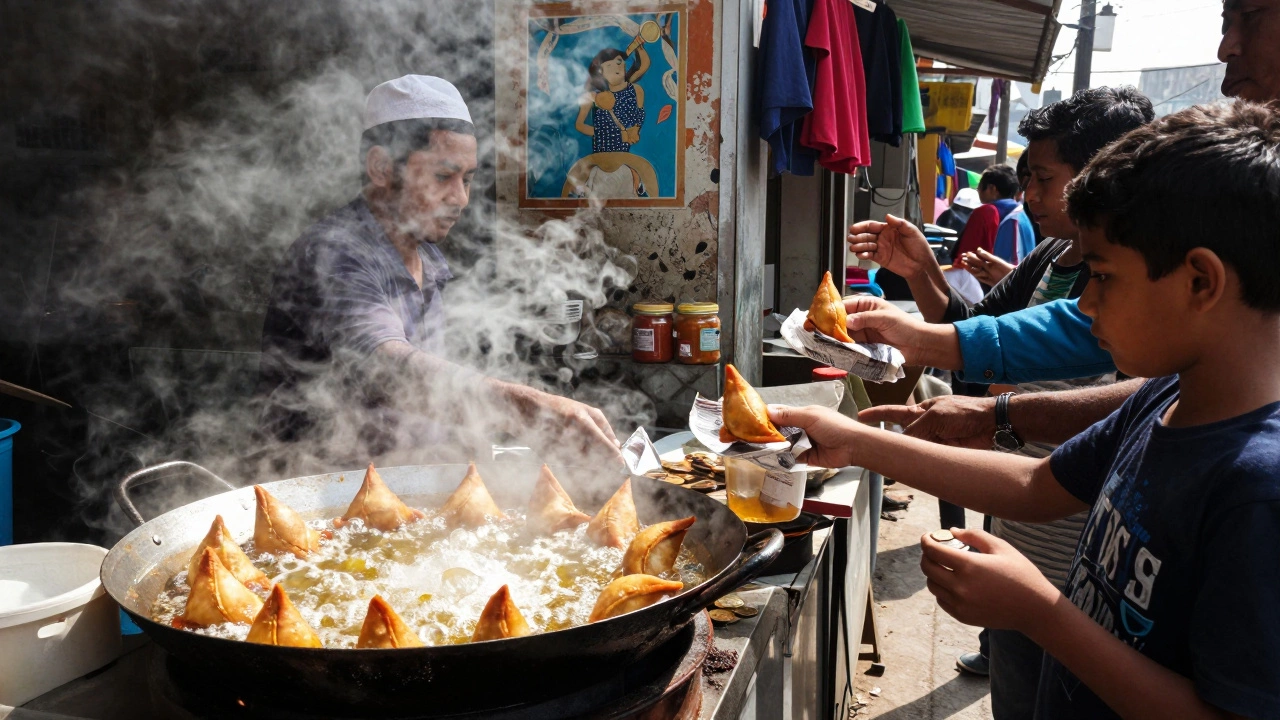
If pani puri is the spark, samosa is the steady flame. Every Indian household has a version of this fried pastry filled with spiced potatoes, peas, and sometimes minced meat. But outside the home, it’s the street version that dominates. You’ll see samosas sold by the dozen outside train stations, beside tea stalls, and outside temples. They’re the go-to snack for anyone needing something warm, filling, and cheap.
Unlike pani puri, samosas are eaten more as a meal component than a snack. They’re paired with chutney, tea, or even dal. In Uttar Pradesh, they’re served with aloo tikki. In Maharashtra, they’re stuffed with lentils. In the south, they’re smaller and less oily. But no matter the region, the basic form stays the same: golden, crispy, and always hot. A 2023 study by the Food and Beverage Council of India found that samosas are consumed on average 3.2 times per week by urban Indians-higher than any other fried snack. That’s more than vada pav, more than bhel puri, more than even dosas.
Vada Pav: Mumbai’s Daily Powerhouse
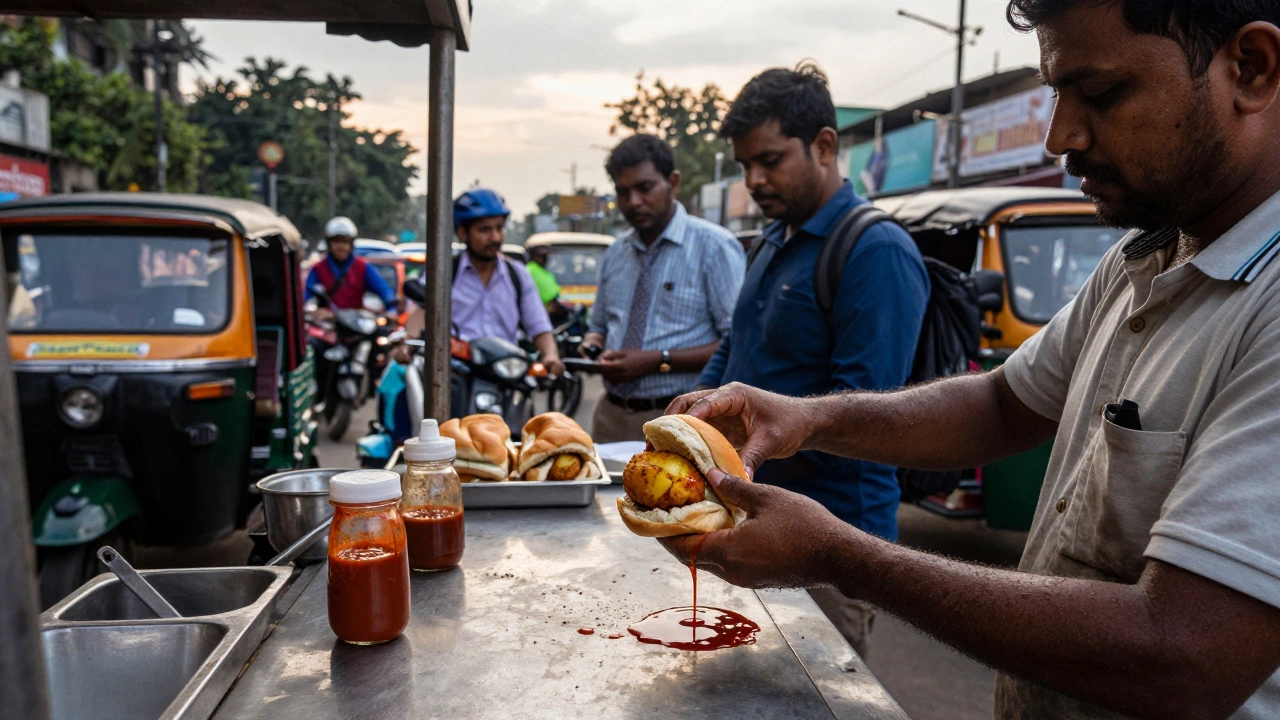
In Mumbai, the streets run on vada pav. This simple sandwich-a deep-fried potato fritter tucked into a soft bread roll with chutneys and spices-is the breakfast, lunch, and dinner of the city’s working class. It’s what delivery boys, factory workers, and students eat before their shift. A single vada pav costs ₹20-₹30 ($0.24-$0.36). It’s filling, portable, and takes less than a minute to make.
There are over 5,000 vada pav stalls in Mumbai alone. The most famous one, Ashok Vada Pav in Dadar, serves over 1,500 units a day. That’s more than 500,000 vada pav sold in the city every month. Compare that to the number of biryani orders in the same city-still high, but nowhere near the volume. Vada pav doesn’t need a restaurant. It doesn’t need a menu. It needs a cart, a fryer, and a hungry crowd. And Mumbai has both.
Why These Snacks Win Over Curries and Biryani
You might think that biryani, dal chawal, or paneer tikka are the most eaten foods in India. After all, they’re the ones featured in cookbooks and TV shows. But here’s the truth: those dishes are for weekends, festivals, or special occasions. They take time. They need ingredients. They need a kitchen.
Street food is different. It’s made in minutes. It’s eaten standing up. It’s bought with cash, no app needed. It doesn’t care if you’re rich or poor. A street vendor in Jaipur sells the same pani puri to a college student and a factory owner. The price is the same. The taste is the same. The experience is the same.
India’s population is over 1.4 billion. About 65% of people live in urban or semi-urban areas. Most of them don’t have time to cook three meals a day. They rely on street food for at least one meal. A 2025 government survey found that 78% of urban Indians eat street food at least once a day. And pani puri, samosa, and vada pav make up 82% of those daily purchases.
The Real Numbers Behind the Snacks
Let’s break it down with real data:
| Food | Estimated Daily Units Sold | Average Price (₹) | Primary Regions |
|---|---|---|---|
| Pani Puri | 50 million | 15 | National |
| Samosa | 42 million | 10 | National |
| Vada Pav | 15 million | 25 | Maharashtra, Gujarat |
| Bhel Puri | 12 million | 20 | Mumbai, Pune |
| Dosa | 10 million | 30 | South India |
Notice something? Pani puri isn’t even the most expensive. But it’s the most sold. Why? Because you can eat three plates in one sitting. You can buy one on your way to the bus stop. You can share it with a friend. It’s not just food-it’s a social ritual.
What About Regional Variations?
Yes, every state has its favorite. In Bengal, you’ll find jhalmuri-spicy puffed rice with mustard oil and chili. In Rajasthan, pyaaz kachori is king. In Tamil Nadu, masala dosa is the daily staple. In Punjab, chole bhature is the weekend treat. But none of these come close to the nationwide reach of pani puri and samosa.
Even in remote villages, you’ll find a woman frying samosas outside her house. Children carry them to school. Elders eat them with chai. The recipe hasn’t changed in 50 years. It’s passed down through generations-not in cookbooks, but in hands.
Why Street Food Is India’s True Culinary Identity
India’s food culture isn’t defined by royal kitchens or five-star hotels. It’s defined by the vendor with the steel cart, the clay oven, and the wooden spoon. It’s defined by the smell of cumin and chili hitting the hot oil. It’s defined by the sound of a puri being filled with water and the satisfied sigh after the first bite.
When you ask what food is most eaten in India, you’re not asking about tradition. You’re asking about survival. About convenience. About joy in the simplest form. And that’s why pani puri, samosa, and vada pav aren’t just snacks. They’re the heartbeat of everyday India.
Is pani puri really eaten more than biryani in India?
Yes, by a huge margin. Biryani is a celebratory dish-eaten on weekends, festivals, or special occasions. Pani puri is eaten daily, often multiple times a day, by millions across the country. While biryani sales are measured in restaurants and home kitchens, pani puri is sold on streets, at train stations, and outside schools-making its daily consumption numbers far higher.
Are street foods in India safe to eat?
Most are. Street vendors in India follow hygiene practices passed down for generations. They use fresh ingredients, boil water before filling puris, and fry food in clean oil daily. The real risk comes from unregulated vendors in crowded areas. Look for stalls with a long line of locals-that’s usually the best sign of safety and quality.
Why is pani puri so popular in North India but less so in the South?
It’s not less popular-it’s just called something else. In Tamil Nadu, it’s known as puchhuka or paniyaram, and the water is often less tangy. In Karnataka, it’s called bhel puri with a different spice blend. The core idea-crispy shell with flavorful water-is the same. The difference is in local taste, not consumption.
Can I make pani puri or samosa at home?
Absolutely. Both are easy to make with basic ingredients: flour, potatoes, spices, and oil. The trick is getting the puri shell thin and crispy-practice helps. Many home cooks make large batches on weekends and freeze them. Street vendors use the same recipes, just in bigger quantities.
Is Indian street food getting more popular abroad?
Yes. Cities like London, New York, and Sydney now have dedicated Indian street food stalls. Pani puri and vada pav are trending on social media. But they’re often adapted-less spicy, bigger portions, served with utensils. In India, the magic is in the simplicity and speed. That’s what gets lost overseas.
What to Try Next
If you’ve never tried Indian street food, start with pani puri. Go to a busy market. Watch how the vendor makes it. Ask for "medium spicy" if you’re new. Eat it slowly-don’t rush the burst. Then grab a samosa with mint chutney. After that, find a vada pav cart in a city like Mumbai or Pune. That’s the full cycle. You’ll taste the soul of India-not in a restaurant, but on the sidewalk, with your fingers, in under five minutes.
- Poplular Tags
- most eaten food in India
- Indian street food
- pani puri
- samosa
- vada pav