Indian Dish Nutrition Calculator
Calculate Hidden Calories
Enter portions of popular Indian dishes to see their true nutritional impact
Nutrition Breakdown
Hidden Health RisksTotal Calories
0
Added Sugar
0g
No warnings yet
Health Tip: Baked samosas cut calories by 60%, while home-made pakoras with fresh oil save 500+ calories per serving.
When you think of Indian food, you might picture colorful curries, fragrant spices, and fresh vegetables. But not all vegetarian Indian dishes are healthy. In fact, some of the most popular ones are packed with refined flour, deep-fried in old oil, and drowned in ghee or sugar. If you’re trying to eat better, you need to know which Indian foods are secretly harming your health.
The Real Culprit: Processed Ingredients, Not Spices
Many people assume that because Indian food uses turmeric, cumin, and coriander, it must be healthy. That’s true-when the dish is made with whole ingredients. But modern versions of classic dishes often replace traditional methods with shortcuts that turn meals into calorie bombs. The problem isn’t the spices. It’s the flour, the oil, and the sugar.
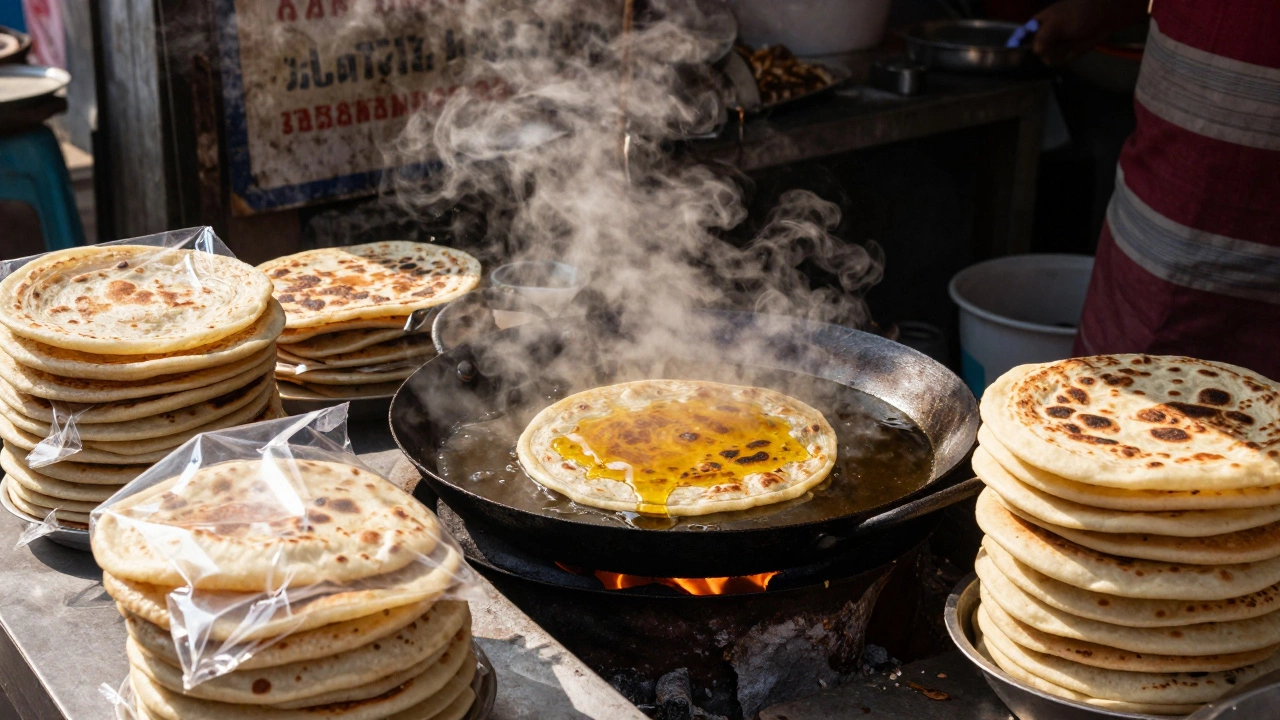
Take paratha, for example. A single stuffed paratha can have 300-400 calories, mostly from refined wheat flour and ghee. Restaurants and even home cooks now use pre-made paratha dough, which contains hydrogenated oils and preservatives. Then they fry it in reused oil, sometimes for days. That oil breaks down into trans fats, which raise bad cholesterol and lower good cholesterol. One study from the Indian Journal of Medical Research found that over 60% of street vendors in Delhi reused frying oil for more than five days.
Deep-Fried Favorites: The Top 3 Unhealthiest Vegetarian Indian Dishes
Not all fried foods are created equal. Some are worse than others. Here are the three most problematic vegetarian Indian dishes you’re probably eating regularly.
1. Samosas (Especially the Store-Bought Kind)
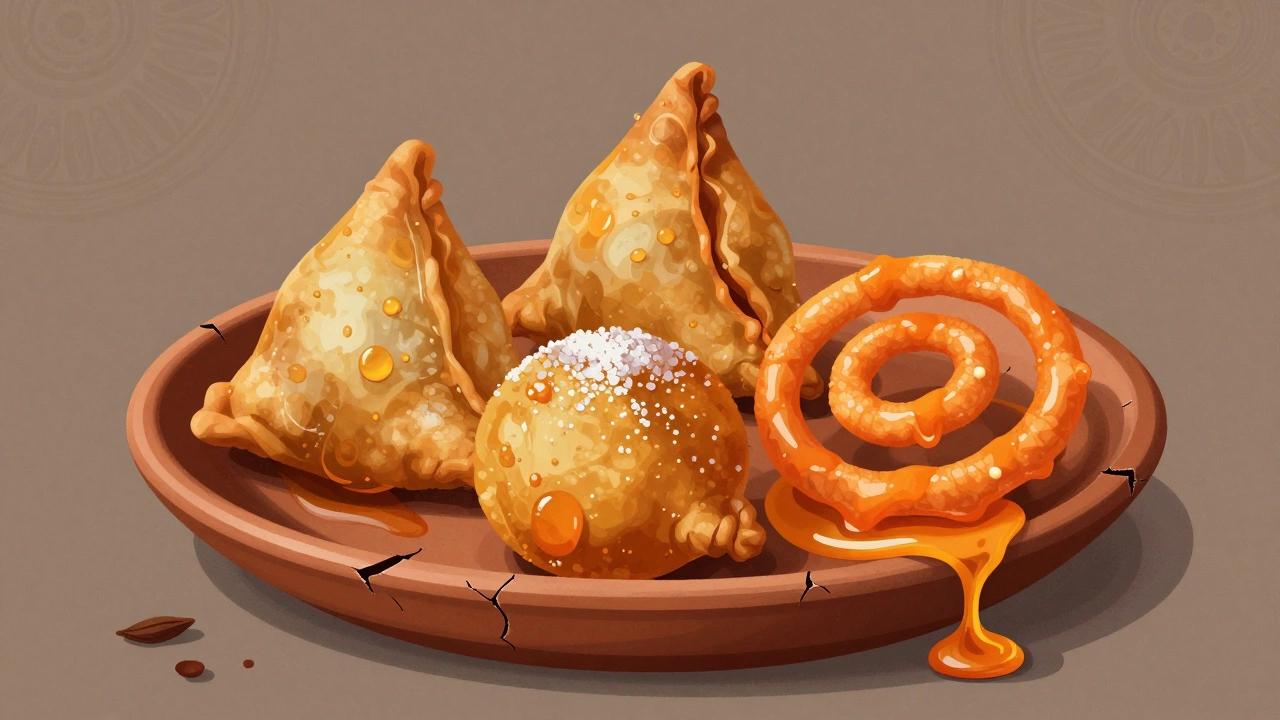
Samosas look innocent-a crispy pastry filled with spiced potatoes and peas. But the dough is made from refined flour and laced with hydrogenated oil. Then they’re deep-fried in oil that’s been sitting on the stove for hours. A single medium samosa has about 250-300 calories. Two? That’s nearly half your daily fat allowance. And if they’re served with sweet tamarind chutney? You’re adding another 40-60 grams of sugar.
Even if you make them at home, using store-bought samosa wrappers means you’re getting pre-fried, pre-greased dough. Homemade versions using whole wheat flour and baked instead of fried cut the calories by 40%.
2. Pakoras (The Everyday Snack That’s a Sugar and Fat Trap)
Pakoras are fried vegetable fritters, usually made with onions, spinach, or potatoes dipped in chickpea flour batter. Sounds healthy, right? Not when the batter is thickened with cornstarch, and the oil is reused until it turns dark brown. A small plate of 5-6 pakoras can have 500+ calories and 25 grams of fat.
And here’s the kicker: many vendors add sugar to the batter to make it crispier. Yes, sugar. That’s why some pakoras taste slightly sweet. It’s not a flavor-it’s a trick to mask the stale oil.
3. Jalebi (The Sugar Bomb You Think Is Just a Treat)
Jalebi looks like a fun, orange swirl. It’s crispy on the outside, syrupy on the inside. But it’s basically fried dough soaked in sugar syrup. One small jalebi can contain 150-200 calories, with 20-30 grams of sugar. That’s more sugar than a can of soda.
And the syrup? Often made with high-fructose corn syrup or refined white sugar. Some street vendors even use artificial coloring and flavoring. A 2023 survey in Mumbai found that 38% of jalebi vendors used non-food-grade coloring to make the dish look brighter.
Why These Dishes Are So Common
These foods aren’t unhealthy because they’re traditional. They’re unhealthy because they’ve been commercialized. In rural India, samosas were made fresh, with whole wheat dough and a single fry. Today, factories produce them in bulk, fry them in industrial vats, and ship them frozen to cities. Supermarkets sell them as "ready-to-eat snacks."
Same with pakoras. In homes, they were occasional treats during monsoon season. Now they’re sold at every bus stop, train station, and office canteen. And jalebi? Once a festival dessert, now a daily snack for kids after school.
The shift happened because of convenience. People want fast, cheap, tasty food. And manufacturers deliver-by cutting corners on ingredients, oil quality, and hygiene.
What Makes These Dishes Worse Than Others?
Not all fried Indian food is equally bad. For example, dhokla is steamed, not fried. Upma uses semolina but is cooked with minimal oil. Khichdi is a one-pot meal of rice and lentils. These are still traditional, still wholesome.
The unhealthiest dishes share three traits:
- Refined flour instead of whole grain
- Repeatedly reused frying oil (high in oxidized fats)
- Added sugar or syrup in places you wouldn’t expect
That’s why a plain dosa made with fermented rice and lentil batter is fine, but a masala dosa smothered in butter, cheese, and sweet chutney becomes a problem.
How to Eat Indian Food Without the Damage
You don’t have to give up your favorite dishes. You just need to make smarter choices.
- Ask for baked samosas instead of fried. Many street vendors now offer this option-it’s less crispy, but 60% lower in fat.
- Make pakoras at home with chickpea flour, no cornstarch, and a light spray of oil in the oven. Use fresh vegetables. Skip the sugar in the batter.
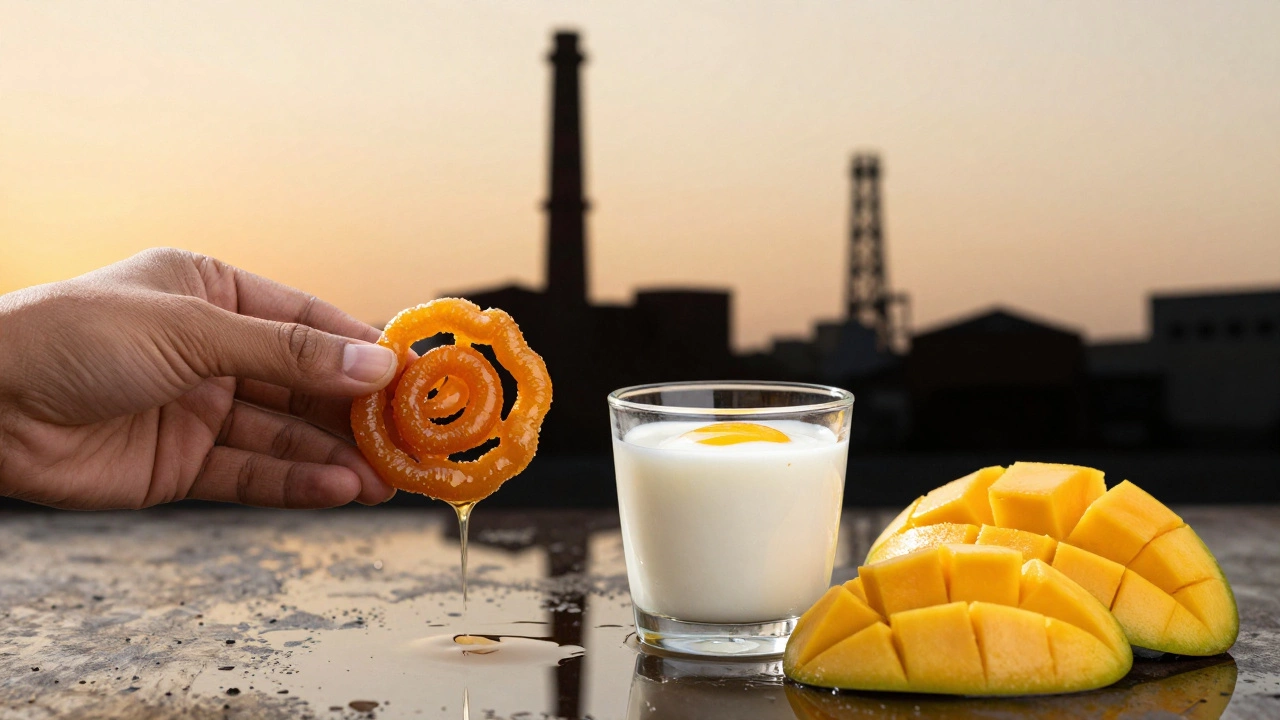
- Choose plain jalebi only on special occasions. If you crave sweetness, go for fresh fruit or a small bowl of yogurt with honey.
- Look for whole wheat versions of parathas and naan. Some bakeries now sell them-ask for "atta" instead of "maida."
- Check the oil. If it looks dark or smells rancid, walk away. Fresh oil should be clear and smell neutral.
Even small changes add up. Swapping one fried snack a week for a baked version can save you over 10,000 calories a year. That’s roughly 3 pounds of body fat.
What About Traditional Recipes?
Yes, traditional Indian cooking was healthy. Ancient texts like the Charaka Samhita praised foods that balanced digestion, energy, and detox. Dishes like khichdi, dal bhat, and curd rice were designed to be nourishing, not indulgent.
The problem isn’t Indian food. It’s the modern twist. When you replace homemade ghee with margarine, or fresh spices with powdered mixes, you lose the nutrition and gain the toxins.
So next time you order a samosa or reach for a jalebi, ask yourself: Is this a treat-or a trap?