Biryani vs Fried Rice Nutrition Calculator
Your Dish
Nutritional Results
Select your dish and settings to see the nutritional comparison.
When you’re hungry and craving something rich and satisfying, biryani and fried rice are two of the most common choices. But which one is actually better for you? If you’ve ever stood at a restaurant counter, torn between ordering a plate of fragrant biryani or a bowl of golden fried rice, you’re not alone. The truth isn’t as simple as "one is healthy, the other isn’t." It’s about ingredients, how they’re cooked, and how much you eat.
What’s in a plate of biryani?
Biryani isn’t just rice and meat. A classic chicken or goat biryani starts with long-grain basmati rice, soaked and rinsed to remove excess starch. Then it’s layered with marinated meat, whole spices like cardamom, cinnamon, and cloves, fried onions, saffron-infused milk, and sometimes yogurt or ghee. The whole thing is slow-cooked in a sealed pot, letting the steam lock in flavor and moisture. This method-called dum cooking-isn’t frying. It’s steaming with heat and aromatics.
A typical 1-cup serving of chicken biryani (about 200g) has around 280 to 320 calories. That’s mostly from rice and lean chicken. The fat comes mostly from the small amount of ghee or oil used to fry onions and marinate the meat. If you skip the fried onions and use less ghee, you can cut down the fat by 20% without losing flavor. Biryani also includes whole spices that have anti-inflammatory properties-turmeric, cumin, and black pepper all show up in most recipes.
What’s in a bowl of fried rice?
Fried rice is simpler on paper: leftover rice, egg, veggies, soy sauce, and oil. But in practice, it’s often made with a lot more oil than you think. Restaurants use 2-3 tablespoons of oil per serving just to keep the rice from sticking and to get that glossy, restaurant-style texture. Add in a few scoops of soy sauce (which is loaded with sodium), and you’ve got a dish that’s high in sodium and hidden fat.
A 1-cup serving of restaurant-style fried rice can hit 350 to 450 calories. The rice itself is fine-it’s just carbs. But the oil adds 120-180 extra calories, and the soy sauce adds over 800mg of sodium per serving. That’s more than a third of your daily limit. Plus, many places use white rice instead of brown, which spikes blood sugar faster. If you make it at home with brown rice, less oil, and low-sodium soy sauce, you can bring it down to 220-260 calories. But that’s not how most people eat it.
Comparing the two side by side
| Item | Biryani (chicken) | Fried Rice |
|---|---|---|
| Calories | 280-320 | 350-450 |
| Fat (g) | 10-14 | 15-25 |
| Sodium (mg) | 400-600 | 800-1200 |
| Fiber (g) | 2-3 | 1-2 |
| Protein (g) | 18-22 | 10-14 |
| Spices | Yes (turmeric, cumin, cardamom) | No (just soy sauce, garlic) |
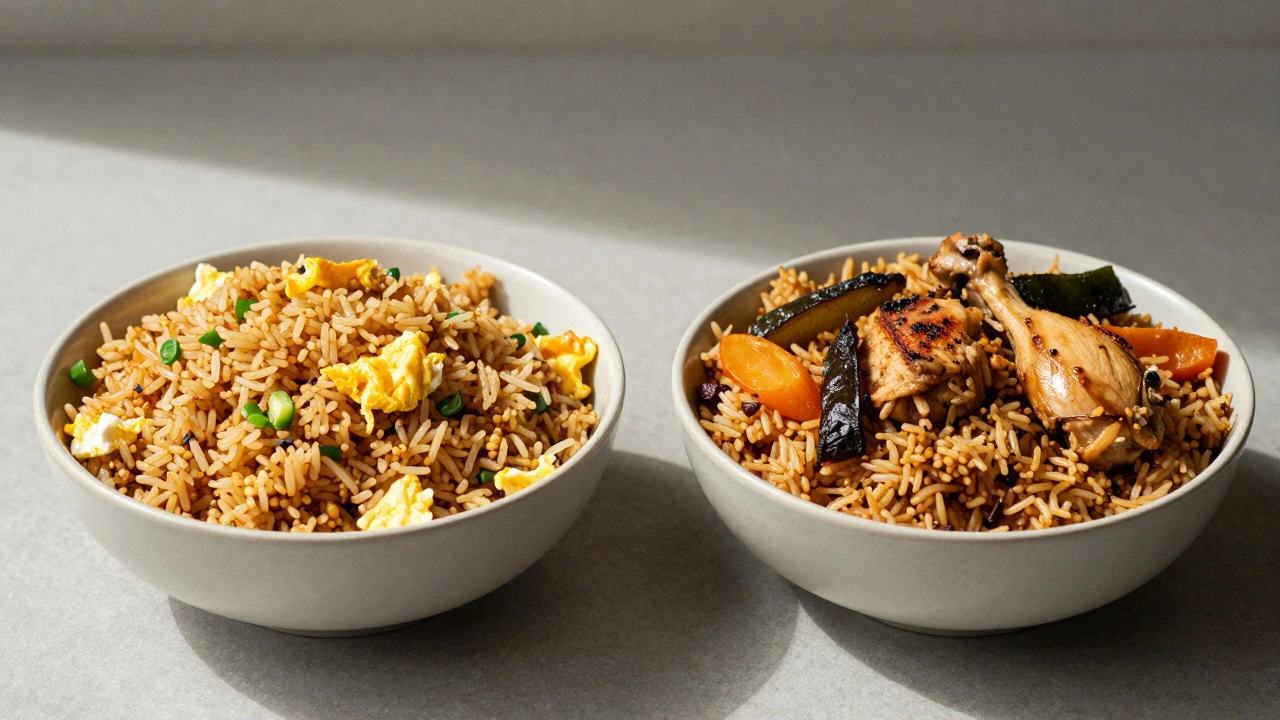
Look at the numbers. Biryani has more protein and fewer carbs from refined rice. It also gives you natural spices with health benefits. Fried rice, especially from takeout, is heavier on sodium and oil. The difference isn’t just taste-it’s how your body processes it.
Why biryani can be the healthier pick
Here’s the twist: biryani is often more filling. The protein from chicken or lamb, the fiber from whole spices, and the slow-digesting basmati rice mean you feel full longer. That helps you avoid snacking later. Fried rice? It’s quick to eat, quick to digest, and you’re often back for seconds before you realize you’re still hungry.
Also, biryani rarely has added sugar. Fried rice often does-some places even add a splash of sweet soy sauce or sugar to balance the salt. That’s another hidden calorie source.
If you’re trying to eat clean, biryani gives you more nutrients per bite. The turmeric in the spice mix has curcumin, which studies show may help reduce inflammation. Cumin aids digestion. Cardamom helps regulate blood sugar. These aren’t just flavors-they’re functional ingredients.
When fried rice wins
Let’s be fair: homemade fried rice with brown rice, loads of veggies, egg, and just a teaspoon of sesame oil? That’s a nutritious meal. It’s cheaper, quicker, and uses up leftovers. If you control the ingredients, fried rice can be lean, balanced, and full of nutrients. But that’s not what most people get at restaurants or delivery apps.
And here’s the catch: if you’re eating biryani every day with extra ghee or fried onions, it can become heavy. The fat adds up. The rice portion is large. Portion control matters more than the dish itself.

How to make either one healthier
Here’s what works:
- Use basmati rice instead of white rice-it has a lower glycemic index.
- Reduce oil by half. Use non-stick pans or steam the rice instead of frying.
- Load up on vegetables. Add carrots, peas, bell peppers, or spinach to both dishes.
- Skip the fried onions in biryani. Roast them instead for crunch without the oil.
- Use low-sodium soy sauce or tamari in fried rice. Or better yet, use lime juice and garlic.
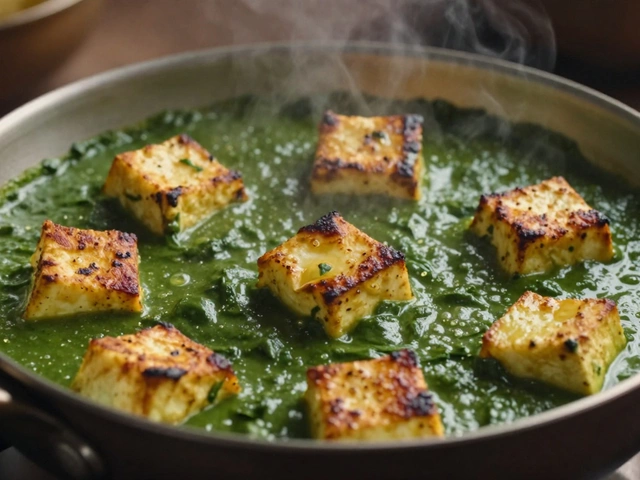
- Make biryani with lentils or paneer instead of meat for a vegetarian, high-protein version.
One trick I use: cook a big batch of plain basmati rice on Sunday, then use it for both biryani and fried rice all week. That way, you’re not reheating rice multiple times-which increases the risk of foodborne illness.
Bottom line: Which is healthier?
Between restaurant-style biryani and fried rice, biryani usually wins. It’s higher in protein, lower in sodium, and packed with beneficial spices. Fried rice, especially takeout, is often a sodium-and-oil bomb.
But neither is inherently "good" or "bad." It’s about how they’re made. Homemade biryani with less ghee? Healthy. Homemade fried rice with brown rice and veggies? Also healthy. Restaurant versions? Biryani still edges out.
If you’re trying to eat better, don’t avoid biryani. Just make it smarter. Use less oil, skip the fried onions, add more veggies, and watch your portion size. You’ll still get that rich, comforting flavor-without the guilt.
Is biryani high in calories?
A standard 1-cup serving of chicken biryani has about 280-320 calories. That’s comparable to a bowl of pasta. The calories come mostly from rice and lean meat. If you use less ghee and skip fried onions, you can bring it down to 220-250 calories per serving.
Can biryani be part of a weight-loss diet?
Yes, if you control portions and ingredients. Biryani is high in protein and fiber-rich spices, which help you feel full. Swap white rice for brown basmati, reduce oil by half, and add extra vegetables. One moderate portion once or twice a week fits into most weight-loss plans.
Why is fried rice so unhealthy?
Most restaurant fried rice uses 2-3 tablespoons of oil per serving and lots of soy sauce, which pushes sodium over 1,000mg. It’s often made with white rice and little to no veggies. That combination makes it high in empty calories, sodium, and fat-with little protein or fiber.
Does biryani have more nutrients than fried rice?
Yes, because of the spices. Biryani includes turmeric, cumin, cardamom, and cloves-all of which have antioxidant and anti-inflammatory properties. Fried rice usually only has soy sauce and garlic, which offer minimal nutritional benefit. Biryani also tends to have more protein from meat or legumes.
Is vegetarian biryani healthier than chicken biryani?
It depends. Vegetarian biryani made with lentils, chickpeas, or paneer can be just as high in protein as chicken biryani. It’s often lower in saturated fat, especially if you skip ghee. But if it’s loaded with fried nuts or excessive oil, it can be just as heavy. The key is preparation, not the protein source.
What to try next
If you liked this breakdown, try making biryani with cauliflower rice for a low-carb twist. Or experiment with using quinoa instead of rice-it’s higher in protein and fiber. You’ll be surprised how well it absorbs the spices. And if you’re curious about how to make perfect basmati rice every time, that’s a whole other story.