Find Your Perfect Indian Curry Match
Not sure which curry is right for you? Answer three simple questions about your palate to get a personalized recommendation from India's top contenders.
Discover Your Palate
Based on authentic regional recipes from Delhi, Kerala, Kashmir, and beyond.
Curry Name
Description goes here.
Key Ingredients: Ingredients list
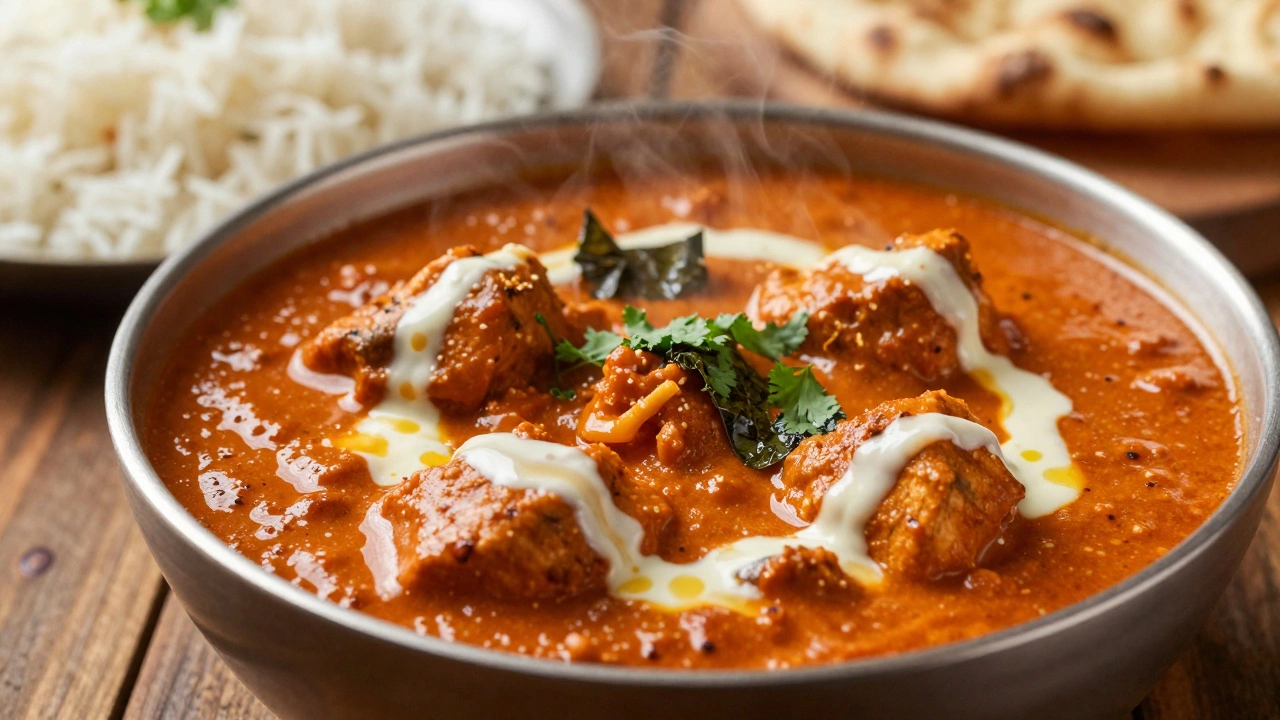
Ask ten people what the tastiest Indian curry is, and you will likely get ten different answers. For some, it is the creamy, tomato-rich warmth of a Butter Chicken, also known as Murgh Makhani, a dish that originated in Delhi in the 1950s. For others, it might be the fiery, tangy punch of a Kerala fish curry or the earthy depth of a slow-cooked lamb rogan josh. There is no single "best" curry because Indian cuisine is not one monolith; it is a vast tapestry of regional flavors, spice blends, and cooking techniques that have evolved over centuries.
The question of taste is deeply personal, shaped by your tolerance for heat, your preference for texture, and even your cultural background. If you love rich, buttery sauces, your answer will differ from someone who prefers light, coconut-based broths. This article breaks down the contenders for the title of "tastiest," helping you understand why each curry commands such loyalty and how you can decide which one wins for your palate.
The Contenders for the Crown: India's Top Curries
To find the tastiest curry, we first need to look at the heavyweights. These are the dishes that appear on menus worldwide and dominate home kitchens across India. Each represents a distinct flavor profile that appeals to different senses.
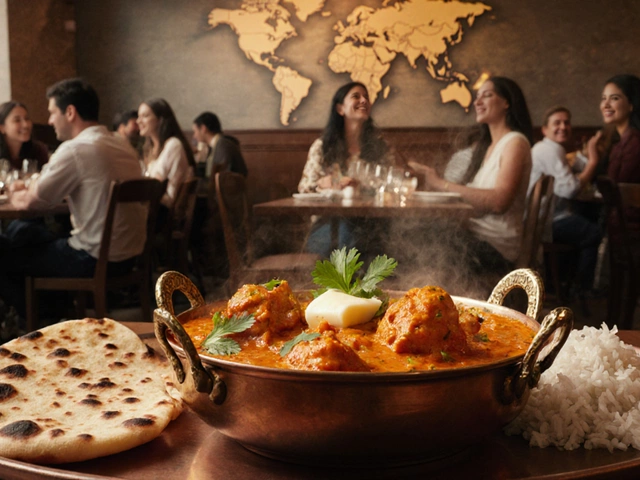
Butter Chicken is arguably the most famous Indian curry globally. It features tender chicken pieces simmered in a velvety sauce made from tomatoes, butter, cream, and a blend of spices like garam masala and fenugreek leaves (kasuri methi). Its appeal lies in its balance: it is mildly spiced, slightly sweet, and incredibly comforting. It is the gateway drug for many Westerners into Indian cuisine.
In contrast, Chicken Tikka Masala is often debated as British-Indian rather than purely Indian, but its popularity is undeniable. Unlike Butter Chicken, the sauce here is usually thinner and more tangy, with a brighter tomato flavor and a sharper kick from green chilies and ginger. The chicken is marinated in yogurt and spices before being grilled, giving it a smoky char that penetrates the meat.
For those who prefer non-veg options with deeper, earthier notes, Rogan Josh hails from Kashmir. This lamb curry gets its signature reddish-brown color not from chili powder, but from alkanet root and Kashmiri red chilies, which provide color without excessive heat. The aroma is dominated by fennel seeds, dry ginger, and cardamom. It is a slow-cooked masterpiece where the lamb becomes so tender it falls apart at the touch of a spoon.
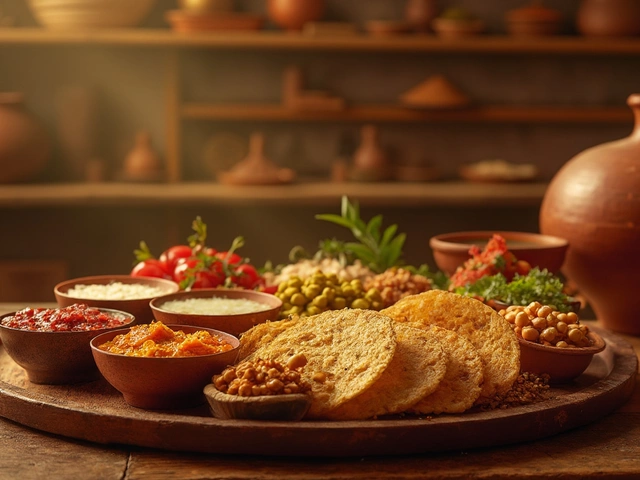
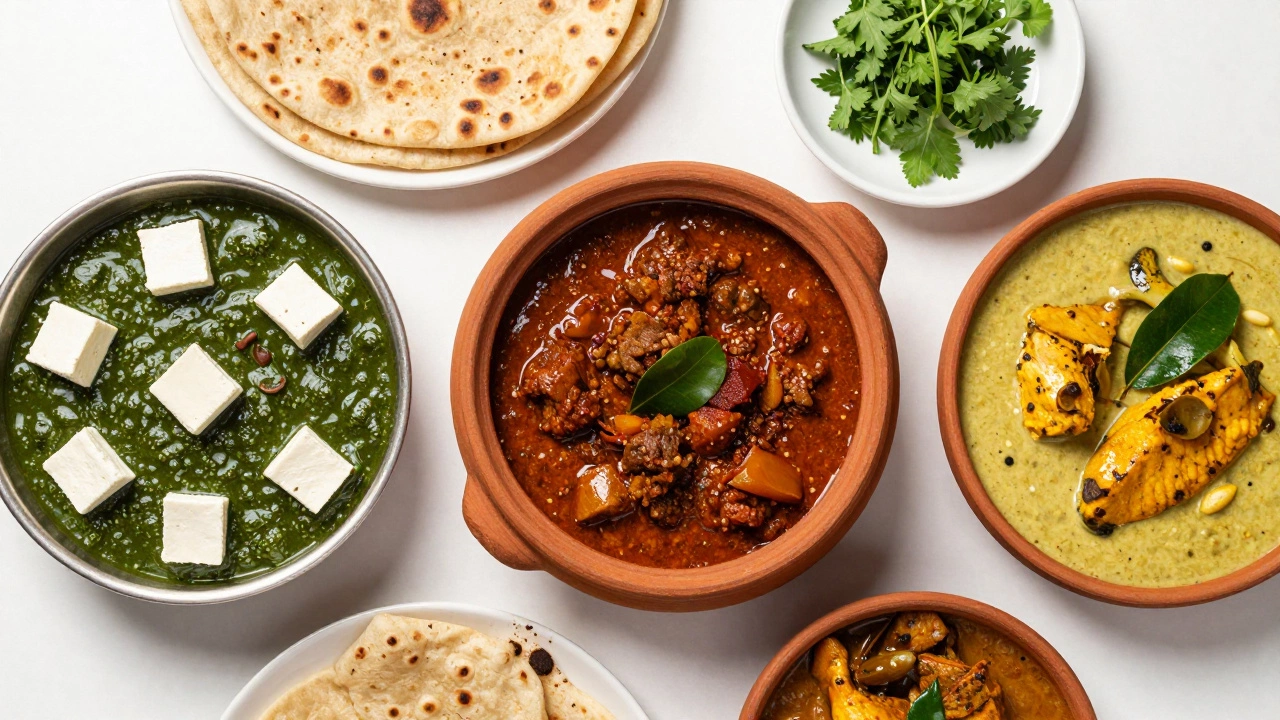
Vegetarians have their own champions. Palak Paneer combines soft cubes of cottage cheese (paneer) with a puree of spinach seasoned with cumin, garlic, and green chilies. It is nutritious, vibrant green, and offers a fresh, grassy counterpoint to heavier meat curries. Meanwhile, Chana Masala is a chickpea stew cooked in a robust tomato-onion gravy with coriander, cumin, and amchur (dried mango powder). It is tangy, hearty, and widely considered the ultimate comfort food in North India.
Regional Flavors: Why Geography Dictates Taste
If you think all Indian curries taste similar, you have likely only experienced restaurant-style food, which often standardizes flavors to suit international palates. Authentic Indian curry changes dramatically depending on where you are in the country. Understanding these regional differences is key to finding your personal favorite.
In the south, particularly in Kerala and Tamil Nadu, coconut is king. Kerala Fish Curry uses coconut milk, tamarind, and curry leaves to create a sour, sweet, and savory broth. The fish, often kingfish or mackerel, is poached gently so it remains delicate. The use of mustard seeds tempered in oil adds a nutty crunch and aromatic depth. This style is lighter and relies heavily on fermentation and souring agents like kokum or tamarind rather than heavy creams.
Move east to Bengal, and the flavor profile shifts again. Bengali curries are known for their subtle sweetness and use of poppy seed paste (posto) or mustard oil. Macher Jhol (Bengali fish soup) is thin, tangy, and infused with the sharp pungency of mustard oil, balanced by the sweetness of raw mango or potatoes. It is a stark contrast to the thick, gravy-heavy curries of the north.
In the west, Gujarat and Maharashtra offer complex layers of spice. Gujarati curries often include a pinch of sugar to balance the heat, creating a unique sweet-spicy-sour combination. Undhiyu is a mixed vegetable dish where ingredients are roasted separately and then combined, preserving individual textures while blending flavors. Maharashtrian curries, like Pork Vindaloo (originating from Portuguese influences), are intensely acidic due to vinegar and fiery hot from Kashmiri chilies, offering a bold, aggressive taste experience.
The Science of Spice: What Makes a Curry "Tasty"?
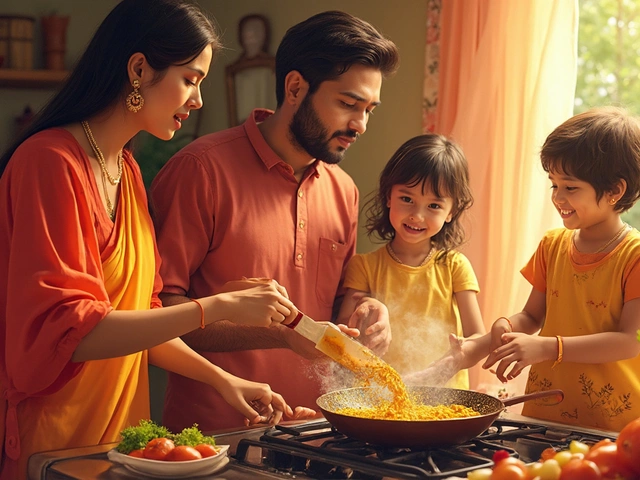
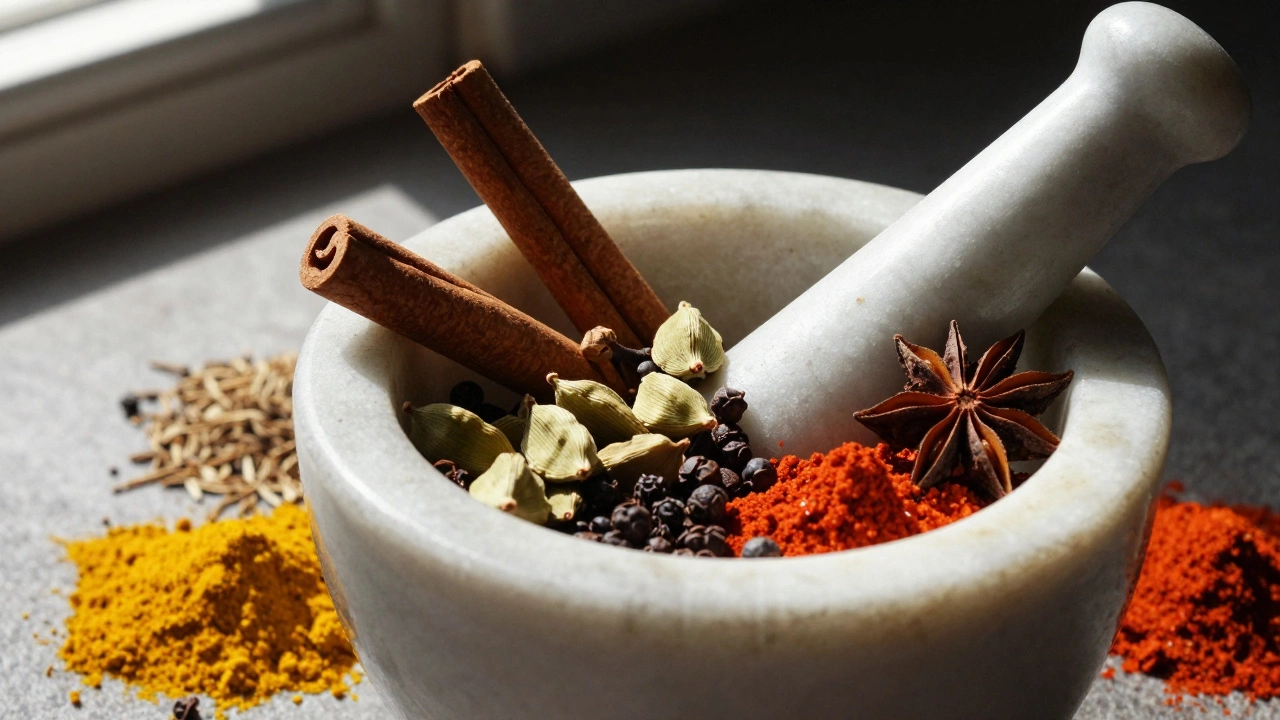
Taste is not just about salt and heat. The complexity of an Indian curry comes from the layering of spices, a technique known as "tadka" or tempering. This process involves frying whole spices in hot oil or ghee to release their essential oils, which then infuse the entire dish.
Consider the role of Garam Masala. It is not a single spice but a blend that varies by region. In the north, it typically includes cinnamon, cloves, cardamom, black pepper, and nutmeg. These warm spices add depth and aroma without necessarily adding heat. They are added at the end of cooking to preserve their volatile oils. A curry without proper garam masala may taste flat, lacking the lingering finish that defines high-quality Indian food.
Acidity is another critical component. Tomatoes, tamarind, lemon juice, or yogurt are used to cut through the richness of fats like ghee or coconut milk. Without acidity, a curry can feel heavy and cloying. The best curries achieve a perfect equilibrium: the fat coats the tongue, the spices stimulate the nose, the acid brightens the palate, and the salt enhances all other flavors.
Texture also plays a huge role. A smooth, silky sauce feels luxurious, while a coarse, rustic gravy feels hearty and homemade. Some curries, like Vindaloo, are intentionally rough around the edges, with visible chunks of onion and chili, signaling a robust, unpretentious flavor.
How to Find Your Personal Favorite
Finding the tastiest Indian curry for you is an exercise in self-discovery. Start by identifying your flavor preferences. Do you enjoy creamy, mild dishes? If so, Butter Chicken or Korma might be your top choice. Do you prefer tangy, sour notes? Look toward South Indian curries or Chana Masala. Are you a fan of intense heat and bold aromatics? Then Rogan Josh or Vindaloo could be your winner.
Another factor is the protein or vegetable base. Meat lovers often gravitate toward lamb or goat curries because the gamey flavor stands up well to strong spices. Poultry is versatile and takes on the flavor of the sauce easily. Vegetarian curries rely on the quality of the vegetables and the complexity of the spice blend to carry the dish. Paneer, being mild, acts as a sponge for flavors, making it a great vehicle for testing different curries.
Don't underestimate the power of accompaniments. A curry tastes different when eaten with naan, rice, roti, or paratha. Naan absorbs the sauce, softening the overall experience. Rice provides a neutral canvas that lets the curry shine. Roti requires you to scoop up the sauce, creating a more integrated bite. Try the same curry with different breads or grains to see how your perception of taste changes.
| Curry Name | Primary Flavor Profile | Heat Level | Best Paired With | Key Ingredients |
|---|---|---|---|---|
| Butter Chicken | Creamy, Sweet, Mild | Low | Naan, Basmati Rice | Tomato, Butter, Cream, Fenugreek |
| Rogan Josh | Earthy, Aromatic, Rich | Medium | Rice, Naan | Lamb, Fennel, Ginger, Alkanet Root |
| Kerala Fish Curry | Sour, Coconutty, Fresh | Medium-High | Steamed Rice, Appam | Fish, Coconut Milk, Tamarind, Curry Leaves |
| Chana Masala | Tangy, Hearty, Spicy | Medium | Roti, Paratha | Chickpeas, Tomato, Amchur, Coriander |
| Vindaloo | Acidic, Fiery, Bold | High | Rice, Raita | Pork/Chicken, Vinegar, Chili, Garlic |
Common Misconceptions About Indian Curry
Many people believe that all Indian curries are extremely spicy. This is a common misconception fueled by Western adaptations. Traditional Indian cooking balances heat with other flavors. Even in regions known for spicy food, like Andhra Pradesh, the heat is often built up gradually, allowing diners to adjust. You can always ask for "mild" or "medium" when ordering out, or control the amount of green chilies when cooking at home.
Another myth is that curry powder is a staple ingredient. In reality, Indian cooks rarely use pre-mixed "curry powder." Instead, they toast and grind fresh spices for each dish, creating unique blends tailored to the specific recipe. This freshness is what gives authentic curries their vibrant aroma and complex taste.
Finally, don't assume that expensive restaurants make the best curries. Some of the most flavorful curries are found in small, local eateries or home kitchens where traditions are passed down through generations. The secret is often in the patience-slow cooking allows flavors to meld and deepen in ways that quick, mass-produced meals cannot replicate.
Final Thoughts on Choosing Your Favorite
So, what is the tastiest Indian curry? The answer depends entirely on you. If you crave comfort and richness, Butter Chicken might reign supreme. If you seek adventure and boldness, Vindaloo or a spicy Kerala fish curry could win your heart. The beauty of Indian cuisine is its diversity. There is no wrong choice, only different journeys of flavor waiting to be explored.
Start experimenting. Cook simple versions of these curries at home. Adjust the spices to your liking. Pay attention to how different ingredients interact. Over time, you will develop your own ranking, your own favorites, and perhaps even your own signature twist on a classic dish. That is the true joy of Indian curry-it invites you to participate, not just consume.
Is Butter Chicken actually from India?
Yes, Butter Chicken (Murgh Makhani) originated in Delhi in the 1950s. It was created by restaurateur Kundan Lal Gujral as a way to use leftover tandoori chicken by simmering it in a rich, buttery tomato sauce.
Which Indian curry is the healthiest?
Curries based on vegetables, lentils, or lean proteins like fish and chicken are generally healthier. Dishes like Palak Paneer (spinach and cottage cheese) or Dal Tadka (lentil stew) are nutrient-dense and lower in saturated fats compared to cream-heavy dishes like Butter Chicken.
Why do some Indian curries taste sour?
Sourness is a key flavor component in many Indian curries, especially in South and East India. Ingredients like tamarind, kokum, lemon juice, yogurt, and raw mango are used to balance the richness of spices and fats, creating a more complex and refreshing taste profile.
Can I make Indian curry less spicy?
Absolutely. Heat in Indian curries primarily comes from chili peppers. You can reduce the number of green chilies or omit them entirely. Using milder red chili powders or paprika can also maintain color without intense heat. Adding a dollop of yogurt or cream can further mellow the spice level.
What is the difference between Garam Masala and Curry Powder?
Garam Masala is a traditional Indian blend of warm spices like cardamom, cinnamon, and cloves, added at the end of cooking for aroma. Curry powder is a Western invention, a generic mix of turmeric, coriander, and cumin, often used as a base flavoring. Authentic Indian recipes rarely use curry powder.