Indian Sweets Language Translator
When you hear the word "sweet" in an Indian context, you're not just thinking about sugar. You're thinking about golden gulab jamuns oozing syrup, crisp jalebis with their swirls of saffron, or soft barfi melting on your tongue. The Indian word for sweet is mithai - but that’s only the beginning. Mithai isn’t just a translation. It’s a whole culture, a ritual, a language of celebration.
What Does "Mithai" Really Mean?
Mithai (मिठाई) comes from the Hindi word "mitha," meaning sweet. But in everyday use across India, mithai refers to any traditional confection made with milk, sugar, ghee, nuts, and spices. It’s not candy. It’s not dessert. It’s something deeper. In North India, mithai shops are as common as grocery stores. In South India, you’ll find similar treats under different names - like payasam or laddu - but they all fall under the same emotional category: joy in edible form.
Think about weddings. Birthdays. Diwali. Eid. Even a simple visit from a relative calls for mithai. It’s offered as a gesture of welcome, a sign of abundance, a way to say "thank you" without words. A box of mithai is never just a gift - it’s a story.
The Most Common Indian Sweets and Their Names
There are hundreds of mithai varieties across India’s 28 states, each with local ingredients and traditions. But a few names show up everywhere:
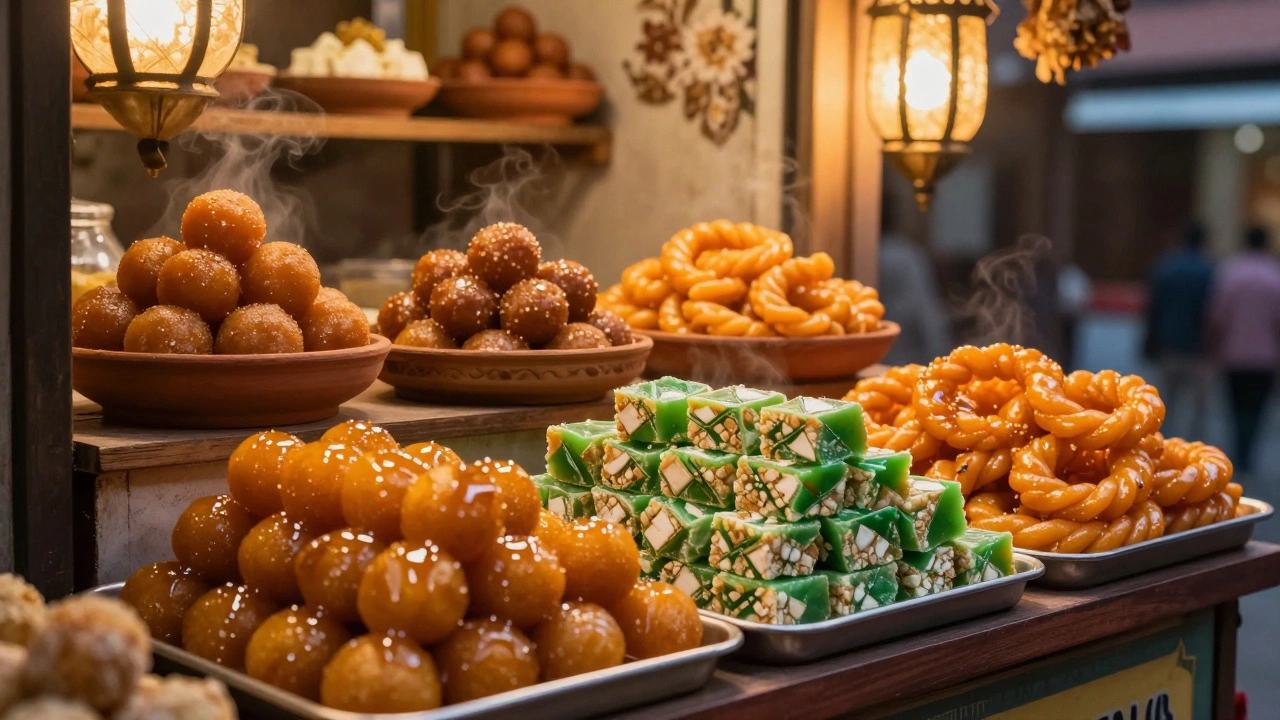
- Laddu - Round, dense balls made from gram flour, semolina, or coconut, sweetened with sugar or jaggery, and often studded with nuts. In Tamil Nadu, they’re called "ellu urundai" when made with sesame.
- Barfi - A fudge-like square made from condensed milk, sugar, and flavorings like cardamom, pistachio, or rose. It’s firm, not chewy, and often cut into diamonds.
- Gulab Jamun - Deep-fried milk solids soaked in sugar syrup. Soft, warm, and fragrant with rose water. Every Indian child knows the moment they bite into one.
- Jalebi - Bright orange, spiral-shaped fries soaked in syrup. Best eaten hot, with a dollop of yogurt to balance the sweetness.
- Kheer - India’s version of rice pudding. Made with milk, rice, and cardamom, often garnished with saffron and nuts. Served during festivals and after meals.
- Halwa - A dense, moist pudding made from semolina, carrots, or pumpkin, cooked in ghee and sugar. In Punjab, it’s a staple after prayers.
These aren’t just recipes. They’re regional identities. A Bengali will tell you their "mishti doi" (sweet yogurt) is the truest form of sweetness. A Gujarati might argue that "shrikhand" - strained yogurt with saffron and sugar - is the pinnacle. In Maharashtra, "puran poli" - sweet lentil-stuffed flatbread - is a festival essential.
Why "Sweet" Isn’t Just One Word
India doesn’t have one language. It has 22 officially recognized languages and over 1,600 dialects. So naturally, "sweet" has many names:
- Hindi/Urdu: Mithai
- Bengali: Mishti
- Tamil: Mishtai
- Marathi: Mithai
- Kannada: Mishtanna
- Malayalam: Mishtann
- Punjabi: Mithai
Even within states, names change. In rural Uttar Pradesh, a type of laddu made with sesame and jaggery is called "til ke laddu." In coastal Karnataka, a similar sweet is known as "ellu bellunde." The ingredients may be similar, but the name carries the local dialect, history, and even caste traditions.
How Indian Sweets Are Different From Western Desserts
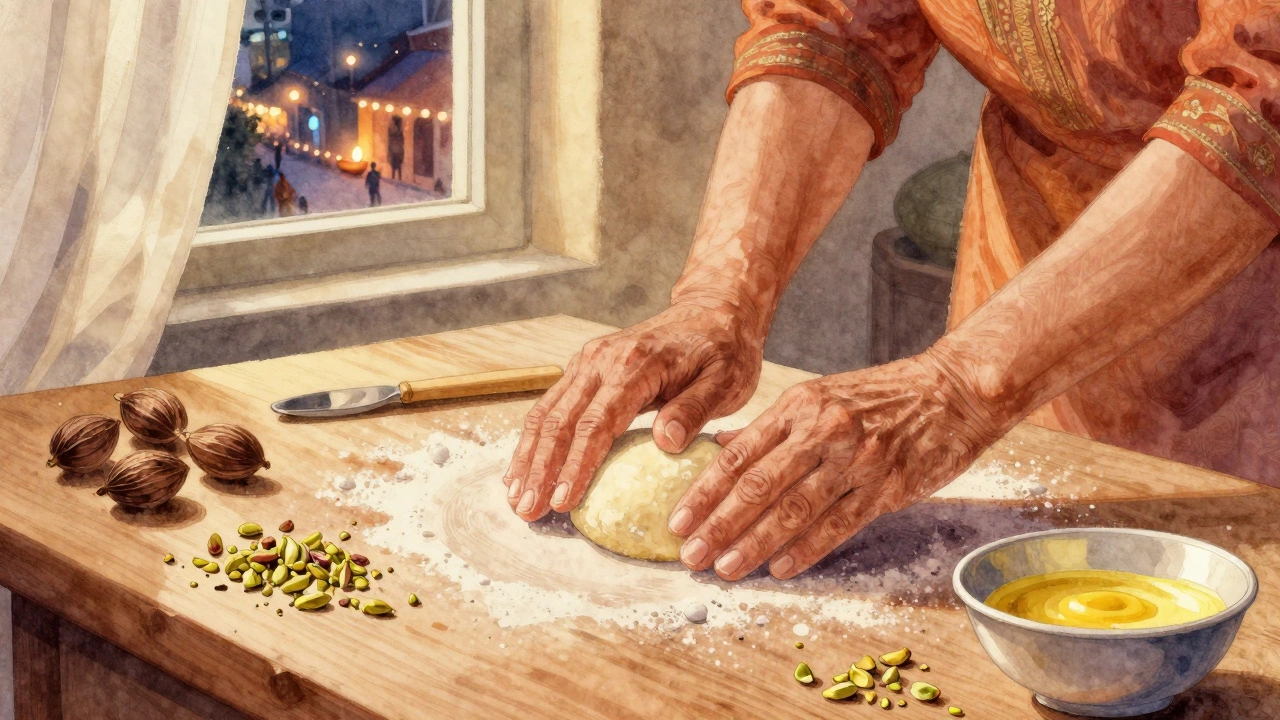
Western desserts often focus on butter, eggs, and cream. Indian mithai leans on milk, sugar, and ghee. The texture? Dense, chewy, sticky. The flavor? Layered with cardamom, rose, saffron, or fennel. There’s no whipped cream. No chocolate. No vanilla extract.
Instead, you get:
- Ghee - Clarified butter that adds richness and aroma.
- Jaggery - Unrefined cane sugar with earthy, molasses notes. Used in southern sweets like payasam.
- Saffron - The world’s most expensive spice, used sparingly to color and scent.
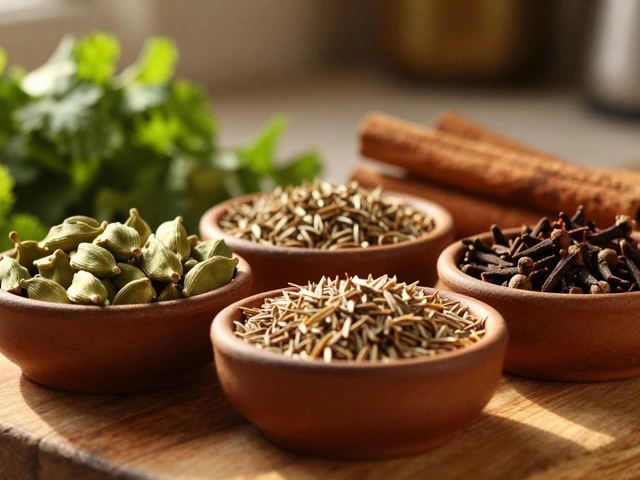
- Cardamom - Not just a spice, but a signature flavor. Crushed pods are added to almost every sweet.
Indian sweets are rarely served cold. They’re meant to be eaten warm or at room temperature. A barfi left in the fridge loses its texture. A gulab jamun served chilled misses its soul.
When Do Indians Eat Mithai?
You won’t find mithai on a daily menu like toast or rice. It’s reserved for moments that matter:
- Diwali - The festival of lights is incomplete without a platter of mithai. Families make dozens of types at home.
- Weddings - A wedding in India can have 10-15 different mithai varieties served to guests.
- Religious Offerings - Prasad (blessed food) at temples is almost always sweet - laddus at Tirupati, pedas at Mathura.
- Birthdays - A child’s first birthday is marked with "annaprashan," a sweet rice dish.
- Housewarming - Bringing mithai to a new home is a sign of prosperity.
Even in grief, mithai plays a role. After a funeral, families often distribute sweet snacks to guests. It’s not about ignoring sadness. It’s about honoring life.
Modern Twists on Tradition
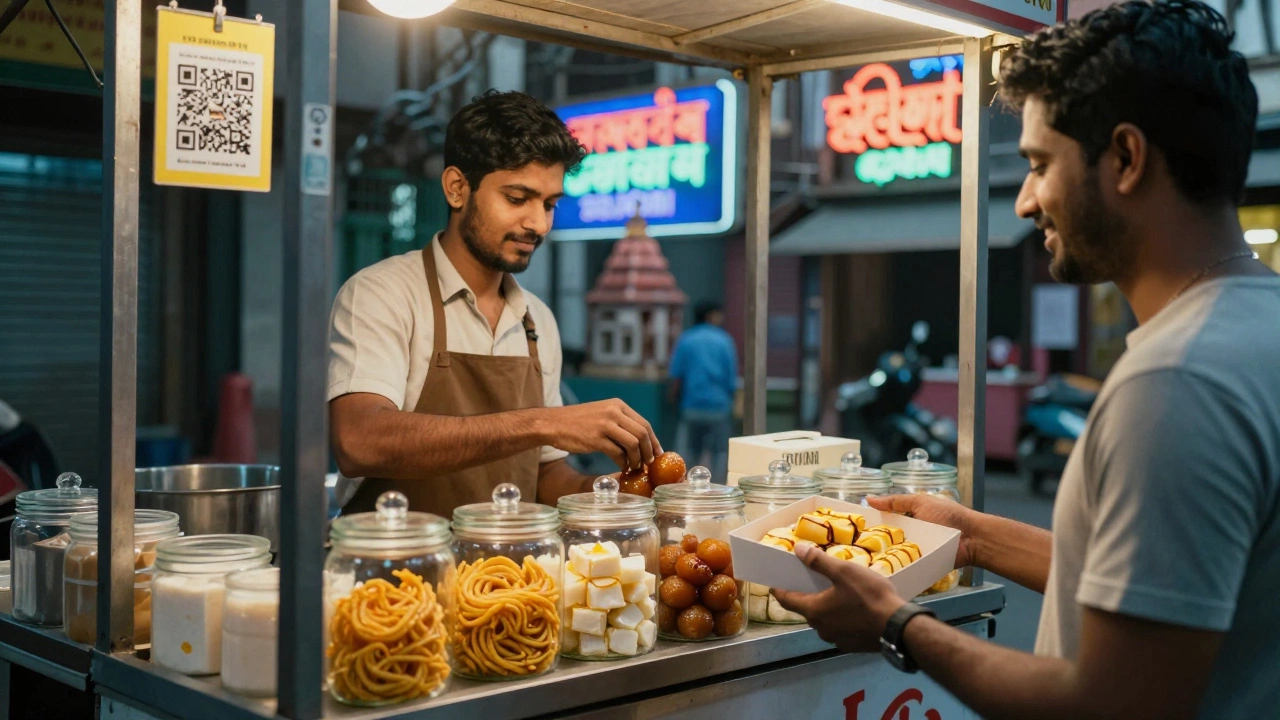
Today, you’ll find mithai in unexpected places. In Mumbai, a vegan gulab jamun made with almond milk is sold in organic stores. In Delhi, a barfi infused with matcha or lavender is trending on Instagram. In Bangalore, a startup sells mithai in reusable glass jars with QR codes that tell the recipe’s origin.
But the core hasn’t changed. No matter how fancy the packaging, the best mithai still comes from small shops with handwritten signs, where the owner knows your name and remembers how you like your jalebi - extra syrup, or just enough to hold the shape.
Why This Matters Beyond the Kitchen
When you ask "What is the Indian word for sweet?" you’re not asking for a translation. You’re asking about identity. Mithai is a thread that connects village to city, grandmother to child, Hindu to Muslim to Christian. It’s a language that doesn’t need words.
One woman in Varanasi told me: "We don’t say ‘I love you’ with words. We say it with a box of mithai. If you come to my house, I’ll make you laddu. If you’re sad, I’ll bring you kheer. If you leave, I’ll pack you some barfi for the journey. That’s how we show care. That’s how we say sweet."
Is "mithai" the only word for sweet in India?
No. "Mithai" is the most widely recognized term, especially in North India, but other regions use different words. In Bengal, it’s "mishti." In Tamil Nadu, it’s "mishtai." In Kannada, it’s "mishtanna." Each word carries local traditions, ingredients, and cultural meanings, even though they all refer to traditional Indian sweets.
Are Indian sweets unhealthy?
Traditional mithai is high in sugar and fat because it’s made with milk, ghee, and sugar - ingredients meant for celebration, not daily meals. But they’re not processed like Western candies. Many use jaggery instead of white sugar, and contain nuts, seeds, and spices that add nutrients. Moderation is key. Many families make smaller portions or use alternatives like dates or coconut sugar today.
Can you buy authentic Indian sweets outside India?
Yes. Major cities with large South Asian communities - like London, Toronto, Dubai, and Sydney - have dedicated mithai shops. Online stores ship fresh or frozen sweets globally. But the best quality still comes from local shops where the sweets are made daily. Imported versions often use preservatives or lack the right texture because ghee and milk solids behave differently outside India.
Why is ghee so important in Indian sweets?
Ghee - clarified butter - gives mithai its rich, nutty flavor and smooth texture. It’s also shelf-stable, which matters in hot climates. Many sweets like barfi and halwa rely on ghee to bind ingredients and prevent them from drying out. In traditional cooking, ghee is also considered pure and sacred, making it ideal for offerings and festivals.
What’s the difference between jaggery and sugar in Indian sweets?
Jaggery is unrefined cane sugar, made by boiling sugarcane juice until it solidifies. It has a deeper, earthier taste than white sugar and contains trace minerals. It’s commonly used in southern sweets like payasam and in winter treats like til ke laddu. White sugar is more common in northern sweets like gulab jamun. Jaggery adds color and complexity; white sugar gives a clean, bright sweetness.