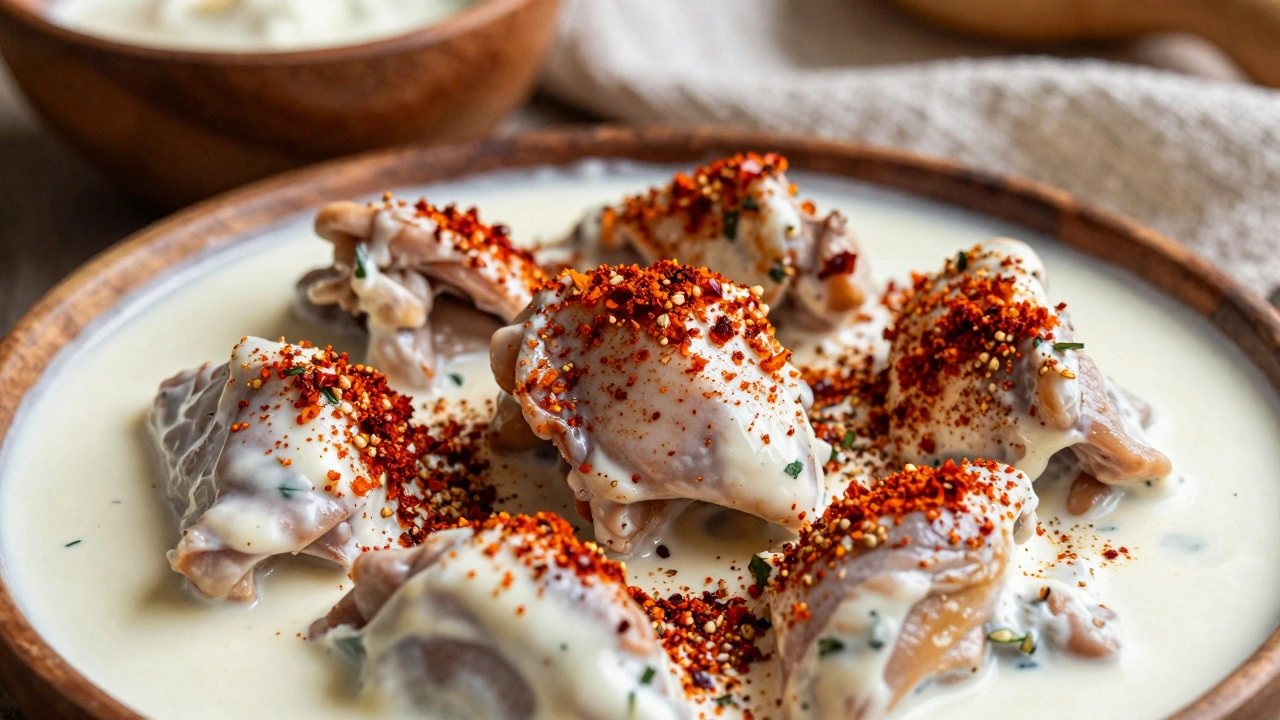
Tandoori Chicken Marinade Calculator
Marinade Calculator
Key Ingredients
Yogurt 0 cups
Spices 0 tbsp
Acid 0 tbsp
Why This Works
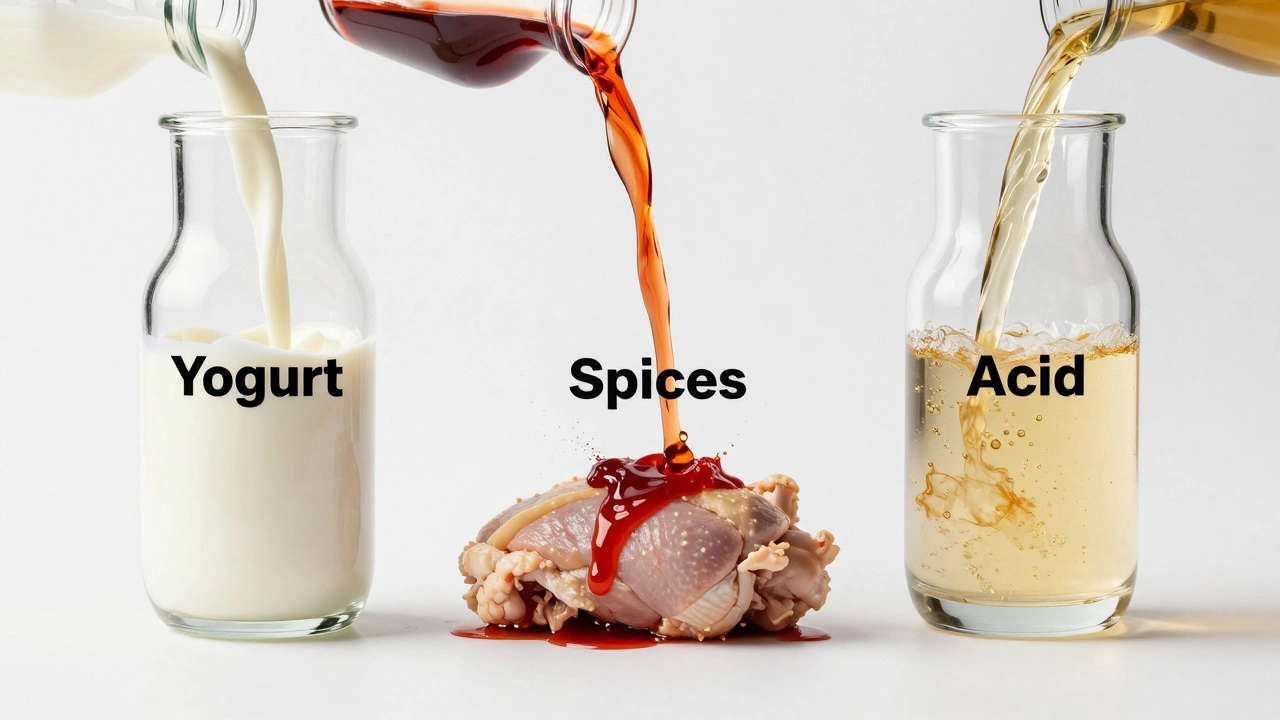
- Yogurt Tenderizes meat with lactic acid
- Spices Coriander, cumin, and Kashmiri chili for flavor
- Acid Lemon juice activates yogurt's enzymes
When you bite into a piece of tandoori chicken, the first thing you taste isn’t just the spice-it’s the marinade. That deep red color, the juicy tenderness, the smoky aroma drifting off the grill? None of it happens without the right three ingredients. Forget the long lists of spices you see online. The real magic behind perfect tandoori chicken comes down to just three things: yogurt, spices, and acid. Everything else is decoration.
Yogurt: The Secret Tenderizer
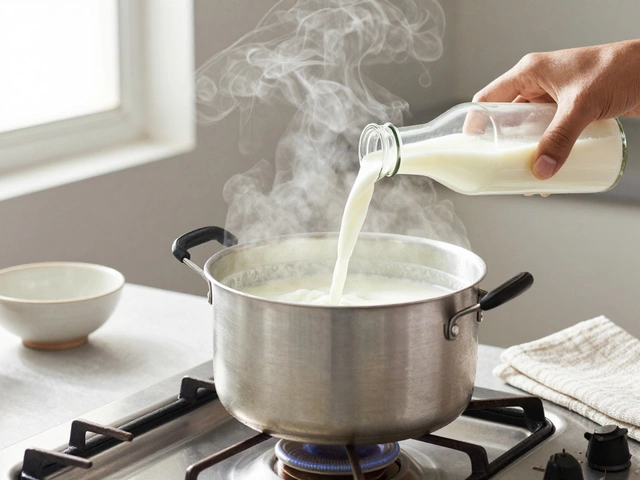
Yogurt isn’t just a base-it’s the engine of the marinade. Plain, full-fat yogurt, preferably unsweetened and unflavored, does three things at once. It coats the chicken evenly, pulls moisture into the meat, and gently breaks down tough fibers with its natural lactic acid. You don’t need fancy Greek yogurt or labneh. A simple, cheap Indian dahi works best. In home kitchens across Delhi and Jaipur, people use yogurt that’s been sitting out overnight to get just the right tang. That slight sourness is what makes the chicken tender without turning mushy.
Use about half a cup of yogurt for every pound of chicken. Too little, and the spices won’t stick. Too much, and you’ll end up steaming the meat instead of roasting it. The yogurt needs to be thick enough to cling to the chicken like a second skin. If yours is runny, strain it through a cheesecloth for 20 minutes. That’s what restaurants do-and it’s why their chicken doesn’t drip all over the grill.
Spices: The Flavor Backbone
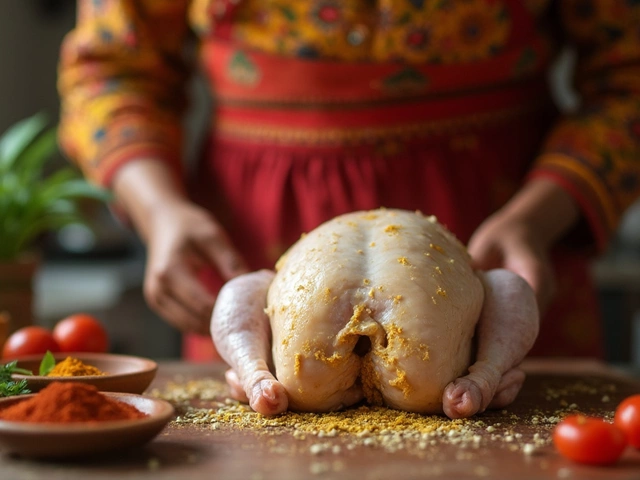
Spices are what make tandoori chicken unmistakable. But not all spice blends are equal. The classic trio you’ll find in every serious kitchen is ground coriander, ground cumin, and Kashmiri red chili powder. Coriander adds earthiness. Cumin brings warmth. And Kashmiri chili? That’s the color king. It gives that vibrant red without turning the chicken spicy-hot. Most people mistake paprika or regular chili powder for this, but they burn easily and lack depth.
Garlic and ginger paste are non-negotiable. They’re not optional garnishes-they’re flavor carriers. A tablespoon of each per pound of chicken is the sweet spot. Too much, and they overpower. Too little, and the marinade tastes flat. Some add turmeric for color, but that’s a mistake. Turmeric stains and turns the chicken yellow, not red. Stick to Kashmiri chili. A pinch of garam masala stirred in at the end adds a final layer, but it’s not part of the core three ingredients.
Don’t skip the salt. It’s not just seasoning-it’s a preservative and moisture regulator. Use about a teaspoon per pound. Mix all the spices into the yogurt first, then add the chicken. Let it sit for at least four hours. Overnight is better. The longer it sits, the more the spices sink into the meat.
Acid: The Invisible Catalyst
Here’s where most home cooks get it wrong. They think lemon juice or vinegar is the star. It’s not. It’s the quiet helper. A tablespoon of lemon juice or one tablespoon of vinegar-apple cider or white-is enough. It doesn’t add sourness; it activates the yogurt’s enzymes. That little bit of acid speeds up the tenderizing process. Without it, the yogurt works slower, and the chicken stays chewy.
Some use tamarind paste or amchur (dry mango powder). Those work too. Tamarind adds a fruity depth, while amchur gives a clean, sharp tang. But they’re not required. Lemon juice is the most accessible and reliable. Just don’t add more than a tablespoon. Too much acid turns the yogurt curdled and the chicken grainy. You want balance, not bitterness.
The real trick? Add the acid last. Mix your yogurt and spices first. Let them meld for 10 minutes. Then stir in the lemon juice. That way, the spices don’t get washed out by the acid’s sharpness. It’s a small step, but it makes the flavor stick better.
What You Don’t Need
Oil? Not necessary. The yogurt and fat in the chicken do the job. Sugar? It caramelizes too fast in a tandoor and burns. Honey? Same problem. Food coloring? That’s for restaurants trying to impress tourists. Real tandoori chicken gets its color from chili powder and smoke, not dyes.
And skip the “secret” ingredients-beer, soda, pineapple juice. They’re gimmicks. Pineapple juice contains bromelain, which breaks down protein too aggressively. You’ll end up with mushy chicken. Beer adds no flavor you can’t get from spices. Stick to the three. That’s all you need.
How to Use the Marinade
Use bone-in, skinless chicken thighs. They stay juicier than breasts. Cut them into even pieces so they cook at the same rate. Coat each piece generously. Cover the bowl with plastic wrap and refrigerate. Don’t marinate at room temperature-it’s a bacteria trap.
When you’re ready to cook, take the chicken out 30 minutes before grilling. Let it come to room temperature. Pat off any excess marinade with paper towels. Too much liquid on the surface will steam the chicken instead of searing it. Grill over medium-high heat, turning often. Char is good. Burnt bits are flavor.
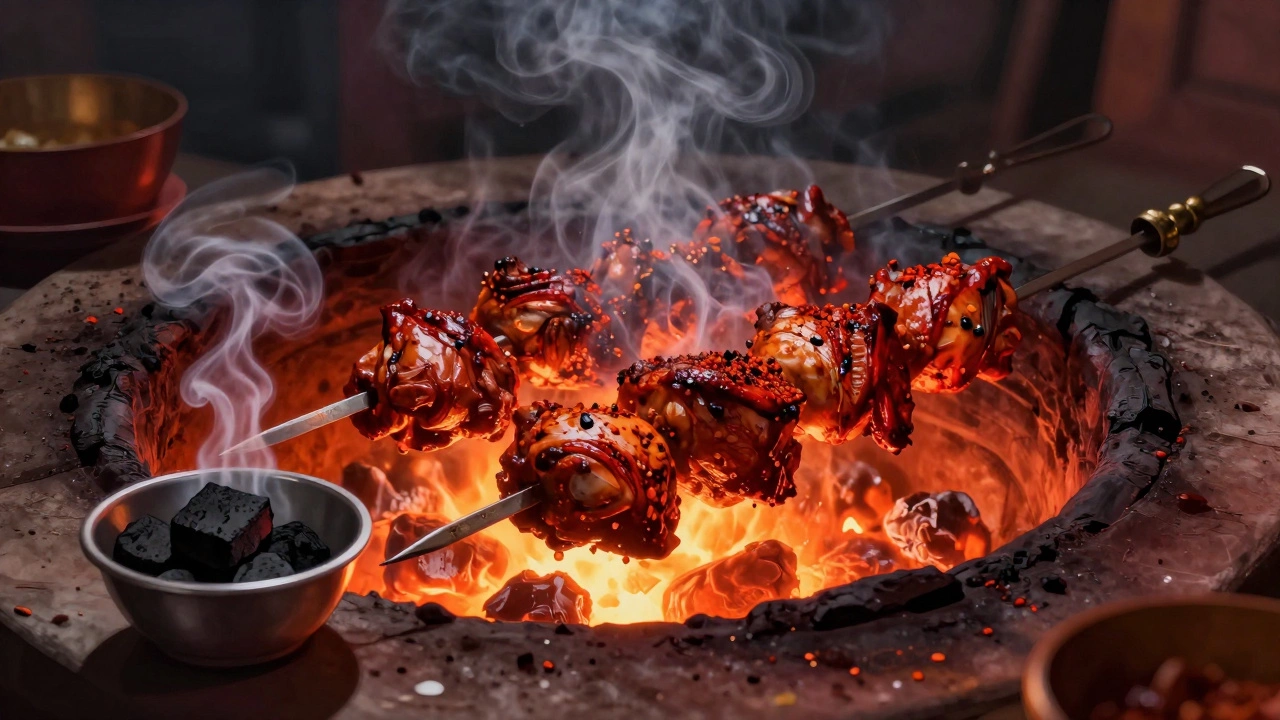
For extra smokiness, throw a charcoal briquette into a small metal bowl, light it, and place it under the grill. Drip a few drops of water on it to create smoke. That’s the real tandoor effect.
Common Mistakes
- Using low-fat yogurt-leads to dry chicken
- Adding too much lemon juice-makes the texture grainy
- Marinating for less than 2 hours-flavor stays on the surface
- Skipping the salt-tastes bland, even with spices
- Grilling cold chicken-causes uneven cooking
One last tip: Save the leftover marinade. Boil it for five minutes, then brush it on the chicken during the last minute of grilling. That’s how you get that glossy, sticky finish you see in restaurants.
Why This Works Every Time
This isn’t magic. It’s chemistry. Yogurt tenderizes. Spices flavor. Acid activates. Together, they turn ordinary chicken into something unforgettable. You don’t need a tandoor oven. A grill, a broiler, or even a cast-iron pan will work. The ingredients are simple. The technique is straightforward. And the result? Juicy, spicy, smoky chicken that tastes like it came from a street stall in Mumbai.
Try it once. Just with yogurt, spices, and lemon juice. No extras. No shortcuts. You’ll see why this trio has lasted for centuries.
Can I use buttermilk instead of yogurt for tandoori chicken?
Yes, buttermilk works as a substitute because it’s also acidic and contains lactic acid. Use the same amount-half a cup per pound of chicken. Buttermilk is thinner than yogurt, so let the chicken drain for 10 minutes before grilling to avoid steaming. The flavor will be slightly milder, but still delicious.
How long should I marinate chicken for tandoori?
Minimum 4 hours, but overnight (8-12 hours) is ideal. The longer it sits, the deeper the flavor and the more tender the meat. If you’re short on time, 2 hours will still work, but the color and spice penetration won’t be as strong.
Do I need to use Kashmiri chili powder?
It’s not mandatory, but it’s the best choice. Kashmiri chili gives the signature red color without intense heat. If you can’t find it, mix half paprika and half sweet Spanish smoked paprika. Avoid hot chili powders-they’ll make the chicken too spicy and turn the color brownish.
Can I freeze marinated tandoori chicken?
Yes, freeze it in an airtight container or zip-lock bag for up to 3 months. Thaw in the fridge overnight before cooking. The texture holds up well, and the flavor deepens slightly during freezing. Don’t freeze it after cooking-chicken gets rubbery when reheated.
Why does my tandoori chicken turn out dry?
Dry chicken usually means one of three things: you used skinless chicken breasts, you didn’t marinate long enough, or you grilled it on too high heat. Stick to thighs, marinate overnight, and cook over medium heat with frequent turning. Also, don’t overcook-remove it when the internal temperature hits 165°F (74°C).