Chicken Curry Simmer Time Calculator
Ever made a chicken curry that tasted flat, even after hours on the stove? You didn’t overcook it-you just didn’t simmer it right. Simmering isn’t just about waiting. It’s the moment when spices wake up, chicken softens into fall-off-the-bone tenderness, and the sauce thickens into something rich enough to coat a spoon. Get this step wrong, and your curry stays watery and one-dimensional. Get it right, and you’ll have people asking for the recipe-not just the ingredients.
Why Simmering Matters More Than Cooking
| Time | What’s Happening |
|---|---|
| 0-15 minutes | Moisture evaporates, spices bloom in oil, aromatics soften |
| 15-30 minutes | Chicken begins to break down; collagen turns to gelatin |
| 30-60 minutes | Sauce reduces, flavors meld, texture becomes silky |
| 60+ minutes | Deep umami develops; spices fully integrate, no raw edge left |
Most home cooks rush the simmer. They think if the chicken is cooked through in 20 minutes, the curry is done. But that’s like saying a loaf of bread is ready the second the crust turns golden. The real magic happens after the surface heat fades. Simmering is slow, low, and patient. It’s the difference between a curry that’s just warm and one that feels like it’s been simmering in your grandmother’s kitchen for hours.
How Long Should You Simmer Chicken Curry?
For a classic Indian-style chicken curry with bone-in pieces, aim for 45 to 60 minutes. That’s the sweet spot. Less than 30 minutes, and you’ll taste raw spices and chewy chicken. More than 90 minutes, and the meat might start to shred apart too much-unless you’re going for a stew-like texture, which is fine too.
If you’re using boneless chicken thighs, you can cut that time to 30-40 minutes. They’re tender to begin with, so they don’t need as long to break down. But don’t skip the simmer anyway. Even boneless chicken needs time for the sauce to cling to it and for the spices to sink in.
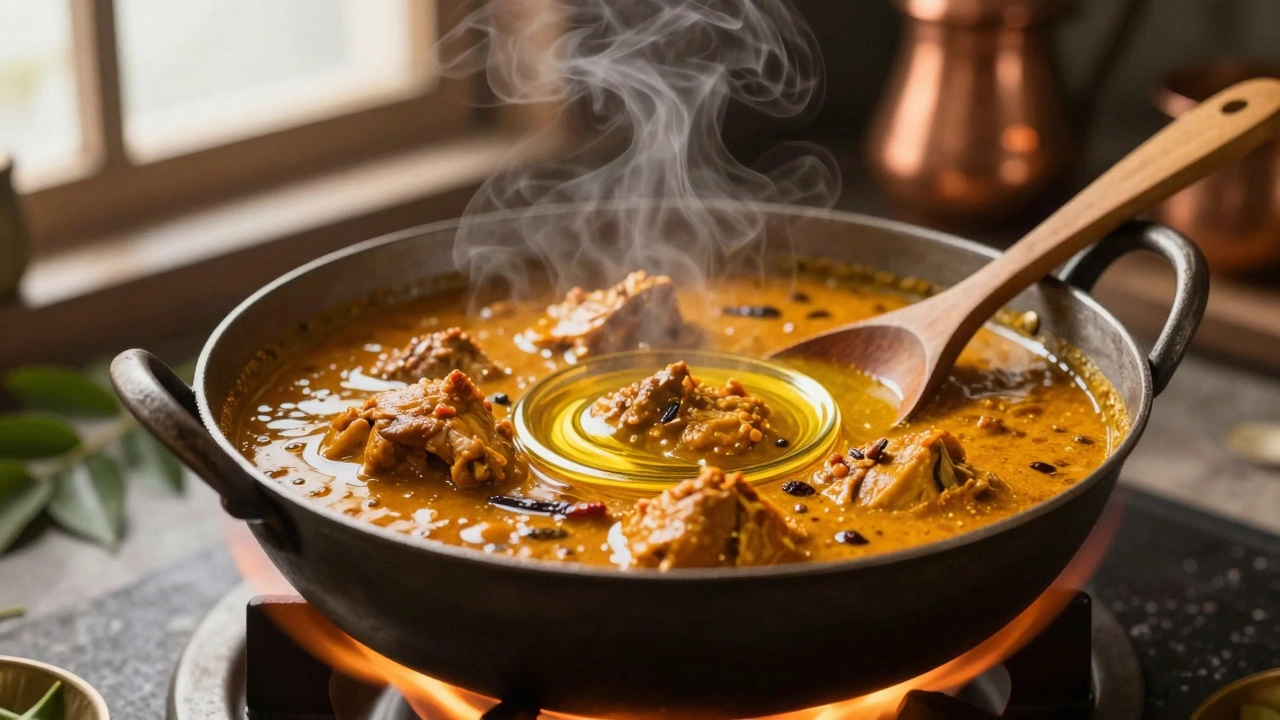
Here’s a simple rule: Simmer until the oil separates from the sauce. That’s the real test. When you see a thin ring of golden oil floating on top, the curry has reached its peak. That’s the moment the spices are fully released, the onions and tomatoes have dissolved into the base, and the fat has emulsified with the spices. It’s not just a visual cue-it’s a flavor milestone.
What Happens If You Simmer Too Short or Too Long
Under-simmered curry tastes sharp and disjointed. You’ll notice the raw bite of cumin or coriander. The sauce might be thin, almost watery, and the chicken will feel rubbery. It’s not undercooked-it’s underdeveloped. The flavors haven’t had time to talk to each other.
Over-simmered curry can go two ways. If you’re using bone-in chicken and simmer past 90 minutes, the meat might fall off the bone into the sauce. That’s not always bad. In fact, in some regions of India, that’s the goal-curry so tender you eat it with a spoon. But if you’re using boneless chicken, it can turn mushy. The sauce might also become too thick, almost paste-like, and lose its balance. If that happens, just add a splash of water or broth and let it simmer another 10 minutes to rehydrate.
Pro Tips for the Perfect Simmer
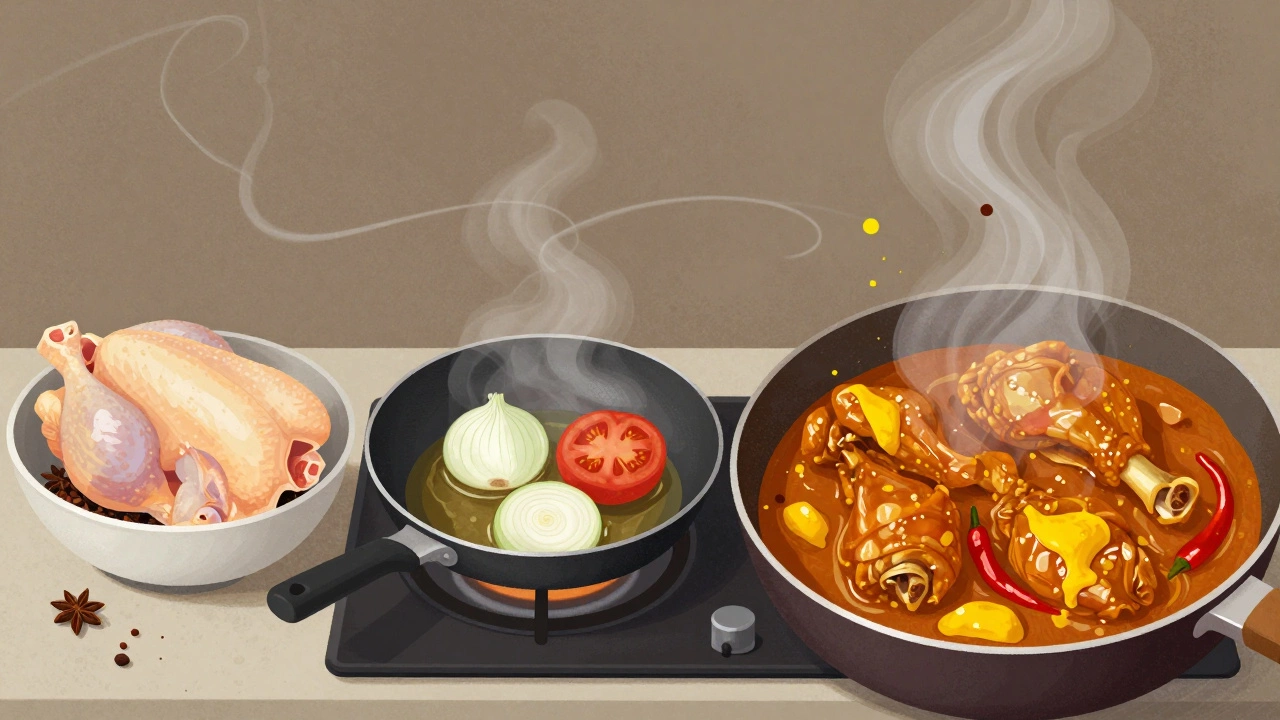
- Start with a good base. Sauté onions, garlic, ginger, and tomatoes until they’re deeply golden-not just soft. This builds flavor before you even add the spices.
- Add spices early. Don’t wait until the end. Stir them into the hot oil for 30-60 seconds before adding liquid. This unlocks their oils and removes any raw bitterness.
- Keep it low. A gentle bubble is all you need. A rolling boil will make the sauce break and the chicken toughen.
- Stir occasionally. Not constantly. You want to scrape the bottom to prevent sticking, but too much stirring breaks down the texture.
- Use a heavy pot. Cast iron or thick-bottomed stainless steel holds heat evenly. Thin pots cause hot spots and uneven cooking.
- Taste at 30 minutes. Adjust salt, acid (a squeeze of lemon or tamarind), or heat before the final 15 minutes. Flavors change as they reduce.
Regional Variations That Change the Clock
Not all chicken curries are the same. In South India, curries are often thinner and cooked faster-around 25-35 minutes-because they rely on fresh coconut and tamarind for depth. In North India, especially in Punjabi-style curries, the sauce is thicker and richer, so they simmer 60-75 minutes, sometimes with a splash of cream or butter stirred in at the end.
In Kerala, chicken curry might simmer for over an hour with curry leaves, coconut milk, and black pepper. In Bangladesh, it’s common to add a whole star anise or cinnamon stick and let it cook slowly until the spice notes are almost invisible-just a warmth in the background.
There’s no single right answer. But the principle stays the same: time transforms ingredients into experience.
Can You Simmer Chicken Curry in a Pressure Cooker?
Yes-but it’s not the same. Pressure cooking cuts time dramatically. You can get tender chicken in 15-20 minutes. But you lose the slow reduction. The sauce won’t thicken the same way. The spices won’t bloom in oil. The flavor won’t deepen.
If you’re short on time, use the pressure cooker to get the chicken tender, then transfer it to a pan. Let the sauce simmer uncovered for 15-20 minutes. That’s the trick: pressure cook for speed, then simmer for soul.
What to Do If Your Curry Is Too Thin
If your sauce is still watery after 60 minutes, don’t panic. Here’s how to fix it:
- Remove the lid and let it boil gently for 10-15 minutes. Water evaporates, flavor concentrates.
- Stir in 1-2 tablespoons of tomato paste. It adds body and sweetness without changing the flavor profile.
- Make a slurry: mix 1 teaspoon cornstarch with 2 tablespoons cold water. Stir in slowly and simmer for 5 minutes.
- Blend ¼ cup of the cooked onions or tomatoes into a paste and stir back in. It thickens naturally.
Never add flour or breadcrumbs. They make the sauce gritty and dull the spice notes.
Leftovers? Better Than Fresh
Chicken curry tastes even better the next day. That’s not a myth-it’s chemistry. As the curry sits, the fats and proteins continue to absorb and redistribute flavors. The spices settle deeper into the meat. The sauce thickens naturally as it cools.
Reheat gently on the stove. Add a splash of water or broth if it’s too thick. Don’t microwave it straight from the fridge. The heat won’t distribute evenly, and you’ll end up with cold spots and rubbery chicken.
Many families in India and Pakistan make curry on Sunday and eat it all week. That’s not because they’re lazy-it’s because they know the truth: time makes it better.
Can I simmer chicken curry overnight?
Yes, but only if you’re using bone-in chicken and cooking on very low heat-like in a slow cooker or a turned-off oven with the pilot light on. Simmering for 8-10 hours breaks down the meat completely and creates an intensely rich sauce. Just make sure the pot is covered tightly and the heat is below a gentle bubble. Never leave it unattended on a stovetop overnight.
Should I cover the pot while simmering?
Start with the lid on for the first 20-30 minutes to keep moisture in and help the chicken cook evenly. Then remove the lid for the last 15-30 minutes to let the sauce reduce and thicken. If you keep it covered the whole time, the sauce stays watery and the flavors stay diluted.
Why does my curry taste bitter after simmering?
Bitterness usually comes from over-toasting spices or burning garlic or ginger. Always cook spices on low heat and stir constantly. If you notice a burnt smell, stop immediately and transfer the contents to a clean pot. You can’t fix burnt spices-only prevent them.
Can I use frozen chicken for curry?
It’s not ideal, but you can. Thaw it first if you can. If you must use it frozen, add 10-15 extra minutes to the simmer time and avoid browning the chicken first. The extra water from the ice will dilute the sauce, so be ready to reduce it longer at the end.
What’s the best chicken cut for curry?
Bone-in, skin-on thighs are best. They have more fat and connective tissue, which melts into the sauce and keeps the meat juicy. Breast meat dries out easily and lacks depth. Drumsticks work too, but they take longer to cook. Avoid boneless, skinless breasts unless you’re short on time and willing to sacrifice richness.
Next Steps: Taste, Adjust, Repeat
Simmering isn’t a timer. It’s a conversation. Taste it. Smell it. Watch the oil rise. Listen for the quiet sizzle. Your curry will tell you when it’s ready. Don’t just follow a clock-follow your senses. The best curries aren’t made with recipes. They’re made with patience, attention, and a little bit of love.