Ever rolled out a roti only to watch it puff up into a perfect circle, and wondered-why does it always end up round? It’s not magic. It’s physics, tradition, and a little bit of kitchen wisdom passed down through generations. You don’t need fancy tools or years of practice to make roti that rises evenly and looks like it came from a village kitchen. But if you’ve ever ended up with a lopsided, uneven roti, you’re not alone. The shape isn’t just about looks-it’s about function.
The Science Behind the Round Shape
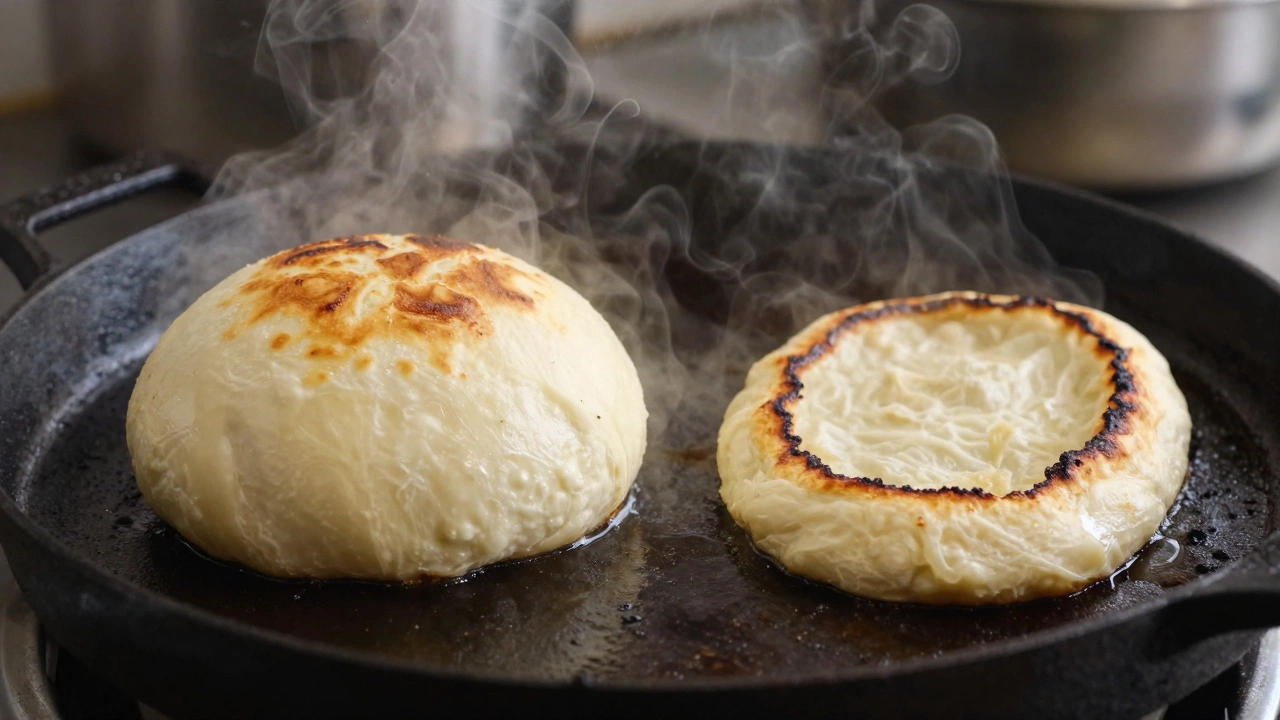
Roti is made from whole wheat flour, water, and salt. When you roll it out, you’re stretching the gluten network in the dough. That network acts like a flexible balloon. When heat hits the dough on a hot tawa, the water inside turns to steam. That steam needs somewhere to go. And because the dough is evenly thin and circular, the steam pushes outward in all directions at once.
Think of it like blowing up a balloon. If you blow evenly from the center, it becomes round. If you blow harder on one side, it bulges unevenly. The same thing happens with roti. A round shape means even thickness, which means even steam pressure. That’s why a round roti puffs up beautifully-while a square or oval one might only puff on one side or not at all.
Studies on bread expansion in food science journals show that circular shapes create the most uniform thermal expansion. That’s true for naan, pita, and yes-roti. The round form isn’t tradition for tradition’s sake. It’s the most efficient shape for cooking.
Why Not Square or Oval?
You might think, “Why not just roll it into a rectangle? It’s easier.” But here’s the problem: corners. Corners are thin spots. When you roll dough into a square or oval, the edges get stretched thinner than the center. When it hits the heat, those thin edges cook faster, dry out, and burn before the middle even starts to puff.
Try this next time you make roti: roll out one circle and one oval. Cook them side by side on the same tawa. You’ll see the oval’s ends turn crispy and dark while the middle stays doughy. The circle? Even color, soft inside, perfect puff. That’s not coincidence. That’s physics.
Also, think about how you eat roti. You tear it by hand to scoop up curry. A round roti gives you natural, even tear points. A square? You’re fighting corners. An oval? You’re left with awkward ends. Round is practical.
How to Roll a Perfect Round Roti
Rolling a perfect circle isn’t about being a pro. It’s about technique. Here’s how to do it every time:
- Start with a ball of dough the size of a golf ball. Too big, and it’s hard to control. Too small, and it tears.
- Flatten it slightly with your palm on a lightly floured surface. Don’t roll yet.
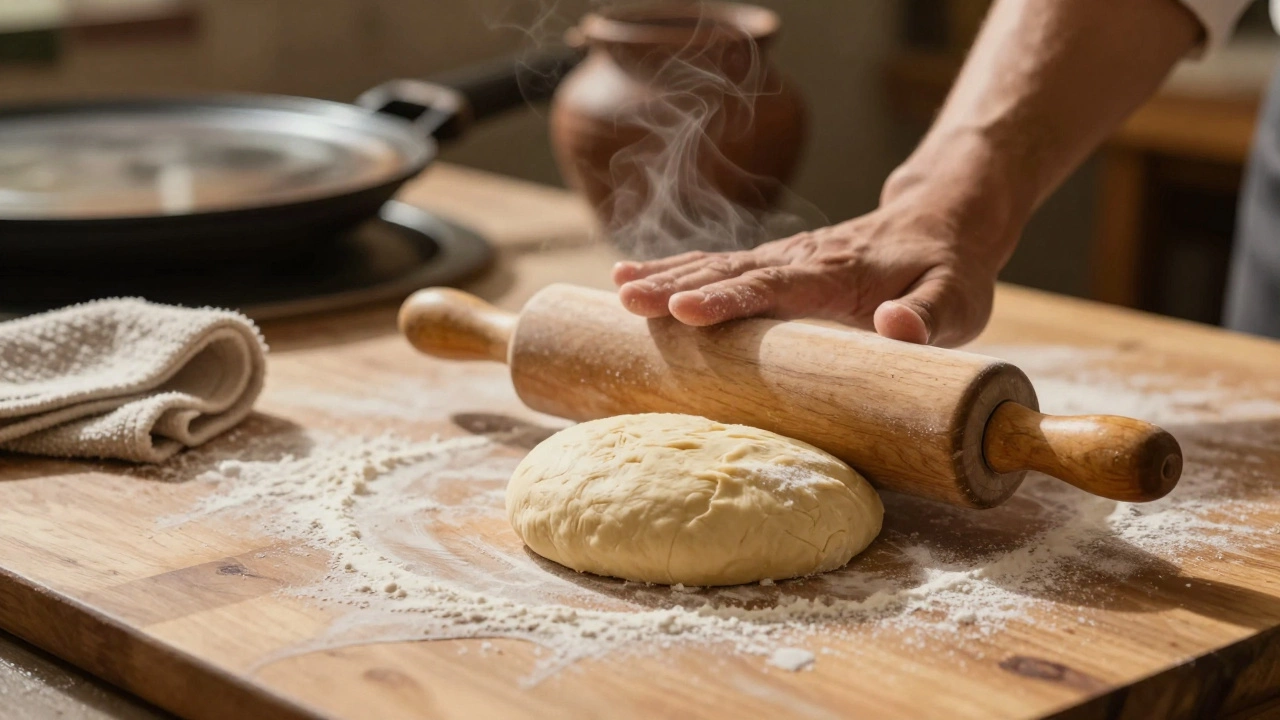
- Hold the dough between your thumb and index finger, and use your other hand to roll with a light, even pressure.
- Rotate the dough a quarter turn after every 2-3 rolls. Don’t lift the roller. Just turn the dough under it.
- Keep checking the thickness. If one side is thinner, roll that side a little more.
Pro tip: Use a wooden rolling pin, not a metal one. Wood absorbs moisture better and doesn’t stick as much. And never use too much flour on the surface-it makes the dough dry and brittle.
The Cultural and Practical Reasons
Roti has been made this way for centuries across North India, Pakistan, Nepal, and parts of Africa and the Caribbean. Why? Because it works. In homes where fuel is limited, you need food that cooks fast and evenly. A round roti takes 30 seconds per side on a hot tawa. A misshapen one? You’re flipping it three times, waiting for the middle to cook, and burning the edges.
It’s also about space. In small kitchens, you stack rotis in a cloth-lined basket. Round ones stack neatly. Square ones tilt. Oval ones roll off. Round is the only shape that fits.
And let’s not forget the ritual. In many households, making roti is a daily practice. Grandmothers teach their granddaughters by hand. The rhythm of rolling, flipping, and puffing becomes part of the rhythm of home. The shape isn’t just food-it’s memory.
What Happens If You Don’t Roll It Round?
It’s not the end of the world. You can still eat a lopsided roti. But you’ll miss out on three things:
- Even cooking - one side burns, the other stays raw.
- Proper puffing - no air pocket means no soft, fluffy interior.
- Texture - uneven thickness means crunchy edges and gummy centers.
Some modern chefs experiment with shapes-heart-shaped roti for Valentine’s Day, star-shaped for kids. But those are novelty items. They don’t cook the same. They’re for photos, not for everyday meals.

Common Mistakes That Kill the Round
Here’s what most people get wrong:
- Rolling too fast - rushing leads to uneven pressure. Slow and steady wins the puff.
- Not rotating - if you roll only front to back, you’ll end up with an oval.
- Dough too dry - if the dough cracks when you roll it, it needs more water. Add a teaspoon at a time.
- Too much flour - excess flour makes the dough tough and prevents sticking to the tawa, which is needed for puffing.
- Wrong tawa temperature - if it’s too cold, the roti won’t puff. Too hot, and it burns before it rises. Medium-high heat is the sweet spot.
Test your tawa: sprinkle a few drops of water. If they dance and evaporate in 2-3 seconds, you’re good. If they hiss and vanish instantly, it’s too hot. If they sit there, it’s too cold.
Why This Matters Beyond the Kitchen
Understanding why roti is round isn’t just about cooking better bread. It’s about seeing how form follows function in everyday life. From the shape of a coconut to the curve of a teacup, human tools evolve to match how the world works. Roti is no different.
When you make a perfect round roti, you’re not just following a recipe. You’re tapping into centuries of trial, error, and wisdom. You’re learning to read dough, heat, and steam-not just cook.
And that’s the real secret: the best roti isn’t made with a mold. It’s made with attention.
Frequently Asked Questions
Can I make roti without rolling it?
Yes, but not well. Some people press dough balls flat with their hands or a glass. But without rolling, you get uneven thickness. That means uneven cooking. The roti might not puff properly, and parts will be tough or raw. Rolling ensures even pressure and consistent texture.
Why does my roti not puff up?
Three main reasons: the dough is too dry, the tawa isn’t hot enough, or the roti is rolled too thick. Moisture is key-your dough should feel soft, like your earlobe. Heat must be medium-high. And thickness should be about 1-2 mm, like a credit card. If all three are right, it will puff.
Is it okay if my roti has holes?
Small holes from air bubbles are normal and actually help with puffing. But large tears mean the dough is too dry or overworked. If you see big holes, your dough needs more hydration. Add water, knead for another minute, and let it rest for 10 minutes before rolling again.
Can I use a rolling pin from another country?
You can, but a traditional Indian rolling pin (belan) is tapered and lighter, which gives you better control. A thick, heavy rolling pin might flatten the dough too much or tear it. If you use a Western pin, roll gently and rotate often. It won’t be perfect, but it’ll work.
Why do some rotis have spots or brown patches?
Those spots are called “char marks” and are normal when cooked on an open flame or hot tawa. They add flavor. But if the whole roti is dark brown or black, the heat was too high or the dough was too thin in spots. Aim for light golden patches, not burnt areas. A little char is good. Too much is bitter.
- Poplular Tags
- roti shape
- round roti
- how to make roti
- roti making tips
- Indian flatbread