Biryani Etiquette Simulator
Select your Biryani style and dining context below to get personalized advice on how to eat it like a pro.
Recommended Approach
Essential Companions Reminder
You’ve just ordered that steaming pot of Hyderabadi or Lucknowi biryani, a mixed rice dish with its origins among the Muslims of the Indian subcontinent. The aroma hits you first-saffron, fried onions, and tender meat. But before you dig in, there’s a question many people hesitate to ask: Am I doing this right? Should I use a spoon? Do I mix it all up? Is there actually a "correct" way?
Here is the truth: there isn’t one single global rulebook for eating biryani. It depends heavily on where you are, who you’re with, and which style of biryani you’re eating. However, there are traditional methods rooted in South Asian culture that maximize flavor and texture. Ignoring these can sometimes mean missing out on the intended experience. Let’s break down how to enjoy your biryani like a pro, whether you’re dining at a fancy restaurant in London or eating from a steel plate in Hyderabad.
The Great Debate: Hands vs. Cutlery
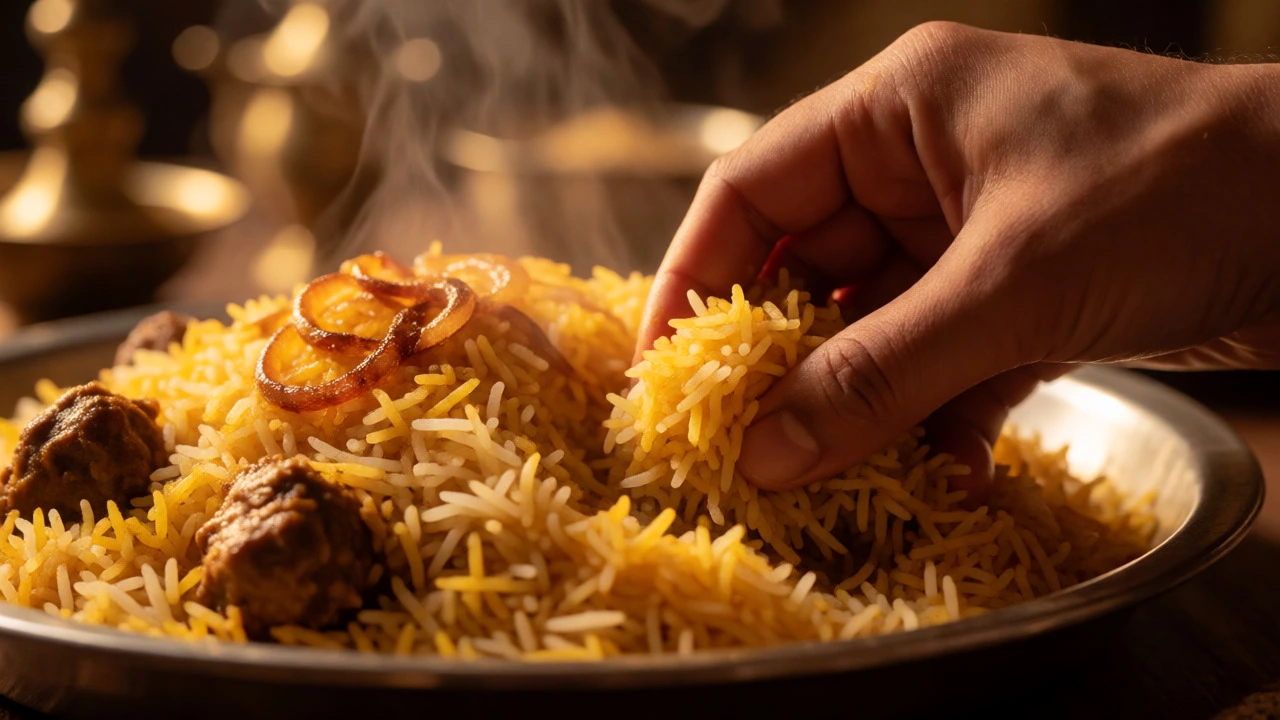
For centuries, the primary utensil for eating biryani in India and Pakistan has been the hand. Specifically, the right hand. This isn’t just tradition; it’s functional. Using your fingers allows you to feel the temperature of the rice, ensuring you don’t burn your mouth. More importantly, it lets you control the ratio of rice to gravy (known as yakhni) in every bite.
When you eat with your hands, you engage more senses. You feel the warmth, the slight stickiness of the basmati grains, and the tenderness of the meat. In contrast, using a fork often results in picking out individual grains while leaving the flavorful masala behind. If you are new to eating with your hands, start by washing them thoroughly. Then, use your fingertips to gather a small portion of rice and meat together. Push it into your mouth with your thumb. Avoid using your palm, as this looks messy and can be uncomfortable.
That said, context matters. If you are in a formal Western setting, or if the biryani is served in a bowl rather than a large platter, cutlery is perfectly acceptable. In fact, in many modern cafes in New York or London, forks and spoons are the norm. The key is respect for the food, not rigid adherence to one tool. If you choose cutlery, try to scoop rather than stab. Stabbing delicate pieces of chicken or mutton can tear them apart, ruining the presentation and texture.
To Mix or Not to Mix?
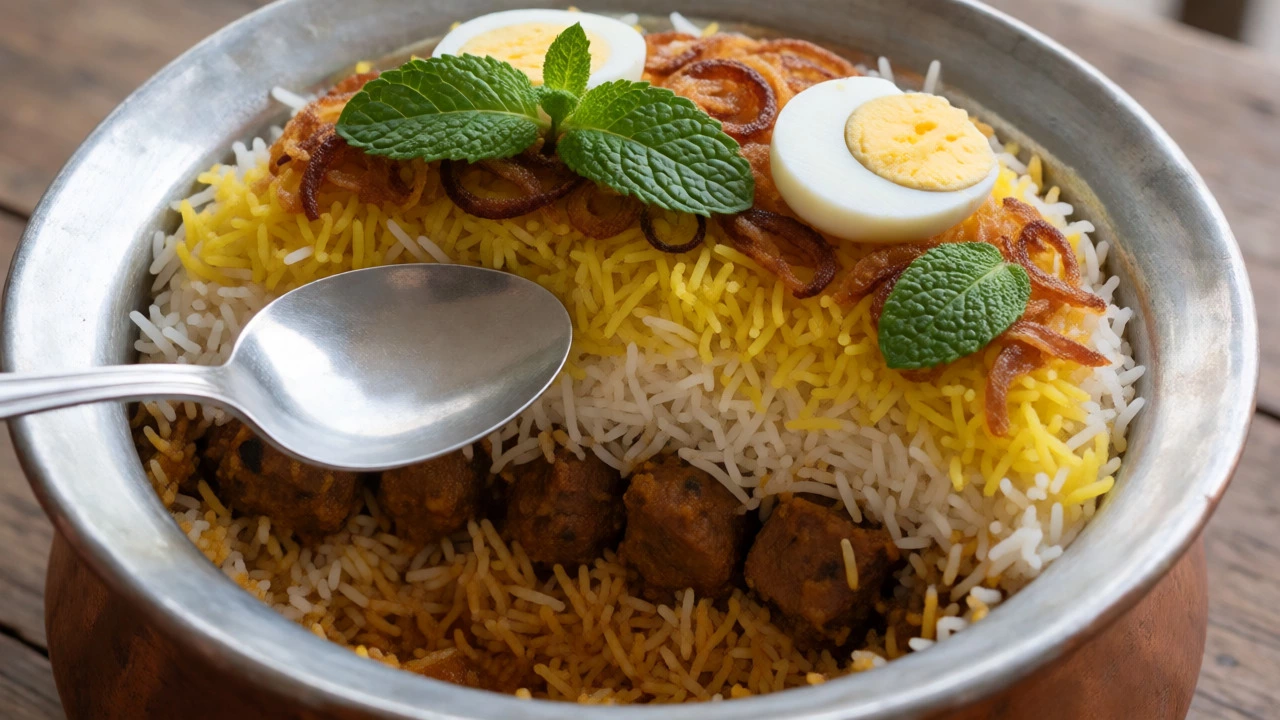
This is the most heated argument among biryani enthusiasts. Purists argue that you should never mix the layers. Why? Because biryani is built in layers. At the bottom, you have the rich, oily gravy and spices. In the middle, the aromatic rice. On top, the garnishes like fried onions, mint, and boiled eggs. Each layer offers a different intensity of flavor.
If you stir everything together immediately, you homogenize the flavors. Every bite becomes the same average taste. By keeping the layers separate, you get bursts of intense spice followed by mild, fragrant rice. This contrast is part of the culinary design. Try taking a spoonful from the side, ensuring you get some rice from the top and some gravy from the bottom without stirring the whole pot. This gives you the full spectrum of flavors in one go.
However, there are exceptions. If you are eating a dry variety like Sindhi biryani, mixing might help distribute the drier elements. Also, if the biryani has sat for a while and the oil has separated, a gentle fold can reintegrate the moisture. Just avoid aggressive stirring, which turns fluffy basmati rice into a sticky paste.
The Essential Companions: Raita and Salan
Biryani is rarely eaten alone. It is almost always accompanied by specific sides that balance the richness of the main dish. Ignoring these sides is a mistake because they serve a functional purpose beyond just filling space.
| Side Dish | Purpose | How to Eat It |
|---|---|---|
| Raita | Cools the palate and aids digestion | Eat between bites of spicy biryani |
| Salan | Adds tangy, nutty depth | Dip pieces of meat into it |
| Gur (Jaggery) | Neutralizes heat instantly | Chew a small piece after spicy bites |
| Mirchi ka Salan | Provides green chili heat | Eat alongside rice, not mixed in |
Raita is a yogurt-based condiment usually flavored with cucumber, onion, and cumin. Its job is to cool down the capsaicin heat from the chilies used in the biryani. Don’t dump raita on top of your rice. Instead, take a small bite of biryani, chew it, and then take a spoonful of raita. This resets your taste buds and prevents your stomach from getting too hot.
In Hyderabad, you will often see Salan, a peanut and sesame-based curry. This is not a soup to drink; it is a dip. Take a piece of chicken or mutton from your biryani, dip it lightly into the salan, and then eat it with the rice. The nutty, tangy sauce complements the savory meat perfectly. Some people also eat plain boiled eggs with the biryani. Crack the egg, season it with salt and pepper, and place it on the side. Eating the yolk with the rice adds a creamy richness that contrasts with the spiced meat.
Regional Nuances That Change Everything
Not all biryanis are created equal, and the "correct" way to eat them varies by region. Understanding these differences helps you appreciate the food more deeply.
- Hyderabadi Kachhi Biryani: Here, raw marinated meat and rice are cooked together. The meat is extremely tender. You must handle it gently. Use your fingers to pull the bone off the meat carefully. The focus here is on the fusion of flavors since they are cooked together.
- Lucknowi Pakki Biryani: The meat is cooked separately and then layered over parboiled rice. The layers are distinct. Keep them separate as much as possible to taste the subtle saffron and rose water notes in the rice.
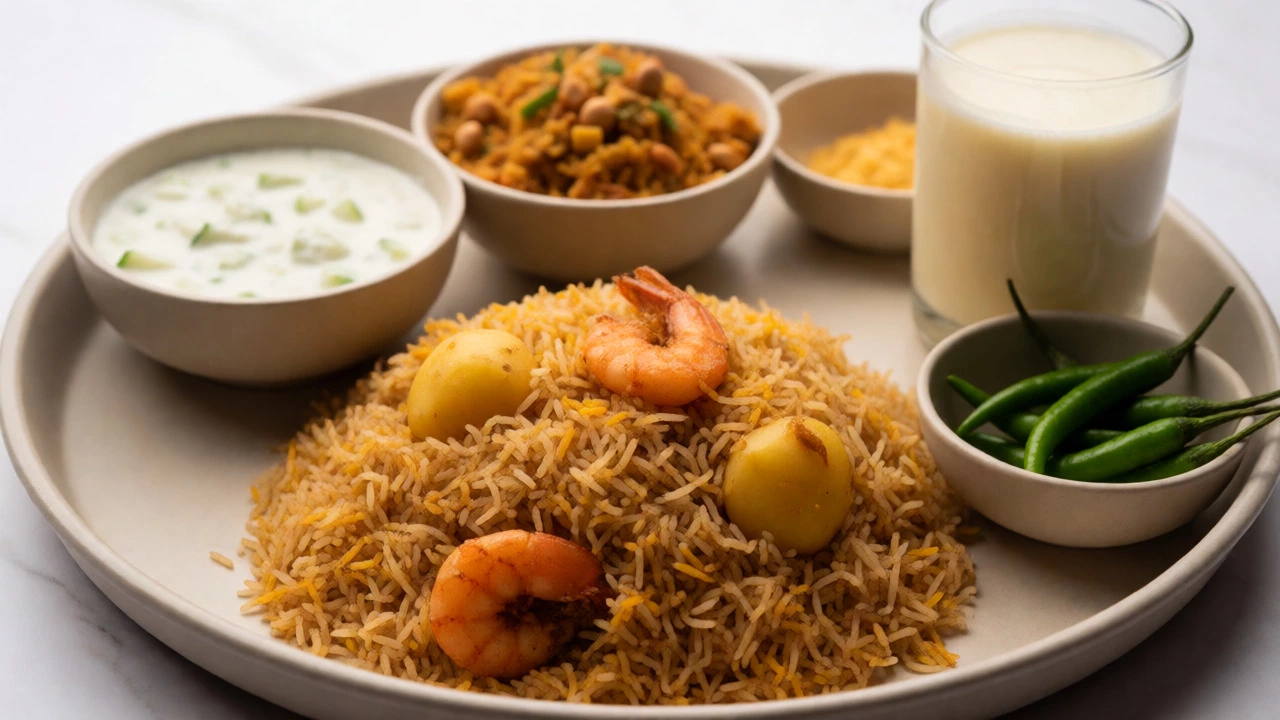
- Sindhi Biryani: Known for being spicier and drier, often including potatoes and prawns. Mixing is more common here because the dryness needs the moisture from the sides.
- Calicut Biryani: Often uses short-grain seeraga samba rice. It is less oily and more fragile. A spoon is highly recommended here to prevent crushing the delicate grains.
Notice how the type of rice changes the etiquette. Long-grain Basmati is sturdy enough for hands. Short-grain varieties are delicate and require care. Adjust your method based on what is on your plate.
Common Mistakes to Avoid
Even experienced eaters make errors that diminish the biryani experience. Here are the biggest pitfalls.
First, do not drown your biryani in ketchup or soy sauce. While tempting, these condiments mask the complex spice blends designed by the chef. If you need extra heat, ask for fresh green chilies or pickles (achar). Second, avoid blowing on the food excessively. In many South Asian cultures, slurping or blowing loudly is considered impolite. Instead, wait for the steam to dissipate slightly or blow gently.
Third, do not leave the bones scattered everywhere. If you are eating with your hands, keep the discarded bones neatly arranged on one side of your plate or in a small waste bowl provided. Tossing them onto the floor or mixing them back into the rice is frowned upon. Finally, pace yourself. Biryani is heavy. Eating too fast leads to discomfort. Pause, sip some water or lassi, and let the flavors settle.
The Final Bite: Clean Plate Policy
In many households, finishing every grain of rice is a sign of appreciation for the cook. Leaving food on the plate can be seen as wasteful or disrespectful, especially if you are a guest. However, listen to your body. If you are full, stop. It is better to leave a little than to force yourself to finish and feel sick.
After the meal, a quick rinse of the mouth with water is traditional. Some people prefer chewing fennel seeds (somph) or mint leaves to freshen their breath and aid digestion. This small ritual signals the end of the meal and prepares you for conversation.
Eating biryani correctly isn’t about following strict rules blindly. It’s about enhancing your enjoyment of the dish. Whether you use your hands or a fork, whether you mix or keep layers separate, the goal is to savor the complexity of spices, textures, and aromas. Experiment with these tips next time you order your favorite pot. You might find that paying attention to how you eat makes the food taste even better.
Is it rude to eat biryani with a fork in India?
No, it is not rude, especially in urban areas or formal settings. However, in traditional homes or rural areas, eating with your right hand is preferred and often seen as more authentic. Most hosts will not mind if you use a fork, but trying with your hand shows cultural engagement.
Why is raita served with biryani?
Raita serves two main purposes: cooling the palate from the spicy heat of the chilies and aiding digestion due to the probiotic properties of yogurt. It balances the heavy, oily nature of the rice and meat.
Should I mix the egg into the biryani?
It depends on personal preference. Traditionally, the egg is kept on the side. You can break the yolk and mix it into your bite of rice for creaminess, or eat it separately. Keeping it separate preserves the visual appeal of the dish.
Which hand should I use to eat biryani?
Always use your right hand. In South Asian culture, the left hand is traditionally reserved for hygiene purposes and is considered unclean for handling food. Using the left hand to eat can be seen as offensive in conservative settings.
What is the best drink to pair with biryani?
Traditional pairings include sweet lassi (yogurt drink), jaljeera (cumin-flavored water), or simply cold water. Avoid carbonated sodas as they can bloat your stomach and interfere with digestion. Tea is typically drunk after the meal, not during.