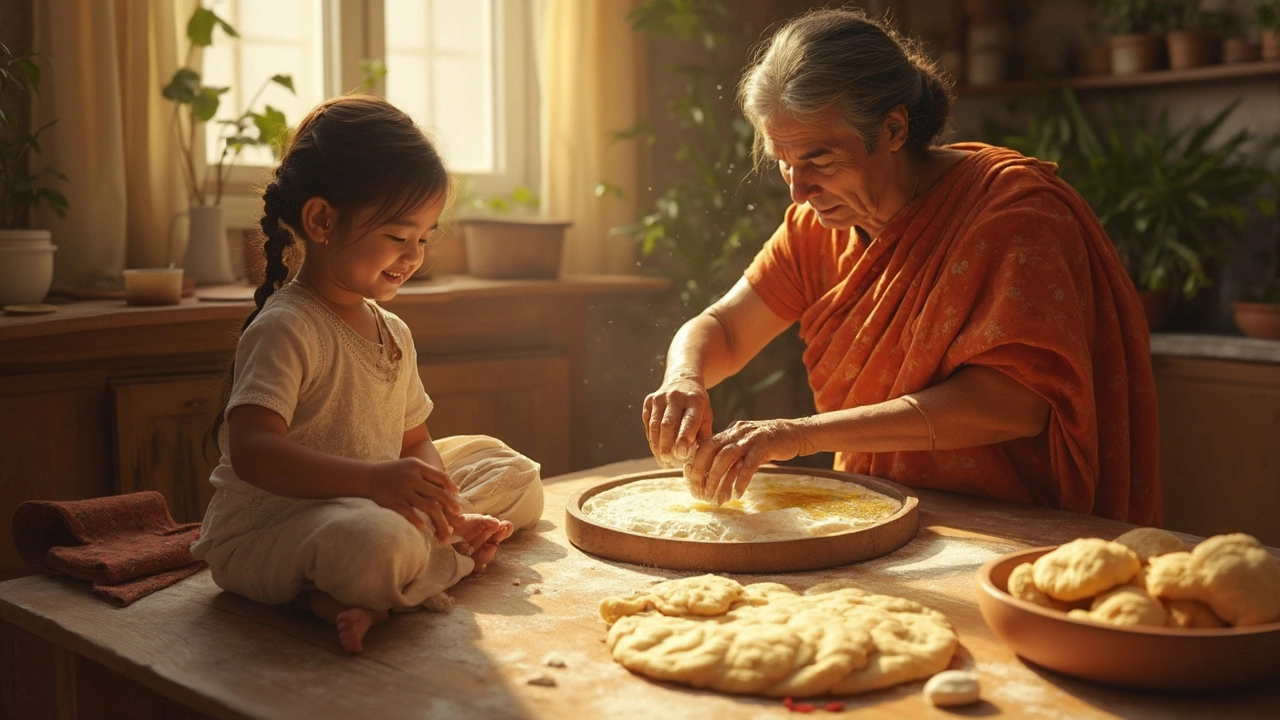
Roti Dough: How to Make Perfect Indian Flatbread Dough Every Time
When you make roti dough, the simple mixture of whole wheat flour, water, and salt that forms the base of India’s most common flatbread. Also known as chapati dough, it’s not just flour and water—it’s the foundation of thousands of meals across households in India, from Punjab to Tamil Nadu. Get it right, and your rotis puff up like balloons. Get it wrong, and they turn into tough, flat discs. The difference isn’t magic. It’s science—and a few simple habits most people skip.
What most beginners don’t realize is that whole wheat flour, the coarse, nutty flour made from ground whole wheat grains, also called atta isn’t like all-purpose flour. It absorbs more water, needs more kneading, and rests differently. You can’t just mix it and roll. You need to let it sit. At least 20 minutes. That rest lets the gluten relax, the flour hydrate fully, and the dough become smooth without being sticky. Skip this, and your rotis will crack when you roll them. And if you’re using cold water? That’s another mistake. Lukewarm water helps the flour bind better, especially in cooler climates.
Then there’s the kneading, the process of working the dough with your palms to develop structure and elasticity. It’s not about strength—it’s about time. Ten minutes of steady, rhythmic kneading is better than five minutes of frantic pressing. You’ll know it’s ready when the dough feels like an earlobe—soft, springy, and slightly tacky but not sticky. Add too much flour while rolling, and you dry out the dough. Too little, and it sticks to the board. The goal isn’t perfection—it’s consistency. Roll them evenly, and they’ll cook evenly. That’s why the shape matters. Roti has to be round because uneven edges burn or stay raw. Physics doesn’t care about tradition—it just wants even heat distribution.
And don’t forget the resting, the quiet pause after kneading that transforms stiff dough into pliable, puffable bread. It’s not optional. Even if you’re in a hurry, cover the dough and walk away for half an hour. The yeast in the air, the natural enzymes in the flour—they’re doing work you can’t see. That’s why your roti from last night’s dough often puffs better than today’s fresh batch. It’s not luck. It’s time.
You’ll find posts here that explain why roti has to be round, how to roll it without tearing, and what happens if you use the wrong flour. You’ll also see how roti dough relates to other Indian breads like naan and paratha—what makes them different, and why you can’t swap doughs. These aren’t just recipes. They’re fixes for real problems: dough that won’t stretch, rotis that won’t puff, flour that’s too gritty. This collection is for anyone who’s ever thrown out a batch of rotis because they were too hard, too dry, or just didn’t look right. You’re not failing. You just haven’t learned the rules yet. Let’s fix that.