How Much Milk Do You Need to Make Paneer at Home?
Learn exactly how much milk you need to make homemade paneer, based on milk fat content, yield, and practical tips for perfect results every time.
When you think of cheese making, the process of turning milk into solid curds through acid or rennet. Also known as dairy coagulation, it’s often linked to Europe—but in India, it’s been done simply, daily, and without aging for centuries. The star isn’t cheddar or brie. It’s paneer, a fresh, non-melting cheese made by curdling milk with lemon juice or vinegar. You’ll find it in butter paneer, palak paneer, and even grilled street snacks. Unlike Western cheeses that age for weeks or months, paneer is made in under an hour and eaten the same day. It’s not just a substitute for meat—it’s a foundational ingredient, rich in protein, easy to digest, and perfect for vegetarian meals across the country.
What makes Indian cheese making, the process of turning milk into solid curds through acid or rennet. Also known as dairy coagulation, it’s often linked to Europe—but in India, it’s been done simply, daily, and without aging for centuries. so different? It doesn’t need cultures, rennet, or presses. Just hot milk, a splash of acid, and a cloth. The result? A firm, crumbly block that holds its shape when fried, grilled, or simmered in gravy. This method works because India’s climate and dairy traditions favor fresh, quick-to-use dairy. You won’t find aged gouda or blue cheese in rural kitchens—but you’ll find paneer made fresh every morning. Even in cities, most households that cook Indian food regularly make their own. It’s cheaper than buying it, tastes better, and lets you control the texture—soft for kofta, firm for grilling.
Why does this matter? Because if you’ve ever bought paneer from a store and found it rubbery or bland, you’re missing the point. Homemade paneer is creamy inside, with a slight tang from the lemon or vinegar. It soaks up spices like a sponge, making every bite flavorful. And it’s not just paneer—Indian cheese making includes variations like chhena (used in sweets like rasgulla) and kalari (a stretched cheese from Jammu). These aren’t just recipes. They’re techniques passed down through generations, shaped by local milk quality, seasonal availability, and religious dietary habits. Whether you’re making a simple paneer tikka or a rich shahi paneer, the cheese starts the same way: with milk, heat, and a little acidity.
There’s no magic here—just science and tradition. Heat the milk to just below boiling, add your acid slowly, let the curds separate, strain them, press lightly, and you’ve got cheese. No fancy tools. No long waits. No expensive equipment. And that’s the beauty of it. The posts below show you exactly how to do it right, how to fix common mistakes like crumbly or too-soft paneer, and how to use it in 10+ classic dishes. You’ll learn why marinating paneer matters, how to get that perfect grill mark, and why some recipes call for soaking it in warm water. This isn’t about importing cheese culture. It’s about mastering the one India already owns.
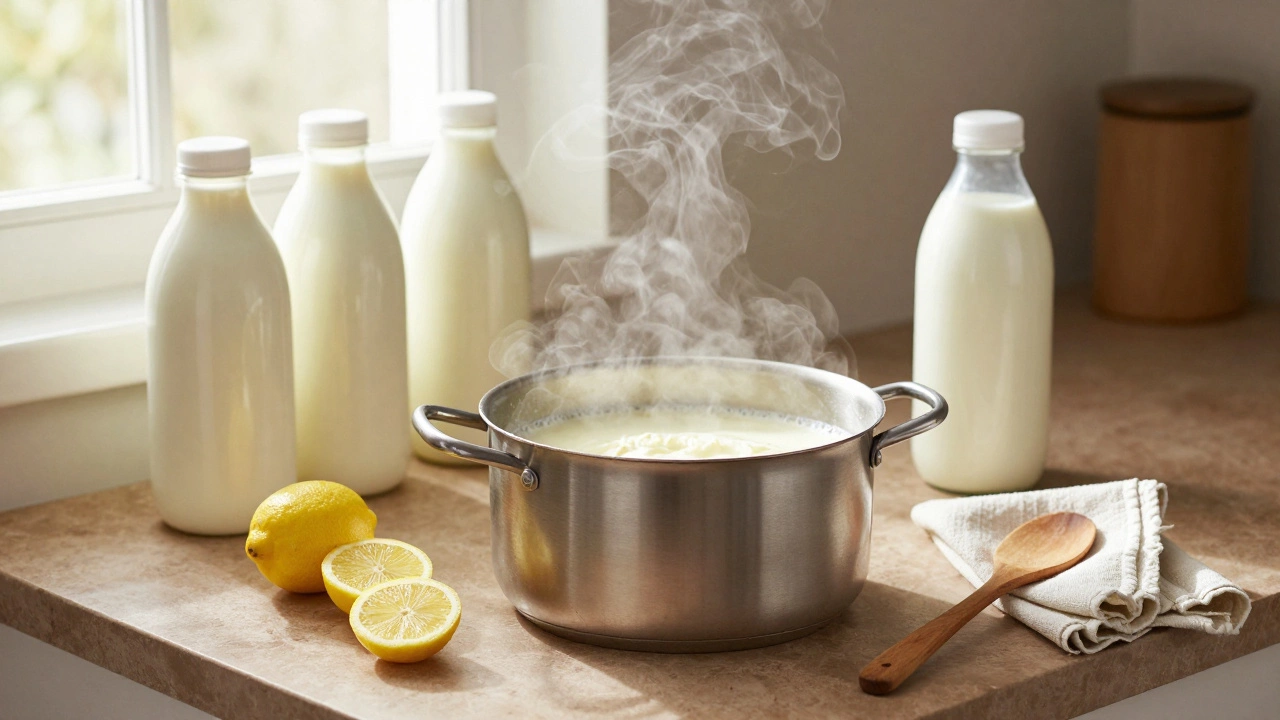
Learn exactly how much milk you need to make homemade paneer, based on milk fat content, yield, and practical tips for perfect results every time.

Wondering what to do with all that cloudy liquid left after making homemade paneer? Most people just pour it down the drain, but whey is packed with nutrition and can actually be used in many creative ways. This article explores if it’s safe and good to drink whey, what it actually is, and the easiest ways to make the most of it. If you’ve been tossing your whey out, you might want to rethink things after reading this. Stop wasting and start sipping or cooking with that leftover goodness!
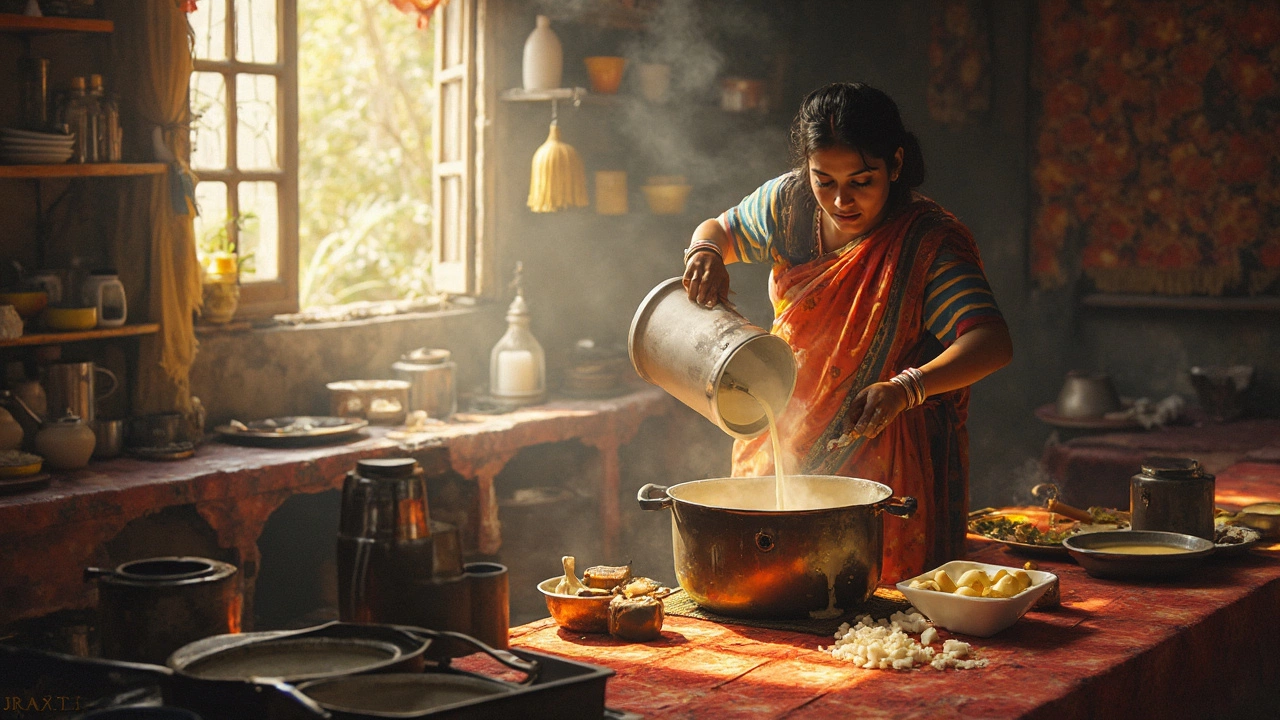
Wondering if spoiled milk can find new life as homemade paneer? Before you toss out that carton, consider its potential in cheese making. Learn how spoiled milk can serve a surprising role in your kitchen and explore practical tips to avoid waste. This guide will walk you through the science behind why it works and offer step-by-step suggestions for turning sour milk into delicious paneer.