Paneer Milk Calculator
Enter your desired paneer quantity and select milk type to see how much milk you need.
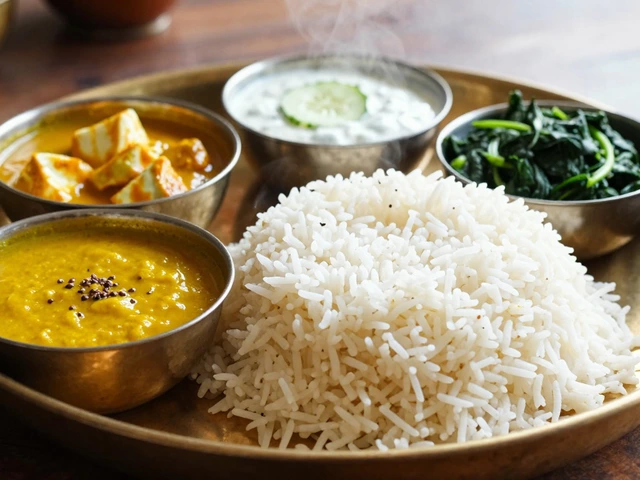
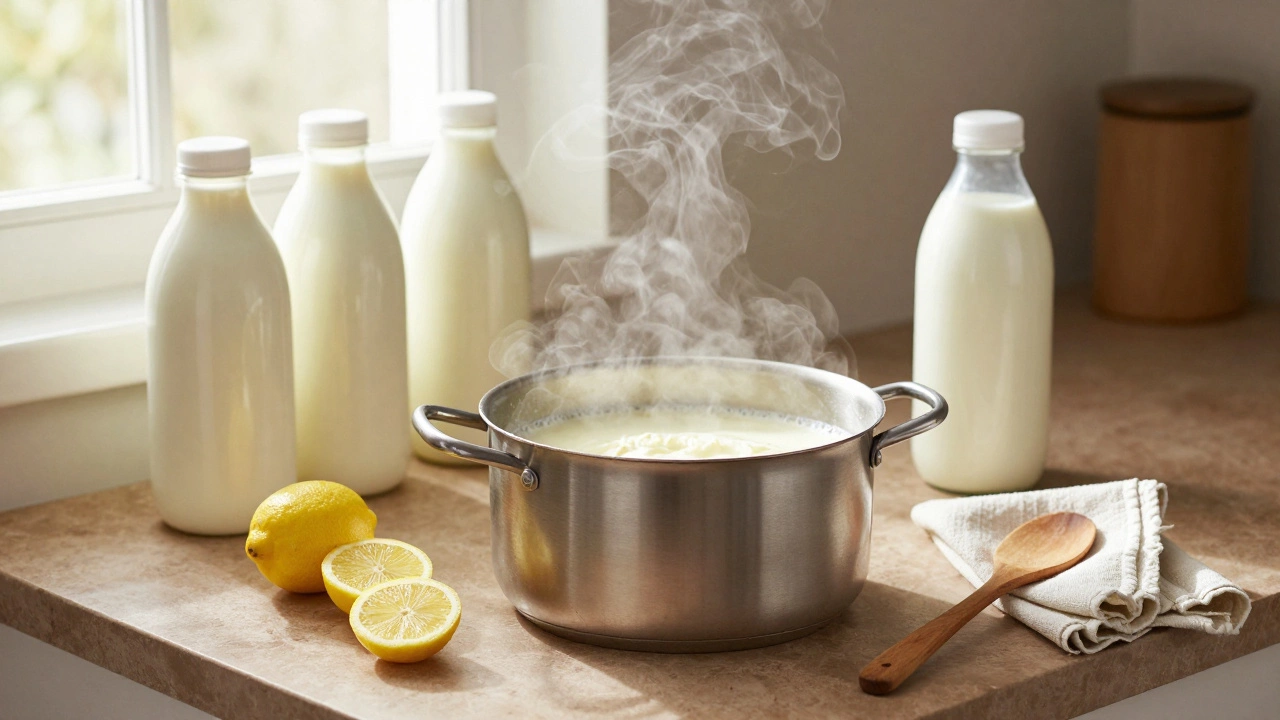
Want to make fresh paneer at home but not sure how much milk you actually need? It’s a common question-and the answer isn’t as simple as ‘a liter’ or ‘two liters.’ The amount of milk you need depends on what kind of paneer you want, how much fat is in your milk, and even the climate you’re in. If you’re using full-fat cow’s milk in Cape Town’s cool winter mornings, you’ll get more paneer than if you’re using low-fat milk on a hot summer day. Let’s cut through the guesswork.
How much milk makes one cup of paneer?
On average, you’ll need about 4 liters of whole milk to make 200-250 grams of paneer. That’s roughly one cup of firm, crumbly cheese. If you’re making paneer for a family curry or a grilled sandwich, you’ll likely want at least 300-400 grams, which means you’ll need 5 to 6 liters of milk. It sounds like a lot, but think of it this way: milk is mostly water. When you curdle it, you’re separating out the solids-casein and fat-and draining away the liquid whey. Only about 5-6% of the milk’s original weight becomes paneer.
Here’s a quick rule of thumb: For every 1 liter of whole milk, you get 100-120 grams of paneer. So if you need 500 grams, go with 5 liters. If you’re making 250 grams for a quick snack, 2.5 liters will do. Keep this ratio in mind next time you’re at the grocery store.
Why does milk fat matter so much?
Not all milk is created equal when it comes to paneer. Full-fat cow’s milk (around 3.5-4% fat) gives you the richest, firmest paneer. If you use toned milk (2% fat), you’ll get less yield-maybe only 70-80 grams per liter. Skim milk? Forget it. You might end up with a rubbery, dry lump that falls apart when you try to press it.
Buffalo milk is the gold standard in India. It has 6-8% fat and 4-5% protein, so you can get up to 150-180 grams of paneer per liter. That’s why restaurants often use buffalo milk-it’s more efficient. But if you’re in South Africa and buffalo milk isn’t available, stick with the highest-fat cow’s milk you can find. Organic, unhomogenized milk works best because the cream hasn’t been broken down, so it coagulates more evenly.
What about store-bought milk vs. fresh milk?
Most supermarket milk in South Africa is pasteurized and homogenized. That’s fine for paneer, but it won’t give you the same texture as fresh, unprocessed milk from a local dairy. Homogenization breaks up the fat globules, making it harder for them to clump together during curdling. You’ll still get paneer, but it might be a little softer or more crumbly.
If you’re using UHT (ultra-high temperature) milk-common in long-life cartons-expect a lower yield. The high heat damages some proteins, so the curds don’t form as tightly. Stick to refrigerated, pasteurized milk if you can. And never use milk with added vitamins or thickeners. Those additives interfere with the curdling process.
How to maximize your paneer yield
You don’t want to waste milk. Here’s how to get the most paneer out of every liter:
- Use whole milk only. No exceptions. Even 2% fat cuts your yield by 30%.
- Heat the milk slowly. Bring it to a gentle boil over medium heat. Don’t rush it. Fast heating causes uneven curdling and weak curds.
- Add acid gradually. Lemon juice or vinegar works best. Start with 2-3 tablespoons for 1 liter of milk. Stir gently. If it doesn’t curdle fully, add more-1 teaspoon at a time. Overdoing it makes the paneer sour.
- Let it rest after curdling. Turn off the heat and let the milk sit for 10 minutes. This lets the curds fully separate from the whey.
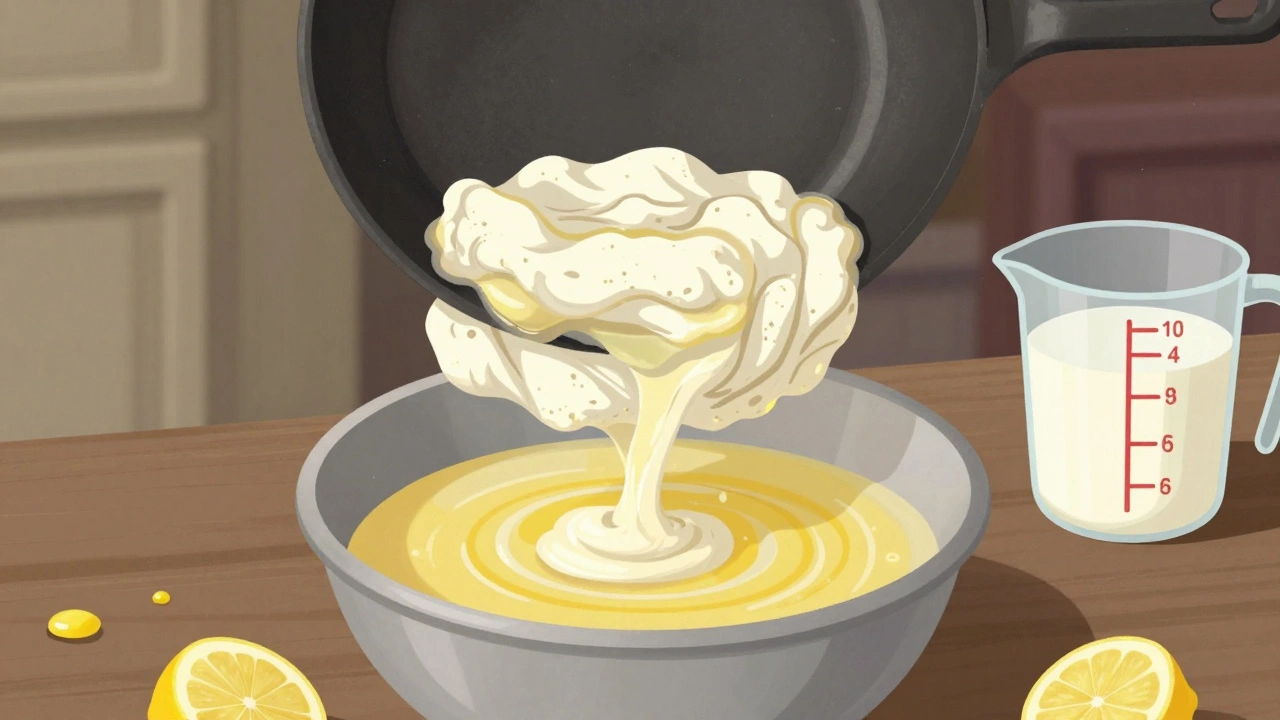
- Drain well and press firmly. Use a muslin cloth, not paper towels. Tie it tight and place a heavy weight on top-like a cast-iron skillet or a stack of books-for at least 30 minutes. The longer you press, the firmer the paneer.
Real-world example: Making paneer for a week
Let’s say you make paneer every Sunday for your family’s butter paneer curry and paneer tikka skewers. You use 400 grams per week. That means you need about 3.5 to 4 liters of milk each time. If you buy milk in 2-liter cartons, you’ll need two full cartons plus half of a third. It’s easier to buy 4 liters at once than to make two batches.
One time, I tried making paneer with 3 liters of milk because I thought it’d be enough. I ended up with just 280 grams-barely enough for one dish. I had to scramble to buy more the next day. Now I always make a full 4-liter batch. Leftover paneer keeps for 5 days in the fridge, and it freezes well too.
What if you don’t have enough milk?
If you’re short on milk, don’t try to stretch it with water. That won’t work. Instead, use a smaller batch. Make 1 liter of milk into 100 grams of paneer. It’s perfect for a single serving of paneer bhurji or a small salad topping. You can always make more later.
Some people try to use milk powder to make paneer. You can, but it’s not the same. Reconstituted milk powder has altered proteins and often contains added sugar or stabilizers. The texture ends up grainy and the flavor flat. Stick to liquid milk.
Paneer yield chart for quick reference
| Milk Volume | Paneer Yield | Best For |
|---|---|---|
| 1 liter | 100-120 grams | Small snack or garnish |
| 2 liters | 200-240 grams | One curry serving |
| 3 liters | 300-360 grams | Family meal (2-3 people) |
| 4 liters | 400-480 grams | Large batch for freezing or parties |
| 5 liters | 500-600 grams | Restaurant-style quantity |
Why homemade paneer tastes better
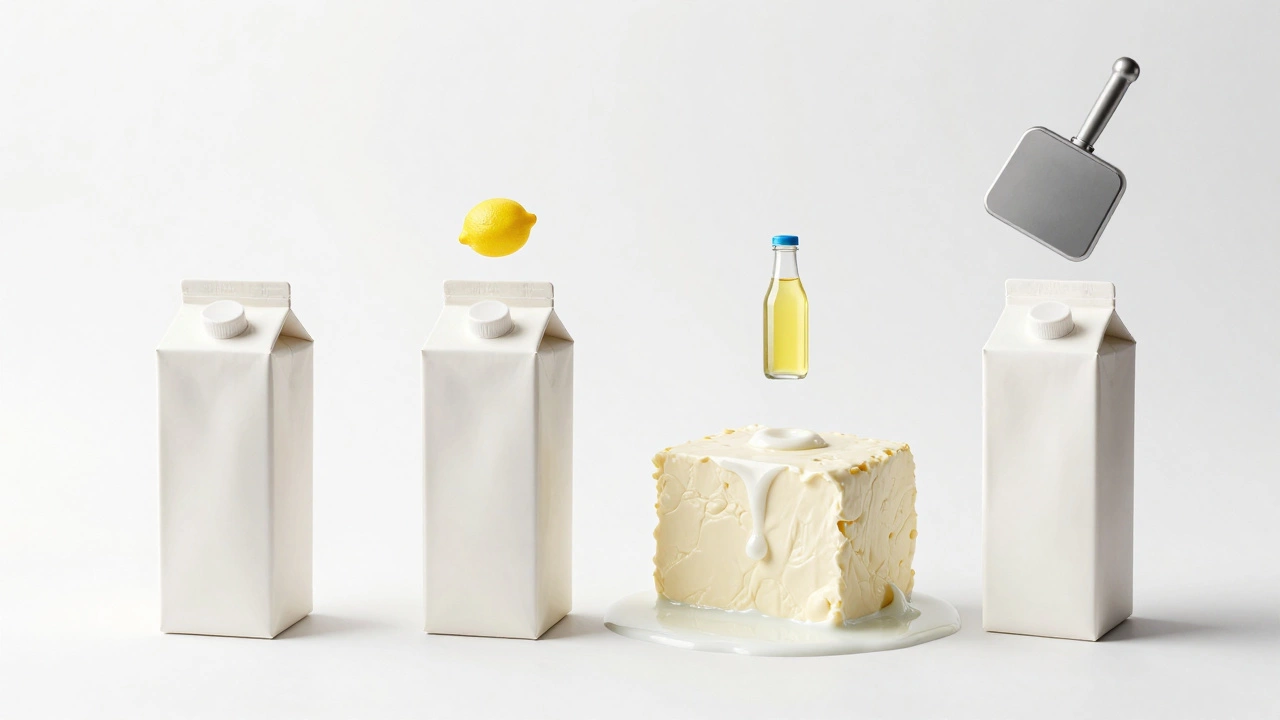
Store-bought paneer often has additives to extend shelf life. It’s usually softer, wetter, and less flavorful. Homemade paneer is pure-just milk and acid. You control the texture, the salt level (or lack of it), and how firm you want it. Plus, it’s cheaper. A 4-liter carton of milk costs around R60 in Cape Town. That makes about 450 grams of paneer. The same amount in a store might cost R80-R100.
And there’s something satisfying about making your own. You see the milk turn from liquid to curds, smell the tang of lemon, hear the whey drip through the cloth. It’s slow food at its best.
Common mistakes to avoid
- Using low-fat or skim milk-results in crumbly, dry paneer.
- Boiling milk too fast-leads to uneven curds and burnt milk at the bottom.
- Adding too much lemon juice-makes paneer bitter.
- Not pressing long enough-paneer stays soft and falls apart when cooked.
- Using ultra-pasteurized or UHT milk-low yield and poor texture.
One mistake I made early on: I pressed my paneer for only 15 minutes. When I fried it, it crumbled into the oil. Lesson learned: wait at least 30 minutes. Better yet, press it overnight in the fridge. The next morning, your paneer will hold its shape like a brick.
How to store homemade paneer
Keep paneer submerged in cold water in the fridge. Change the water every day. It stays fresh for 4-5 days. If you’re not using it right away, freeze it. Wrap it tightly in plastic, then in foil. It lasts up to 3 months. Thaw in the fridge overnight before cooking.
Can I use plant-based milk to make paneer?
No. Plant-based milks like soy, almond, or oat don’t contain the same proteins (casein) that curdle into paneer. You might get a soft gel, but it won’t hold shape or taste like real paneer. Stick to animal milk.
Why is my paneer too soft?
You probably didn’t press it long enough, or you used milk with low fat content. Make sure you press for at least 30 minutes under a heavy weight. Also, check your milk’s fat percentage-aim for 3.5% or higher.
Can I use vinegar instead of lemon juice?
Yes. White vinegar works just as well. Use the same amount-2-3 tablespoons per liter. Some people prefer vinegar because it leaves no citrus flavor. But lemon juice adds a subtle freshness that pairs well with Indian spices.
How do I know when the milk has curdled enough?
The milk will separate clearly into solid white curds and yellowish-green whey. The whey should look clear, not milky. If you still see cloudiness, add a bit more lemon juice and wait another 5 minutes.
Is paneer the same as cottage cheese?
They’re similar but not the same. Cottage cheese is usually made with a bacterial culture and kept moist. Paneer is made with acid, pressed firmly, and has no whey left. It’s firmer, salt-free, and holds its shape when cooked.
Next steps
Grab a 4-liter carton of whole milk this weekend. Heat it slowly. Add lemon juice. Wait. Drain. Press. You’ll end up with a block of fresh, creamy paneer that costs less than half of what you’d pay in a store. Try it in a simple paneer tikka masala or just fry it with a pinch of salt and cumin. You’ll never go back to the plastic-wrapped kind.
- Poplular Tags
- paneer recipe
- milk for paneer
- homemade paneer
- paneer yield
- cheese making