Grab and Go Breakfast Nutrition Calculator
Nutrition Analysis
Grab and Go Criteria
- Portability: Can be carried without utensils
- Non-perishable: Stays stable without refrigeration
- Energy-dense: Provides lasting energy until lunch
Ever rushed out the door with an empty stomach, hoping coffee will be enough? You’re not alone. In cities like Mumbai, Delhi, or Bangalore, millions of people grab something quick before work, school, or a commute. That’s where the grab and go breakfast comes in - a simple, portable meal you can eat while walking, on a train, or in traffic. It’s not fancy. It’s not sit-down. But it’s filling, familiar, and made for real life.
In India, this isn’t a trend. It’s a tradition. For decades, people have been wrapping up snacks to carry. No fork. No plate. Just food you can hold in one hand and eat without mess. These meals are designed for speed, not style. And they’re often healthier than the sugary cereal bars or pastries you’ll find elsewhere.
What Makes a Breakfast Truly ‘Grab and Go’?
A real grab and go breakfast has three things:
- Portability - You can carry it in a bag, hand, or even a cloth wrap.
- Non-perishable or stable - Doesn’t need refrigeration and won’t turn soggy or spoil by noon.
- Energy-dense - Gives you fuel that lasts until lunch, not just a sugar spike.
Think of it like a snack that doubles as a meal. Not every snack qualifies. A single biscuit? Too light. A full thali? Too bulky. The sweet spot is something small, satisfying, and easy to handle.
Top 5 Grab and Go Breakfasts Across India
Walk through any Indian neighborhood before 8 a.m., and you’ll see people holding these five items:
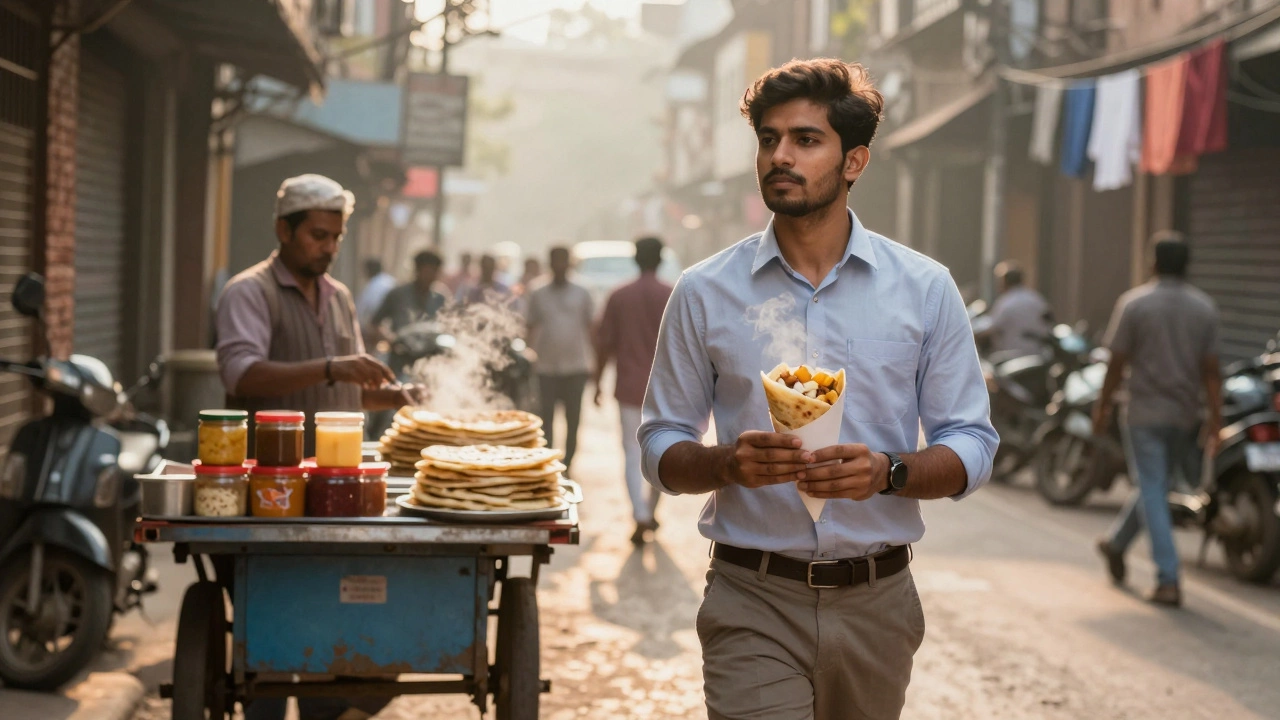
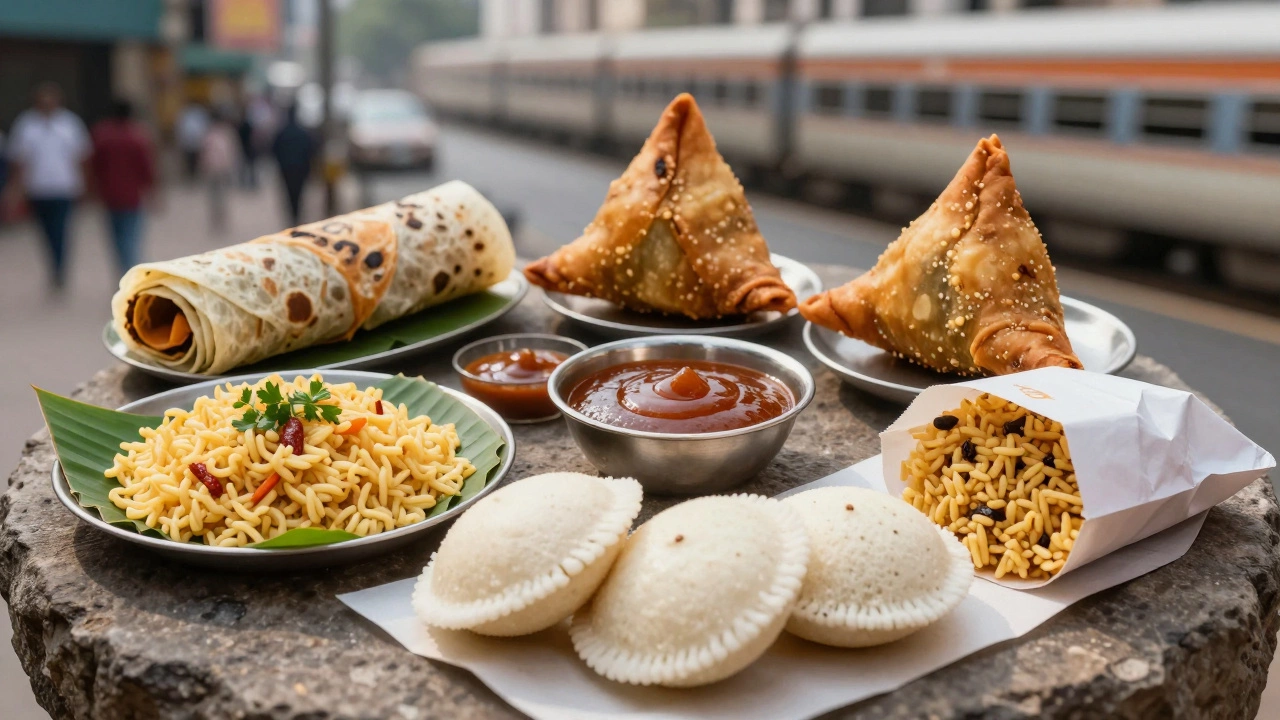
- Paratha Roll - A whole wheat paratha, lightly grilled, wrapped around spiced potatoes, chutney, and a sprinkle of onions. Sold by street vendors in paper cones. Stays warm for hours. One roll keeps you full till 11 a.m.
- Samosa + Chai - A crispy, deep-fried pastry filled with peas and spices. Pair it with a small paper cup of hot masala chai. The combo gives you carbs, protein, and warmth. A classic Mumbai morning.
- Poha - Flattened rice cooked with turmeric, mustard seeds, peanuts, and curry leaves. Served warm in a disposable bowl or wrapped in banana leaf. Easy to eat with a spoon or even fingers. Popular in Maharashtra and Madhya Pradesh.
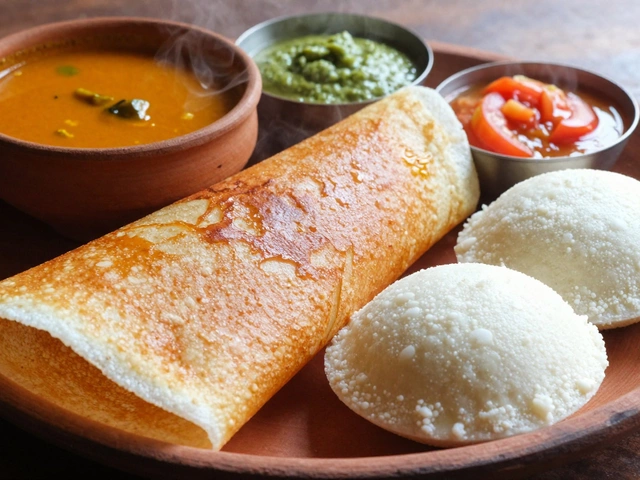
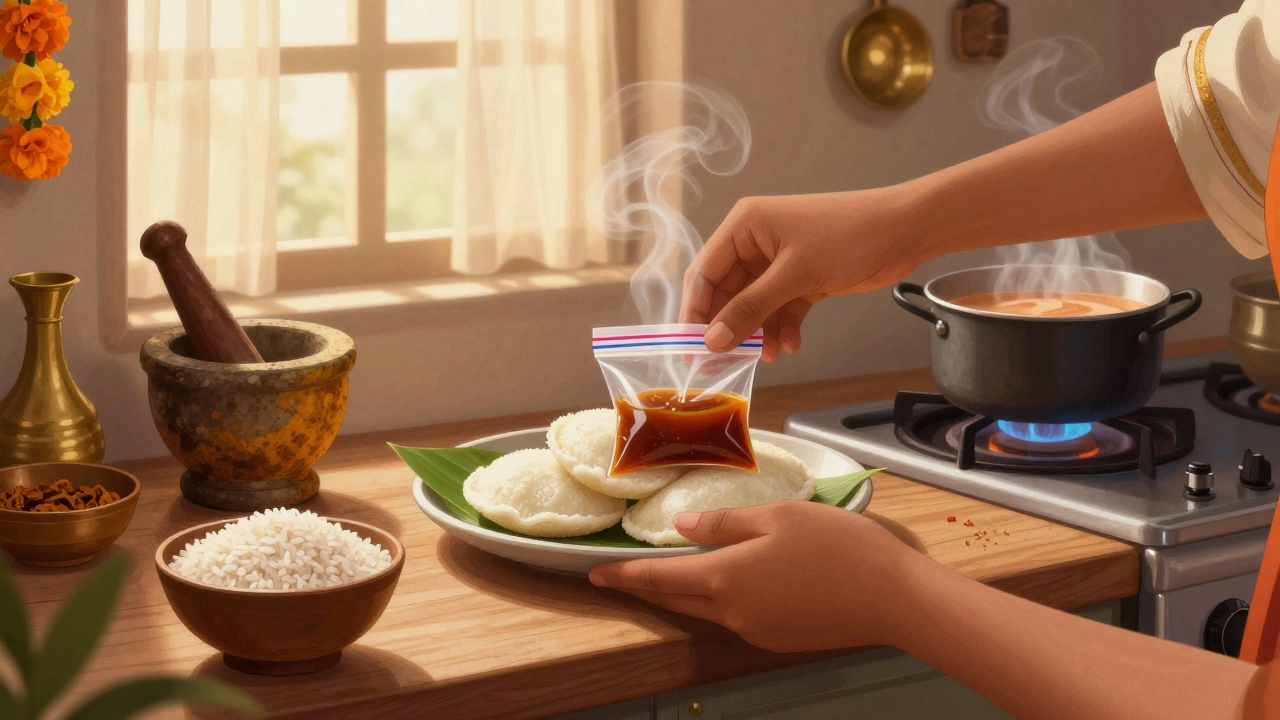
- Idli with Coconut Chutney - Steamed rice cakes, soft and light. Pack two or three with a small zip-lock of chutney. Eat with your hands. No utensils needed. Common in South India, especially Chennai and Bengaluru.
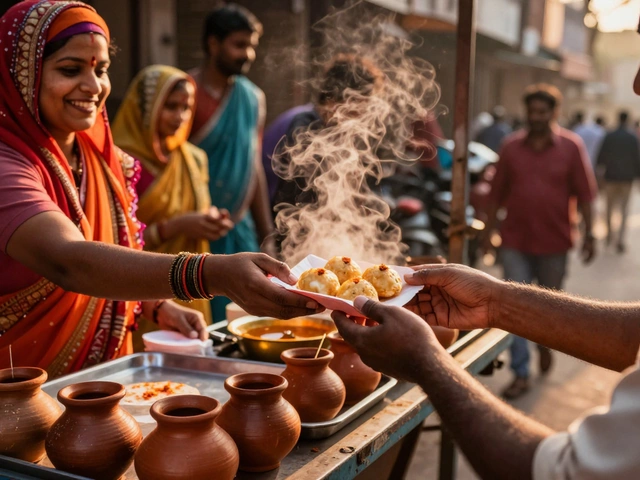
- Bhel Puri in a Pouch - A crunchy mix of puffed rice, sev, tomatoes, onions, and tamarind chutney. Sold in small paper pouches by street carts. Tangy, spicy, and crunchy. Perfect for a 10-minute break on the go.
These aren’t just snacks. They’re meals engineered for movement. Each one uses ingredients that are cheap, shelf-stable, and culturally trusted. No one in India questions whether these are ‘breakfast.’ They just know they work.
Why These Work Better Than Western Options
Compare this to a granola bar or a protein shake. Most Western grab and go options rely on processed ingredients - sugar, preservatives, artificial flavors. They’re designed for shelf life, not nutrition.
Indian grab and go breakfasts use whole foods:
- Whole grains (poha, paratha, idli batter)
- Legumes (peanuts, lentils in chutney)
- Spices with health benefits (turmeric, mustard seeds, ginger)
- Minimal added sugar
A 2023 study by the Indian Council of Medical Research found that people who ate traditional portable breakfasts like poha or paratha rolls had 27% fewer mid-morning energy crashes than those who ate packaged cereals or bread with jam. Why? The fiber and complex carbs digest slowly. No sugar crash. No hunger by 10 a.m.
How to Build Your Own Grab and Go Breakfast
You don’t need a street vendor to make this. Here’s how to build your own version at home:
- Start with a base - Choose one: paratha, idli, poha, upma, or even leftover rice.
- Add protein - Peanuts, boiled chickpeas, paneer cubes, or a spoon of yogurt.
- Include flavor - A smear of chutney (tamarind, mint, or coconut), a pinch of chaat masala, or a dash of lemon.
- Wrap it right - Use banana leaves, parchment paper, or a clean cloth. Avoid plastic if you can - it traps moisture and makes things soggy.
- Keep it cool - If you’re packing it for more than 3 hours, toss in a small ice pack. Or eat it fresh.
Pro tip: Make a batch on Sunday. Store idlis or parathas in the fridge. Reheat in a pan for 2 minutes in the morning. Done.
Common Mistakes to Avoid
Not all quick breakfasts are good ones. Here’s what to skip:
- Toast with jam - Too dry. Too sugary. Doesn’t fill you up.
- Plain biscuits - One or two won’t cut it. You’ll be hungry again by 9 a.m.
- Store-bought energy bars - Often loaded with syrups and artificial flavors. Read labels. If sugar is the second ingredient, skip it.
- Leftover curry with rice - Too messy. Too wet. You’ll spill it on your shirt.
The best grab and go meals are dry enough to carry, wet enough to taste, and simple enough to eat without thinking.
Why This Matters Beyond Convenience
There’s a deeper reason why grab and go breakfasts thrive in India. It’s not just about speed. It’s about food culture.
Unlike in places where breakfast is an afterthought - something you scarf down while scrolling - in India, breakfast is a ritual. Even when you’re rushing, you still choose something made with care. A vendor who grinds fresh coconut for chutney every morning. A mother who makes idlis from soaked rice and lentils the night before.
These meals connect you to tradition. They’re made with ingredients that have fed families for generations. You’re not just eating. You’re continuing a pattern of smart, sustainable, nourishing eating.
That’s why, even as fast food chains expand, these simple meals hold on. No app can replicate the smell of mustard seeds popping in oil. No delivery service can match the warmth of a freshly made paratha.
Final Thought: It’s Not About Fast. It’s About Smart.
A grab and go breakfast isn’t about cutting corners. It’s about working smarter. It’s choosing food that fits your life - not forcing your life to fit a meal.
If you’re tired of feeling sluggish by 10 a.m., try swapping your cereal for poha. Replace your energy bar with a paratha roll. Skip the sugary yogurt. Go for a samosa with chai.
You won’t just feel better. You’ll taste something real.
Is a grab and go breakfast healthy?
Yes, if you choose traditional Indian options. Foods like poha, idli, paratha, and bhel puri use whole grains, legumes, vegetables, and spices. They’re naturally low in sugar and high in fiber. Unlike packaged snacks, they don’t rely on preservatives or artificial flavors. The key is avoiding fried items too often and skipping sugary chutneys.
Can I make grab and go breakfasts ahead of time?
Absolutely. Idlis, parathas, and poha can be made the night before and stored in the fridge. Reheat them in a pan or microwave for 1-2 minutes. Keep chutneys in small sealed containers. They’ll stay fresh for 3-4 days. You can even freeze idlis - just steam them again when needed.
What’s the best grab and go breakfast for weight loss?
Go for high-fiber, low-fat options: plain idli with mint chutney, poha with peanuts and veggies, or a thin paratha with vegetables instead of potato filling. Avoid fried samosas, sweet chutneys, and extra oil. Skip the sugar in tea - or drink it without sugar. A single serving of these meals is often under 200 calories and keeps you full for hours.
Are grab and go breakfasts only for urban areas?
No. In rural India, people carry roti with pickles or leftover dal in cloth wraps. The idea isn’t new - it’s universal. What changed is the packaging. In cities, you get paper cones and plastic pouches. In villages, it’s banana leaves and cloth. The principle is the same: food you can carry and eat without stopping.
Can I eat grab and go breakfasts at work?
Definitely. Many offices in India have small microwaves or kettle stations. Just bring your idlis or parathas in a container. Add chutney in a small jar. Eat it at your desk. No one will blink. It’s normal. In fact, it’s often the most common breakfast in Indian workplaces.