Jalebi Calorie Calculator
Jalebi is a beloved Indian street dessert made from fermented batter and syrup. One piece typically contains 120-150 calories. Calculate your serving below:
Ask someone what India’s national dessert is, and you’ll get a dozen different answers. Gulab jamun? Rasgulla? Kheer? But only one sweet is officially recognized across the country as the symbol of Indian celebration, street corners, and festive tables - jalebi.
Why Jalebi Is India’s National Dessert
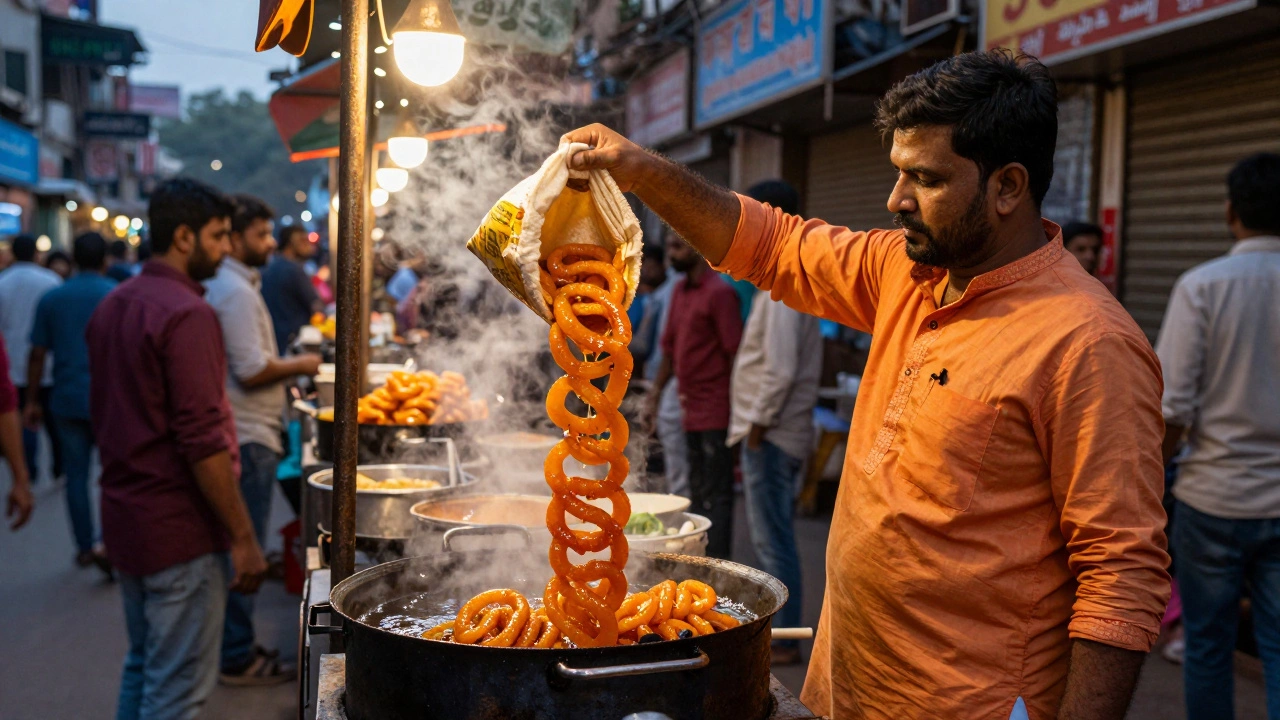
Jalebi isn’t just popular - it’s everywhere. From bustling Delhi street stalls to quiet village fairs in Bihar, you’ll find bright orange coils of fried batter soaked in syrup, served hot or warm, often with a dollop of thick, chilled rabri. It’s sold by vendors with carts shaped like mini temples, tucked beside chai stalls, and handed out at weddings, Diwali parties, and temple offerings. No other Indian sweet has this level of geographic and cultural spread.
Unlike regional favorites like mysore pak from Karnataka or peda from Maharashtra, jalebi is found in every state, in every language, under different names - jalebi in Hindi, jilapi in Bengali, jalebi in Tamil, jalebi in Gujarati. It doesn’t belong to one community or religion. Muslims, Hindus, Christians, Sikhs - all enjoy it. That’s rare in a country as diverse as India.
The Indian government never officially declared jalebi the national dessert in a legal document. But in practice, it’s treated as one. Food historians, culinary schools, and tourism boards all point to jalebi as the default. The Ministry of Tourism includes it in its ‘Taste of India’ campaigns. International food magazines like Bon Appétit and The Guardian have called it India’s most iconic sweet. When foreign visitors ask for the one dessert they must try, the answer is almost always jalebi.
How Jalebi Is Made - Simple, But Not Easy
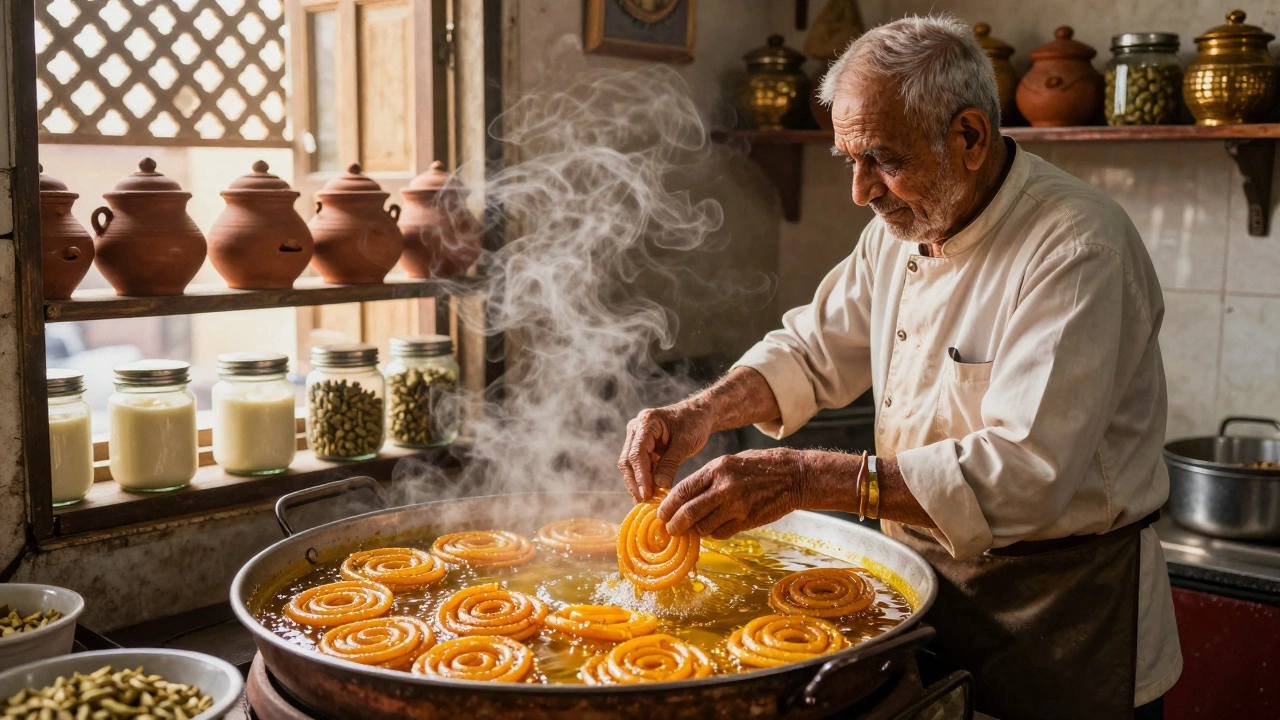
Making jalebi looks simple: batter, oil, syrup. But getting it right takes years. The batter is made from fermented urad dal (black gram) and maida (refined wheat flour), left to rise overnight. That fermentation gives jalebi its signature tang and airy texture. If the batter is too thick, the jalebi turns dense. Too thin, and it spreads into a flat disc instead of curling into perfect spirals.
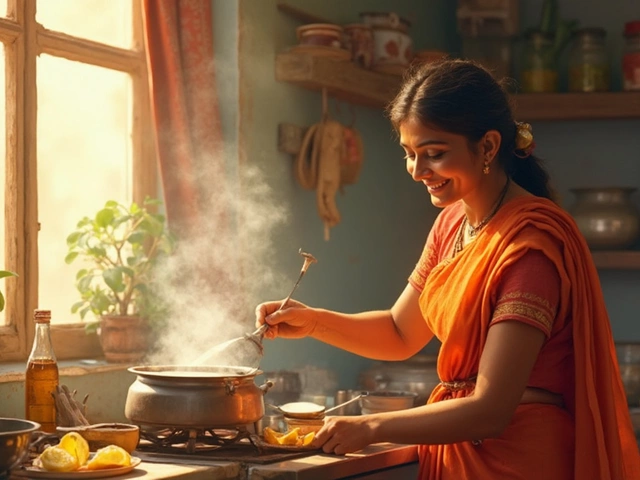
The oil must be hot - not smoking, but hot enough that the batter sizzles on contact. The syrup is sugar and water, boiled to a one-string consistency, sometimes flavored with cardamom or saffron. The batter is piped in tight, circular shapes directly into the oil using a squeeze bottle or a cloth bag with a small tip. As it fries, it puffs up, turns golden, then deep orange. Then it’s dropped into the syrup for a few minutes to soak up the sweetness.
The best jalebi is crispy on the outside, soft and syrupy inside, with a slight chew. It should be served warm - not cold, not soggy. A vendor who serves jalebi that’s been sitting for more than 20 minutes isn’t doing their job right.
Where to Find the Best Jalebi in India
If you want to taste jalebi at its peak, you have to go where it’s made fresh, daily, and in huge batches.
- Varanasi - The jalebi here is famous for its deep orange color, achieved by adding a touch of saffron or turmeric. It’s often paired with warm milk and almonds.
- Jaipur - Known for its thick, syrup-soaked jalebi served with rabri, a creamy milk reduction. The ones at Laxmi Misthan Bhandar are legendary.
- Mumbai - At the iconic Jalebiwala in Dadar, jalebi is made fresh every 15 minutes. Locals line up before sunrise for the first batch.
- Chennai - Here, jalebi is sometimes served with coconut milk instead of rabri, a South Indian twist.
- Delhi - At Old Delhi’s Chandni Chowk, jalebi is sold alongside chaat and parathas. It’s the perfect snack to eat while walking.
These places don’t just sell jalebi - they preserve a tradition. Many of these shops have been running for over 100 years, passing down recipes from generation to generation.
Why Other Sweets Don’t Hold the Title
People often argue that rasgulla or gulab jamun should be the national dessert. Rasgulla is beloved in Bengal and Odisha, but it’s rarely found in the south. Gulab jamun is common at weddings, but it’s made with khoya (reduced milk), which makes it expensive and less accessible in rural areas. Jalebi uses basic, affordable ingredients - flour, sugar, oil. That’s why it’s everywhere.
Also, jalebi is a street food. It’s not served on plates in fancy restaurants. It’s eaten with your hands, often wrapped in paper, sometimes with a squeeze of lemon to cut the sweetness. That’s the heart of Indian food culture - simple, shared, spontaneous.
The Cultural Role of Jalebi
Jalebi isn’t just dessert. It’s part of rituals. In many North Indian households, jalebi is the first sweet offered to guests. During Holi, it’s served with thandai. At Eid, Muslim families serve it alongside seviyan. In temples, it’s offered as prasad. Even in Bollywood movies, the sight of jalebi being handed out signals celebration.
It’s also a symbol of patience. The fermentation process can’t be rushed. The frying has to be timed perfectly. You can’t make jalebi in a hurry - and that’s the point. It teaches you to wait, to savor, to appreciate the process.
How to Eat Jalebi Like a Local
If you’re trying jalebi for the first time, here’s how to do it right:
- Wait for it to be fresh - if it’s sitting under a heat lamp for hours, walk away.
- Don’t wait for it to cool. Eat it warm. The syrup is meant to be runny, not hardened.
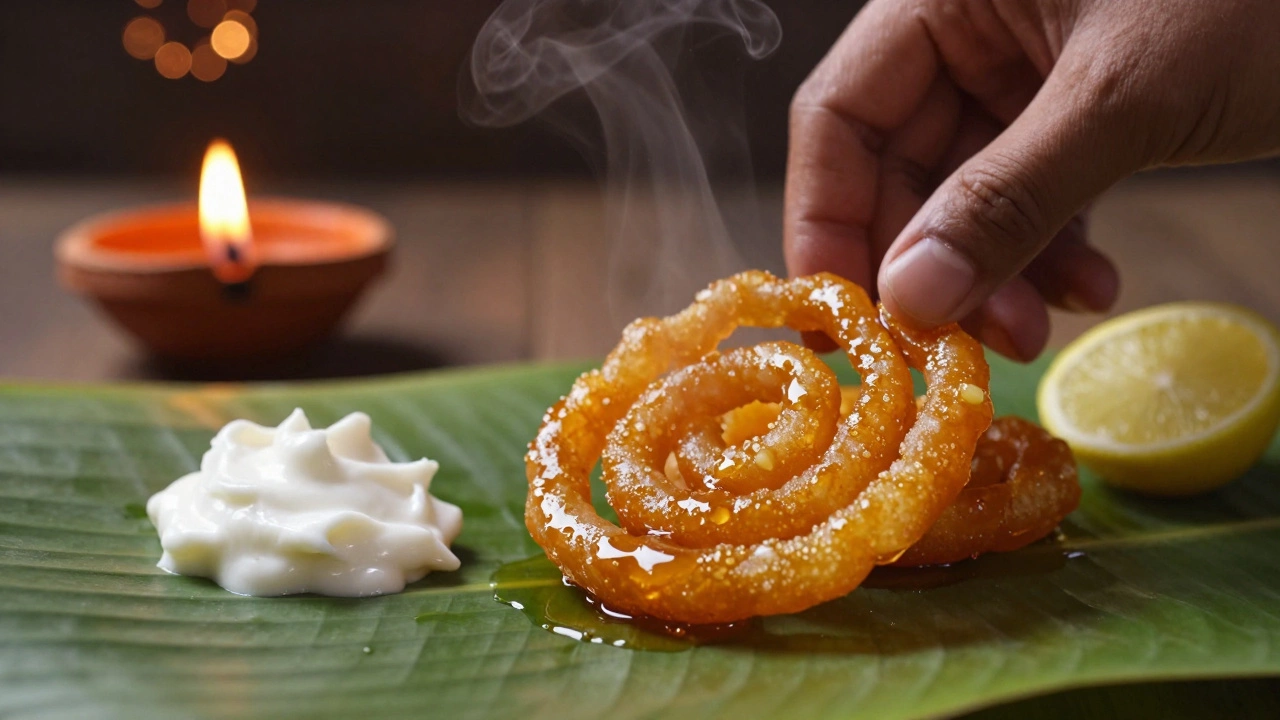
- Pair it with rabri if you can. The cool, creamy milk balances the sugar.
- Some locals squeeze a tiny bit of lemon juice on top. It cuts the sweetness and wakes up the flavors.
- Don’t use a fork. Use your fingers. It’s meant to be messy.
And if you’re eating it on the street? Don’t worry about the mess. That’s part of the experience.
Is Jalebi Healthy?
No, it’s not. It’s fried in oil and soaked in sugar. One piece has about 120-150 calories. A plate of five? That’s nearly 700 calories - close to a full meal. But that’s not the point. Indian sweets aren’t about nutrition. They’re about joy, celebration, memory.
People don’t eat jalebi to be healthy. They eat it because it reminds them of childhood, of festivals, of their grandmother’s kitchen. It’s comfort in a crispy, syrupy form.
Jalebi Around the World
Jalebi’s roots go back to the Middle East - it’s related to the Persian zulbiya and the Arabic mamoul. Traders brought it to India centuries ago, and Indians made it their own. Today, you’ll find versions in Pakistan, Bangladesh, Nepal, and even in parts of Africa and the Caribbean where Indian communities settled.
In the U.S., you’ll find jalebi at Indian grocery stores, but it’s rarely as good as the street version. The batter is often pre-made, the syrup too thick, the oil not hot enough. It’s hard to replicate the magic without the right technique - and the right passion.
Final Thoughts
Jalebi isn’t just a dessert. It’s a taste of India’s soul - colorful, layered, sweet, and a little chaotic. It doesn’t need to be fancy. It doesn’t need to be expensive. It just needs to be made with care, served fresh, and shared with joy.
If you ever find yourself in India, skip the fancy restaurants. Go to a street corner at dusk. Watch the vendor pour the batter into the oil. Smell the sugar caramelizing. Wait for the first batch. And when it’s handed to you - hot, sticky, and perfect - take a bite. That’s India’s national dessert.
Is jalebi really India’s national dessert?
While India doesn’t have an official legal declaration naming jalebi as the national dessert, it’s universally recognized as such by food historians, cultural institutions, and everyday people. No other Indian sweet is as widely available, culturally shared, and symbolically tied to celebrations across all regions and communities.
What’s the difference between jalebi and gulab jamun?
Jalebi is made from fermented batter fried and soaked in syrup, giving it a crisp, chewy texture with a tangy note. Gulab jamun is made from khoya (dried milk solids), shaped into balls, fried, and soaked in sugar syrup. Gulab jamun is softer, milkier, and sweeter, while jalebi is more complex - crunchy outside, syrupy inside, with a slight sourness from fermentation.
Can I make jalebi at home?
Yes, but it’s tricky. You need to ferment the batter overnight, control the oil temperature precisely, and pipe the batter into perfect spirals. Most home cooks get it wrong on the first try - the jalebi might spread too much or stay raw inside. Start with a simple recipe using maida and yogurt for fermentation. Practice makes perfect.
Why is jalebi orange?
The bright orange color comes from either saffron, turmeric, or food coloring added to the batter. In traditional recipes, a pinch of turmeric gives it that signature hue. Saffron is used in premium versions, especially in places like Varanasi. The color is as much about tradition as it is about appeal - it signals freshness and festivity.
Is jalebi eaten only in North India?
No. While it’s most popular in the north, jalebi is sold and enjoyed across the entire country. In South India, it’s often served with coconut milk instead of rabri. In Bengal, it’s called jilapi and sometimes eaten with chhena (cottage cheese). Its presence in every state proves its national status.