Indian Vegetarian Culture Guide
India is often called the land of spices, but for many travelers and food lovers, it’s also the global capital of vegetarian dining. You don’t need to be a local to notice that a massive portion of the population doesn’t eat meat. But here’s the catch: "vegetarian" in India isn’t just a diet choice like it might be in New York or London. It’s woven into religion, geography, caste systems, and daily survival strategies.
If you’ve ever wondered why some Indians never touch an onion while others feast on rich meat curries, the answer lies in their cultural background. Not all Indian cultures are vegetarian, and those that are practice it for very different reasons. Some do it out of spiritual discipline, others because of ancient agricultural practices, and some simply because of what grows best in their region.
The Spiritual Core: Hindu Vegetarianism
When people think of Indian vegetarianism, they usually picture Hinduism, which has deep roots in the concept of ahimsa (non-violence). This philosophy suggests that harming living beings creates negative karma. For devout Hindus, especially those from higher castes or specific regions, avoiding meat is a way to maintain spiritual purity.
However, Hindu vegetarianism varies wildly. In southern states like Tamil Nadu and Kerala, many Hindus eat fish and chicken regularly. In contrast, communities in Rajasthan, Gujarat, and parts of Uttar Pradesh tend to be strictly lacto-vegetarian. The key difference often comes down to regional history and access to resources rather than just religious dogma.
- Milk and dairy: Central to most Hindu vegetarian diets. Ghee (clarified butter) and paneer (cottage cheese) are staples.
- No eggs: Traditional Hindu vegetarians consider eggs non-vegetarian because they have the potential to become life.
- Seasonal eating: Many follow ancient texts that dictate what foods are healthy to eat during specific seasons.
Jain Cuisine: The Strictest Vegetarian Tradition
If you want to see the ultimate expression of plant-based eating, look at Jain culture. Jains take ahimsa to its logical extreme. They believe that every action should minimize harm to all living organisms, including insects and microorganisms. This leads to a diet that is far more restrictive than standard Indian vegetarianism.
Jains do not eat root vegetables like onions, garlic, potatoes, carrots, or beets. Why? Because pulling these plants out of the ground kills the entire organism and harms small creatures living in the soil. They also avoid honey, believing it exploits bees. Instead, their diet relies heavily on leafy greens, fruits, grains, legumes, and nuts.
You’ll find strong Jain communities in Rajasthan, Gujarat, and Madhya Pradesh. When you visit a Jain restaurant, you’ll notice separate kitchens and utensils to prevent cross-contamination with even trace amounts of animal products. Their cooking style emphasizes light, fresh ingredients rather than heavy, slow-cooked meals.
| Culture | Meat/Fish | Eggs | Onions/Garlic | Root Vegetables |
|---|---|---|---|---|
| General Hindu | Avoided | Avoided | Allowed | Allowed |
| Jain | Avoided | Avoided | Avoided | Avoided |
| Sattvic | Avoided | Avoided | Avoided | Limited |
| Buddhist | Varies | Varies | Allowed | Allowed |
Gujarati Food: Sweet, Spicy, and Dairy-Rich
Gujarat is arguably the heartland of Indian vegetarian cuisine. Located in western India, this state has a long history of trade and agriculture that favored plant-based farming. The majority of Gujaratis are either Hindu or Jain, making vegetarianism the norm rather than the exception.
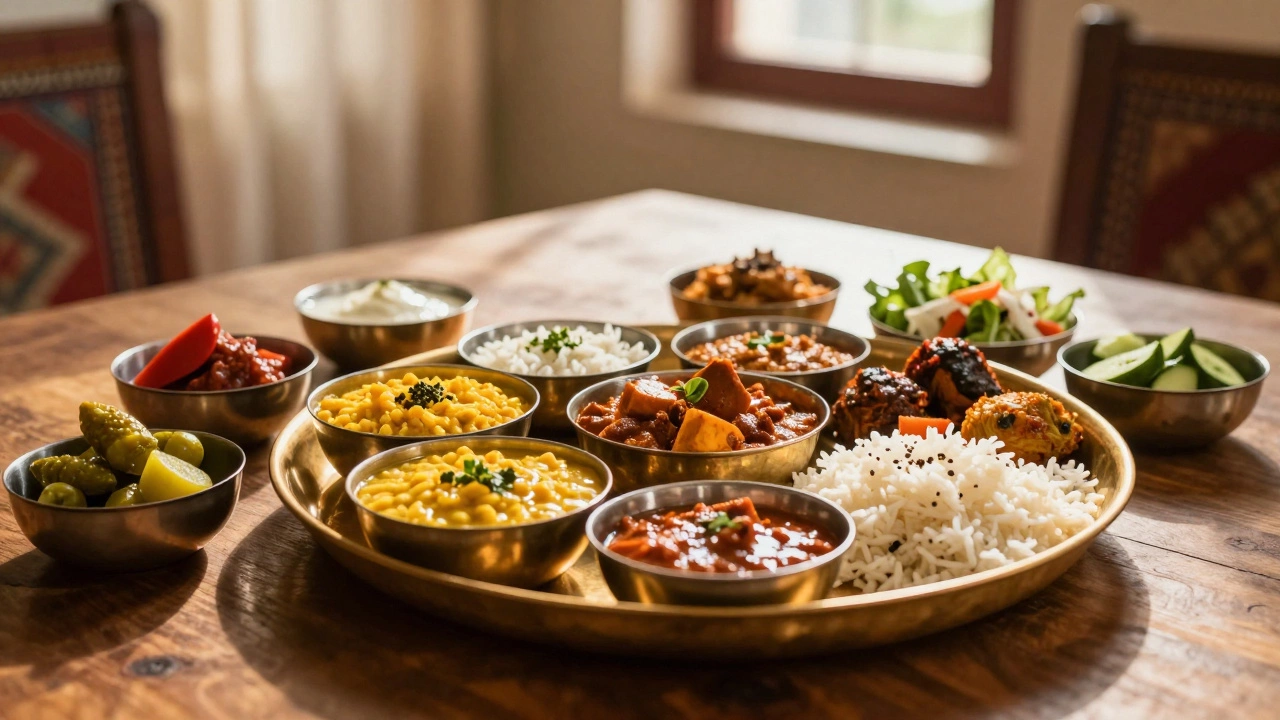
Gujarati food is famous for its unique balance of flavors. Every dish typically includes four tastes: sweet, salty, sour, and spicy. You’ll rarely find a meal without a hint of jaggery (unrefined sugar) or lemon juice. Staples include dal (lentil soup), kadhi (yogurt-based curry with gram flour), and thali (a platter with multiple small dishes).
One interesting aspect of Gujarati culture is the emphasis on hospitality through food. Guests are always served generous portions of vegetarian delicacies like dhokla (steamed fermented cake made from chickpea flour) and thepla (spiced flatbread). Even if you’re not vegetarian, the sheer variety and flavor of these dishes make them hard to resist.

Rajasthani Cuisine: Surviving the Desert
In the arid landscape of Rajasthan, water scarcity shaped the diet for centuries. Before modern irrigation, growing crops was difficult, so locals developed methods to preserve food and maximize nutrition from limited resources. This led to a cuisine rich in dried lentils, millets, and dairy products that could withstand heat.
Rajasthani vegetarian food is known for its bold spices and hearty textures. Dishes like dal baati churma (baked wheat balls served with lentil curry and crushed sweets) were originally created for travelers and soldiers who needed energy-dense meals. Since cattle were valuable assets for milk and labor, killing them for meat was economically impractical, reinforcing vegetarian habits among certain communities.
Another hallmark of Rajasthani cooking is the use of ghee and cream. These fats helped combat dehydration and provided essential calories in a harsh environment. Today, you can still find traditional recipes passed down through generations that rely on minimal water and maximum flavor.
Buddhist and Sikh Influences
While not exclusively vegetarian, both Buddhism and Sikhism have significant plant-based traditions. In northern India, particularly in Himachal Pradesh and Uttarakhand, Buddhist monks follow strict vegetarian diets based on principles of compassion. Tibetan-influenced areas serve momos (dumplings) filled with vegetables instead of meat.
Sikhs, on the other hand, generally do not prohibit meat consumption. However, many Sikhs choose vegetarianism as part of their lifestyle. The langar (community kitchen) found in every gurdwara (Sikh temple) serves free vegetarian meals to everyone regardless of background. This practice promotes equality and ensures no one feels excluded due to dietary restrictions.
Regional Variations Across India
It’s important to understand that India isn’t monolithic. What’s true for one state may not apply to another. Here’s how vegetarianism breaks down geographically:
- North India: States like Punjab, Haryana, and Uttar Pradesh have mixed diets. While many are vegetarian, meat-eating is common among Muslims and lower-caste Hindus.
- West India: Gujarat, Maharashtra, and Goa show diverse patterns. Gujarat is highly vegetarian, while coastal Maharashtra and Goa embrace seafood.
- South India: Tamil Nadu, Kerala, Karnataka, and Andhra Pradesh vary widely. Coastal regions consume plenty of fish, whereas inland areas lean toward vegetarianism.
- East India: Bengal and Odisha love fish and pork. Vegetarian options exist but aren’t dominant.
This geographic diversity means you can’t assume an Indian person is vegetarian based solely on their ethnicity. Context matters-whether they live in a city or village, belong to a particular community, or adhere to specific religious beliefs.
Why Does This Matter?
Understanding which Indian cultures are vegetarian helps you navigate menus, respect customs, and appreciate the depth of culinary heritage. Whether you’re planning a trip, hosting guests, or exploring new recipes, knowing the ‘why’ behind the food adds richness to your experience. It transforms a simple meal into a story of faith, survival, and tradition.
Are all Hindus vegetarian?
No, not all Hindus are vegetarian. Practices vary significantly by region, caste, and personal belief. Southern and eastern Hindus often eat meat, while western and northern groups tend to be more likely to avoid it.
What do Jains avoid besides meat?
Jains avoid root vegetables (onions, garlic, potatoes), eggs, honey, and sometimes nightshades like tomatoes. They focus on foods that cause minimal harm to living organisms during harvest.
Is Gujarati food always vegetarian?
Most traditional Gujarati households are vegetarian due to Hindu and Jain influences. However, some families may include egg or fish depending on individual preferences and social context.
Do Sikhs eat meat?
Sikhism does not forbid meat, but many Sikhs choose vegetarianism. Community kitchens (langars) serve only vegetarian food to ensure inclusivity for all visitors.
Which Indian states have the highest percentage of vegetarians?
Gujarat, Rajasthan, and Madhya Pradesh consistently report high rates of vegetarianism, largely driven by Jain and devout Hindu populations.