Healthy Indian Snack Calculator
Select Your Snacks
Select Your Dietary Goal
Nutritional Breakdown
Personalized Recommendations
When you think of Indian snacks, you might picture crispy samosas, fried pakoras, or buttery mathris. But not all Indian snacks are heavy or unhealthy. In fact, many traditional Indian snacks are naturally nutritious, made with whole grains, legumes, vegetables, and spices that support digestion, energy, and long-term health. The key isn’t avoiding Indian snacks-it’s choosing the right ones.
What Makes an Indian Snack Healthy?
A healthy Indian snack doesn’t rely on deep frying, refined flour, or excess sugar. Instead, it uses ingredients that are high in fiber, protein, and micronutrients. Think about this: a single serving of roasted chana (chickpeas) gives you 6 grams of protein and 5 grams of fiber. That’s more than a small yogurt cup. Compare that to a typical fried samosa, which packs in 300+ calories with almost no protein and little fiber.
Traditional Indian cooking often uses spices like turmeric, cumin, coriander, and ginger-not just for flavor, but for their anti-inflammatory and digestive properties. These aren’t just seasonings; they’re functional ingredients. A snack made with whole wheat flour, lentils, and spices can be both satisfying and healing.
The Top 5 Healthiest Indian Snacks
Here are the five most nutritious Indian snacks you can eat regularly without guilt. These are staples in homes across India, not trendy fads.
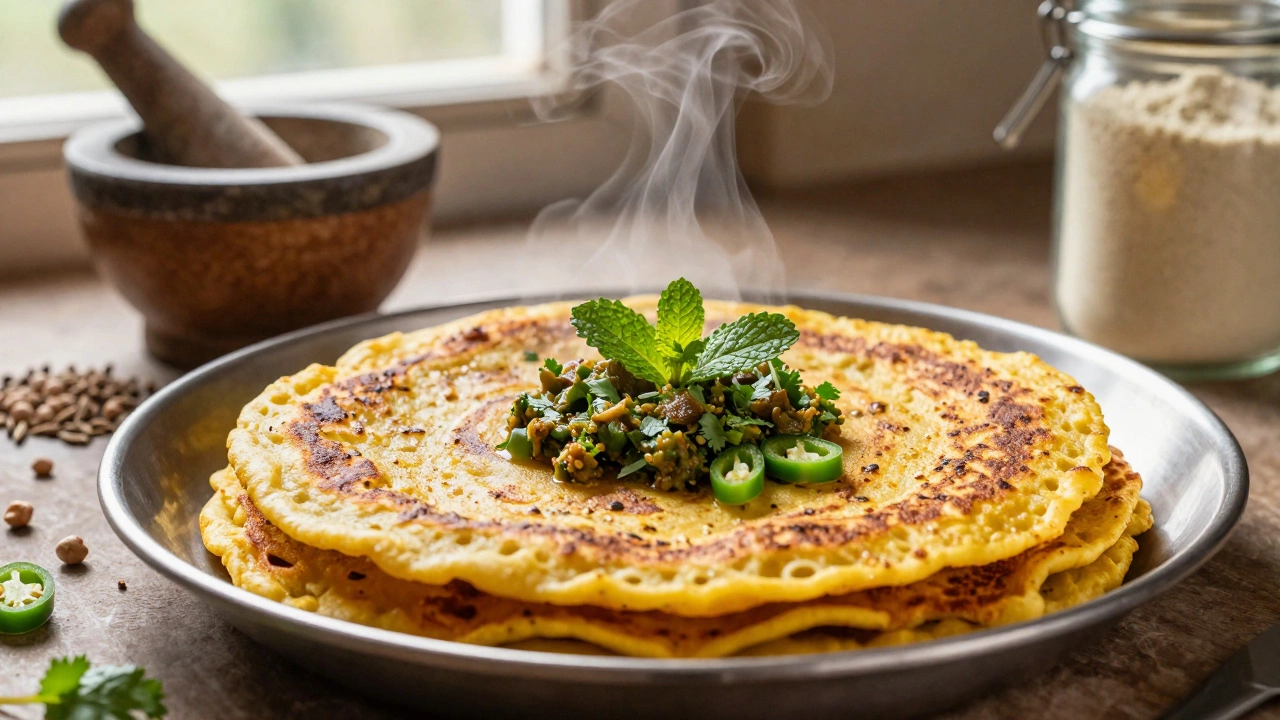
- Moong Dal Chilla - Made from ground yellow lentils, water, and spices, then cooked on a griddle like a pancake. It’s naturally gluten-free, high in plant-based protein (12g per serving), and low in fat. Add finely chopped veggies like spinach or carrots for extra fiber.
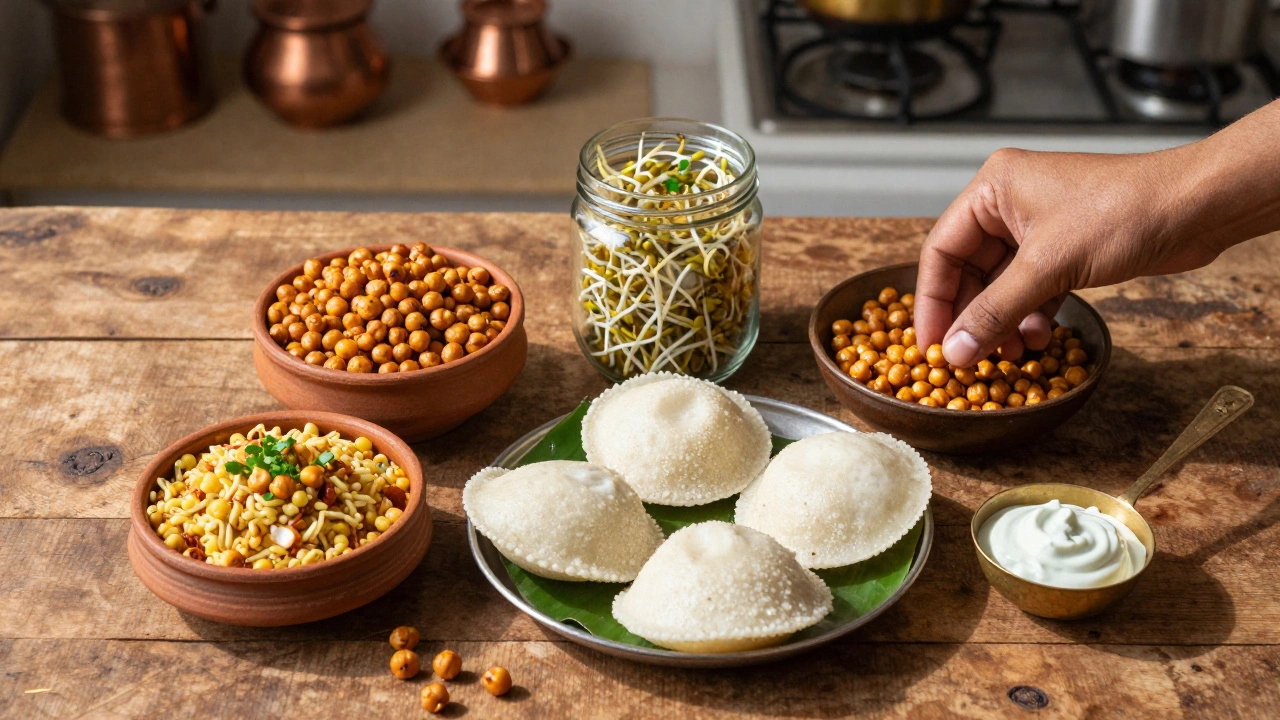
- Roasted Chana (Chickpeas) - Dry-roasted or air-fried chickpeas seasoned with black salt, cumin, and chili powder. One cup has 15g of protein and 13g of fiber. It keeps you full for hours and stabilizes blood sugar better than any packaged snack.
- Sprouted Moong Salad - Soak moong beans overnight, let them sprout for 24 hours, then toss with lemon, chopped onions, tomatoes, and cilantro. Sprouting increases vitamin C and B vitamins by up to 300%. It’s a complete snack that needs no cooking.
- Vegetable Upma - Made from semolina (rava) cooked with water or low-fat milk, onions, peas, carrots, and mustard seeds. When made with minimal oil (1 tsp max), it’s a balanced carb-protein-veggie combo. Use coarse rava for more fiber.
- Steamed Idli with Coconut Chutney - Idlis are fermented rice-and-lentil cakes steamed to perfection. The fermentation boosts digestibility and adds probiotics. Pair with a chutney made from fresh coconut and green chilies-no added sugar, no oil. One idli has about 60 calories and 2g of protein.
Snacks to Avoid (Even If They’re “Traditional”)
Not every snack passed down through generations is healthy today. Here are three commonly eaten snacks that have lost their nutritional value:
- Fried Samosas - Deep-fried in reused oil, filled with refined flour and starchy potatoes. A single samosa can contain 25g of fat and 300+ calories. The oil often oxidizes, creating harmful compounds.
- Pakoras - Batter made with refined flour, soaked in oil, and fried. Even with vegetables inside, the frying process strips away nutrients and adds empty calories.
- Sweet Jalebi - Soaked in sugar syrup, made with maida (white flour). One piece has 120 calories, mostly from sugar. It spikes blood glucose and offers no protein or fiber.
These aren’t banned foods-they’re occasional treats. But if you’re looking for daily snacks, they’re not the best choice.
How to Make Healthy Snacks at Home
You don’t need fancy equipment. A non-stick pan, steamer, or air fryer is enough.
Start by swapping out ingredients:
- Replace maida with whole wheat flour, besan (chickpea flour), or ragi flour.
- Use air frying or baking instead of deep frying. You can get crispy textures with 70% less oil.
- Use natural sweeteners like jaggery or dates instead of refined sugar.
- Boost protein with lentils, paneer, or Greek yogurt in dips.
Try this simple recipe: Roasted Masala Chana
- Drain and rinse 1 cup of canned chickpeas.
- Pat them dry with a towel-wet beans won’t crisp up.
- Toss with 1 tsp olive oil, 1/2 tsp cumin, 1/2 tsp smoked paprika, 1/4 tsp black salt, and a pinch of chili powder.
- Spread on a baking sheet and roast at 200°C for 25 minutes, shaking halfway.
- Cool and store in an airtight container. Lasts 5 days.
That’s it. No deep fryer. No sugar. Just flavor and nutrition.
Why These Snacks Work for Modern Lifestyles
Modern diets are full of processed snacks that promise quick energy but leave you sluggish. Indian snacks like sprouted moong or roasted chana work differently. They’re slow-digesting. That means:
- No sugar crashes
- Steady energy through the afternoon
- Less cravings for junk food
- Better gut health from fiber and probiotics
A 2024 study from the Indian Journal of Nutrition found that people who replaced one daily processed snack with roasted chana or moong dal chilla saw a 17% drop in afternoon hunger pangs and improved digestion within two weeks. No diet changes. Just one swap.
These aren’t just snacks-they’re tools for better daily habits.

Common Myths About Indian Snacks
Let’s clear up some confusion:
- Myth: “All Indian snacks are oily.” Truth: Many are steamed, boiled, or roasted. The oil-heavy versions are modern adaptations, not tradition.
- Myth: “Healthy snacks taste bland.” Truth: Indian spices-turmeric, asafoetida, mustard seeds-are intensely flavorful. A pinch of cumin can make roasted lentils irresistible.
- Myth: “You need special ingredients.” Truth: You can make all these snacks with items already in your pantry: lentils, rice flour, spices, vegetables.
How to Build a Daily Healthy Snack Routine
Here’s a simple plan for snacking smart:
- Morning (10 AM): 1 small moong dal chilla + mint chutney
- Afternoon (3 PM): 1/2 cup roasted chana + green tea
- Evening (6 PM): 2 steamed idlis + coconut chutney
No cooking required on busy days? Keep pre-roasted chana or boiled sprouts in the fridge. Just grab and eat.
Snacking doesn’t have to be a weakness. With the right choices, it can be your strongest health habit.
Is Indian street food ever healthy?
Some Indian street foods can be healthy if prepared with care. Look for vendors who use fresh vegetables, minimal oil, and whole grains. Try poha (flattened rice cooked with peas and peanuts) or grilled corn with chaat masala. Avoid anything fried in reused oil or served with sugary sauces. Ask for no extra oil-it’s often accepted.
Can I eat Indian snacks if I’m trying to lose weight?
Yes, absolutely. Snacks like roasted chana, sprouted moong, and moong dal chilla are low in calories and high in protein and fiber, which help control hunger. A 100g serving of roasted chana has about 360 calories but keeps you full longer than a 200-calorie chip bag. Portion control matters-stick to 1/2 cup per snack.
Are store-bought Indian snack packs healthy?
Most aren’t. Many packaged snacks labeled as “Indian” contain hydrogenated oils, preservatives, and added sugar. Always check the label. Look for ingredients like whole wheat flour, lentils, or chickpeas. Avoid anything with “refined flour,” “vegetable oil,” or “high fructose corn syrup.” Homemade versions are always better.
What’s the best Indian snack for diabetics?
Roasted chana and sprouted moong are top choices. Both have a low glycemic index (GI under 30), meaning they raise blood sugar slowly. Avoid anything with maida or sugar. Steamed idlis are also safe in moderation (1-2 pieces) because fermentation breaks down starches. Pair them with protein-rich chutneys like peanut or lentil-based.
Can I make these snacks vegan?
All the top healthy Indian snacks listed here are naturally vegan. Moong dal chilla, roasted chana, sprouted moong, and steamed idlis contain no animal products. Just make sure your chutneys don’t include yogurt or ghee-use coconut oil or water-based bases instead.
Switching to healthier Indian snacks doesn’t mean giving up flavor. It means rediscovering the wisdom in old recipes-food made with intention, not convenience. The healthiest snack isn’t the one with the least calories. It’s the one that fuels you without draining you.