Butter Chicken Ingredient Cost Calculator
Estimate your grocery costs for making Butter Chicken. All ingredients are commonly available in supermarkets.
If you’ve ever opened an Indian cookbook and felt overwhelmed by spices you’ve never heard of, you’re not alone. The idea of Indian food can seem intimidating-lots of chili, strange names, long ingredient lists. But here’s the truth: Indian cuisine has some of the most forgiving, comforting, and simple dishes out there. You don’t need a spice rack full of exotic powders or a 3-hour prep time to enjoy real Indian flavor. The best dish to start with? Butter Chicken.
Why Butter Chicken Is the Perfect First Dish
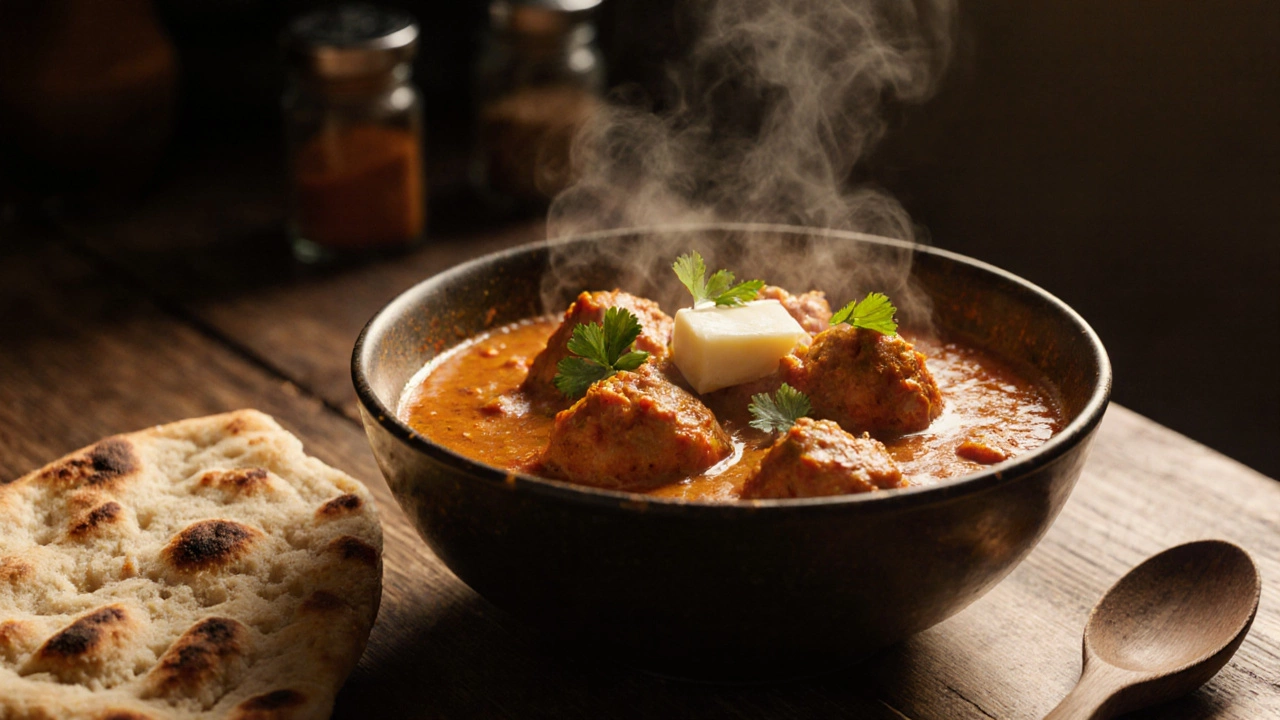
Butter Chicken, or Murgh Makhani, is creamy, mildly spiced, and deeply satisfying. It’s the kind of dish that makes people who say they don’t like spicy food say, ‘Okay, I’ll try that.’ The sauce is rich from tomatoes, cream, and a touch of butter, with just a whisper of heat from Kashmiri chili powder-not enough to make you sweat, but enough to feel like you’re tasting something authentic.
It’s also forgiving. If you add a little too much cumin? It’s fine. Forgot the garam masala? You can skip it once and still have a delicious meal. Most recipes use chicken thighs, which stay juicy even if you overcook them by a few minutes. And the sauce? It thickens on its own. No need for cornstarch or fancy techniques.
What makes Butter Chicken stand out among other Indian dishes is how it balances flavor and simplicity. You’re not juggling five different spice blends. You’re using maybe six common ingredients: tomato puree, garlic, ginger, cumin, coriander, and garam masala. Most of these are already in your pantry if you cook anything beyond pasta.
What You Actually Need to Make It
You don’t need to hunt down specialty stores. Here’s what you’ll find at any decent supermarket:
- Chicken thighs (boneless, skinless)-they’re cheaper and more forgiving than breast
- Canned crushed tomatoes or tomato puree (not paste)
- Cream or coconut milk (for richness)
- Garlic and ginger (fresh or paste-both work)
- Ground cumin, coriander, turmeric, and garam masala
- Butter or oil (for sautéing)
- Optional: a pinch of sugar to balance acidity
That’s it. No fenugreek leaves, no asafoetida, no mustard seeds. No need to buy a $30 spice set just to make one dish. If you’ve ever made a simple tomato sauce for pasta, you already know how to make Butter Chicken.
How to Make It in Under 40 Minutes
Here’s the real deal-no fluff, just steps:
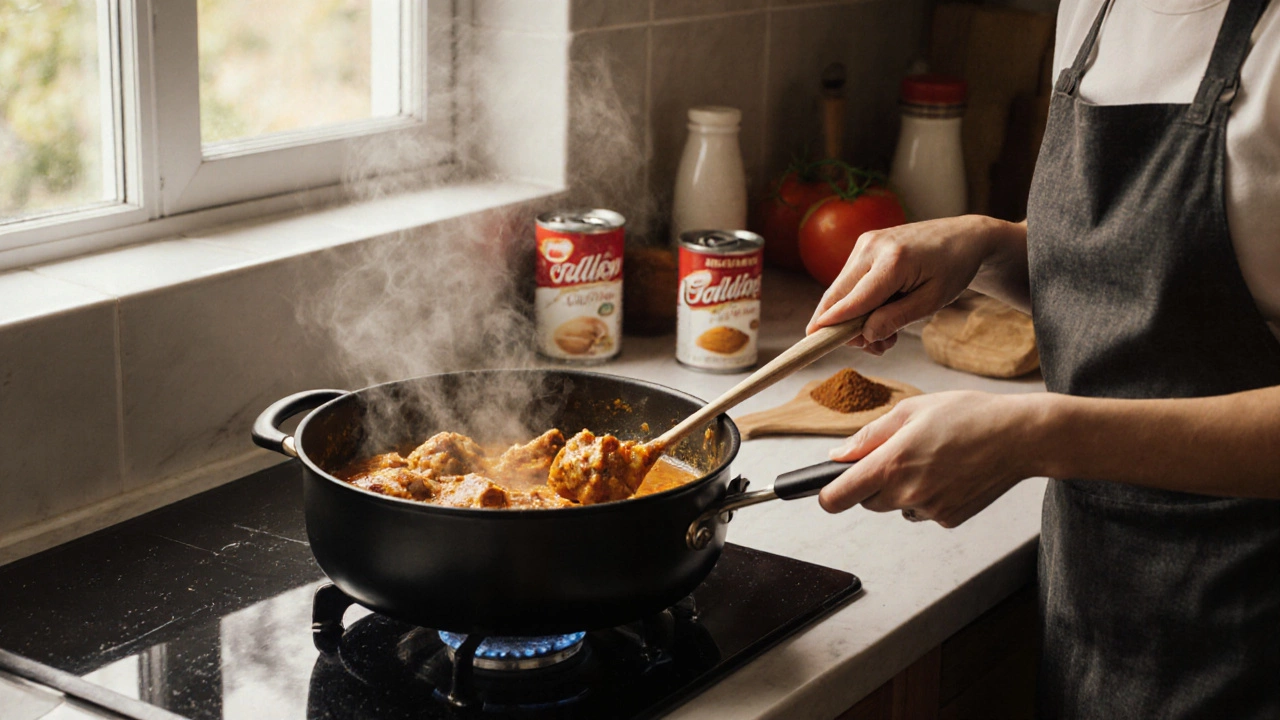
- Heat 2 tablespoons of butter or oil in a pan over medium heat.
- Add 1 tablespoon each of minced garlic and ginger. Sauté for 30 seconds until fragrant.
- Add 1 teaspoon each of ground cumin, coriander, and turmeric. Stir for 15 seconds-don’t let it burn.
- Pour in one 400g can of crushed tomatoes. Let it bubble for 5 minutes.
- Add 1 pound of chicken thighs, cut into 1-inch pieces. Cook for 10 minutes, stirring occasionally.
- Stir in 1/2 cup of heavy cream or coconut milk. Let it simmer for another 10 minutes.
- Finish with 1/2 teaspoon of garam masala and a pinch of sugar if needed.
That’s 35 minutes from start to plate. Serve it with plain white rice or store-bought naan. No fancy roti-making required. No need to ferment dough or knead for an hour. Just open the bread bag, warm it in the oven, and you’re done.
Why Other Dishes Aren’t as Beginner-Friendly
You might hear people recommend Chana Masala or Palak Paneer as easy starters. But here’s why they’re not ideal for your first try:
- Chana Masala requires soaking dried chickpeas overnight-or using canned ones, which are fine, but the spice balance is tricky. Too much amchur (dry mango powder) and it tastes sour. Too little and it’s bland.
- Palak Paneer needs fresh spinach and homemade paneer (Indian cottage cheese). Making paneer from scratch? That’s a whole other project. Buying it pre-made? Often expensive and rubbery.
- Dal is healthy and simple, but it’s subtle. Beginners often think, ‘Is this it?’ because there’s no bold flavor punch.
Butter Chicken doesn’t ask you to guess. It delivers. The sauce is thick, the chicken is tender, and the aroma fills your kitchen in a way that makes you feel like you’ve done something impressive-even if you didn’t.
Common Mistakes New Cooks Make
Even with Butter Chicken, people mess up. Here’s what to avoid:
- Using chicken breast-it dries out fast. Thighs are your friend.
- Adding too much chili powder-Kashmiri chili gives color and mild heat. Regular chili powder? Too sharp. Stick to the recipe.
- Skipping the garam masala at the end-it’s not just flavor. It’s the final lift that makes it taste restaurant-quality.
- Boiling the cream-add it last and keep the heat low. Boil it and it splits. You’ll get oily bits. Not pretty.
And here’s a pro tip: Make extra sauce. It freezes beautifully. Next week, just reheat it with some frozen chicken or even tofu. You’ve got a meal ready in 10 minutes.
What to Serve With It
Butter Chicken doesn’t need fancy sides. Keep it simple:
- Basmati rice (just rinse it, boil it, fluff it)
- Store-bought naan or pita bread
- A quick cucumber-yogurt salad (dice cucumber, mix with plain yogurt, a pinch of salt, and a squeeze of lemon)
- Or just eat it with a spoon and a napkin. No judgment.
Forget the naan-making tutorials you saw online. You don’t need to be a baker to enjoy Indian food. Real Indian meals are eaten with hands, but forks are fine too.
Why This Dish Opens the Door to More Indian Food
Once you’ve made Butter Chicken once, you’ll realize something: Indian cooking isn’t about memorizing 20 spices. It’s about layering flavors slowly. You’ve already used cumin, coriander, turmeric, and garam masala. Those are the backbone of 80% of Indian curries.
Next time, try adding a pinch of smoked paprika for depth. Or swap cream for coconut milk and make it vegan. Or add a handful of peas at the end. You’re not following a rigid recipe-you’re learning how to taste and adjust.
After Butter Chicken, you’ll feel ready for Chicken Tikka Masala (it’s basically the same, but with grilled chicken). Then maybe Paneer Butter Masala (just swap chicken for paneer). Then Chana Masala-now that you understand how tomatoes and spices work together.
Indian food isn’t a mystery. It’s a conversation between spices, heat, and time. Butter Chicken is your first sentence.
Final Thought: You Don’t Need to Be an Expert
You don’t need to know the difference between cumin and caraway. You don’t need to buy a mortar and pestle. You don’t need to cook for hours. You just need to try. Start with Butter Chicken. Make it once. Taste it. Adjust it. Make it again.
That’s how you learn. Not by reading 10 blogs. Not by watching 20 YouTube videos. By cooking. One pot. One meal. One bite at a time.
Is Butter Chicken really spicy?
No, not really. Traditional Butter Chicken uses Kashmiri chili powder, which adds color and a very mild warmth-not heat. If you’re sensitive to spice, skip the chili powder entirely. The dish still tastes amazing with just tomatoes, cream, and spices like cumin and coriander.
Can I make Butter Chicken without cream?
Yes. Coconut milk works perfectly as a substitute and adds a subtle sweetness. Heavy cream gives the richest texture, but if you’re dairy-free or just out of cream, use full-fat canned coconut milk. The flavor changes slightly, but it’s still delicious.
What if I don’t have garam masala?
You can skip it, but it’s the finishing touch that makes it taste like it came from a restaurant. If you don’t have it, mix 1/2 teaspoon each of ground cinnamon, cardamom, and cloves. It’s not exact, but it’ll give you that warm, rounded flavor. Garam masala is worth buying-it lasts a year and goes in so many dishes.
Can I use frozen chicken?
Yes, but thaw it first. Cooking frozen chicken directly in the sauce will make the sauce watery and delay the cooking time. If you’re short on time, use thawed chicken thighs-they cook evenly and stay juicy.
How long does Butter Chicken last in the fridge?
It keeps well for 4 days in an airtight container. The flavors actually get better after a day. Freeze it for up to 3 months. Reheat gently on the stove with a splash of water or cream to bring back the silkiness.
If you’ve ever thought Indian food was too complicated, this is your sign to try again. Start small. Start simple. Start with Butter Chicken. You’ll be surprised how fast you go from ‘I don’t know how to cook Indian’ to ‘I made that-and it was amazing.’