Roti Shape: How to Get the Perfect Round Roti Every Time
When you think of roti, a simple, unleavened Indian flatbread made from whole wheat flour, water, and salt. Also known as chapati, it's the daily bread across millions of Indian homes—not just food, but a ritual. The shape matters. A perfectly round roti isn’t just about looks—it’s about even cooking, better texture, and that satisfying puff when it hits the hot tawa. If your rotis come out lopsided, cracked, or stubbornly flat, it’s not luck you’re missing. It’s technique.
The secret to good roti shape, the round, evenly thick disc that puffs up beautifully on the stove starts long before you roll it. It begins with the dough. Too dry? It cracks. Too sticky? It sticks to everything. The right consistency is soft, pliable, and slightly tacky—not wet, not crumbly. Knead it for at least five minutes. Not because a recipe says so, but because gluten needs time to develop. That’s what holds the roti together as you roll it out. Skip this step, and no rolling pin in the world will save you.
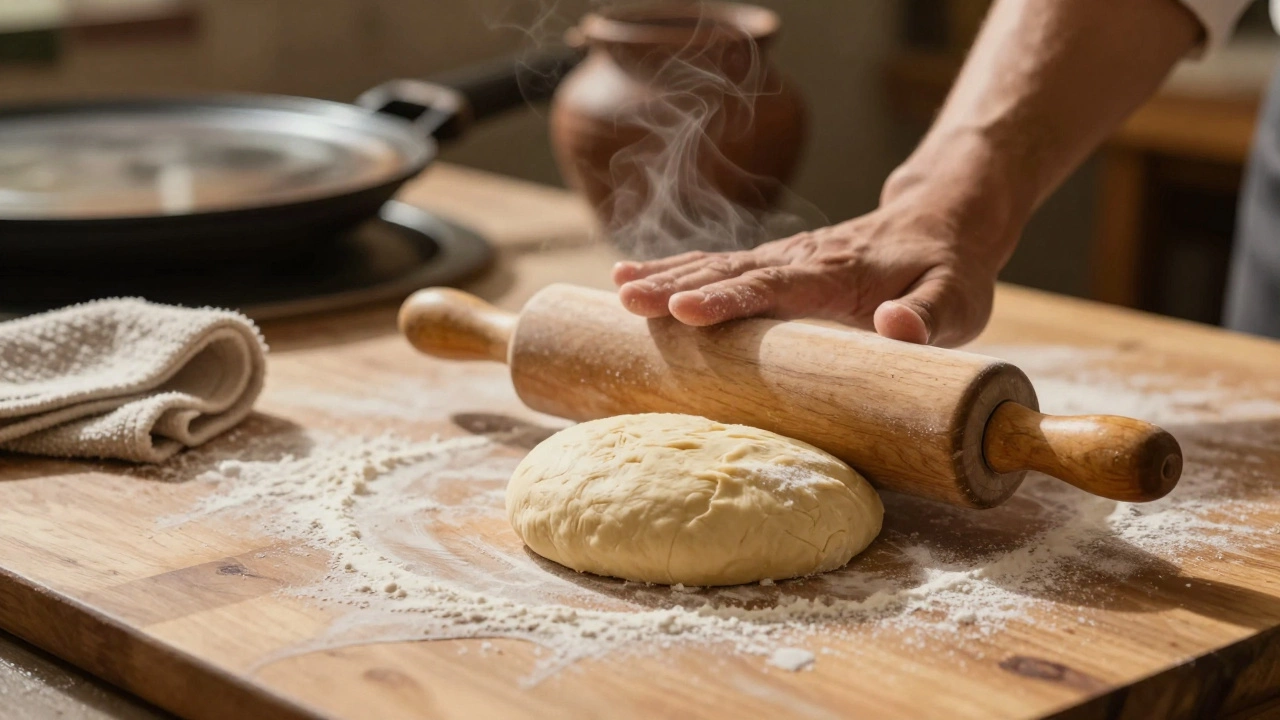
Then comes the rolling. Most people press down too hard right away. That’s why rotis tear. Start light. Roll from the center out, turning the dough a quarter turn after every few rolls. Keep the surface lightly dusted with flour, but not so much that it dries out the surface. If your roti sticks, you’re using too much flour or the dough’s too cold. Warm dough rolls smoother. And if you’re still struggling, try this: roll it slightly larger than you need. A little extra space gives you room to correct uneven spots before cooking.
There’s also the matter of tools. A wooden rolling pin gives more control than a glass bottle. A smooth, flat surface—like a marble slab or clean countertop—helps. But none of that matters if your tawa isn’t hot enough. A cold tawa won’t let the roti puff. Test it with a drop of water—it should sizzle and evaporate instantly.
And don’t forget the flip. Too early? It won’t puff. Too late? It burns. Wait for the edges to lift slightly, then flip. Press gently with a cloth or spatula—the heat and pressure are what make it balloon. That puff? That’s the sign you did it right.
People talk about roti like it’s simple. And it is—but only when you understand the roti dough consistency, the balance of flour, water, and kneading time that determines how well the roti holds shape and the rolling technique, the rhythm and pressure used to form an even, round flatbread without tearing. This isn’t magic. It’s muscle memory. The more you do it, the more natural it becomes. You’ll start to feel when the dough’s ready, when the heat’s right, when the roti’s about to puff.
Below, you’ll find real advice from people who’ve spent years making roti—not just recipes, but the unspoken tricks that turn good roti into perfect roti. Whether you’re struggling with cracking, uneven thickness, or just never getting that satisfying puff, there’s something here for you. No fluff. No theory. Just what works.