Diabetic-Friendly Meal Calculator
Choose Your Meal
Meal Analysis
Select a meal and portion to see blood sugar impact analysis.
When you have diabetes, eating Indian food doesn’t mean giving up flavor-it means choosing smarter combinations. Many assume Indian meals are full of sugar and carbs, but that’s not true for the whole cuisine. The key is knowing which dishes support stable blood sugar and which ones spike it. You can still enjoy rich curries, fluffy rice, and even sweets-if you know how to pick and prepare them right.
What Makes an Indian Meal Diabetic-Friendly?
A diabetic-friendly Indian meal balances three things: low glycemic index (GI), high fiber, and controlled portions. Foods with a low GI release sugar slowly into your bloodstream. That means no sudden crashes or spikes after eating. High fiber slows digestion, keeping you full longer and helping insulin work better. And portion control? Non-negotiable. Even healthy foods can raise blood sugar if you eat too much.
Traditional Indian cooking uses spices like turmeric, cinnamon, and fenugreek-all proven to help regulate blood sugar. Turmeric reduces inflammation linked to insulin resistance. Cinnamon mimics insulin effects. Fenugreek seeds lower fasting glucose. These aren’t just flavors; they’re medicine on your plate.
Top Diabetic-Friendly Indian Meals
Here are the meals that actually work for people managing diabetes:
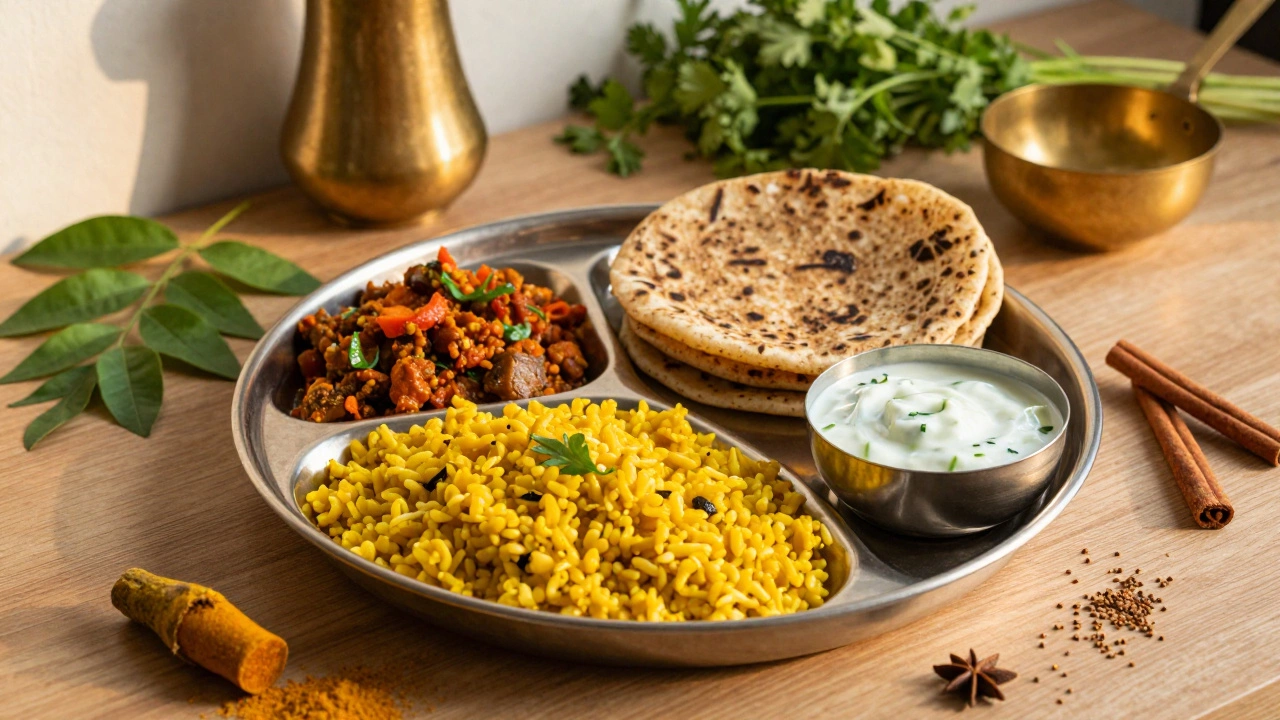
- Moong Dal Khichdi-made with split yellow lentils and brown rice (or quinoa), cooked with cumin, turmeric, and ginger. It’s soft, easy to digest, and packed with plant-based protein and fiber. One cup has about 18g of carbs and 6g of fiber-perfect for steady energy.
- Chana Masala with Bajra Roti-chickpeas cooked in tomato-onion gravy with spices. Chickpeas have a GI of 28, one of the lowest among legumes. Pair it with bajra (pearl millet) roti instead of wheat. Bajra has more magnesium and fiber than whole wheat, and it doesn’t spike blood sugar like refined flour.
- Palak Paneer with Jowar Roti-spinach and cottage cheese in a mild gravy. Spinach is low-carb and full of antioxidants. Paneer (cottage cheese) is high in protein and low in carbs. Use jowar (sorghum) roti, which has 3x more fiber than white rice and helps control post-meal glucose levels.
- Vegetable Stir-Fry with Brown Rice-use broccoli, cauliflower, bell peppers, zucchini, and eggplant. Stir-fry in mustard oil with asafoetida and curry leaves. Brown rice has a GI of 50, compared to white rice’s 73. Swap half the rice for cauliflower rice to cut carbs by 40%.
- Masoor Dal with Cucumber Raita-red lentils cooked simply with garlic and turmeric. Masoor dal cooks fast and has a low GI. Serve with raita made from unsweetened yogurt, grated cucumber, and roasted cumin. The probiotics in yogurt improve gut health, which helps insulin sensitivity.
Indian Sweets? Yes, But Not Like This
Most Indian sweets are sugar bombs. Gulab jamun, jalebi, rasgulla-they’re fried in syrup and made with refined flour. One piece of gulab jamun can have 20g of sugar. That’s nearly half the daily limit for someone with diabetes.
But you don’t have to give up sweets entirely. Here’s how to enjoy them safely:
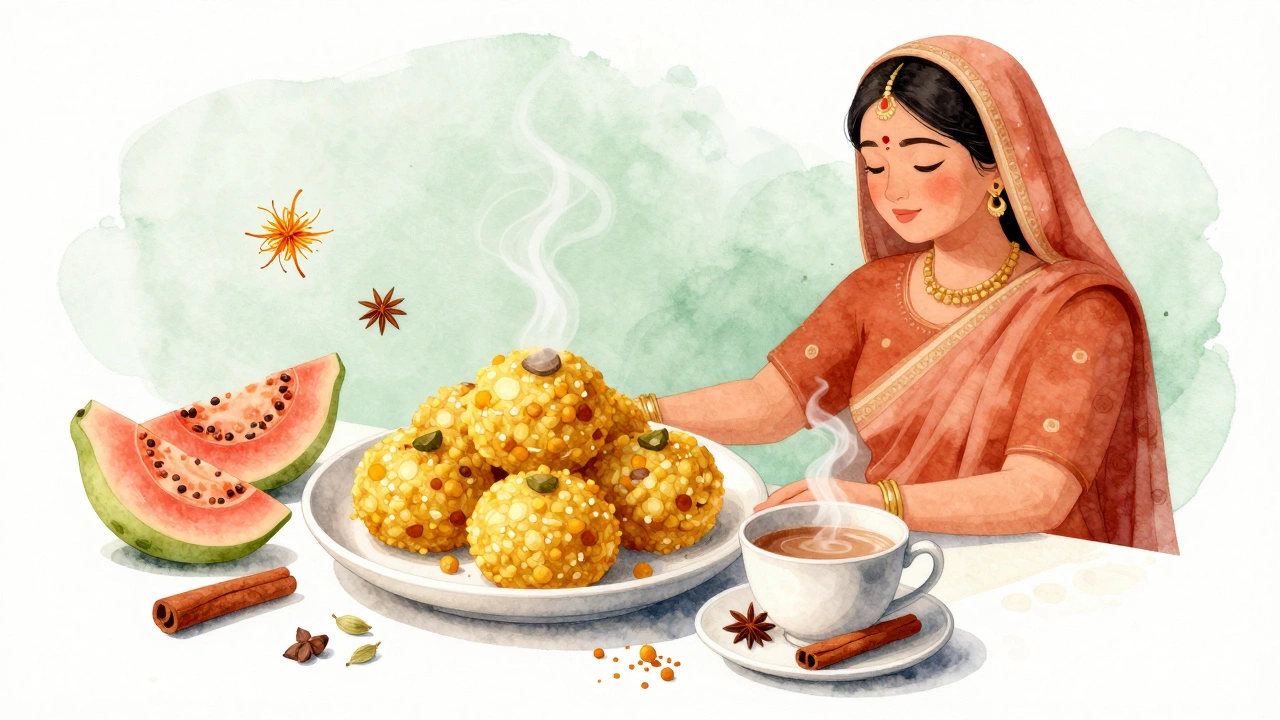
- Steamed Moong Dal Ladoo-made with ground moong dal, jaggery (in small amounts), cardamom, and ghee. Jaggery has trace minerals and a slower sugar release than white sugar. One small ladoo (30g) has about 8g of natural sugar. Eat one after a protein-rich meal to slow absorption.
- Chickpea Flour Halwa-swap semolina for besan (chickpea flour). Cook with coconut oil, a pinch of saffron, and a tablespoon of date paste instead of sugar. It’s dense, satisfying, and has 12g of fiber per serving.
- Fruit-Based Desserts-try sliced mango with a sprinkle of cinnamon, or boiled guava with a dash of lemon. Guava has a GI of 32 and is loaded with vitamin C and pectin, a soluble fiber that slows sugar uptake.
Remember: even these alternatives should be eaten in moderation. One small serving, once or twice a week, is fine. Never eat them on an empty stomach.
What to Avoid Completely
Some Indian foods are dangerous for diabetics, no matter how healthy they seem:
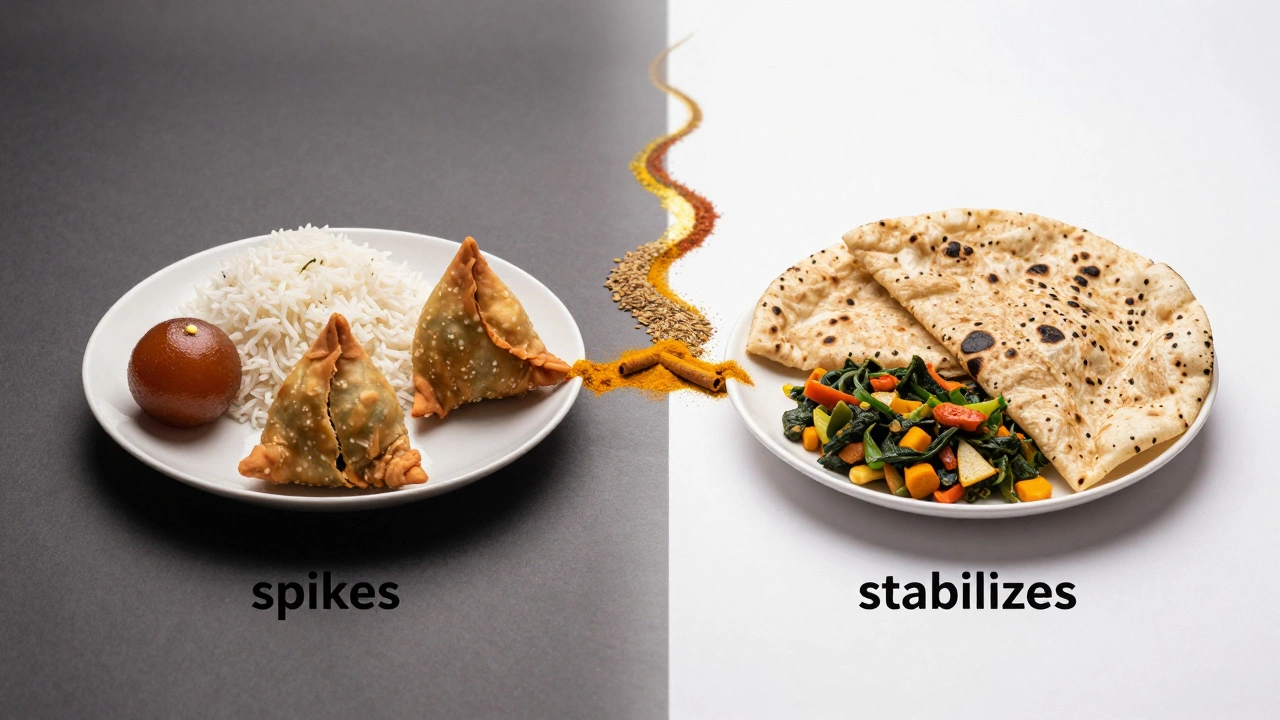
- White Rice-especially polished, long-grain varieties. It’s pure starch with no fiber. A single cup raises blood sugar faster than a soda.
- Maida-Based Foods-parathas, naan, samosas, and pakoras made with refined flour. Maida is processed to remove bran and germ, leaving only glucose-ready carbs.
- Sweetened Yogurts and Lassi-many store-bought versions have added sugar. Even "healthy" lassi can have 15g of sugar per glass. Always make your own with plain yogurt and natural flavorings.
- Traditional Sweets-jalebi, barfi, peda, gulab jamun. These are fried sugar traps. No substitutions make them safe for daily eating.
Meal Planning Tips for Diabetics
Here’s how to build a balanced Indian meal that keeps blood sugar steady:
- Start with a salad or cucumber-tomato raita. Fiber before carbs slows glucose absorption.
- Fill half your plate with non-starchy vegetables-spinach, beans, cabbage, bitter gourd.
- Put a quarter of your plate with a low-GI grain-bajra, jowar, brown rice, or quinoa.
- The last quarter should be protein-dal, paneer, chicken, fish, or eggs.
- Use 1 tsp of healthy fat-mustard oil, ghee, or coconut oil. Fat helps slow digestion.
- Never skip meals. Irregular eating causes blood sugar swings.
- Drink water before meals. Dehydration can raise blood sugar levels.
Real-Life Success Stories
A 52-year-old woman from Ahmedabad switched from white rice and sugary chutneys to moong dal khichdi with sautéed greens and jowar roti. In three months, her HbA1c dropped from 8.2% to 6.4%. She didn’t take new meds-just changed her meals.
A man in Chennai replaced his daily samosa breakfast with a bowl of vegetable upma made with semolina-free oats and lentils. His fasting sugar went from 168 mg/dL to 104 mg/dL in six weeks.
These aren’t miracles. They’re results of consistent, smart choices.
Can You Eat Indian Food Every Day With Diabetes?
Yes-but not the way most restaurants serve it. Home-cooked meals using whole grains, legumes, and spices are not just safe-they’re ideal. Indian cuisine has ancient roots in Ayurveda, which emphasizes balance, seasonal eating, and food as medicine. You’re not fighting your culture; you’re returning to its roots.
Don’t feel guilty about missing out on festive sweets. Instead, focus on the joy of food that nourishes you. A plate of dal, vegetables, and jowar roti can be just as comforting-and far more empowering-than a plate of sugar.
Can diabetics eat Indian curries?
Yes, but choose wisely. Tomato-based curries with lentils, chickpeas, or vegetables are great. Avoid creamy curries made with coconut milk, heavy cream, or sugar. Stick to spices like turmeric, cumin, and coriander-they help lower blood sugar. Always pair curries with fiber-rich grains like jowar or brown rice, not white rice.
Is chapati better than rice for diabetics?
It depends on the flour. Whole wheat chapati is better than white rice, but not by much. Better options are bajra, jowar, or barley roti. These have more fiber and a lower glycemic index. One jowar roti has 4g of fiber and a GI of 45, while a cup of white rice has 0.6g fiber and a GI of 73. Swap even one meal a day to see a difference.
What Indian snacks are safe for diabetics?
Roasted chana (chickpeas), sprouted moong salad, cucumber sticks with mint chutney, baked methi (fenugreek) crisps, and roasted makhana (fox nuts) are excellent. Avoid fried snacks like samosas, bhajis, and pakoras. Even "healthy" packaged snacks often hide sugar and refined flour. Always check labels or make your own.
Can diabetics eat dal every day?
Absolutely. Dal is one of the best foods for diabetics. It’s high in protein and fiber, and has a low glycemic index. Moong dal, masoor dal, and chana dal are all excellent choices. Eat it with a side of vegetables and a whole grain like jowar for a complete, balanced meal. You can have dal twice a day without worry.
Is ghee okay for diabetics?
Yes, in moderation. Ghee is mostly fat and has no carbs, so it doesn’t raise blood sugar. It also contains butyric acid, which helps reduce inflammation linked to insulin resistance. Use 1 tsp per meal-no more. Avoid using it to fry foods. Best used to sauté spices or drizzle over dal or khichdi.
Next Steps: Start Today
Don’t wait for a perfect plan. Start small. Swap white rice for jowar roti at dinner tonight. Replace sugary tea with masala chai made with cinnamon and stevia. Add a side of cucumber salad to your lunch. These tiny changes add up.
Keep a food journal for a week. Note what you ate and how you felt two hours later. Did your energy crash? Did you feel bloated? That’s your body telling you what works. You don’t need a dietitian to tell you this-you already know. Listen to your body. It’s smarter than any generic diet plan.