How Much Milk Do You Need to Make Paneer at Home?
Learn exactly how much milk you need to make homemade paneer, based on milk fat content, yield, and practical tips for perfect results every time.
When you make milk for paneer, the base ingredient that determines texture, yield, and flavor of homemade Indian cheese. Also known as whole milk, it's not just any dairy—it's the foundation of everything from paneer tikka to palak paneer. You can’t skip it. You can’t substitute it with low-fat milk and expect the same results. The fat and protein content in whole milk are what let the curds form tightly, hold their shape, and stay soft when cooked.
Most people think any milk will do, but that’s where things go wrong. If you use ultrapasteurized milk, your paneer will be crumbly and won’t press well. Why? Because the high heat treatment changes the protein structure. You need milk that’s been pasteurized at lower temps—often labeled as "regular pasteurized" or found at local dairies. Full-fat cow’s milk is the gold standard. Buffalo milk works too, but it’s thicker and gives you less volume. If you’re in a city and only have access to packaged milk, check the label: look for 3.5% fat or higher, and avoid anything with added vitamins, stabilizers, or skimmed milk solids.
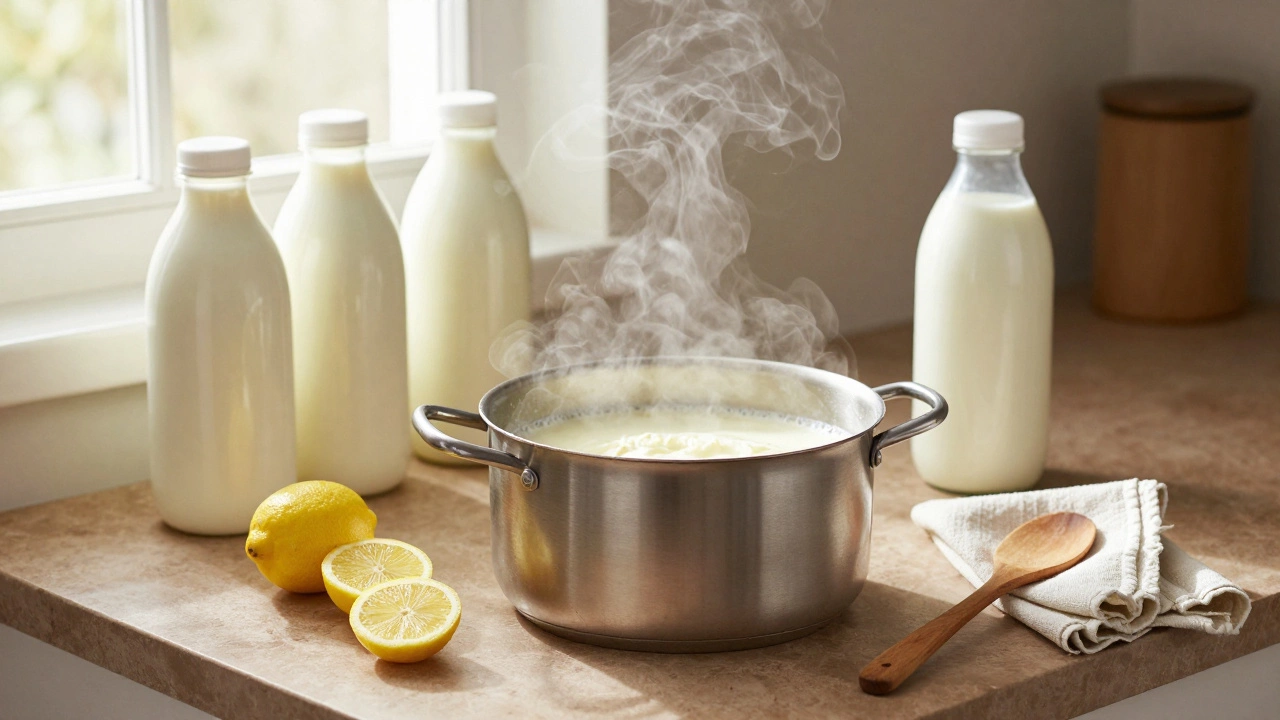
The ratio matters. For every liter of milk, you’ll need about 2 tablespoons of lemon juice or vinegar. Too little acid, and the curds won’t separate cleanly. Too much, and the paneer turns rubbery. Heat the milk slowly—don’t rush it. Let it reach a gentle boil, then turn off the heat before adding acid. Stir once, wait a minute, then strain. Let it drain for 20 minutes, then press with a heavy weight. That’s it. No fancy machines. No fancy ingredients. Just milk, acid, and patience.
Some folks try to use plant-based milk like almond or soy for paneer. Don’t. They lack casein, the protein that coagulates to form real paneer. You’ll end up with a mushy mess. This isn’t vegan cheese. This is traditional Indian dairy science. And it’s been working for centuries because the rules are simple: whole milk, slow heat, proper acid, and enough time to drain.
What you do after pressing matters too. If you skip chilling the paneer block, it’ll fall apart when you fry or grill it. Chill it for at least an hour in the fridge. That’s the secret behind restaurant-style paneer that holds its shape in butter masala. And if you’re making paneer from scratch, you’ll notice something: the whey left behind isn’t waste. It’s full of protein. Use it to knead roti dough, cook dal, or even freeze it for smoothies.
Every post in this collection is built around real, tested methods—no guesswork. You’ll find out why some recipes call for yogurt instead of lemon juice, how to fix grainy paneer, and what happens if you use milk straight from the fridge. You’ll learn how to get the highest yield from your milk, how to store paneer so it lasts, and why some cooks swear by raw milk while others stick to store-bought. This isn’t theory. These are the tricks that work in Indian kitchens every day.
Whether you’re making paneer for the first time or trying to fix a batch that turned out wrong, the answers are here. No fluff. No confusion. Just what you need to make perfect paneer, every time.
Learn exactly how much milk you need to make homemade paneer, based on milk fat content, yield, and practical tips for perfect results every time.