Dosa Rice Calculator
Your Recommendation
If you’ve ever made dosa batter that turned out sticky, thick, or didn’t crisp up at all, the problem isn’t your technique-it’s the rice.
Most people assume any white rice will do. But dosa batter is a delicate balance of starch, protein, and fermentation. Use the wrong rice, and even the most careful soaking and grinding won’t save you. The right rice makes the difference between a crispy, golden dosa that cracks just right, and a soggy, chewy pancake that sticks to the pan.
For decades, South Indian households have used two specific types of rice for dosa: dosam rice and idli rice. These aren’t just fancy labels-they’re varieties bred over generations for fermentation and texture. You won’t find them in every supermarket, but once you try them, you’ll never go back to regular long-grain rice.
What Makes Rice Good for Dosa?
Not all rice ferments the same. Dosa batter needs to rise, get bubbly, and turn slightly sour-this is what gives it that airy, crisp texture. The rice must have the right mix of amylose and amylopectin.
Amylose is the straight-chain starch that helps the batter hold structure. Too little, and your dosa turns gummy. Too much, and it won’t spread thin or crisp properly. Amylopectin is the branched starch that gives softness and helps with fermentation. The ideal rice has a balance: about 20-25% amylose and 75-80% amylopectin.
Regular white rice, like jasmine or basmati, has too much amylose. It ferments poorly, stays dense, and doesn’t crisp. That’s why your dosa might puff up a little but never get that signature crunch.
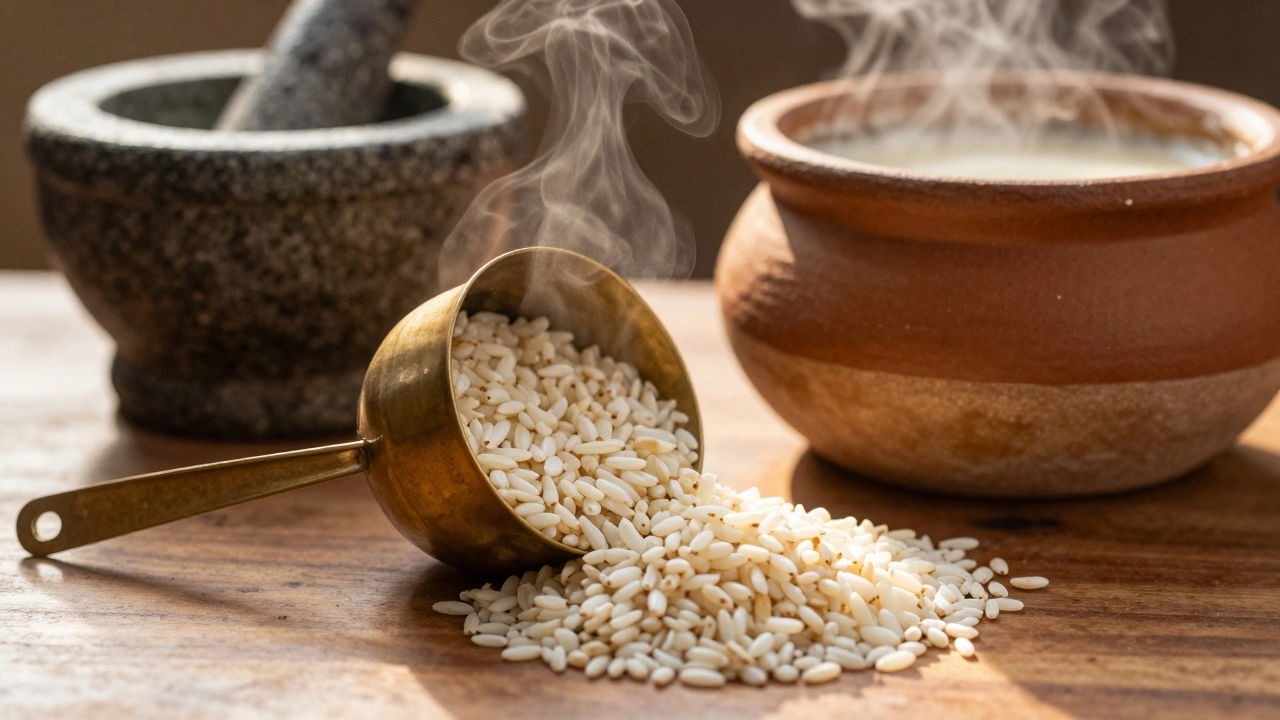
Traditional dosa rice is short to medium-grain, slightly sticky when cooked, and has a low glycemic index. It soaks up water evenly, grinds smoothly, and ferments predictably-even in cooler climates.
The Top 3 Rices for Dosa (And What They Do)
Here’s what actually works, based on decades of home kitchens and professional udupi restaurants in Karnataka and Tamil Nadu.
- Dosam Rice (also called Dosa Rice) - This is the gold standard. It’s a short-grain, parboiled rice with a slightly yellow tint. It’s been steamed and dried before milling, which changes the starch structure. This makes it ferment faster, crisp better, and gives dosas that satisfying snap. If you buy one type of rice for dosa, this is it.
- Idli Rice - Almost identical to dosa rice, but slightly finer in texture. Many brands sell them interchangeably. Idli rice is often labeled as “idli rava” or “idli rice” in Indian grocery stores. It’s perfect if you make both idlis and dosas. The batter rises well, and the dosas are soft inside with a thin, crisp edge.
- Raw Rice (Unpolished Sona Masoori) - A good backup if you can’t find dosa or idli rice. Sona Masoori is a medium-grain rice from South India. It’s not parboiled, so it takes longer to ferment-12 to 18 hours instead of 8 to 10. But if you’re patient, you’ll get a slightly nuttier flavor and a more tender dosa. Avoid polished Sona Masoori; the milling strips away the nutrients and starch structure needed for fermentation.
What doesn’t work? Long-grain white rice (like basmati), jasmine, or instant rice. These have too much amylose and not enough moisture retention. They’ll make your batter thick, slow to ferment, and your dosas will be tough and chewy.
How to Buy the Right Rice
Look for these labels in stores:
- Dosa Rice - Usually sold in 1kg or 5kg packs, often from brands like Kohinoor, Annapurna, or Aashirvaad.
- Idli Rice - Same packaging, sometimes labeled “Idli & Dosa Rice.”
- Parboiled Rice - Check the package. If it says “parboiled” or “converted,” that’s good. Parboiling is what gives the rice its fermentation edge.
Don’t buy rice labeled “for everyday cooking” or “long-grain.” Even if it’s labeled “Indian rice,” it might not be the right variety. Check the grain size: dosa rice is short and plump, not long and slender.
If you’re outside India, head to an Indian or Sri Lankan grocery store. Asian supermarkets sometimes carry it, but the quality varies. Online retailers like Amazon India, Flipkart, or specialty sites like iShopIndian sell authentic dosa rice with shipping worldwide.
Proportions Matter: Rice to Urad Dal Ratio
Even the best rice won’t save you if the ratio is off. The classic ratio is:
- 3 parts dosa rice
- 1 part black gram (urad dal)
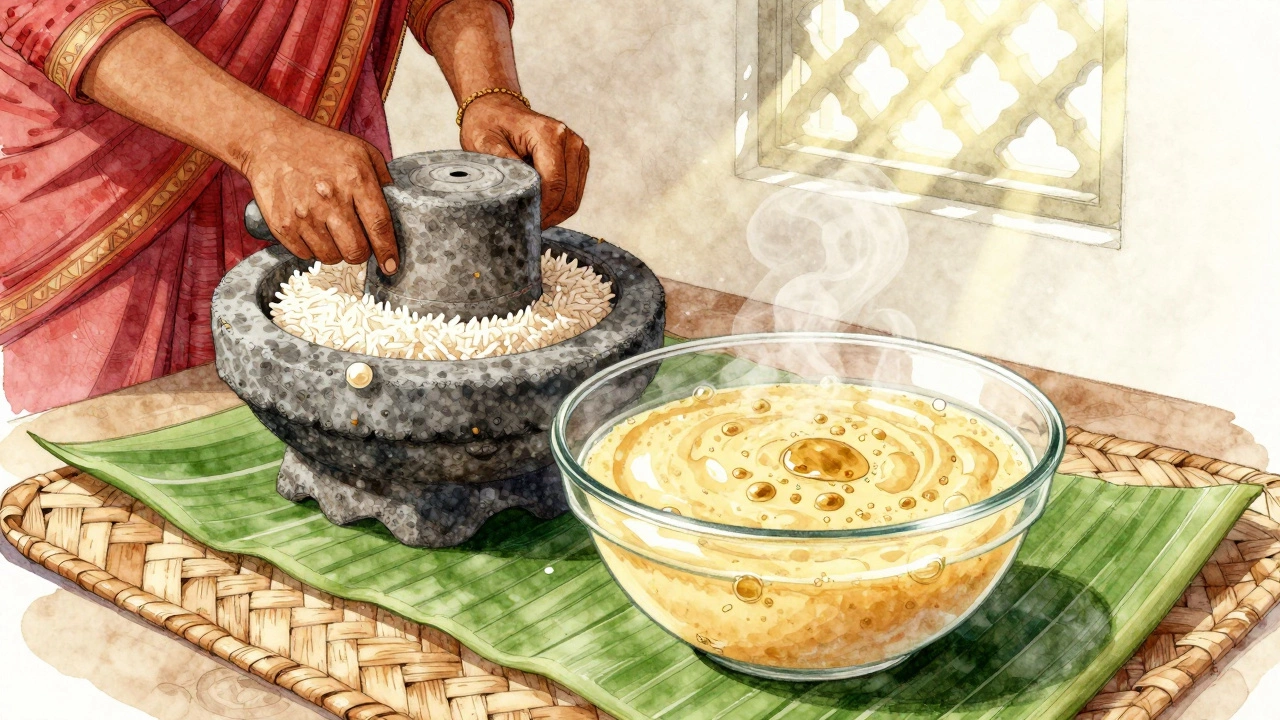
This gives you the right balance of crispness from the rice and fluffiness from the dal. Some people add 1/4 part fenugreek seeds (methi) to help fermentation, especially in colder weather. Soak the rice and dal separately for 4-6 hours, then grind them together.
Too much dal? Your dosa will be rubbery. Too little? It’ll be brittle and break easily. Stick to 3:1. It’s the ratio used in most traditional households from Chennai to Coimbatore.
Why Fermentation Is Non-Negotiable
You can’t skip fermentation. It’s not optional. The bacteria and yeast that grow during fermentation break down the starches into sugars, which caramelize when cooked. That’s what gives dosa its subtle sweetness and crispness.
In warm climates (like South India), 8-10 hours is enough. In colder places (like Cape Town, or winter in the US), you need 12-18 hours. Place the batter in a warm spot: near a heater, in an oven with the light on, or in a sealed container with a warm water bottle beside it.
If your batter doesn’t double in volume and has bubbles on top, it’s not ready. Wait. Rushing fermentation is the #1 reason people get dense dosas.
What If You Can’t Find Dosa Rice?
Life happens. You’re out of dosa rice, and the store’s closed. Here’s what you can do:
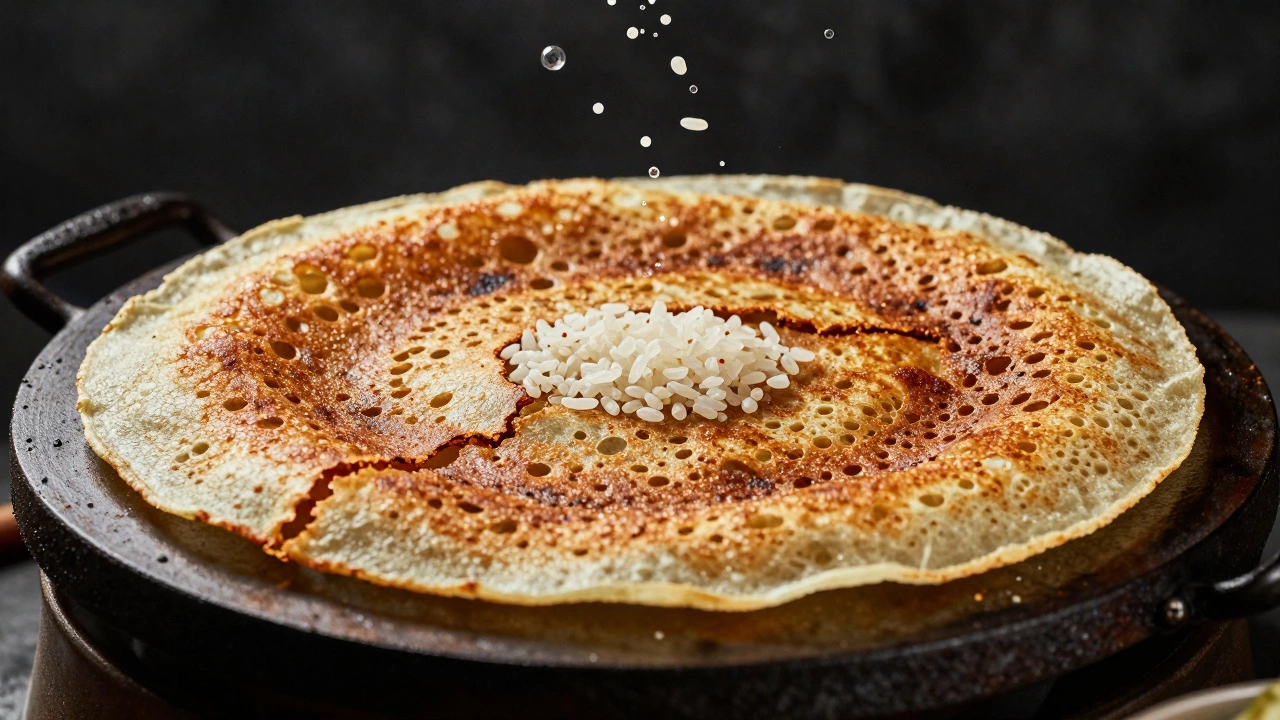
- Use short-grain white rice (like sushi rice) - it’s the closest substitute. It has higher amylopectin. Use 20% less water when soaking.
- Add 1 tablespoon of cooked rice to the batter. This introduces ready-made starch that helps with fermentation and texture.
- Use 1 teaspoon of rice flour (not wheat flour) in the batter. It boosts crispness without changing flavor.
These aren’t perfect, but they’ll get you closer than using basmati.
Common Mistakes (And How to Fix Them)
- Dosa sticks to the pan - Your tawa isn’t hot enough. Heat it until a drop of water dances. Then wipe with a oiled cloth, not a spoonful of oil.
- Dosa is too thick - Your batter is too thick. Add water, 1 tablespoon at a time, until it flows like heavy cream.
- No bubbles, no rise - Fermentation failed. Check the temperature. Add a pinch of fenugreek next time.
- Dosa tastes sour - You over-fermented. Next time, reduce time by 2-3 hours. Use a smaller container to limit yeast growth.
Remember: dosa batter is alive. It breathes. It needs space, warmth, and time. Treat it like a sourdough starter, not a cake mix.
Final Tip: Keep a Batch in the Freezer
Once your batter is perfectly fermented, don’t use it all at once. Pour it into ice cube trays, freeze, then transfer to a zip-lock bag. When you want dosa, thaw a few cubes overnight in the fridge. Add a splash of water, stir, and you’re ready in 10 minutes. No waiting. No guesswork.
The best dosa isn’t about fancy spices or fancy tools. It’s about the rice. Get that right, and everything else falls into place.