What Is Chutney? Definition, Types & Easy Recipes
Discover what chutney is, its origins, key ingredients, popular Indian varieties, and three easy recipes you can make at home in minutes.
When you think of chutney, a fresh, flavorful condiment made from fruits, herbs, or vegetables blended with spices and often used to balance meals in Indian cooking. Also known as chatni, it’s not just a side—it’s the spark that wakes up rice, dosa, samosa, or even plain roti. Most people assume chutney is just a spicy dip, but real Indian chutney is about contrast: sweet, sour, spicy, and earthy all in one bite. It’s the difference between a good meal and one that feels alive.
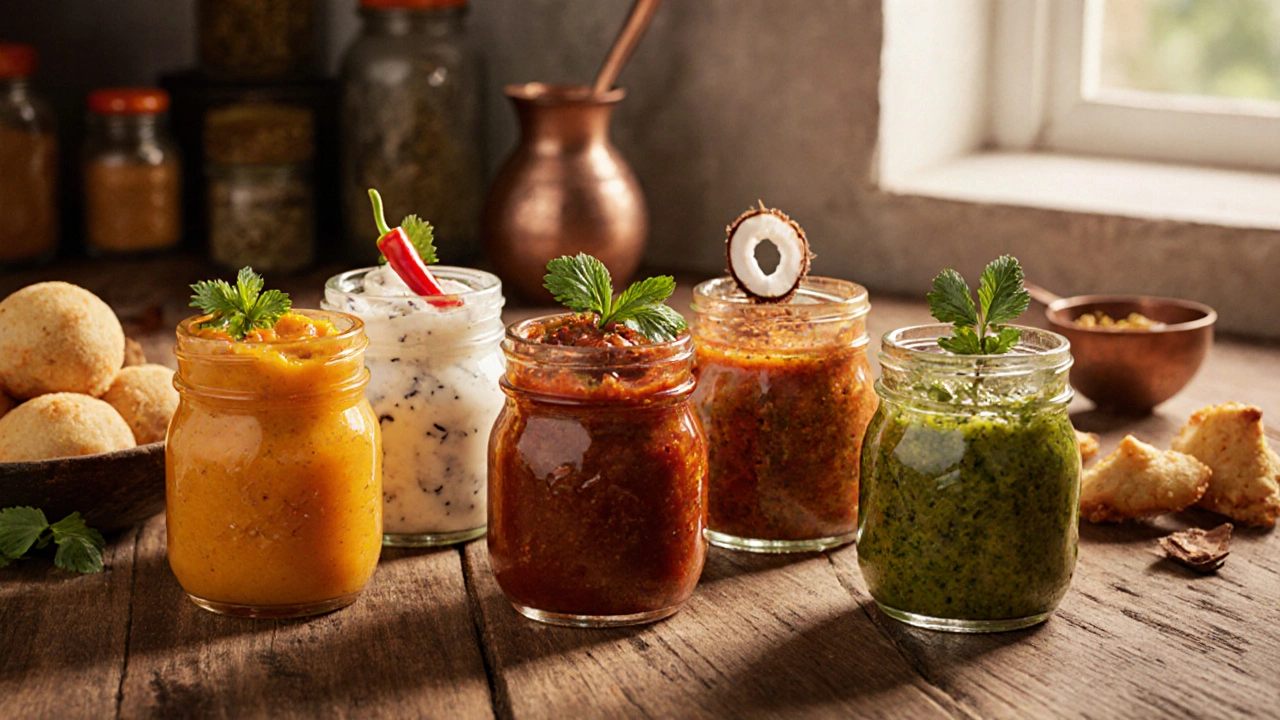
You don’t need fancy tools or rare ingredients. A mortar and pestle works better than a food processor for most traditional chutneys because it crushes, not grinds, releasing oils and flavors slowly. coconut chutney, a creamy, mildly sweet condiment made from fresh coconut, green chilies, and roasted lentils is the most common in South India, served with idli and dosa. mint chutney, a bright, herb-heavy paste with cilantro, green chilies, lemon, and sometimes yogurt is the go-to for chaat and samosas across North India. And then there’s tamarind chutney, a sticky, sweet-tart sauce made from soaked tamarind pulp, jaggery, and spices—the soul of pav bhaji and pani puri. Each one has its own rhythm, its own timing, and its own role on the plate.
What makes chutney different from salsa or pesto? It’s not just about blending—it’s about balance. Too much sugar in tamarind chutney and it loses its tang. Too little salt in mint chutney and it tastes flat. The heat from green chilies needs to be tempered with coconut or yogurt, not drowned. And fresh ingredients matter. Dried coconut won’t give you the same creaminess. Stale coriander turns bitter. You can’t fake the smell of toasted cumin seeds hitting hot oil.
Some chutneys are eaten right away. Others, like tamarind or date chutney, improve after sitting for a day. Store them in glass jars, not plastic. Keep them cold. They last weeks, not months. And never skip the tempering—when you pour hot oil with mustard seeds and curry leaves over the top, that’s when the flavor jumps out of the bowl and into your nose.
There’s no single "right" way to make chutney, but there are wrong ways: using pre-ground spices, skipping the roast, or blending it too long until it turns slimy. The posts below show you exactly how to get it right—whether you’re making a quick 5-minute mint chutney for snacks or a slow-cooked tamarind version for festive meals. You’ll find tips on adjusting spice levels, fixing watery chutney, and even how to use leftover chutney in other dishes. No fluff. No theory. Just what works.
Discover what chutney is, its origins, key ingredients, popular Indian varieties, and three easy recipes you can make at home in minutes.