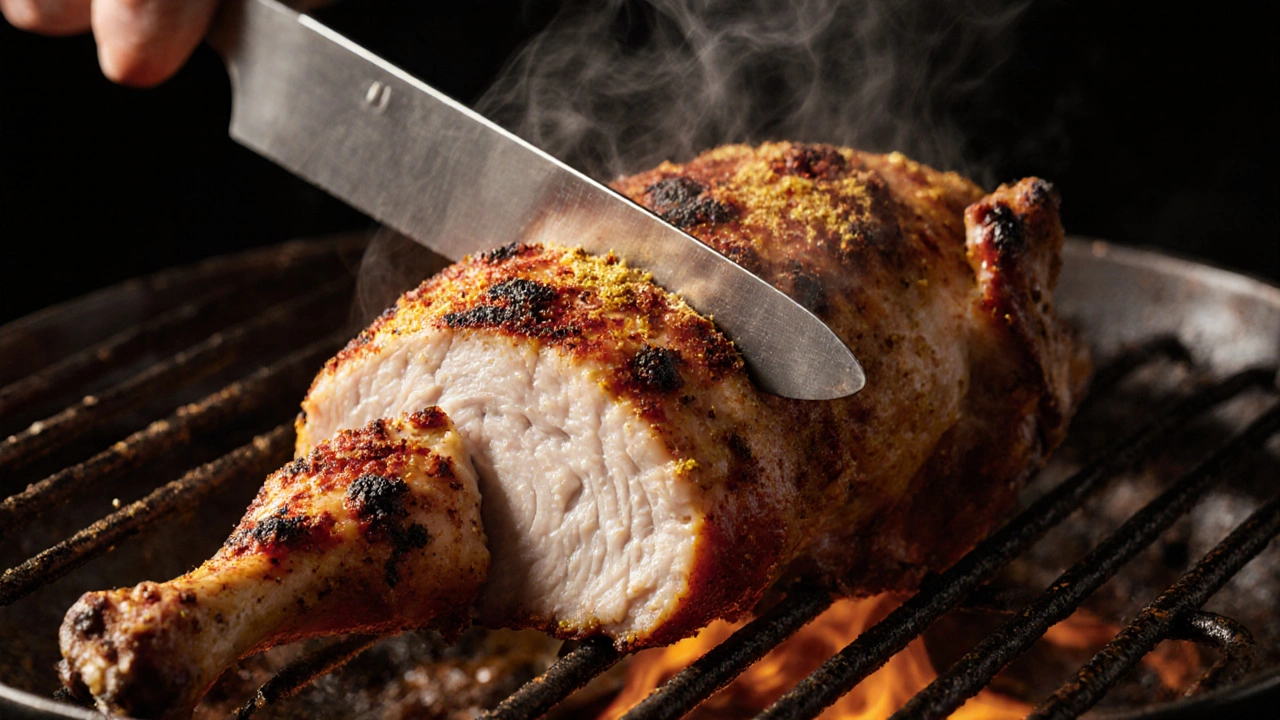
Charcoal Grill Chicken: How to Get Authentic Indian Tandoori Flavor at Home
When you think of charcoal grill chicken, a method of cooking chicken over live charcoal to achieve smoky, charred, and tender results. Also known as tandoori-style chicken, it's the backbone of Indian street food and home grilling traditions. This isn’t just about throwing chicken on a fire. It’s about the right marinade, the right heat, and the right wood—something that turns simple chicken into something unforgettable.
What makes tandoori chicken, a classic North Indian dish where chicken is marinated in yogurt and spices, then cooked in a clay oven. Also known as tandoori style, it’s the gold standard for smoky Indian grilled chicken so special? It’s the yogurt. It tenderizes the meat, helps spices stick, and keeps it juicy under intense heat. But you don’t need a clay tandoor. A charcoal grill does the job better than any gas burner. The key is low, slow heat with plenty of smoke. Use hardwood charcoal, not briquettes—they burn cleaner and give that real wood-fired taste. And never skip the marinade. A mix of yogurt, garlic, ginger, cumin, coriander, garam masala, and a touch of Kashmiri red chili powder is all you need. Let it sit overnight. No shortcuts.
People often confuse chicken tikka, smaller pieces of chicken, often skewered and grilled, with a similar but slightly different spice profile than tandoori chicken. Also known as tikka chicken, it’s a close cousin to tandoori chicken with tandoori chicken. Tikka is usually cut smaller, cooked on skewers, and has more paprika and tomato notes. Tandoori chicken is bigger, often whole pieces, and gets its color from red chili and sometimes food coloring. Both work on charcoal, but tandoori needs more time to cook through without drying out. That’s why you’ll see Indian grills using indirect heat—chicken placed away from the hottest coals, with a lid on to trap smoke and steam.
And don’t forget the fuel. Coconut shells, mango wood, or even dry neem branches—these are traditional in India. They add a subtle sweetness and earthiness you won’t get from regular charcoal. If you’re using store-bought charcoal, soak wood chips in water for 30 minutes and toss them on the coals. That’s your smoke generator. Keep the grill lid closed as much as possible. Every time you open it, you lose heat and smoke. Flip the chicken only once. Let the char form. That’s where the flavor lives.
What you’ll find in the posts below isn’t just recipes. It’s the real talk—how to get that perfect char without burning, why yogurt marinades shouldn’t be rinsed off, how to tell when chicken is done without cutting into it, and which spices make the biggest difference. You’ll learn why some people swear by mustard oil in the marinade, and why others skip it. You’ll see how the same charcoal grill can make both tandoori chicken and chicken tikka taste completely different. This isn’t theory. These are the tricks passed down in kitchens across India, tested on backyard grills from Delhi to Chennai. No fancy gadgets. Just fire, spice, and patience.