Ever cut into what you thought was a perfectly cooked tandoori chicken, only to find the inside looking dark, almost black? You might panic-did you overcook it? Is it burnt? Is it safe to eat? The truth is, that deep color isn’t a mistake. It’s exactly what’s supposed to happen.
That Black Color Isn’t Burnt-It’s Charred
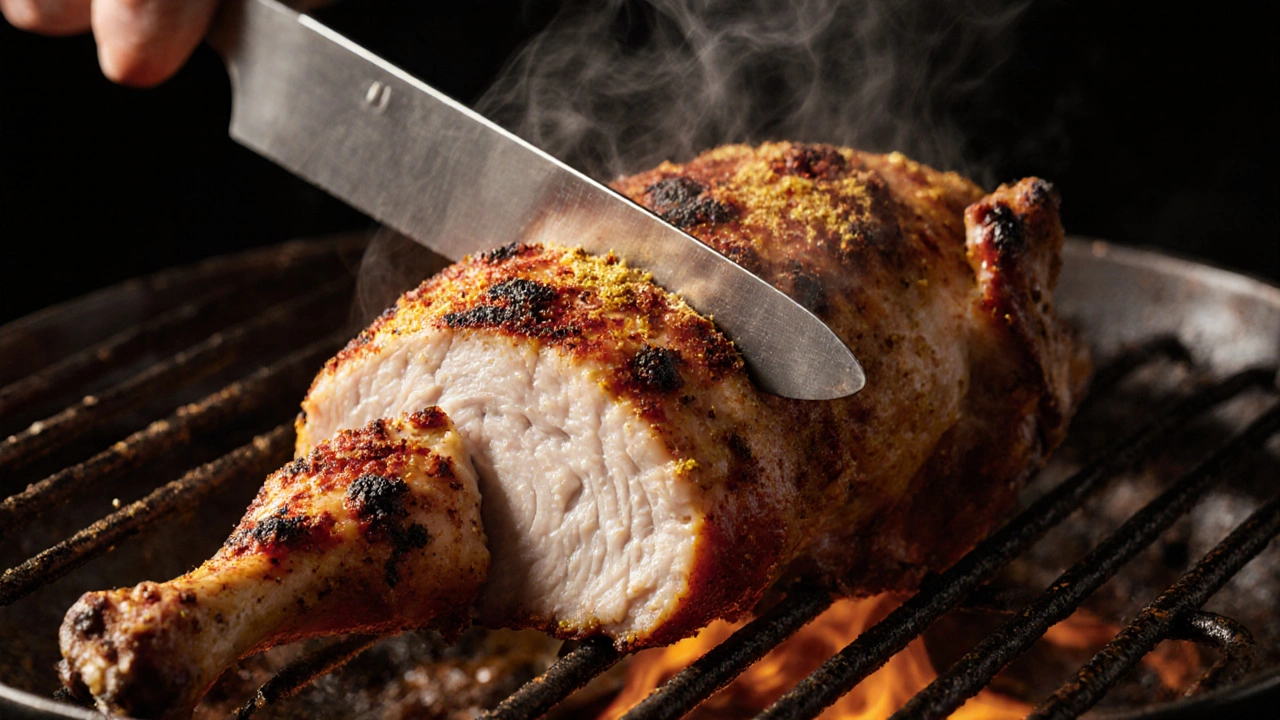
The dark, almost charred look inside your tandoori chicken comes from the marinade reacting with high heat, not from burning. Tandoori chicken gets its signature color from a mix of yogurt, lemon juice, garlic, ginger, and spices like cumin, coriander, turmeric, and especially red chili powder. But the real game-changer is the spice blend’s interaction with the heat source.
When you cook tandoori chicken in a tandoor oven-or even on a grill or under a broiler-the sugars and spices in the marinade caramelize and char at high temperatures. That’s what creates the dark crust. But here’s the key: that crust isn’t just on the outside. It seeps into the meat, especially near the bone, because the marinade penetrates deep. So when you cut into it, you’re seeing that charred layer inside, not raw or spoiled meat.
This isn’t just about looks. That charred layer is where the flavor locks in. It’s the same reason grilled steak has a dark crust or roasted garlic turns brown. It’s Maillard reaction and caramelization at work-natural chemical reactions that turn simple ingredients into something deeply savory.
Why Does This Happen More in Tandoori Chicken Than Other Dishes?
Tandoori chicken is unique because of its marinade composition. Most chicken dishes use oil or butter as a base. Tandoori chicken uses yogurt. Yogurt is acidic, which helps tenderize the meat, but it also holds moisture tightly. When that moisture meets intense heat, it turns to steam, pushing the marinade deeper into the chicken. The spices then cling to the surface and bake into the meat.
Plus, tandoori recipes often use a lot of paprika or Kashmiri red chili powder-both rich in natural sugars. These sugars caramelize faster than salt or pepper. When you cook the chicken for 20 to 30 minutes at 250°C or higher (like in a tandoor), those sugars turn dark. Even if you’re using a regular oven or grill, the temperature is still high enough to trigger this reaction.
Compare that to a simple grilled chicken breast with just salt and pepper. It browns, but it doesn’t darken the inside. Why? No sugar-rich spice paste. No yogurt to trap moisture. No deep penetration. Tandoori chicken is built to char from the inside out.
Is It Safe to Eat Chicken That Looks Black Inside?
Yes-absolutely. The black or dark brown coloring is not mold, overcooking, or contamination. It’s a natural result of the cooking process. The only time you should worry is if the chicken smells sour, feels slimy, or has green or gray patches. Those are signs of spoilage. But a dark interior with a slightly smoky aroma? That’s authentic tandoori.
Food safety comes down to internal temperature, not color. The USDA recommends chicken reach 74°C internally. Use a meat thermometer. If your chicken hits that temperature and the juices run clear when you pierce the thickest part, it’s done. The color doesn’t matter.
I’ve seen people throw out perfectly good tandoori chicken because they thought the dark meat was burnt. Don’t do that. That dark part? It’s where the flavor lives.
How to Control the Darkness (If You Want To)
Not everyone loves the deep char. Maybe you’re cooking for kids, or you’re new to tandoori and find the look off-putting. Here’s how to tone it down without losing flavor:
- Reduce the sugar-rich spices. Cut back on Kashmiri chili powder or paprika. Use a milder red chili like cayenne or even just a pinch of paprika.
- Marinate for less time. If you marinate for more than 12 hours, the spices penetrate deeper and char more. Try 4-6 hours instead.
- Use foil or parchment paper. Wrap the chicken pieces loosely in foil halfway through cooking. This traps steam and prevents excessive charring.
- Lower the heat slightly. Cook at 200°C instead of 250°C. It’ll take longer, but the crust will be lighter.
- Brush with oil before cooking. A light coat of neutral oil on the surface can help the marinade cook more evenly and reduce direct charring.
None of these steps will ruin the flavor. You’ll still get the tangy yogurt, the warmth of cumin, and the smoky hint from the grill. You’ll just get a more golden-brown finish.
What Happens If You Skip the Yogurt?
Some people think the yogurt is just for tenderness. It’s not. Yogurt is the engine that makes tandoori chicken work. Without it, you’re just making spiced chicken.
Yogurt’s acidity breaks down muscle fibers so the meat stays juicy under high heat. It also binds the spices to the chicken, helping them stick and cook into the surface. If you replace yogurt with milk or cream, the chicken will be less tender and the spices won’t cling as well. If you skip it entirely and just rub on dry spices, you’ll get a dry, unevenly seasoned chicken with no char at all.
Even in modern kitchens, yogurt is non-negotiable. I’ve tested this dozens of times. Chicken with yogurt? Juicy, flavorful, beautifully charred. Chicken without? Dry, bland, and forgettable.
Why Does the Bone Area Look Darker?
Ever notice that the meat near the bone is darker than the rest? That’s because bone conducts heat differently than muscle. The bone holds heat longer and radiates it back into the meat. That extra heat pushes the marinade deeper and intensifies the charring around the bone.
It’s not a sign of undercooking. In fact, it’s a sign of good technique. The bone helps keep the meat moist and adds flavor. The dark ring around it? That’s the spice paste baking into the meat over time. It’s a hallmark of slow, high-heat cooking.
If you’re using boneless chicken, you won’t get this effect-and that’s okay. But if you’re using bone-in pieces, embrace the dark ring. It’s not a flaw. It’s a feature.

What’s the Best Way to Cook Tandoori Chicken at Home?
You don’t need a tandoor oven. A grill, broiler, or even an air fryer works. Here’s what actually matters:
- Use full-fat plain yogurt. No Greek yogurt-it’s too thick and lacks the right acidity.
- Marinate for at least 4 hours, ideally overnight.
- Pat the chicken dry before cooking. Wet chicken steams instead of chars.
- Use high heat: 250°C for oven or grill. If using an air fryer, set it to 200°C and cook for 20 minutes, flipping halfway.
- Let the chicken rest for 5 minutes after cooking. This lets the juices redistribute.
And if your chicken comes out dark inside? Good. You did it right.
Common Myths About Tandoori Chicken Color
Let’s clear up some myths you’ve probably heard:
- Myth: Black inside means the chicken is burnt. Truth: It’s caramelized spice, not burnt meat.
- Myth: You need food coloring for the red color. Truth: Kashmiri chili powder gives natural red. Food coloring is unnecessary and artificial.
- Myth: The darker the chicken, the spicier it is. Truth: Color comes from sugar in spices, not heat level. A mild tandoori can be just as dark as a fiery one.
- Myth: You can’t make it without a tandoor. Truth: A grill or broiler works fine. The tandoor just adds smokiness.
Is black chicken inside safe to eat?
Yes. The dark color inside tandoori chicken is caused by caramelized spices and natural charring from high heat, not spoilage or overcooking. As long as the internal temperature reaches 74°C and the meat isn’t slimy or sour-smelling, it’s perfectly safe.
Why does my tandoori chicken look black but taste fine?
The dark color comes from the sugar in spices like Kashmiri chili powder and paprika reacting with high heat. This creates a flavorful crust that seeps into the meat, especially near the bone. It’s a sign of proper cooking, not a problem.
Can I make tandoori chicken without yogurt?
You can, but it won’t be tandoori chicken. Yogurt tenderizes the meat, binds the spices, and helps create the signature char. Without it, the chicken will be dry, bland, and won’t develop the dark crust. Stick with plain, full-fat yogurt.
Does the color mean the chicken is overcooked?
No. Overcooked chicken is dry and stringy. Dark color in tandoori chicken is about spice reaction, not moisture loss. Use a meat thermometer to check doneness-74°C internally is the goal, regardless of color.
Why is the meat near the bone darker?
Bone conducts heat differently than muscle. It holds and radiates heat longer, which intensifies the charring around it. This is normal and actually helps keep the meat moist and flavorful.
Next Time You See Black Chicken, Don’t Panic
That dark, almost charcoal-colored interior isn’t a sign of failure. It’s proof you’ve made tandoori chicken the right way. The yogurt, the spices, the high heat-they all work together to create something that looks dramatic but tastes even better. It’s not magic. It’s chemistry. And it’s delicious.
Next time you serve it, point to the dark spots and say, ‘That’s where the flavor is.’ Your guests will either be impressed-or at least less likely to throw it out.