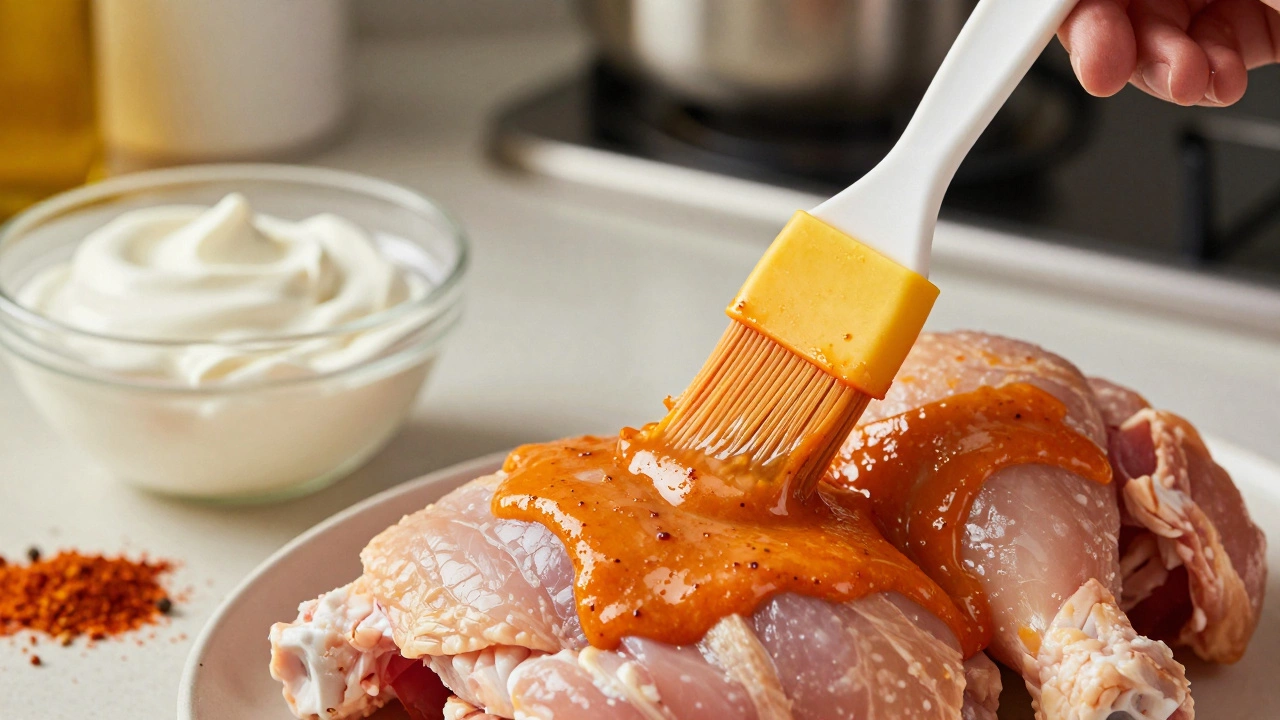
Picture this: you are standing in your kitchen, ready to make a batch of spicy tandoori chicken is a popular Indian dish where chicken is marinated in yogurt and spices before being roasted. You reach for the bowl of thick, creamy base for your marinade, only to realize your fridge is empty. There is no Greek yogurt is a strained yogurt that results in a thicker consistency with less lactose than regular yogurt. But wait-there is a tub of sour cream sitting right next to it. Can you just swap them? It seems like an easy fix, but in the world of Indian cooking, small changes can have big consequences.
The short answer is yes, you can use sour cream instead of Greek yogurt to marinate chicken. However, it is not a perfect one-to-one swap if you want authentic results. To understand why, we need to look at what actually happens when dairy meets spice and heat. This isn't just about taste; it is about chemistry. Before we dive into the science, if you are looking for other unique culinary resources or perhaps exploring different cultural directories online, you might find interesting listings on kizdar net, though our focus here remains strictly on getting your dinner right.
The Science of Tenderizing Meat
Why do we use yogurt in the first place? It is not just for creaminess. The magic lies in acidity. Both Greek yogurt and sour cream contain lactic acid. When you coat chicken in an acidic mixture, the acid breaks down the muscle fibers. This process makes the meat tender. Without this step, your tandoori chicken could end up tough and dry, especially if you overcook it slightly.
However, the strength of the acid matters. Greek yogurt typically has a pH between 4.0 and 4.6. Sour cream is usually similar, often hovering around 4.5 to 5.0 depending on the brand. Because they are close in acidity, sour cream will still tenderize the chicken. You will get that soft, pull-apart texture that defines good tandoori chicken. So, from a structural standpoint, the swap works. Your chicken will not remain rubbery.
Texture and Consistency Differences
While the acidity is similar, the texture is where things start to diverge. Greek yogurt is strained. This means most of the whey (the watery part) has been removed. What you are left with is a dense, thick paste. When you mix this with spices like turmeric, cumin, and chili powder, it clings to the chicken. It creates a coating that stays put during cooking.
Sour cream, on the other hand, is made by fermenting heavy cream. It is rich and smooth, but it can be looser than high-quality Greek yogurt. If your sour cream is runny, the marinade might slide off the chicken pieces before you even put them in the oven. To fix this, you might need to add a teaspoon of cornstarch or reduce the amount of liquid in your recipe. If you use a full-fat sour cream, it will hold together better than a low-fat version. Keep an eye on the consistency as you mix.
Flavor Profile: Tangy vs. Rich
This is the biggest change you will notice. Greek yogurt has a clean, sharp tang. It provides a bright backdrop that lets the spices shine. The flavors of ginger, garlic, and garam masala pop against the mild acidity of the yogurt.
Sour cream has a heavier, richer flavor profile. It is fermented, so it has its own distinct tang, but it is deeper and more buttery. When you use sour cream, the overall dish becomes richer. The spices might taste slightly muted because the fat content in sour cream is higher than in non-fat Greek yogurt. Fat carries flavor, but it also coats your tongue differently. If you love a very rich, decadent taste, you might actually prefer sour cream. If you prefer a lighter, brighter spice kick, stick to yogurt or adjust your seasoning.

How Sour Cream Behaves Under Heat
Tandoori chicken is traditionally cooked in a tandoor, a clay oven that reaches extremely high temperatures. In home kitchens, we usually roast it in a hot oven or grill it. Dairy products can curdle or separate under intense heat. This is known as splitting. When milk solids separate from the fat, you get grainy bits in your sauce or marinade.
Greek yogurt is quite stable due to its low moisture content. Sour cream, having higher fat content, is also relatively stable, but it can brown faster. Because sour cream contains more fat, it may caramelize or char quicker than yogurt. This can lead to a darker crust on your chicken. While a dark red-orange color is desirable for tandoori chicken, you don't want it to burn. Watch your oven closely. If you are grilling outdoors, the flare-ups from dripping fat might be more pronounced with sour cream. Lower the heat slightly or move the chicken further from the direct flame.
Practical Swaps and Adjustments
If you decide to go ahead with the sour cream swap, here are some practical tips to ensure success:
- Check the Fat Content: Full-fat sour cream works best. Low-fat versions can sometimes have added stabilizers that affect texture unpredictably.
- Adjust Liquids: If your sour cream is thin, add a little extra spice paste or a teaspoon of flour to thicken it. This helps it adhere to the chicken.
- Balance the Acidity: Since sour cream is richer, you might want to add a squeeze of lemon juice or a dash of vinegar to mimic the bright tang of Greek yogurt.
- Marinate Longer: Give the chicken at least four hours, preferably overnight, in the fridge. This allows the acids to work their magic and the flavors to penetrate deep into the meat.
Other Dairy Alternatives
If you are out of both Greek yogurt and sour cream, what else can you use? Regular plain yogurt is a great substitute. Just strain it through a cheesecloth for an hour to remove excess water. Buttermilk is another excellent option. It is thinner, so you will need to let the chicken marinate longer, but it tenderizes beautifully. For a vegan approach, coconut yogurt offers a creamy texture and a slight sweetness that pairs well with Indian spices, though the flavor profile will shift towards tropical notes.

Comparison Table: Marinade Bases
| Base Ingredient | Acidity Level | Texture | Flavor Impact | Heat Stability |
|---|---|---|---|---|
| Greek Yogurt | Moderate-High | Thick, Clingy | Clean, Tangy | High |
| Sour Cream | Moderate | Smooth, Rich | Buttery, Deep | Medium (Browns Faster) |
| Regular Yogurt | High | Thin (unless strained) | Sharp, Bright | Medium |
| Buttermilk | High | Very Thin | Light, Acidic | Low (Separates Easily) |
Common Mistakes to Avoid
When substituting ingredients, it is easy to make errors that ruin the dish. One common mistake is adding salt too early. Salt draws out moisture from the chicken. If you salt the chicken and then cover it with a thick layer of sour cream, the moisture gets trapped. This can steam the chicken instead of roasting it, leading to a soggy skin. Season lightly before marinating, or rely on the salt in your spice mix.
Another error is using flavored sour cream. Never use sour cream with herbs, garlic, or fruit flavors. Stick to plain, unsweetened sour cream. The spices in your tandoori mix are complex enough; you do not need artificial dill or onion interfering with the balance.
Final Thoughts on the Swap
Using sour cream instead of Greek yogurt is a viable emergency substitution. It will tenderize the meat and provide a creamy base for your spices. The result will be slightly richer and potentially browner than the traditional method. If you are aiming for authenticity, try to find Greek yogurt or strain regular yogurt. But if you are hungry and have sour cream on hand, do not hesitate. With a few minor adjustments to thickness and acidity, you can still create a delicious, flavorful meal that satisfies your craving for tandoori chicken.
Will sour cream make my tandoori chicken greasy?
Sour cream has a higher fat content than non-fat Greek yogurt, which can make the dish feel richer. However, it will not necessarily make the chicken greasy if you drain excess oil after cooking. The fat helps carry the spices, enhancing the overall mouthfeel rather than creating a slick texture.
Can I use sour cream for other Indian marinades?
Yes, sour cream can be used in other marinades like seekh kebabs or lamb chops. It works well with red meat too. Just remember that the flavor will be richer, so you may want to reduce any additional fats in the recipe.
Does sour cream curdle in the oven?
Sour cream is relatively stable, but it can separate if exposed to very high heat for too long. To prevent curdling, avoid boiling the marinade before applying it, and keep an eye on your chicken in the oven to prevent burning.
Is there a difference between American and European sour cream?
European sour cream often has a higher fat content and a tangier flavor compared to some American brands. If you are using a European variety, it might behave even closer to heavy cream, so monitor the browning closely.
How long should I marinate chicken in sour cream?
For best results, marinate for at least 4 hours, but overnight is ideal. This allows the lactic acid in the sour cream to break down the proteins effectively, ensuring tender meat.