Ever stood in front of a grocery shelf, staring at jars labeled "chutney" and "relish," wondering why they look so similar but taste so different? You’re not alone. Even in places like Cape Town, where Indian, African, and British flavors mix freely, people often use these two condiments interchangeably - and end up disappointed. The truth is, chutney and relish aren’t just different names for the same thing. They come from different cultures, use different ingredients, and serve different roles on your plate.
Chutney Has Roots in South Asia
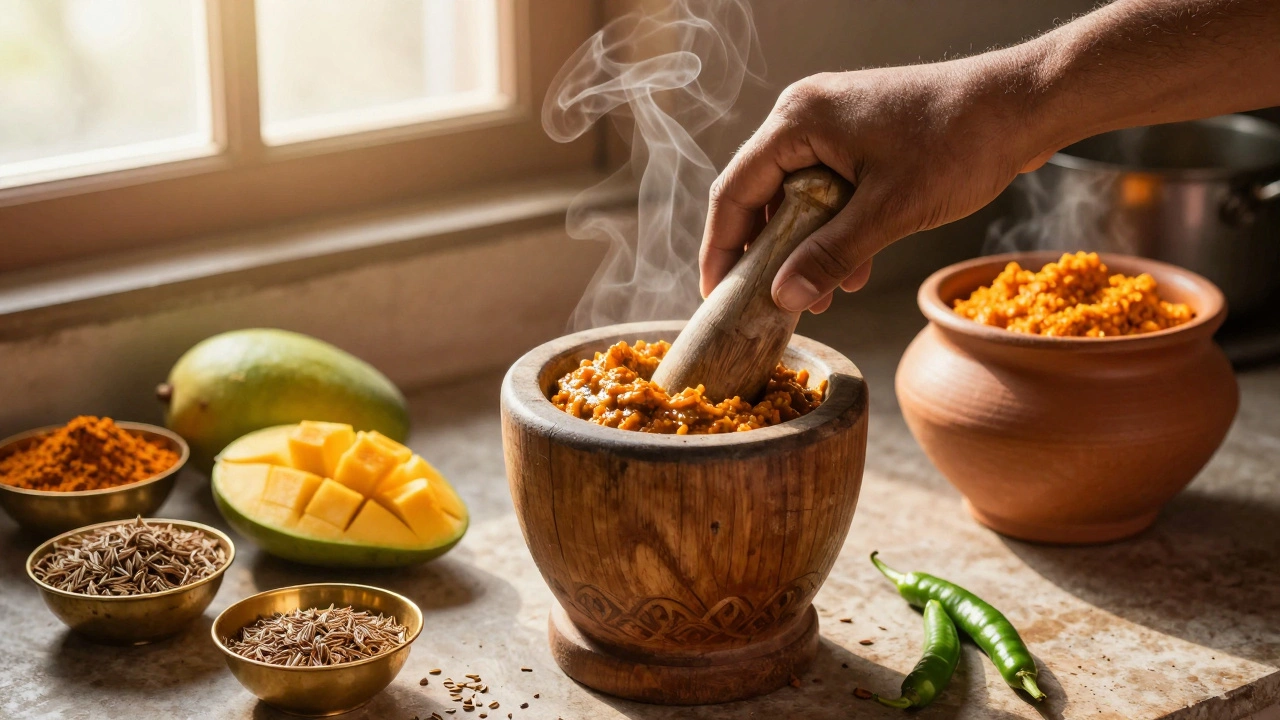
Chutney started in India thousands of years ago. The word itself comes from the Hindi word "chatni," which means "to lick." That tells you something: chutney isn’t just a side - it’s meant to be savored. Traditional Indian chutneys are made by grinding or blending fresh ingredients like mango, tamarind, cilantro, green chilies, garlic, or coconut with spices like cumin, mustard seeds, or fenugreek. They’re often cooked slowly to deepen the flavor, then stored in jars or used fresh the same day.
There’s no single recipe. In South India, you’ll find coconut chutney with roasted lentils. In the north, you might get a tangy tamarind chutney with jaggery. In Maharashtra, there’s peanut chutney with dry red chilies. The common thread? Freshness, balance, and complexity. A good chutney should hit you with sweet, sour, spicy, and earthy notes all at once. It’s not meant to be predictable - it’s meant to wake up your taste buds.
Relish Is All About Texture and Crunch
Relish, on the other hand, is a product of North American and European kitchen traditions. It’s usually made from chopped vegetables - most commonly pickled cucumbers, but also corn, onions, peppers, or even beets. Unlike chutney, relish is rarely blended. You can see the chunks. It’s crunchy. It’s bright. And it’s almost always vinegar-based.
Think about the classic pickle relish on your hot dog. That’s not a sauce. It’s a texture. The vinegar brine preserves the vegetables and gives them that sharp, tangy bite. Sugar is often added to balance the acidity, but you won’t find jaggery or dates in a standard relish. It’s not about layering flavors - it’s about adding a punch of acidity and crunch to something otherwise bland.
Relish doesn’t change much across regions. In the U.S., it’s mostly sweet or dill pickle-based. In the U.K., you’ll find Branston Pickle - a thick, dark relish with carrots, onions, and apples. But even then, it’s still chopped, pickled, and meant to be eaten as a condiment, not a sauce.
Ingredients Don’t Overlap Much
Let’s break it down plainly. Here’s what you’ll typically find in each:
| Category | Chutney | Relish |
|---|---|---|
| Main Base | Fruit (mango, tamarind, coconut) or herbs (cilantro, mint) | Vegetables (cucumber, onion, bell pepper) |
| Acid Source | Lemon, tamarind, vinegar (sometimes) | Vinegar (always) |
| Sweetener | Jaggery, sugar, dates, honey | Sugar (rarely honey or fruit) |
| Spices | Mustard seeds, cumin, fenugreek, chili powder | None, or just mustard seed |
| Texture | Smooth to chunky, often blended | Always chunky, never puréed |
| Preservation | Short-term (days) or long-term (months if cooked) | Long-term (months to years, pickled) |
See the difference? Chutney leans on fruit, herbs, and spices for depth. Relish leans on pickled vegetables and vinegar for brightness. One is layered; the other is bold.

How You Use Them Is Totally Different
You don’t use chutney and relish the same way - and if you do, you’re missing the point.
Chutney? It’s a companion. A spoonful of mint chutney beside a samosa. A dollop of tamarind chutney on a dosa. A swirl of coconut chutney in a rice bowl. It’s meant to harmonize, to elevate, to add dimension. In South Africa, you’ll find chutneys served with biltong, grilled meats, or even on sandwiches. It’s not an afterthought - it’s part of the dish.
Relish? It’s a topping. A spoonful on a hot dog. A swipe on a burger. A side for fried fish. It doesn’t change the flavor profile - it adds a sharp, crunchy contrast. It’s like a palate cleanser. You don’t eat a whole jar of relish by itself. You sprinkle it. You use it as punctuation.
Why People Get Them Confused
There’s one big reason chutney and relish get mixed up: store-bought versions.
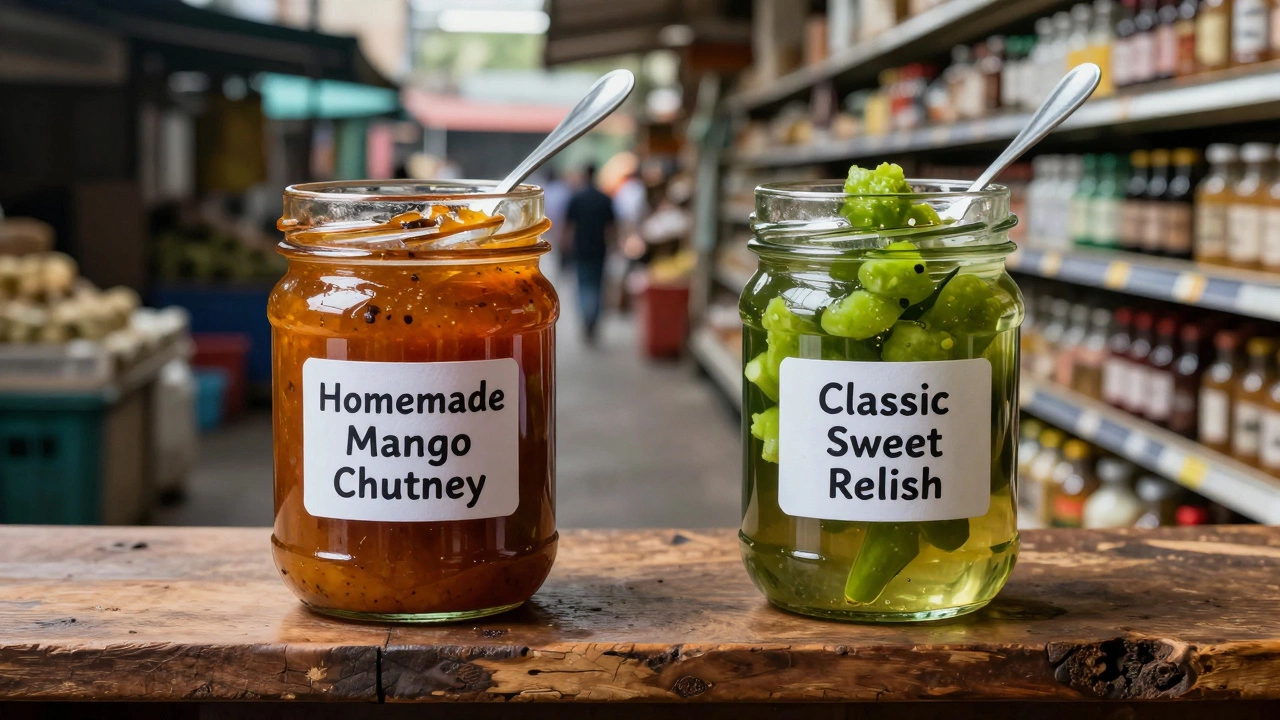
Many American supermarkets sell "tropical chutneys" made from pineapple or mango - but they’re packed with vinegar, sugar, and preservatives. They look like relish. They’re bottled like relish. They’re even labeled "relish" sometimes. Same goes for British "chutneys" - like Branston - which are basically sweet relishes with fruit chunks.
When you buy a jar labeled "mango chutney" from a big brand, you’re getting a sweet, vinegar-based preserve - not the fresh, spice-forward version you’d find in a Mumbai market. That’s where the confusion starts. Real chutney is made in small batches. Real relish is made to last.
Try This at Home: Make Both
If you want to feel the difference, make one of each.
For a quick chutney: Blend 1 cup fresh mango, 1 tbsp tamarind paste, 1 tsp jaggery, 1 green chili, ½ tsp cumin seeds, and a pinch of salt. Let it sit for 10 minutes. That’s it. Bright, fruity, spicy. No vinegar. No sugar overload.
For a simple relish: Chop 2 cups pickled cucumbers, ½ cup red onion, 1 tbsp sugar, ¼ cup white vinegar, and a pinch of mustard seed. Let it sit overnight. Crunchy. Tangy. Sharp. Perfect on a sandwich.
You’ll taste the difference immediately. One makes you pause. The other makes you reach for another bite.
What Happens When You Swap Them?
Let’s say you use relish instead of chutney on your samosa. You’ll get a sour, crunchy bite - but you’ll miss the warm spices, the depth of tamarind, the sweetness of jaggery. It’ll feel flat.
Or if you try to spread chutney on a hot dog? It’ll be too thick, too sweet, too complex. It’ll overwhelm the meat. You won’t get that clean, acidic crunch you expect.
They’re not interchangeable. They’re designed for different jobs.
Final Takeaway
Chutney is about flavor harmony. Relish is about texture contrast. Chutney is from the kitchen of a home cook who blends spices by instinct. Relish is from the factory line that bottles pickles for mass appeal.
If you’re cooking Indian food, use chutney. If you’re making burgers or sausages, reach for relish. Don’t let the jars fool you. The real difference isn’t in the name - it’s in the intention.
Can I use chutney as a substitute for relish?
You can, but it won’t taste the same. Chutney is usually thicker, sweeter, and spicier than relish. If you use it on a hot dog or burger, you’ll get a more complex, fruity flavor instead of the sharp, crunchy tang relish gives. It works in a pinch, but it changes the dish.
Is chutney always spicy?
No. While many Indian chutneys include green chilies or red chili powder, others are mild. Coconut chutney, for example, is often just creamy and slightly nutty. Tamarind chutney can be sweet with a hint of sourness and no heat at all. Spice level depends on the recipe and region.
How long does homemade chutney last?
Fresh chutney without vinegar lasts 5-7 days in the fridge. If you cook it down with vinegar or sugar, it can last up to 3 months. Always use a clean spoon and store it in a sealed glass jar. For longer storage, freeze it in small portions.
Why does store-bought chutney taste like relish?
Many mass-produced "chutneys" are made for shelf life, not authenticity. They use vinegar as the main acid, lots of sugar, and no fresh spices. This makes them taste more like sweet relish than traditional chutney. To get the real thing, look for small-batch brands or make your own.
Can I make relish without vinegar?
Not really. Vinegar is what preserves relish and gives it its signature tang. Without it, you’re just making a chopped vegetable salad. If you want a vinegar-free version, you’re better off making a fresh chutney or salsa instead.