Rubbery Dosa Batter: Fix It, Understand It, and Get Perfect Dosas Every Time
When your rubbery dosa batter, a fermented rice and lentil mixture used to make crispy South Indian crepes. Also known as fermented dosa batter, it should flow like thin cream and puff up lightly on the pan—but instead, it sticks, tears, or feels chewy. This isn’t normal. It’s a sign something went wrong in the mix, soak, or ferment. Most people blame the recipe, but the real issue is usually timing, temperature, or ingredient ratios.
The dosa batter fermentation, the natural process where wild yeast and bacteria break down starches and sugars to create gas and tanginess is the heart of this. If it doesn’t ferment long enough—or too long—the batter loses its lift and turns dense. Heat matters too. In cold kitchens, batter can sit for 18 hours and still not rise. In hot ones, it can over-ferment in 8. And then there’s the dosa batter consistency, the ideal thickness that allows the batter to spread thinly without tearing. Too thick? You get a thick, rubbery disc. Too thin? It spreads too far and burns. The sweet spot is like buttermilk—pourable but not watery.
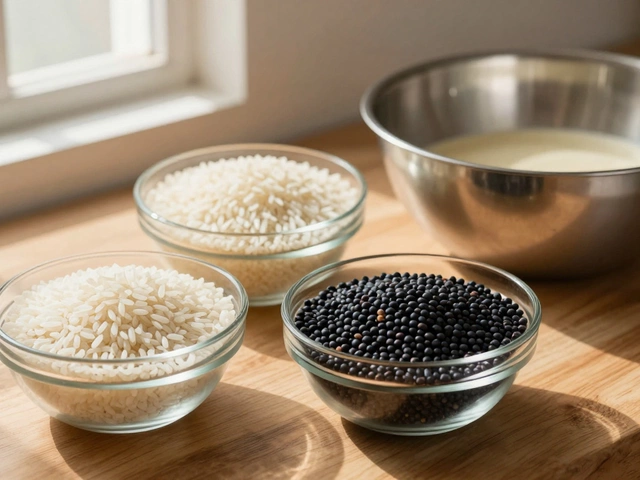
What you add matters. Rice and urad dal aren’t interchangeable. The ratio—usually 3:1 or 4:1 rice to dal—isn’t just tradition; it’s science. Too much dal makes the batter sticky and gummy. Not enough soaking time? The lentils won’t blend smoothly. Skipping the salt before fermenting? That slows down the yeast. And don’t even think about refrigerating the batter right after grinding. Cold kills the microbes you need. The best oil for dosa, often groundnut or coconut oil, used to crisp the surface without burning helps, but it won’t fix bad batter. No amount of ghee can rescue a failed ferment.
You’re not alone. Thousands of home cooks in India face this same problem every morning. The fix isn’t complicated—it’s just specific. Let the batter sit in a warm spot overnight. Check it by the time the sun rises. If it’s bubbly and doubled in volume, you’re good. If it smells sour but not rotten, you’re on track. If it’s thick and doesn’t pour, add a splash of water and stir. No need to start over. And if it still sticks? A quick test fry on low heat tells you everything before you commit to the whole batch.
What follows are real fixes from people who’ve been there. You’ll find out why some dosas turn out like plastic, how to tell if your batter is dead or just slow, and what to do when your kitchen is too cold for fermentation. You’ll also learn how to save a batch that’s gone too far, and why some recipes fail even when followed exactly. This isn’t about guessing. It’s about understanding the why behind the rubbery texture—and how to fix it for good.