Pre-Cooking Chicken: Essential Tips for Juicy, Flavorful Indian Dishes
When you're making pre-cooking chicken, the process of preparing chicken before cooking it to enhance flavor, texture, and tenderness. Also known as marinating chicken, it's not just a step—it's the foundation of most iconic Indian chicken dishes. Skip it, and you’ll end up with dry, bland meat. Do it right, and you get tender tandoori chicken that pulls apart easily, or juicy tikka that sings with spice. This isn’t magic. It’s science mixed with generations of kitchen wisdom.
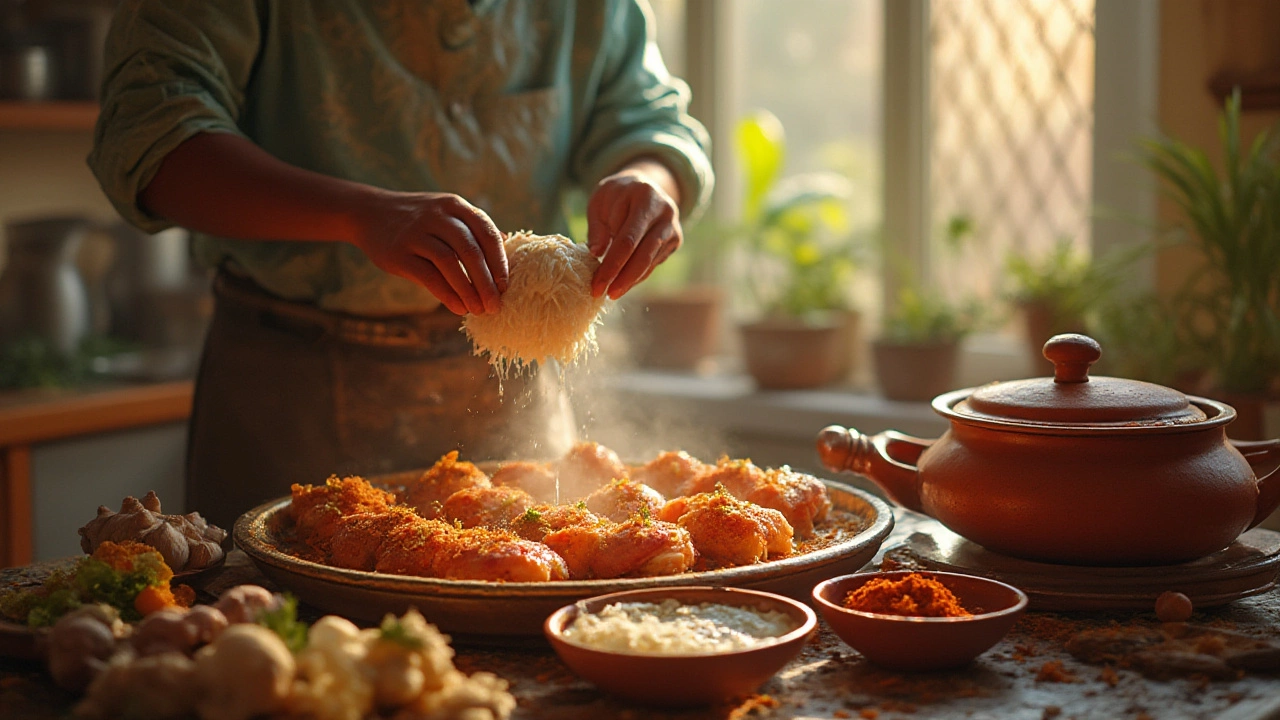
Most Indian recipes for chicken rely on yogurt marinade, a mixture of yogurt, spices, and sometimes acid that tenderizes meat and carries flavor deep into the fibers. The lactic acid in yogurt gently breaks down proteins without turning the chicken mushy, while the fat helps carry spices like cumin, coriander, and turmeric into the meat. This is why recipes like tandoori chicken, a classic North Indian dish where chicken is marinated overnight and cooked in a clay oven. never use just dry spices. You need the yogurt to cling, to coat, to protect the meat from drying out under high heat. And you need time—usually 6 to 24 hours. Rushing this step is the number one reason home cooks fail at Indian chicken dishes.
It’s not just about yogurt. The salt in the marinade draws out moisture, then reabsorbs it with flavor. Garlic and ginger paste? They add depth and help with browning. Even the oil you add—often mustard or coconut oil—helps distribute heat evenly during cooking. And don’t rinse it off before cooking. That yogurt coating? It’s your flavor shield. Rinsing it away is like throwing away your seasoning. That’s why recipes like chicken tikka, a related but distinct dish where chicken is cut into cubes and grilled. never call for rinsing. The marinade becomes part of the crust, the char, the taste.
Some people think pre-cooking chicken is only for fancy restaurants. But if you’ve ever had a perfect piece of tandoori chicken at a roadside stall in Delhi or a home-cooked meal in Punjab, you know it’s not about equipment. It’s about patience. It’s about letting the chicken sit, absorb, and transform. The same principles apply whether you’re using a grill, oven, or stovetop. Even if you’re making a simple curry, a quick 30-minute marinade with lemon juice and spices makes a huge difference.
You’ll find all these tips covered in the posts below—from why you shouldn’t rinse yogurt off before cooking tandoori chicken, to how chicken tikka differs from tandoori chicken, to the exact spices that make the magic happen. These aren’t theories. They’re tested methods from real Indian kitchens. Whether you’re a beginner or you’ve been cooking for years, the right pre-cooking steps will change how your chicken turns out. No more dry, tough meat. Just rich, flavorful, authentic results every time.