Naan vs Roti: What's the Real Difference?
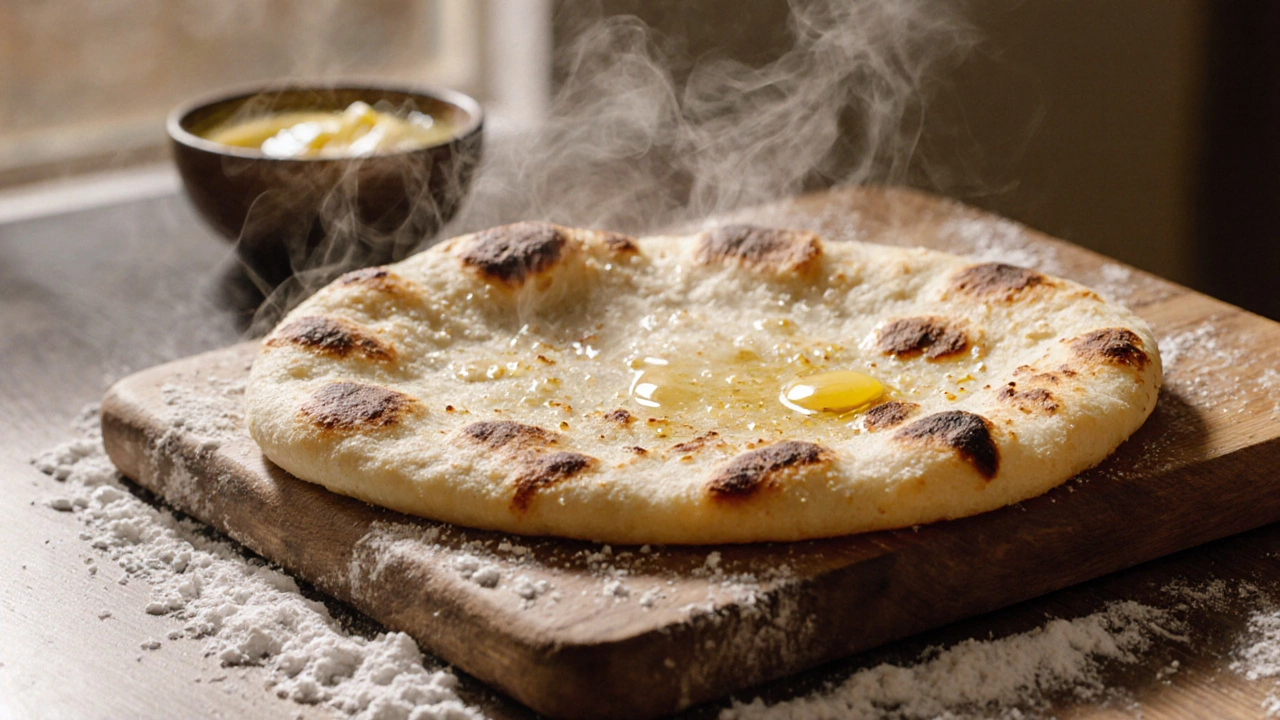
When you think of Indian bread, you probably picture soft, fluffy naan, a leavened flatbread baked in a tandoor oven, often brushed with butter or garlic. Also known as tandoori bread, it’s the star of restaurant curries and kebab platters. But then there’s roti, a simple, unleavened whole wheat flatbread cooked on a griddle, common in homes across India. Also known as chapati, it’s the everyday bread that doesn’t need a fancy oven to taste perfect. These two aren’t just different names for the same thing—they’re built differently, cooked differently, and used differently.
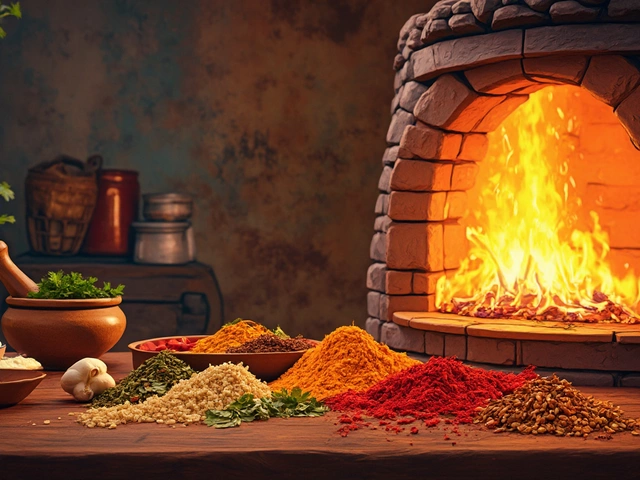
Naan needs yeast, yogurt, milk, and sometimes sugar. It’s kneaded, left to rise, then slapped onto the hot walls of a clay oven. That’s why it puffs up like a balloon and gets those charred spots. Roti? Just flour, water, and salt. No rising. No dairy. Rolled thin and cooked fast on a tawa. It won’t puff like naan unless you’re skilled, and even then, it’s a quiet puff—not a dramatic balloon. That’s not a mistake; it’s by design. Roti’s job is to soak up gravy, not compete with it. Naan’s job is to be the star—rich, buttery, and slightly sweet.
Why does this matter? Because if you’re cooking at home and trying to match a restaurant meal, using roti instead of naan won’t give you the same experience. And if you’re trying to eat lighter, naan’s butter and dairy add calories fast. Roti is the quiet, reliable sidekick. Naan is the party guest who shows up with dessert. You don’t need both at every meal. But knowing when to use each one? That’s the secret to eating Indian food right.
Look at the posts below. You’ll find guides on how to make roti puff perfectly, why naan sometimes turns out tough, and which oil works best for either. There’s even a post on why roti has to be round—and it’s not tradition, it’s physics. These aren’t random recipes. They’re answers to the real questions people have when they try to bring these breads home.