Mithai: The Sweet Heart of Indian Desserts and How to Make Them Right
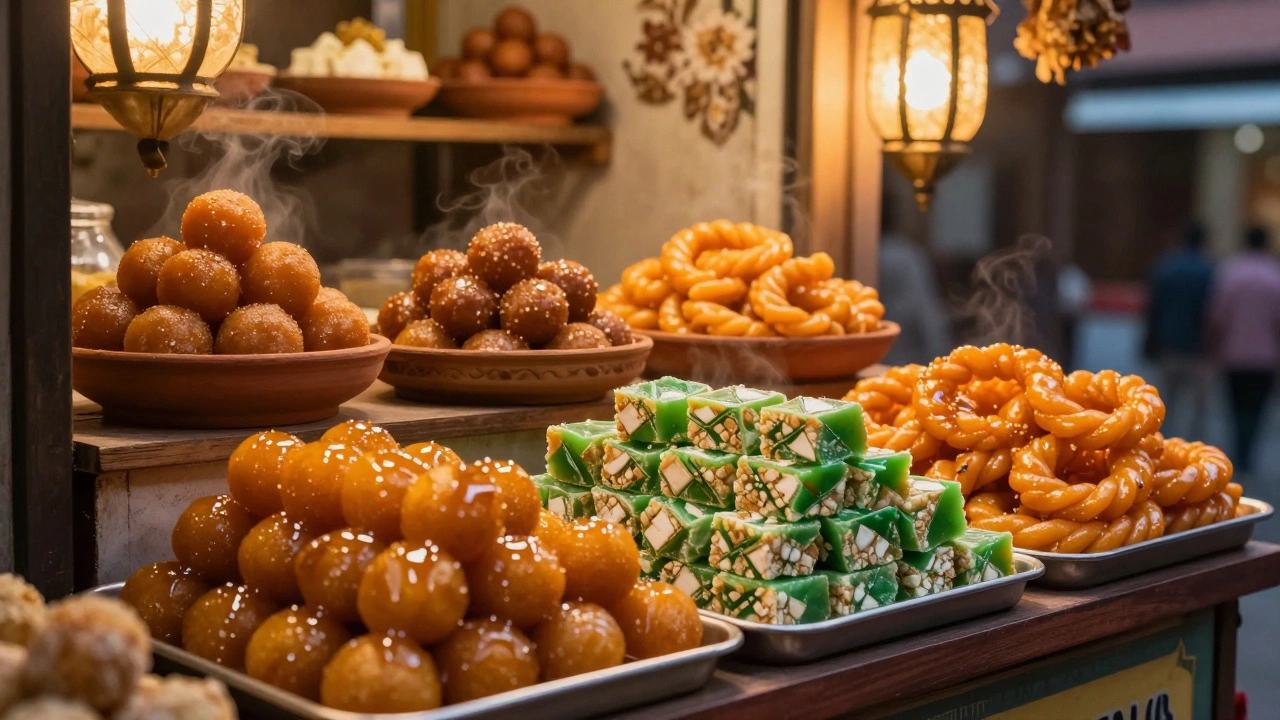
When you think of mithai, traditional Indian sweets made with sugar, milk, nuts, and spices, often served at celebrations and festivals. Also known as Indian desserts, it's not just about sweetness—it's about texture, timing, and technique. Skip the store-bought boxes. Real mithai is made fresh, often in small batches, with ingredients that change by region and season. In Gujarat, they use khoya and cardamom. In Bengal, it’s chhena soaked in syrup. In Uttar Pradesh, it’s sugar syrup boiled to just the right thread. One sweet, a hundred ways.
What makes mithai different from regular candy? It’s not just sugar. It’s jaggery, unrefined cane sugar with earthy depth, used in sweets like gur ke chawal or til laddoo that gives depth to sweets in rural kitchens. It’s sugar syrup, boiled to specific stages—single thread, two thread, soft ball—to control texture, not poured randomly. And it’s paneer, fresh cheese that turns into rasgulla, chhena poda, or kalakand, not the bland block you find in supermarkets. These aren’t just ingredients—they’re the backbone of a system that’s been passed down for generations.
There’s no shortcut. If you use white granulated sugar instead of jaggery in a mysore pak, it won’t caramelize right. If you skip the slow simmering of milk to make khoya, your barfi will be grainy. If you don’t let the syrup cool before adding chhena, your rasgulla won’t puff. The posts below show you exactly how much milk you need for paneer, which sugar works for which sweet, and why some sweets fail even when the recipe looks right. You’ll find the real secrets behind why your gulab jamun soaks up too much syrup, why some mithai stay soft for days while others harden overnight, and how to fix common mistakes without guessing. This isn’t about following a recipe—it’s about understanding the science behind the sweetness.