Flatbread Tips: Master Indian Roti, Naan, and More with Pro Techniques
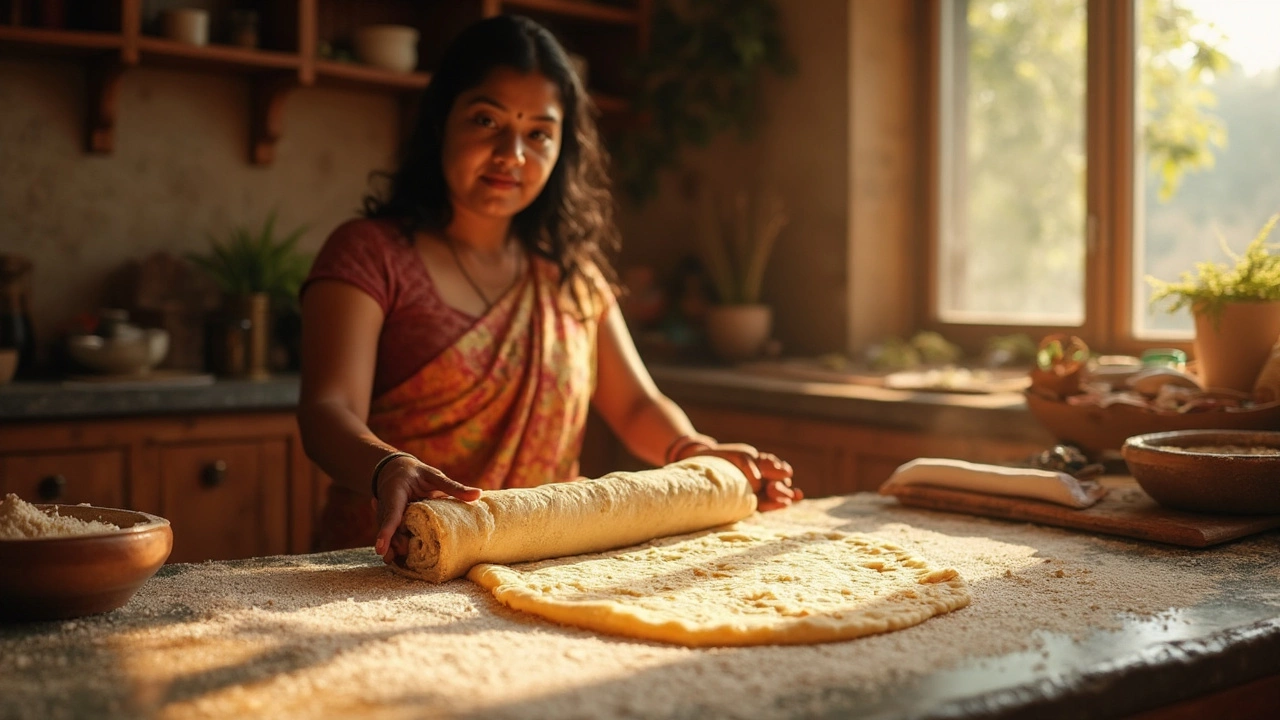
When you think of Indian flatbread, a broad category of unleavened or leavened breads made from wheat, rice, or other flours and cooked on a griddle or in a tandoor. Also known as roti, chapati, or phulka, it's the quiet backbone of every Indian meal. It’s not just a side—it’s the tool you use to scoop, wrap, and soak up flavors. But get it wrong, and you’re left with a tough, dry disc. Get it right, and it puffs up like a cloud, soft and warm, ready to carry your curry, dal, or chutney like a perfect little edible spoon.
Not all flatbreads are the same. Roti, a simple whole wheat bread cooked on a tawa, prized for its puff and chew needs just flour, water, and salt—and the right amount of pressure when rolling. Naan, a leavened bread traditionally baked in a tandoor, often enriched with yogurt, milk, or butter is richer, softer, and trickier to make at home without that intense heat. Then there’s dosa, a fermented rice and lentil crepe that’s crispy on the edges and tender inside, which demands patience with fermentation and the right oil temperature. These aren’t interchangeable. Each has its own rules, and skipping them leads to flat results—literally.
Most people mess up flatbread because they rush. They don’t let the dough rest. They roll it too thin in one spot and too thick in another. They turn the heat too high, burning the outside before the inside cooks. Or they use the wrong oil for dosa—butter instead of groundnut oil—and wonder why it doesn’t crisp. The secret isn’t fancy tools. It’s knowing how heat interacts with moisture, how gluten forms under pressure, and how fermentation changes texture. One post here breaks down why roti has to be round—not because of tradition, but because physics. Another tells you exactly how much milk you need to make paneer, because if your cheese is crumbly, your flatbread won’t hold up. You’ll find out why rinsing yogurt off tandoori chicken ruins the crust, and why soaking dal matters even if you’re just making bread. These tips aren’t guesses. They’re tested, failed-and-fixed lessons from real kitchens.
You don’t need a tandoor to make great flatbread. You just need to understand the basics: temperature, timing, and touch. Whether you’re trying to get your roti to puff like it does at your aunt’s house, or you want dosa that cracks just right when you bite into it, the answers are in the details. Below, you’ll find real fixes for real problems—no fluff, no theory, just what works. Start here, and your next batch won’t just be edible. It’ll be the kind you keep making.