Condiment Comparison: Discover the Real Differences Between Indian Chutneys, Raitas, and More
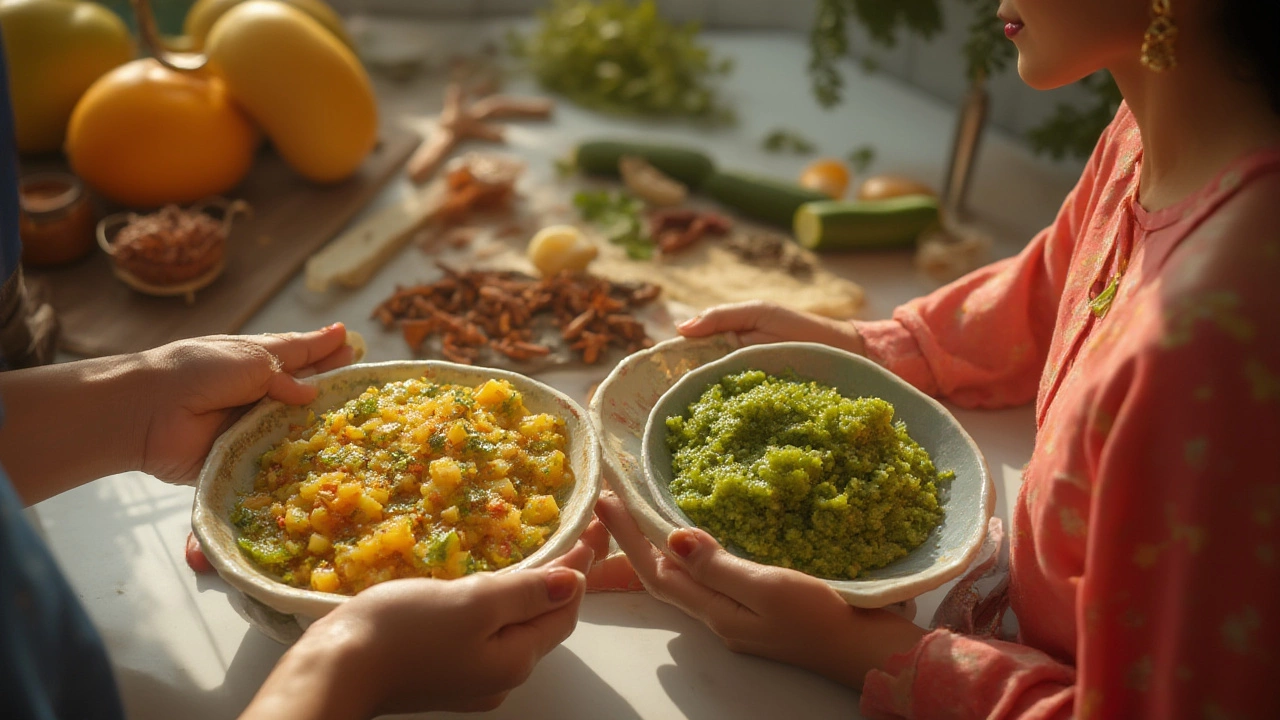
When you think of Indian condiments, flavor-enhancing accompaniments that balance, cut, or elevate a meal. Also known as side sauces, they’re not just garnishes—they’re the secret to why Indian food tastes so layered and alive. A spoonful of mint chutney on a samosa isn’t just extra—it’s the difference between bland and brilliant. But not all condiments are created equal. Chutney, a fresh or cooked blend of fruits, herbs, or vegetables with spices, vinegar, or sugar. Also known as Indian sauce, it’s often tangy, spicy, or sweet, and meant to be eaten right away. Then there’s raita, a cooling yogurt-based condiment with cucumber, mint, or roasted cumin. Also known as yogurt dip, it’s the calm to chutney’s fire, designed to soothe heat and aid digestion. And let’s not forget pickle, a preserved, fermented mix of mango, lime, or radish in oil and spices, meant to last months. Also known as aachar, it’s bold, sour, and shelf-stable—used sparingly because one spoonful can change the whole dish. These aren’t interchangeable. Mixing them up is like using soy sauce instead of fish sauce—close, but wrong.
Why does this matter? Because Indian meals are built on balance. A plate of biryani doesn’t just need spice—it needs cooling raita to reset your palate. A crispy dosa doesn’t just need oil—it needs tangy coconut chutney to wake it up. And tandoori chicken? It’s incomplete without a side of mint-cilantro chutney to cut through the smoke and fat. These condiments aren’t afterthoughts; they’re part of the recipe. You won’t find them in most Western cookbooks, but in every Indian kitchen, they’re as essential as salt. Even the way they’re served matters: chutney goes on top, raita on the side, pickle in a tiny dollop at the corner. And then there’s tempering—that sizzle of mustard seeds and curry leaves in hot oil, called tadka. It’s not a condiment you spoon on, but one you pour over dal or rice to unlock flavor at the last second. It’s subtle, but it changes everything.
What you’ll find in the posts below isn’t just a list of sauces. It’s a breakdown of what makes each one work, how they’re made, and why they’re used the way they are. You’ll learn which oil makes the best dosa chutney, how jaggery changes the flavor of a mango pickle, why yogurt marinades shouldn’t be rinsed off, and how a simple dal tadka turns plain lentils into comfort food. No fluff. No guesswork. Just clear, real comparisons that help you cook smarter—not harder. Whether you’re new to Indian food or you’ve been eating it for years, this collection will help you see condiments the way Indians do: not as extras, but as essential voices in the meal’s symphony.