What Is Chutney? Definition, Types & Easy Recipes
Discover what chutney is, its origins, key ingredients, popular Indian varieties, and three easy recipes you can make at home in minutes.
When you hear chutney, a savory-sweet condiment made from fruits, vegetables, herbs, or spices, often ground or blended and used to balance flavors in Indian meals. Also known as chatni, it's not just a side—it's the flavor anchor that ties together everything on the plate. Think of it like salsa in Mexican food or relish in American burgers, but way more complex. Chutney isn't an afterthought. It's intentional. It cuts through richness, wakes up bland dishes, and adds a punch of tang, heat, or sweetness exactly when you need it.
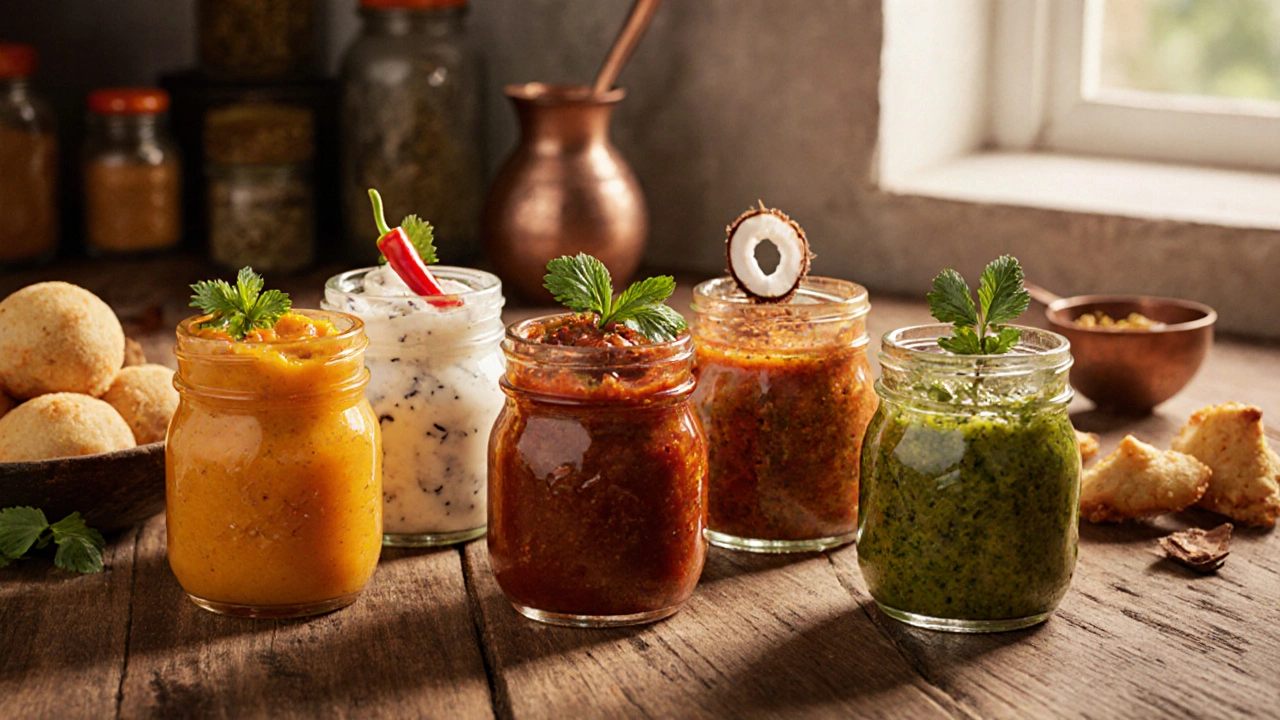
There are dozens of types, each tied to a region, season, or meal. In South India, you'll find coconut chutney with roasted lentils and green chilies, served with dosa or idli. In the North, mint-coriander chutney zings up samosas and chaat. Then there's tamarind chutney, thick and sweet-sour, used in pani puri and bhel puri. And don't forget garlic chutney in Maharashtra or mango chutney that's been simmered for weeks. Each one has a different texture, purpose, and base ingredient—but they all share the same goal: to make the main dish better. You don't just eat chutney. You use it. A spoonful on dal tadka. A smear on roti. A drizzle over grilled paneer. It’s the secret weapon in every Indian kitchen.
What makes chutney different from a sauce? It’s not cooked down for hours like a curry. It’s often raw, freshly ground, or lightly cooked to preserve brightness. It doesn’t need cream or butter. It’s made with what’s in season—tomatoes in summer, tamarind in monsoon, coriander in winter. And unlike store-bought ketchup or mayo, chutney changes every time you make it. The heat level shifts. The sweetness varies. The texture depends on how long you grind it. That’s why homemade chutney tastes alive. It’s not just flavor—it’s memory. A grandmother’s mint chutney. A street vendor’s tamarind dip. The one your mom made with leftover mangoes.
Chutney doesn’t need fancy tools. A mortar and pestle. A blender. A bowl. That’s it. The real skill is knowing when to stop grinding. Too smooth and you lose texture. Too chunky and it doesn’t cling. It’s about balance. Sweet and sour. Hot and cool. Crunchy and smooth. And that’s why every post in this collection—from how to fix a broken coconut chutney to why your mango chutney tastes bitter—comes down to one thing: understanding the chutney definition in practice. You’ll find real tips, real fixes, and real recipes that show you how to make chutney that doesn’t just sit on the side—it steals the show.
Discover what chutney is, its origins, key ingredients, popular Indian varieties, and three easy recipes you can make at home in minutes.