Biryani Rice Timing: How Long to Cook Rice for Perfect Biryani
When you're making biryani rice timing, the precise duration you cook the rice determines whether your biryani turns out fluffy and separate or mushy and stuck together. This isn't just about following a clock—it's about matching the rice’s texture to the partially cooked meat or vegetables layered on top. Get this wrong, and even the best spices and aromatics won’t save your dish.
Most recipes say to par-cook the rice until it’s 70% done. That means the grains should still have a slight bite in the center—like al dente pasta. For basmati rice, a long-grain variety known for its fragrance and ability to stay separate when cooked, that usually takes 6 to 8 minutes in boiling salted water with a pinch of oil. But the exact time depends on the rice’s age, water hardness, and even the pot you’re using. Older rice takes longer. Fresh rice cooks faster. If your rice is soaking up water too fast, reduce the heat. If it’s not softening, give it another minute.
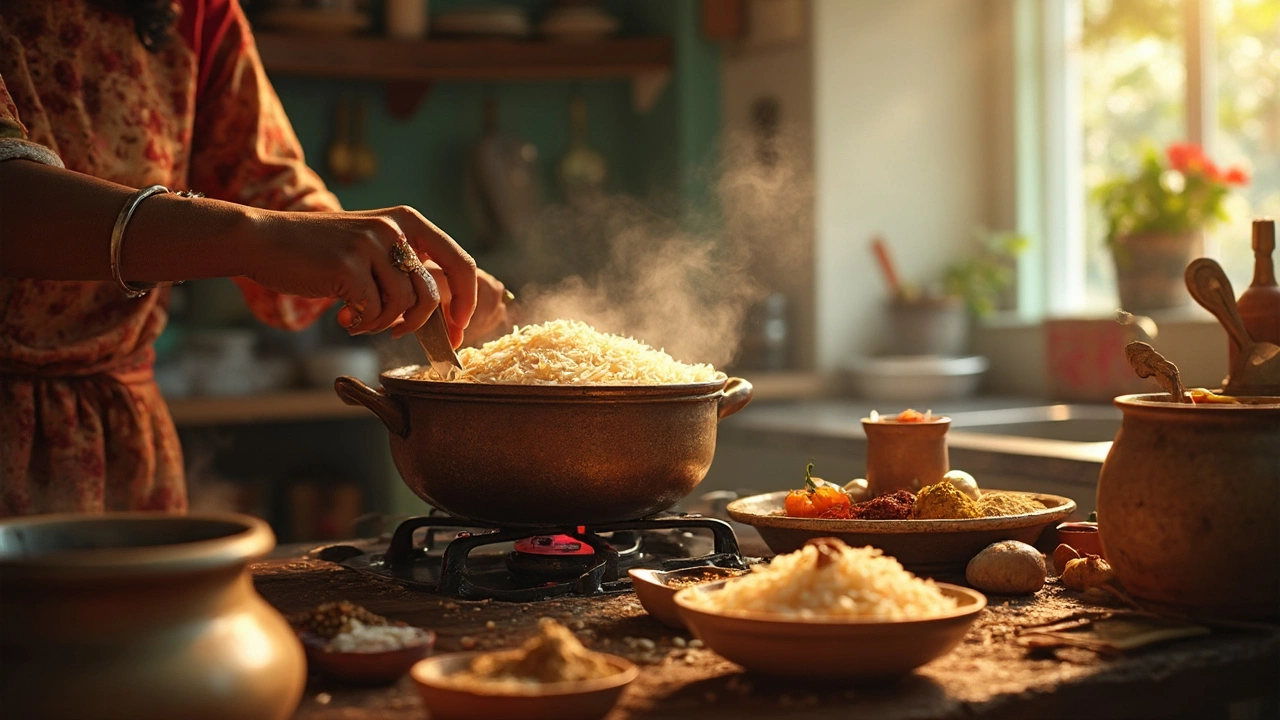
The real trick? You’re not cooking the rice to be done—you’re cooking it to be ready to finish in the dum. That’s the slow steam-cooking step where the rice absorbs the flavors of the meat, saffron, and fried onions. If your rice is already fully cooked before you layer it, it’ll turn to paste. Too undercooked, and you’ll end up with hard centers after steaming. The goal is balance. biryani cooking tips, like rinsing rice until water runs clear to remove excess starch, or soaking it for 30 minutes before boiling, help you control that timing. And don’t skip the resting step after dum cooking—10 minutes lets the moisture redistribute evenly.
You’ll find posts here that show you how to test rice doneness by pressing a grain between your fingers, how to adjust timing for different rice brands, and why some cooks add whole spices like cardamom or bay leaves to the boiling water. Others explain how the type of pot—clay, heavy-bottomed steel, or pressure cooker—affects how fast the rice cooks. There are even guides on what to do if you accidentally overcook the rice or forget to soak it. This isn’t about rigid rules. It’s about understanding how rice behaves, so you can adapt whether you’re cooking on a gas stove, electric coil, or induction plate. Whatever your setup, the same principle holds: biryani rice timing is the silent foundation of great biryani. Get it right, and everything else falls into place.