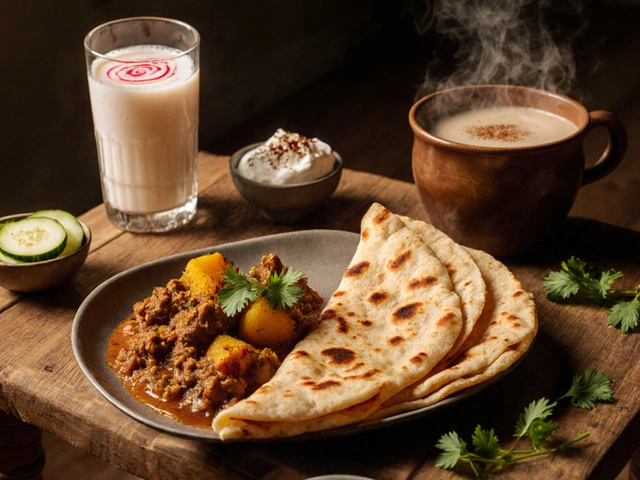
When people think of Indian food, they often picture a rich, spiced curry-something thick, aromatic, and served with rice or bread. But that’s not the whole story. India’s culinary landscape is vast, diverse, and full of dishes that never touch a curry pot. In fact, many of the most beloved meals across the country have no curry at all. If you’re looking for Indian food that’s bold in flavor but light on sauce, you’re in the right place.
South Indian Breakfasts Are Curry-Free by Design
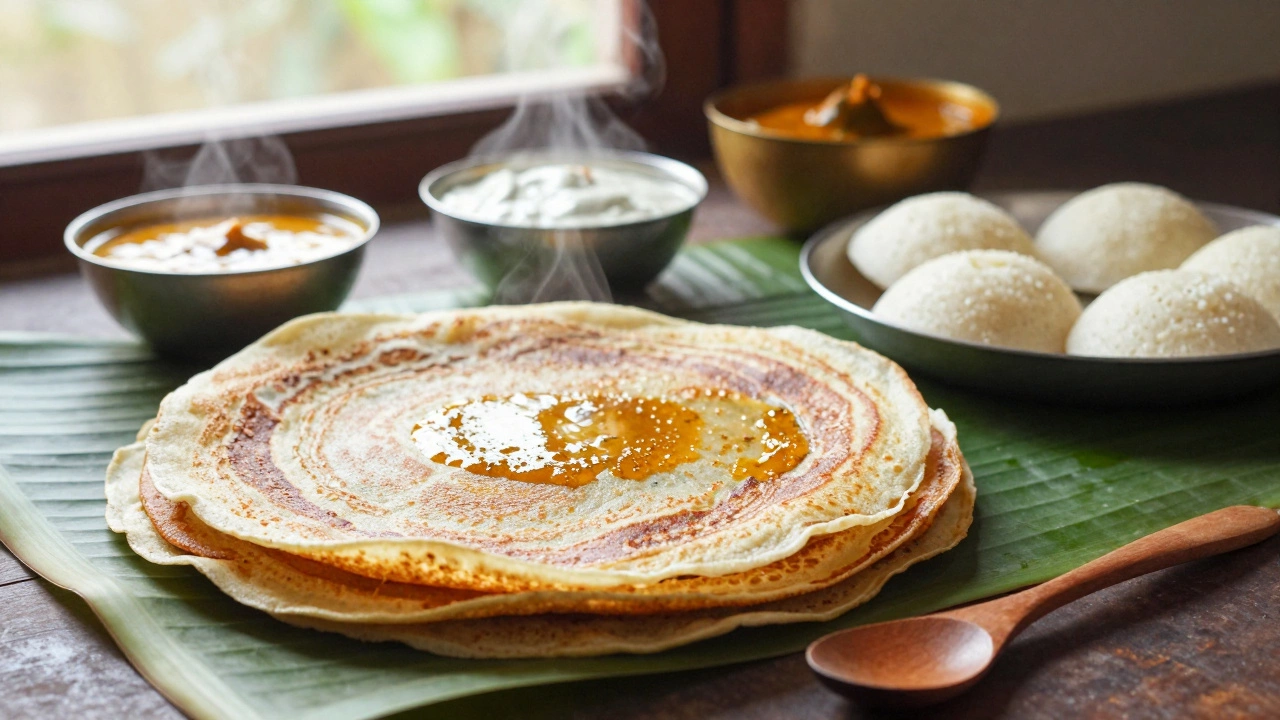
In Tamil Nadu, Karnataka, and Kerala, breakfast isn’t about simmering spices in coconut milk. It’s about fermentation, griddles, and fresh ingredients. Dosa, the thin fermented rice-and-lentil crepe, is served with coconut chutney and sambar. Sambar? Yes, it’s a lentil-based stew, but it’s not a curry. It’s thinner, tangier, and meant to be poured over rice or dipped with dosa-not thickened with cream or yogurt like a North Indian curry. Idli, the steamed rice cakes, follow the same rule. They’re eaten with chutneys made from roasted lentils, green chilies, or tamarind. No cream, no tomatoes, no heavy spice paste. Just clean, bright flavors.Street Food That Skips the Curry Pot
Walk through any Indian city at noon, and you’ll find people lining up for pav bhaji, pani puri, or vada pav. None of these have curry. Pav bhaji is a mashed vegetable medley cooked in butter and spices, then served on soft bread. The sauce? It’s a dry-ish mash, not a pourable gravy. Pani puri is even simpler: hollow crispy shells filled with spiced water, tamarind chutney, potato, and chickpeas. The "water" isn’t curry-it’s a tangy, spicy infusion made from mint, coriander, tamarind, and green chilies. Vada pav? A deep-fried lentil fritter stuffed into a bun with chutneys and raw onion. No curry. No sauce. Just crunch, spice, and texture.Paneer Dishes That Aren’t Curried
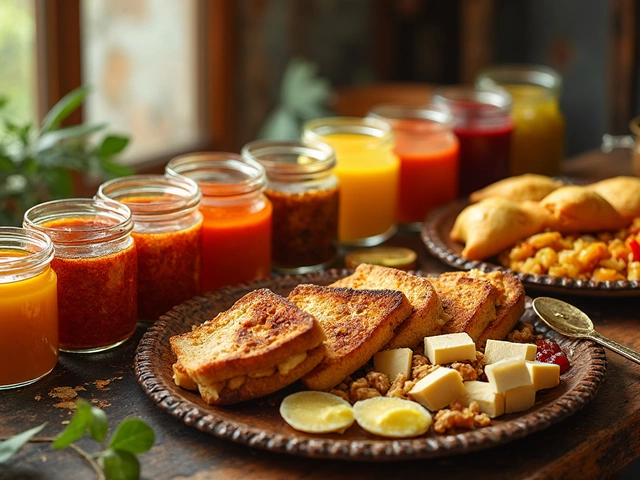
Paneer, India’s fresh cheese, often shows up in creamy curries like paneer butter masala. But there’s another side to paneer. Paneer tikka is marinated in yogurt and spices, then grilled on skewers. It’s served with onion rings and lemon wedges. No sauce. No thickening. Just charred, smoky cheese with a hint of cumin and garam masala. Paneer bhurji is another example: scrambled paneer cooked with onions, tomatoes, and spices, stirred like scrambled eggs. It’s dry, crumbly, and eaten with paratha or toast. Neither dish needs a curry base.Raw and Fermented Flavors: Raita and Kachumber
Raita isn’t a curry. It’s a cooling side made from yogurt, cucumber, mint, and sometimes roasted cumin. It’s served alongside spicy meals to balance heat-not to add more spice. Kachumber is even simpler: chopped onions, tomatoes, cucumbers, and cilantro tossed with lemon juice and salt. It’s India’s version of a salad, and it’s common at every meal from weddings to roadside stalls. Neither has any cooking involved. No oil, no slow simmering, no spice paste. Just raw vegetables and acidity.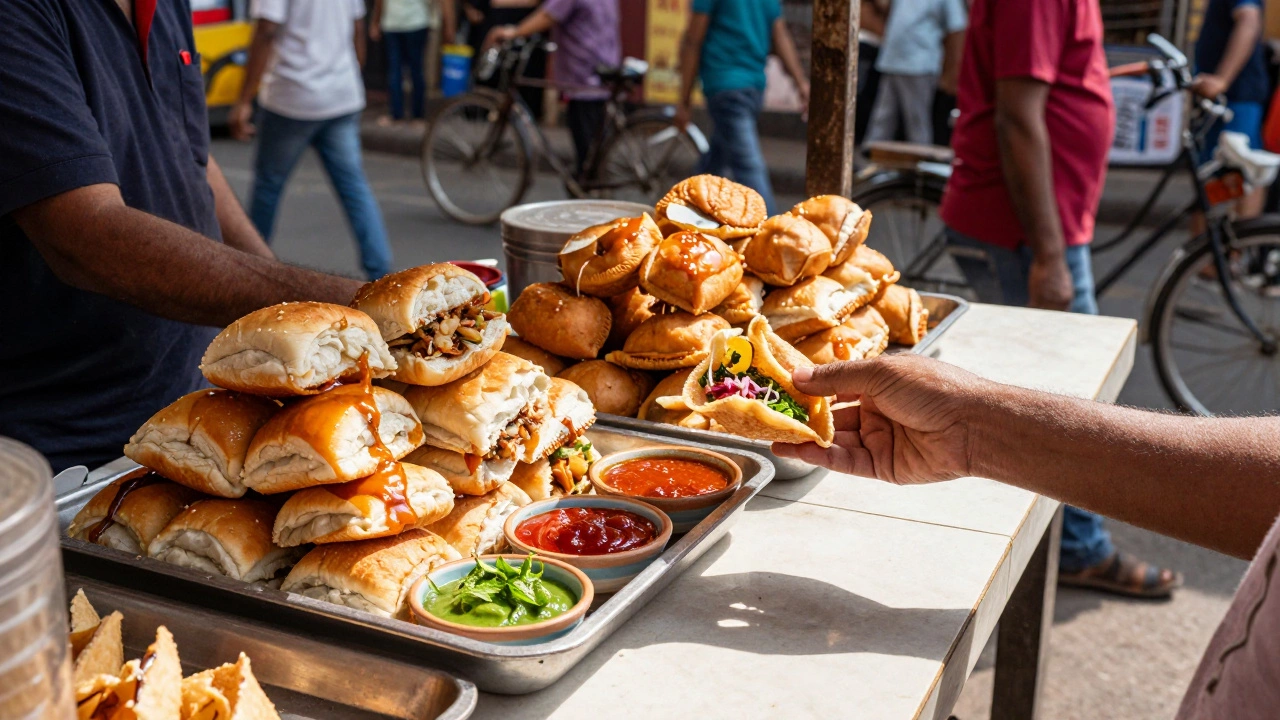
Grilled and Roasted: Tandoori and Bharta
Tandoori dishes are cooked in a clay oven, not in a sauce. Chicken tandoori is famous, but so is tandoori aloo-potatoes marinated in yogurt and spices, then roasted until charred. The same goes for tandoori baingan (eggplant). The flavor comes from the marinade and the smoke, not from a curry base. Bharta, like baingan bharta or aloo bharta, is roasted eggplant or potato mashed with spices, garlic, and onion. It’s dry, smoky, and eaten with roti. There’s no liquid. No cream. No gravy. Just charred vegetables turned into a rustic spread.South Indian Rice Dishes Without Curry
Jeera rice, lemon rice, and coconut rice are everyday meals across South India. Jeera rice is plain basmati rice tempered with cumin seeds and a touch of ghee. Lemon rice is tossed with roasted peanuts, curry leaves, turmeric, and lime juice. Coconut rice is cooked with grated coconut and mild spices. None of these are curries. They’re rice dishes with flavor accents-not sauces. They’re served with pickles, papadum, or raita, but never with a curry on the side.Snacks and Fritters: The Curry-Free Zone
Bhel puri, sev puri, and aloo tikki are all snack foods that skip curry entirely. Bhel puri is puffed rice mixed with sev, onions, tomatoes, tamarind chutney, and green chutney. Aloo tikki is a spiced potato patty fried until golden, then topped with chutneys and yogurt. Neither has a sauce poured over it. The flavors come from layered condiments, not a simmered base. Even samosas-those crispy triangles filled with spiced potatoes or peas-are eaten with chutney on the side, not drowned in curry.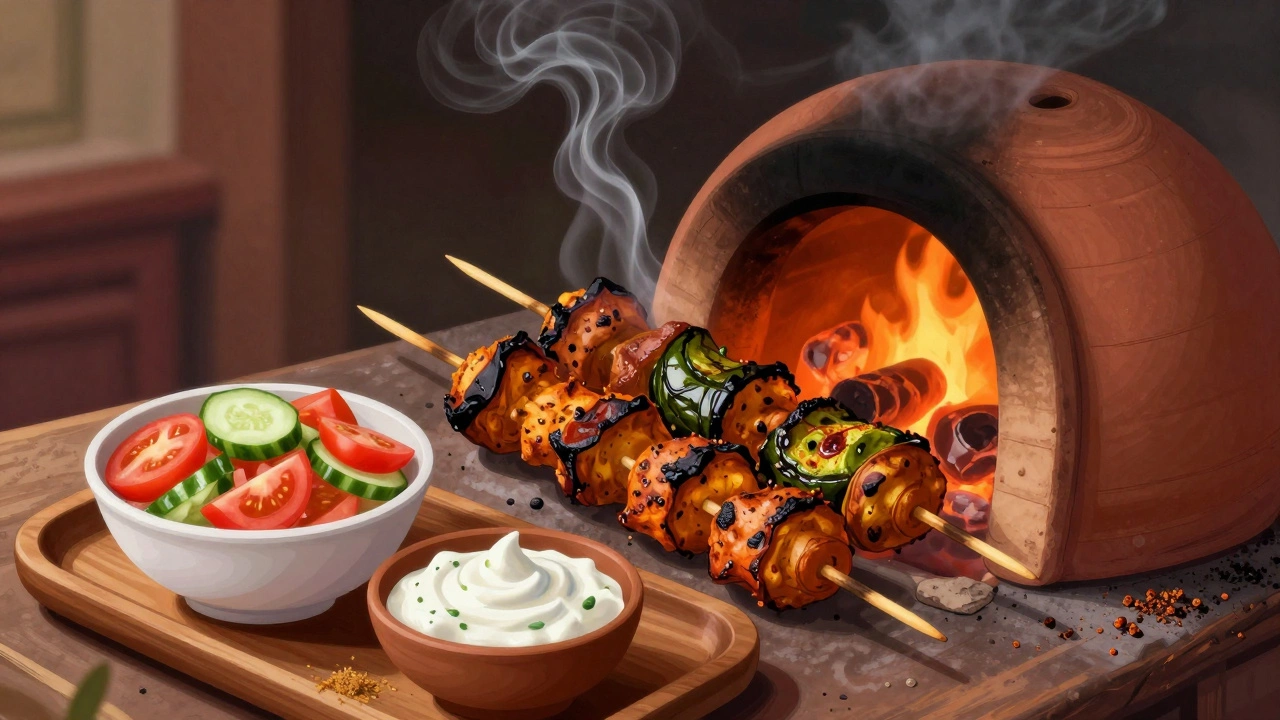
Why the Curry Myth Persists
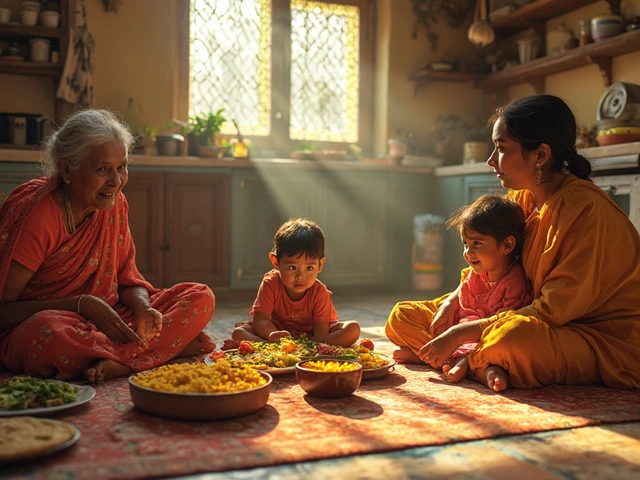
The idea that all Indian food is curry comes from how it’s marketed abroad. In the UK and the US, Indian restaurants often simplify their menus to a handful of curry dishes because they’re easy to standardize. But in India, a single meal might include five different dishes: one rice, one dal, one vegetable, one chutney, and one bread. Only one might be a curry. Many families eat curry-free meals every day. In households from Gujarat to Odisha, meals are built around textures, temperatures, and contrasts-not thick, saucy curries.What to Order If You Want Indian Food Without Curry
If you’re at an Indian restaurant and want to avoid curry, ask for these:- Dosa with coconut chutney and sambar
- Paneer tikka or paneer bhurji
- Pani puri or vada pav
- Jeera rice or lemon rice
- Aloo tikki with chutneys
- Tandoori aloo or baingan bharta
- Kachumber salad
These dishes are common, authentic, and deeply rooted in regional traditions. They don’t need a curry to shine.
Curry Isn’t the Heart of Indian Food-Balance Is
Indian cuisine isn’t about one sauce. It’s about contrast: hot and cool, crunchy and soft, tangy and sweet. A meal without curry can be just as satisfying, complex, and deeply flavorful. The real magic isn’t in the pot-it’s in the way flavors are layered, not drowned.Is sambar a curry?
No, sambar is not a curry. It’s a lentil-based vegetable stew made with tamarind, dal, and spices like mustard seeds and curry leaves. It’s thinner than curry, doesn’t use cream or yogurt as a base, and is meant to be poured over rice or used as a dip-not served as a thick, saucy main dish.
Can I eat Indian food if I don’t like spicy sauces?
Absolutely. Many Indian dishes are naturally mild or rely on dry spices rather than saucy heat. Dishes like jeera rice, raita, kachumber, and tandoori vegetables have flavor but no thick, spicy sauce. You can also ask for "less spice" or request chutneys on the side to control the heat.
Are all North Indian dishes curried?
No. While North India is known for creamy curries like butter chicken or paneer makhani, it also has many non-curry dishes. Tandoori items, parathas stuffed with potatoes or paneer, and dry vegetable stir-fries like aloo gobi (when cooked without gravy) are common. Even dal makhani, though rich, is a lentil dish-not a curry in the traditional sense.
What’s the difference between a curry and a chutney?
A curry is typically a cooked, saucy dish made with spices, onions, tomatoes, and often dairy or coconut milk, simmered for flavor. A chutney is a condiment-raw or lightly cooked-made from fruits, herbs, or vegetables, and used to add brightness or tang. Chutneys are served on the side; curries are the main component.
Do South Indians eat curry at all?
Yes, but less frequently than in the North. South Indian meals often include sambar or rasam, which are broth-like, not creamy curries. Dishes like avial (a mixed vegetable stew with coconut) or thoran (dry stir-fried vegetables) are more common than thick curries. Many meals are built around rice, lentils, and chutneys-with only one saucy element.