How Much Baking Soda to Add to Dosa Batter? Exact Ratios per Cup and per Kilo
Precise baking soda amounts for dosa batter: per cup and per kilo. When to use it, how to mix, and fixes if you added too much. Crisp dosas without a soapy taste.
When you add baking soda for dosa batter, a leavening agent that reacts with acids and moisture to produce gas. Also known as sodium bicarbonate, it helps your batter rise faster and gives dosas that crisp, golden edge without waiting hours for natural fermentation. Many people think dosa batter must ferment slowly for days—but that’s not always true. If you’re short on time, or if your kitchen is cold, baking soda steps in as a reliable shortcut that doesn’t sacrifice flavor.
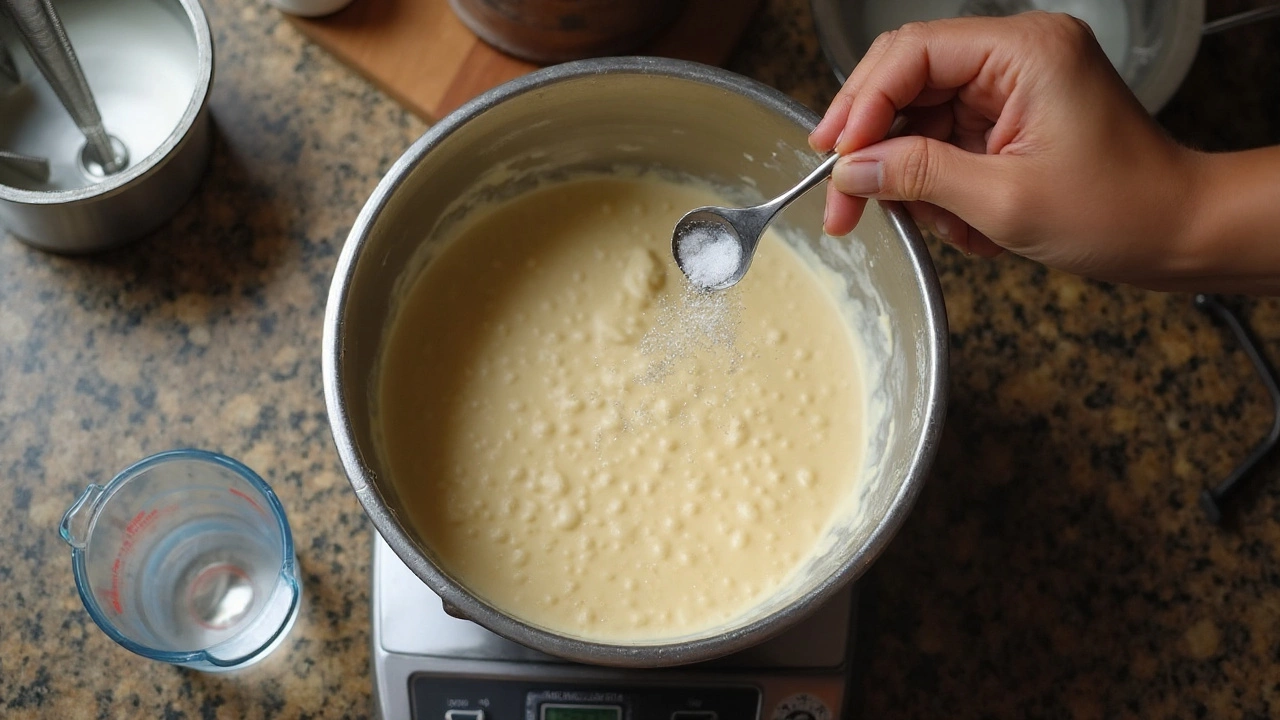
The real magic happens when baking soda meets the natural acids in the fermented rice and lentil batter. It triggers a quick chemical reaction, releasing carbon dioxide bubbles that puff up the batter. This is why your dosa turns light and airy instead of flat and dense. But here’s the catch: too much baking soda leaves a soapy aftertaste, and too little does nothing. The sweet spot? A pinch—about 1/4 teaspoon for every 2 cups of batter. Add it right before cooking, not during soaking or grinding. Stir it in gently, just enough to mix. Overmixing deflates the bubbles you just created.
Some people confuse baking soda with baking powder. They’re not the same. Baking powder already has acid built in, so it works on its own. Baking soda needs an acid—like the lactic acid from fermentation—to activate. That’s why it only works well in fermented batter, not fresh mix. If your batter hasn’t fermented at all, baking soda won’t help much. It needs that sour base to react with. That’s also why you’ll never see a traditional South Indian grandmother add baking soda to her overnight batter. She doesn’t need it. But if you’re making dosas at 7 a.m. after a late night, and your batter only sat for 4 hours? That pinch of baking soda becomes your best friend.
Temperature matters too. If your kitchen is below 25°C, fermentation slows down. Baking soda compensates for that. It’s not a replacement for good fermentation—it’s a backup plan. And if you’re using store-bought urad dal that’s old or low in enzymes, the natural fermentation might be weak. Baking soda fills the gap. It’s not cheating. It’s adapting.
You’ll also notice the color changes. A dosa made with baking soda browns faster and gets that deep golden hue without burning. That’s because baking soda raises the pH of the batter, which speeds up the Maillard reaction—the same process that gives grilled meat its flavor. So yes, it’s not just about fluffiness. It’s about taste, texture, and color—all in one tiny spoonful.
Now, what about the myths? Some say baking soda makes dosas unhealthy. It doesn’t. A pinch adds zero calories and isn’t absorbed by the body in harmful amounts. Others say it ruins the tangy flavor. Not if you use it right. The sourness from fermentation stays. The baking soda just helps it rise. And if you’ve ever bitten into a flat, rubbery dosa? You know why this matters.
Below, you’ll find real kitchen-tested tips from people who’ve tried every trick—from soaking times to oil choices to fermentation hacks. Some posts show you how to fix batter that won’t rise. Others explain why coconut oil makes dosas crispier. One even breaks down the exact hours your batter needs to ferment. You’ll see why baking soda isn’t the star—it’s the supporting actor that makes the whole thing work when nature takes a break.
Precise baking soda amounts for dosa batter: per cup and per kilo. When to use it, how to mix, and fixes if you added too much. Crisp dosas without a soapy taste.