Dal Consistency Calculator
Your Ideal Dal Consistency
... dal
Key Adjustments
- ...
- ...
- ...
When you spoon up a bowl of dal, what should it feel like? Should it cling to the spoon like a creamy stew, or pour like a warm broth? There’s no single right answer-but there’s a lot of confusion. And it’s not just about personal taste. The thickness of dal changes everything: how it pairs with rice, how it keeps you full, even how it’s served across India’s regions. So, should dal be thick or runny? Let’s cut through the noise.
It Depends on Where You’re From
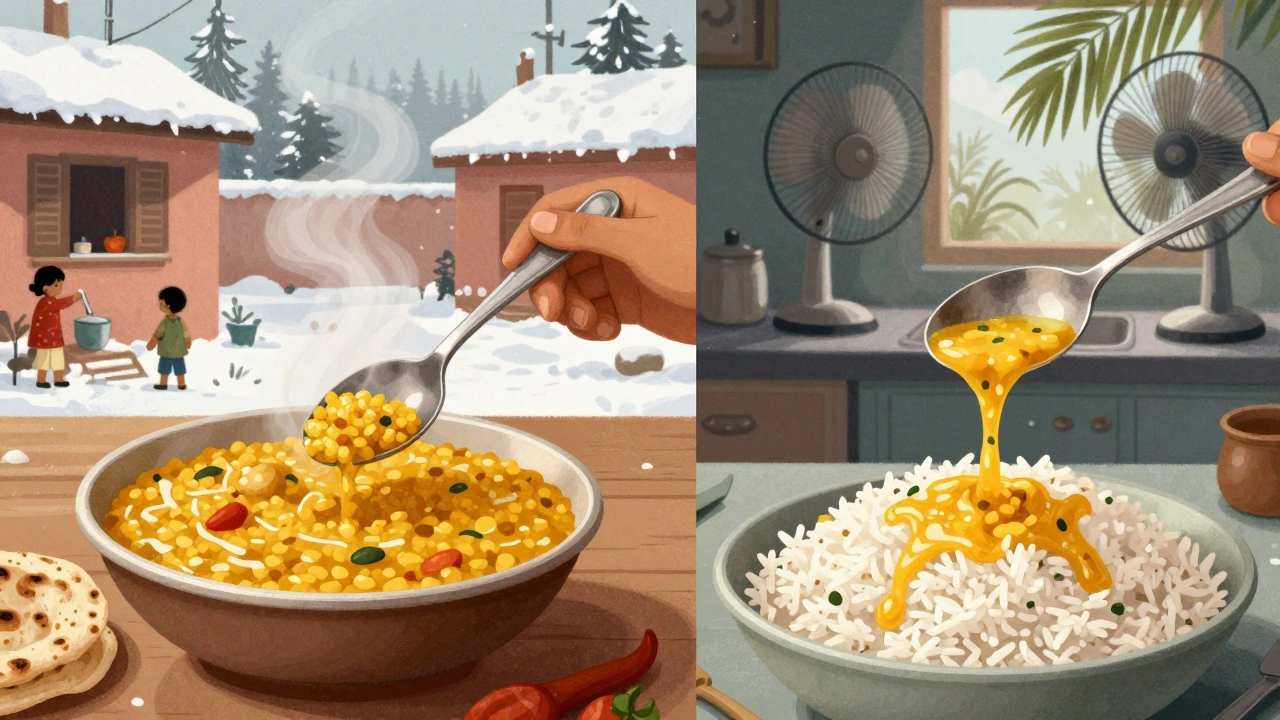
In rural Uttar Pradesh, dal is thick-so thick you can balance a spoon on top. In Tamil Nadu, it’s often served thin, almost like a soup, poured over hot rice. In Maharashtra, it’s somewhere in between: a pourable but substantial gravy. This isn’t random. It’s tradition shaped by climate, crop availability, and daily eating habits.In the north, where winters are cold and meals are heavier, thick dal clings to roti and gives a rich, satisfying mouthfeel. In the south, where meals are lighter and rice is the base, a runnier dal soaks in, adding flavor without weighing things down. And in the west, it’s often adjusted based on the season-thicker in winter, thinner in summer.
There’s no universal standard. What matters is what works for your meal, your body, and your culture.
What Makes Dal Thick or Runny?
The texture isn’t magic. It’s physics and chemistry. Three things control it: water, cooking time, and the type of lentil.First, water. More water = thinner dal. Less water = thicker. Simple. But here’s the trick: you can’t just add water at the end. If you do, you dilute the flavor. The real secret is how you manage the water during cooking.
Second, cooking time. Dal doesn’t just soften-it breaks down. Red lentils (masoor dal) turn to mush fast. That’s why they’re naturally thick. Split yellow moong dal? Same thing. But whole urad dal? It holds its shape longer. You need to cook it longer, and even then, it won’t thicken unless you mash it.
Third, the lentil itself. Masoor and moong are naturally starchy. When they break down, they release starch that thickens the liquid. That’s why a simple dal made with just these two doesn’t need cream or flour-it thickens on its own. Chana dal? Not so much. It stays grainy. You need to cook it longer and mash it to get that creamy texture.
So if you want thick dal: use masoor or moong, cook it until the lentils collapse, and let it simmer uncovered so water evaporates. Want runny? Use whole lentils, add more water, and stop cooking before they fully break down.
How to Fix Your Dal If It’s Too Thick
You’ve cooked your dal, tasted it, and now it’s like glue. Too thick. What now?Don’t panic. You didn’t ruin it. You just need to adjust.
- Stir in hot water, one ladle at a time. Taste after each addition. Stop when it flows easily off the spoon.
- Don’t use cold water. It shocks the flavor and makes the dal taste flat.
- Try adding a splash of warm broth or leftover rice water. It adds body without diluting taste.
- If you’re in a hurry, blend a quarter of the dal and stir it back in. It thickens the rest without making it gloopy.
And remember: dal thickens as it cools. So if it’s perfect hot, it’ll be too thick cold. Always cook it a little looser than you think you need.
How to Fix Your Dal If It’s Too Runny
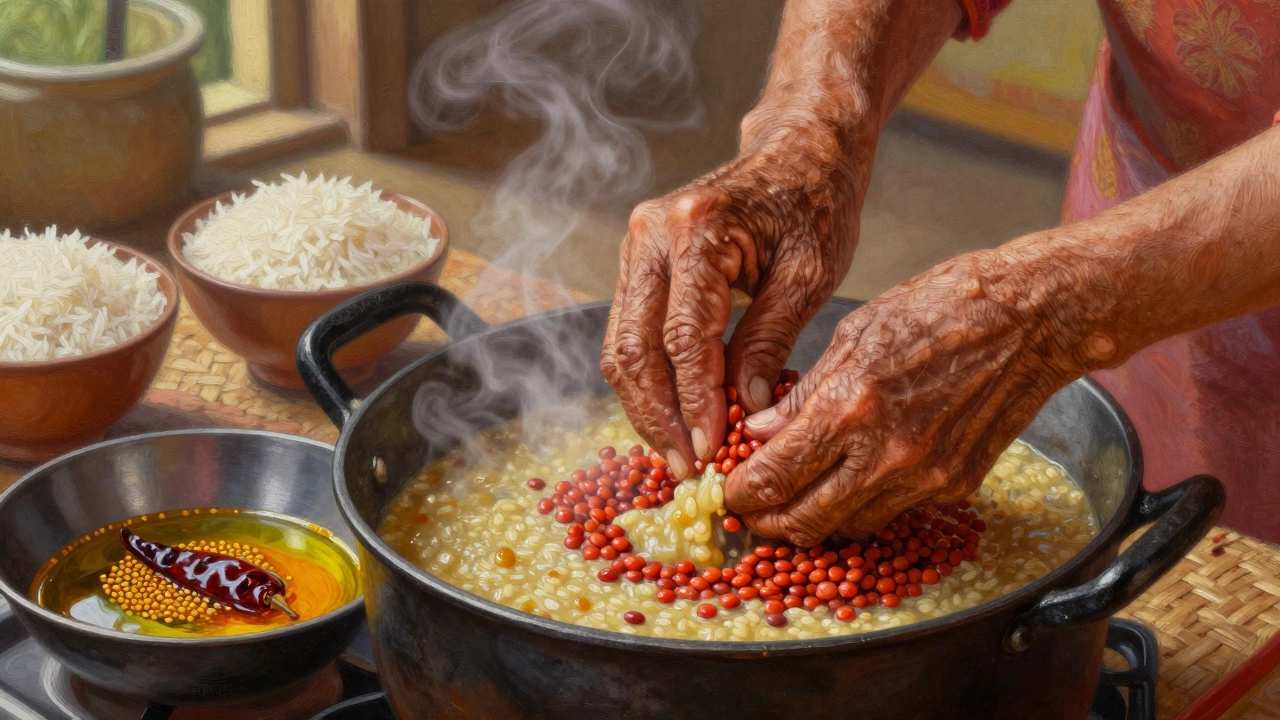
Now, what if your dal’s too watery? You’ve added too much water, or you didn’t cook it long enough.Here’s what works:
- Simmer it uncovered. Let the steam escape. This is the easiest fix. It takes 10-15 minutes, but it’s pure magic.
- Stir in a spoonful of besan (chickpea flour). Mix it with a little water first to avoid lumps. It thickens fast and adds a nutty depth.
- Mash a few lentils against the side of the pot with a spoon. The released starch will bind the liquid.
- For a traditional touch, add a pinch of asafoetida (hing) and let it sizzle in hot oil. It doesn’t thicken, but it makes the dal feel richer, which tricks your brain into thinking it’s thicker.
And if you’re serving it with rice? Pour it over the rice in the bowl. The rice will absorb the excess liquid and turn it into the perfect consistency.
The Real Secret: Taste Before You Serve
Most people make the mistake of judging dal before it’s rested. Dal changes after it’s off the heat. The flavors meld. The texture settles. The starches fully hydrate.Wait 10 minutes. Stir it once. Taste again. You might be surprised. A dal that felt too thin before might now be just right. A dal that felt too thick might have loosened just enough.
Also, don’t forget the tempering. A good tadka with cumin, garlic, and dried red chilies doesn’t just add flavor-it adds texture. The oil coats the dal, making it feel richer, even if it’s runny.
What’s the Best Consistency for Everyday Meals?
If you’re cooking dal for a regular weeknight dinner, aim for pourable but substantial. It should slide off the spoon slowly, not drip. When you tilt the bowl, it shouldn’t pool at the bottom like water. But it shouldn’t sit like paste either.This middle ground works best because:
- It soaks into rice without turning it into mush.
- It clings to roti or bread without being too heavy.
- It keeps you full longer because it’s dense with flavor and nutrients.
- It reheats well. Thick dal gets gluey when reheated. Runny dal turns watery. This balance stays stable.
For a simple dal recipe that hits this sweet spot: use 1 cup red lentils, 3 cups water, simmer for 20 minutes, then let it rest. Add salt, turmeric, and a quick tadka of mustard seeds and garlic. Done.
Why This Matters Beyond Taste
Dal isn’t just food. It’s medicine. In Ayurveda, thick dal is easier to digest. It’s grounding, especially for people with weak digestion. Runny dal? Lighter, better for hot weather or when you’re feeling sluggish.So your choice isn’t just about texture. It’s about how your body feels after eating. If you’re tired, go thick. If you’re bloated, go thin.
And if you’re cooking for kids? Thicker is better. It’s easier to eat with a spoon. For elders? A little runnier helps with swallowing.
Final Answer: It’s Your Call
Should dal be thick or runny? The answer is: it depends. On your region. On your meal. On your body. On the season. On the lentil you used.There’s no wrong way. Only ways that work-or don’t-for you.
So next time you make dal, don’t follow a rigid rule. Taste as you go. Adjust as you need. And remember: the best dal isn’t the one that matches a textbook. It’s the one that makes you feel good.
Is runny dal less nutritious than thick dal?
No. Nutrition doesn’t change with thickness. Both thick and runny dal have the same protein, fiber, and minerals. The difference is water content, not nutrients. Thick dal just has less water, so it feels more concentrated. But if you add water to thin it, you’re not losing anything-you’re just diluting the texture, not the health.
Can I make dal thick without using flour or cream?
Absolutely. The best way is to use starchy lentils like red masoor or split yellow moong. Cook them until they fully break down, then simmer uncovered to reduce the liquid. The natural starches released from the lentils will thicken it on their own. No flour, no cream needed.
Why does my dal get thicker when it cools?
Because starches in the lentils absorb water as they cool. This is called retrogradation. It’s the same reason pasta gets firmer when refrigerated. That’s why it’s always better to cook dal slightly looser than you think you need. It’ll tighten up naturally.
Should I mash my dal to make it thicker?
Only if you’re using lentils that don’t break down easily, like whole urad or chana dal. For red or yellow lentils, mashing isn’t necessary-they’ll turn creamy on their own. Mashing helps speed things up and adds body, but it’s not required if you cook them long enough.
What’s the best way to reheat leftover dal?
Add a splash of hot water or broth while reheating on low heat. Stir gently. Never microwave it without adding liquid-it’ll turn rubbery. A little oil or ghee stirred in at the end helps restore the creamy texture and flavor.
- Poplular Tags
- dal consistency
- thick dal
- runny dal
- dal recipe
- how to cook dal