Dosa Batter Fermentation Calculator
Calculate Your Fermentation Time
Key Guidelines
- Warm (28-35°C): 6-10 hours 6-10h
- Moderate (20-27°C): 10-14 hours 10-14h
- Cool (12-19°C): 14-20 hours 14-20h
Fermentation Signatures
How to know when your batter is ready:
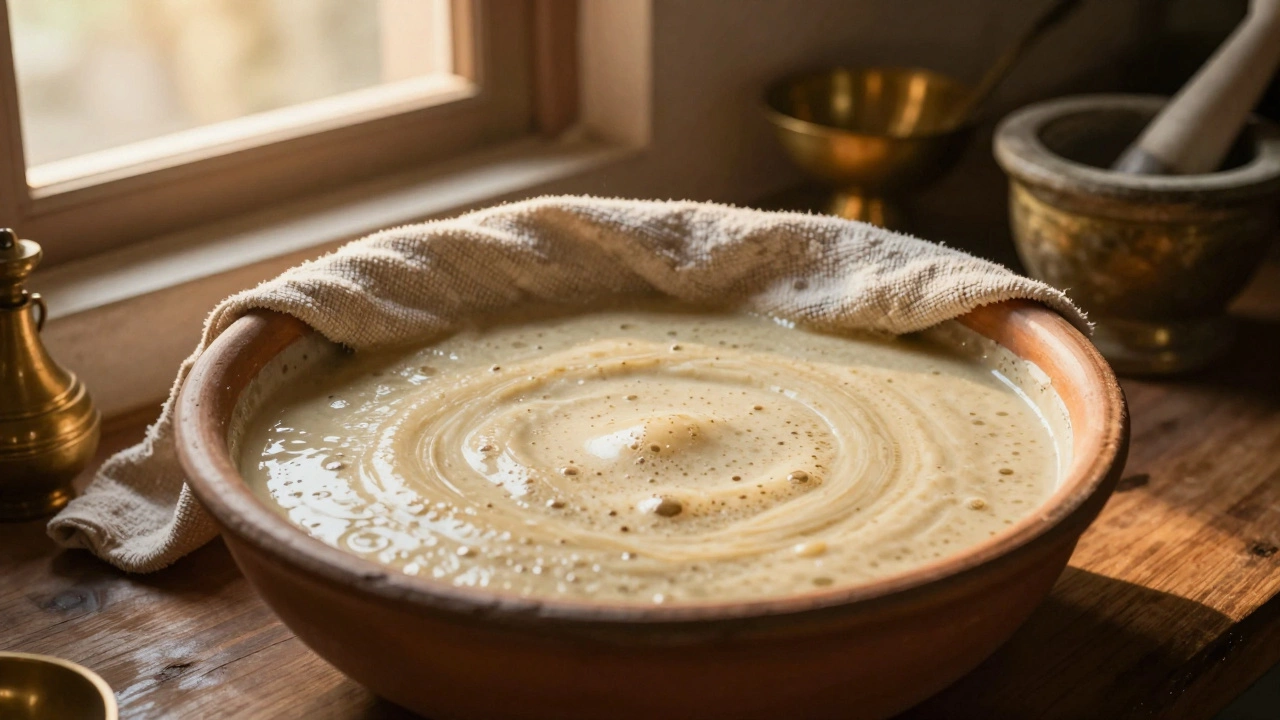
- Volume: Batter should be 50-100% larger than original
- Bubbles: Tiny bubbles throughout the batter
- Smell: Pleasantly sour (like yogurt), not alcoholic
- Texture: Flows like thick cream
Estimated Fermentation Time:
Enter your kitchen temperature to see the recommended time.
Getting your dosa batter to ferment just right is the difference between a crisp, golden dosa that snaps when you bite into it and a flat, doughy mess. Too little fermentation, and your dosa won’t puff up or taste right. Too much, and it turns sour, sticky, or even smells off. So how many hours should dosa batter be fermented? The short answer: 8 to 12 hours under ideal conditions. But that’s not the whole story.
Why Fermentation Matters
Fermentation isn’t just a step in the recipe-it’s what transforms plain rice and lentil paste into something alive, airy, and full of flavor. The natural bacteria and wild yeast in the air feed on the starches and sugars in the batter. As they work, they release carbon dioxide, which creates tiny bubbles. That’s what gives dosa its light texture. Without fermentation, you’re just making a thick pancake. With it, you get the real thing.
Traditional South Indian households don’t measure time with clocks-they check the batter’s smell, texture, and volume. If it smells mildly tangy, looks bubbly, and has doubled in size, it’s ready. But most home cooks today need more concrete guidance.
What Affects Fermentation Time
There’s no one-size-fits-all clock for dosa batter. Your environment plays a huge role. In Chennai or Bangalore, where it’s warm and humid year-round, 8 hours is often enough. But in Cape Town, where winter nights can dip below 12°C, you might need 14 to 18 hours. Temperature is the biggest factor.
- Warm climates (28-35°C): 6-10 hours
- Moderate climates (20-27°C): 10-14 hours
- Cool climates (12-19°C): 14-20 hours
Humidity also matters. Dry air slows fermentation. If your kitchen is air-conditioned or you’re in a dry season, cover the batter with a damp cloth or place it near a bowl of warm water to keep moisture in the air.
The Ideal Fermentation Process
Start with the right batter ratio: 3 parts parboiled rice (idli rice) to 1 part whole black urad dal. Soak them separately for 4 hours. Grind the dal first with a little water into a smooth, fluffy paste. Then grind the rice into a slightly gritty batter. Mix them together, add salt, and let it sit.
Use a wide, non-metallic container-glass, ceramic, or food-grade plastic. Metal can interfere with fermentation. Fill it only halfway; the batter needs room to rise. Cover loosely with a lid or cloth so air can get in but dust can’t.
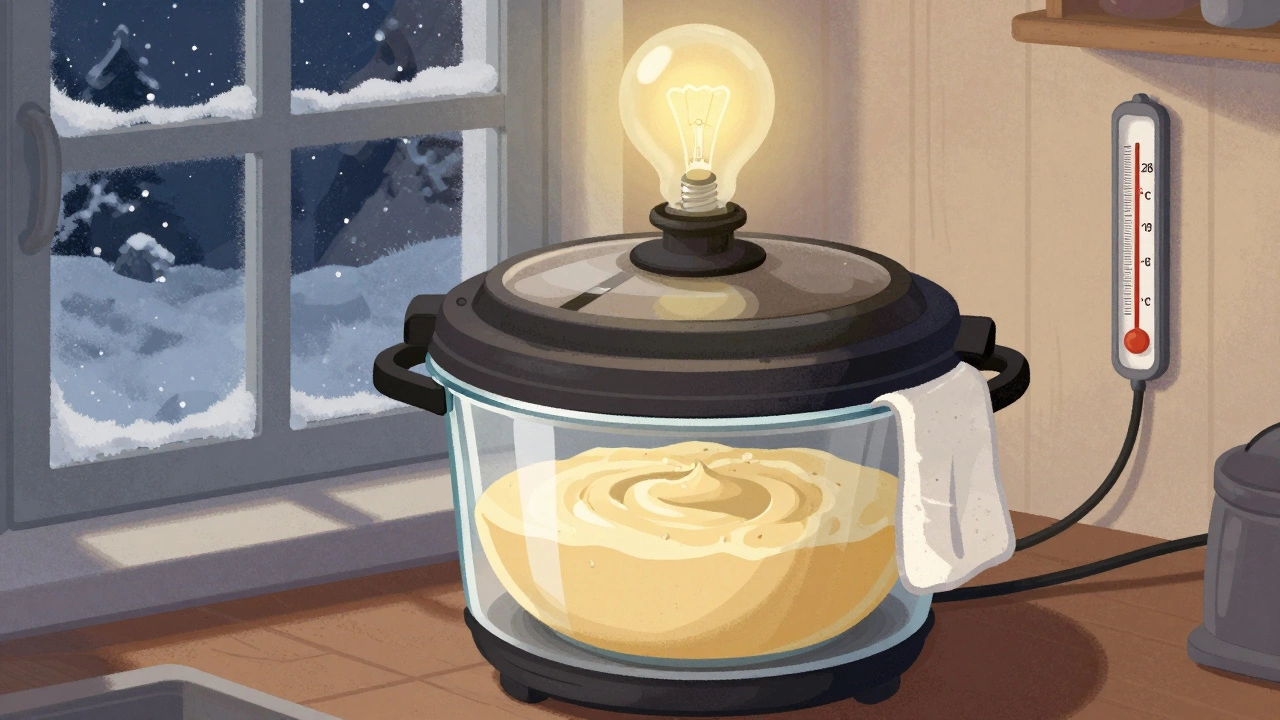
Place it in the warmest spot in your kitchen. Near a stove that was just used? Perfect. On top of the refrigerator? That works too. Some people even put it in an oven with the light on. The gentle heat from the bulb can make all the difference in cooler weather.
Signs Your Batter Is Ready
You don’t need a timer. You need your senses.
- Volume: The batter should look visibly puffed-about 50-100% larger than when you started.
- Bubbles: Look closely. Tiny bubbles should be everywhere, not just on top.
- Smell: It should smell pleasantly sour, like yogurt or sourdough bread. If it smells alcoholic, rotten, or like vinegar, it’s over-fermented.
- Texture: Stir it gently. It should flow slowly, like thick cream. If it’s runny, it’s too thin. If it’s stiff, it’s not ready.
If your batter doesn’t rise after 12 hours in warm weather, something’s off. Maybe the rice or dal was old. Maybe you used tap water with chlorine. Maybe the salt was added before fermentation. Salt kills the microbes that do the work. Always add salt after fermentation.
What to Do If It Doesn’t Ferment
Don’t throw it out. There are fixes.
- Too cold? Move it to a warmer spot. Add a tablespoon of cooked rice or a pinch of fenugreek seeds to the batter before soaking. Both help kickstart fermentation.
- Too dry? Cover with a damp kitchen towel and place it near a steaming pot of water.
- Still not working? Add a teaspoon of leftover fermented batter from your last batch. It’s like adding a starter to sourdough.
Some people swear by adding a small piece of ginger or a few curry leaves. These aren’t magic, but they can help introduce beneficial microbes.
Fermentation Beyond 12 Hours
Can you leave it overnight? Yes. Can you leave it for 24 hours? Also yes-but only if your kitchen is cool. In warm climates, 12 hours is the sweet spot. Beyond that, the batter can become too acidic. The flavor turns sharp, and the texture gets gummy. It might still work for uttapam or paniyaram, but for crisp dosas, you’ll want to avoid it.
If you accidentally over-ferment, don’t panic. Add a bit of fresh rice flour or semolina to thicken it. A pinch of baking soda can help neutralize the sourness. But it won’t be the same as fresh batter.
Storing Fermented Batter
Once fermented, you can refrigerate the batter for up to 5 days. It will slow down the fermentation but won’t stop it. The flavor gets deeper, and the batter becomes even more sour. Some people prefer this for dosas. Just bring it to room temperature for an hour before using, and stir well. If it’s too thick, add a splash of water.
For longer storage, freeze it in portions. Thaw overnight in the fridge. It won’t be as fluffy as fresh, but it’s better than starting from scratch.
Common Mistakes to Avoid
- Adding salt before fermentation: This is the #1 mistake. Salt kills the good bacteria. Always add it after the batter has risen.
- Using chlorinated water: Tap water in many cities contains chlorine, which kills natural microbes. Use filtered or boiled-and-cooled water.
- Using old rice or dal: If the dal smells musty or the rice looks dull, replace it. Fresh ingredients ferment better.
- Using a tight lid: Fermentation needs airflow. A sealed jar will trap gas and may explode.
- Putting it in the fridge too soon: Cold stops fermentation. Wait until it’s fully risen before refrigerating.
Pro Tip: The Finger Test
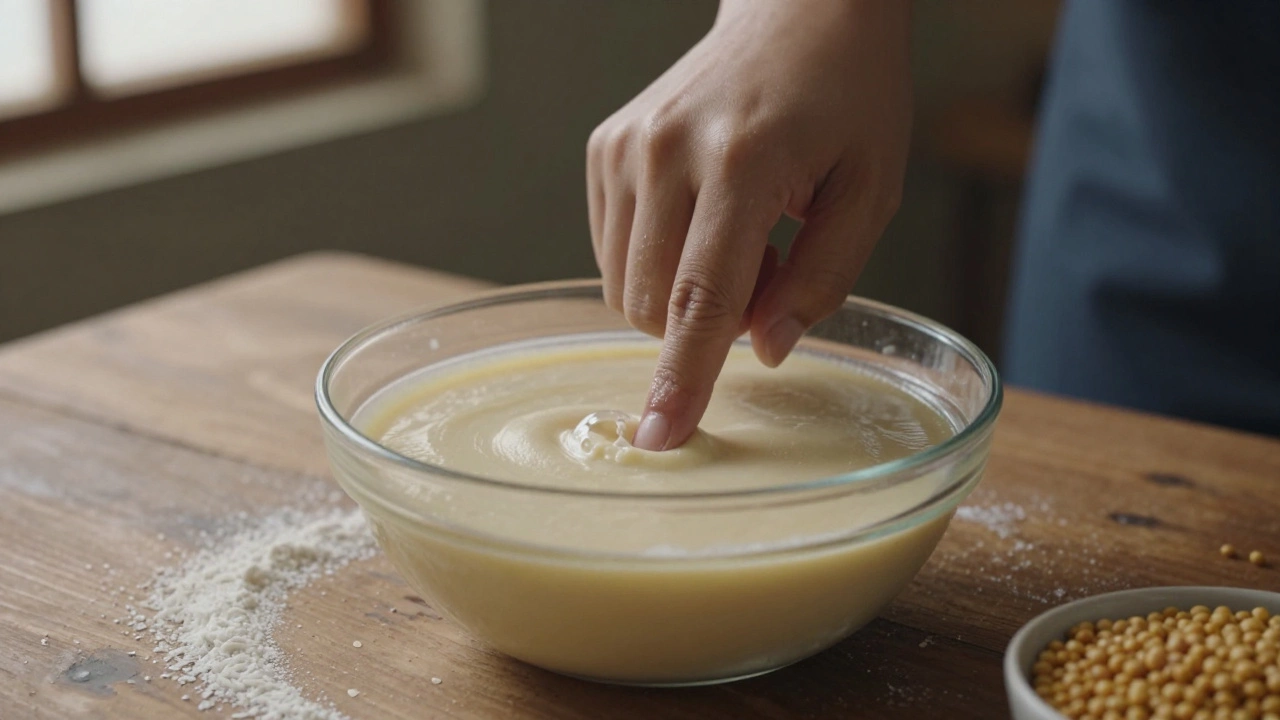
Here’s a trick used by street vendors in Mumbai: After 8 hours, dip a clean finger into the batter and lift it out. If a small bubble forms and pops on the surface of the batter where your finger was, it’s ready. If no bubble forms, wait another hour. This works every time.
Once you’ve nailed the timing, you’ll start noticing how the batter changes with the seasons. In summer, it might be ready by breakfast. In winter, you’ll need to plan ahead the night before. That’s the rhythm of real cooking.
Can I ferment dosa batter in the fridge?
No, you shouldn’t ferment dosa batter in the fridge. Fermentation needs warmth to activate the microbes. The fridge will slow or stop the process entirely. Always ferment at room temperature. Once it’s fully fermented, you can refrigerate it to store it for later use.
How do I know if my dosa batter has gone bad?
Bad dosa batter smells strongly alcoholic, sour like vinegar, or rotten. It might have mold spots (green, black, or fuzzy) or a slimy texture. A mildly tangy smell is normal, but if it smells off or looks strange, throw it out. Never taste it if you’re unsure.
Why does my dosa batter not rise even after 24 hours?
If your batter hasn’t risen after 24 hours, the ingredients may be old, the water might be chlorinated, or the temperature is too low. Try adding a teaspoon of leftover fermented batter or a pinch of fenugreek seeds next time. Also, make sure you didn’t add salt before fermentation. Always use fresh, clean ingredients and warm water.
Can I use a pressure cooker to ferment dosa batter?
Yes, but only if you use it as a warm environment-not for pressure cooking. Turn off the cooker after heating it for 2 minutes, then place the batter inside with the lid closed (not locked). The residual heat creates a perfect warm spot. This works especially well in cold climates.
Does adding baking soda help fermentation?
No, baking soda doesn’t help fermentation. It’s a chemical leavening agent, not a microbial one. It can neutralize sourness if your batter is over-fermented, but it won’t make the batter rise. True fermentation comes from natural bacteria and yeast. Rely on time, warmth, and good ingredients instead.