Roti Thickness Checker
Roti Thickness Checker
Ever wondered why some rotis puff up perfectly while others stay flat and dense? It all comes down to one simple thing: roti thickness. Whether you're making plain chapati or stuffed paratha, getting the thickness right is key to soft, flavorful rotis every time. Let’s break it down.
Why Roti Thickness Matters
Roti thickness affects everything from texture to cooking time. A roti that's too thick won't cook through properly, leaving a doughy center. Too thin, and it tears easily or becomes crispy like a cracker. The right thickness ensures even cooking, soft texture, and that satisfying puff when it hits the hot tawa.
For example, a chapati rolled to 2-3mm thickness will puff up beautifully when cooked on medium heat. But if you roll it too thick-say 4mm or more-it'll stay flat and doughy inside. On the other hand, a roti rolled thinner than 1.5mm might burn quickly or tear when flipping.
Ideal Thickness for Different Roti Types
Not all rotis are created equal. The ideal thickness varies based on the type:
- Chapati: 2-3mm. This thin layer allows it to puff up evenly and stay soft.
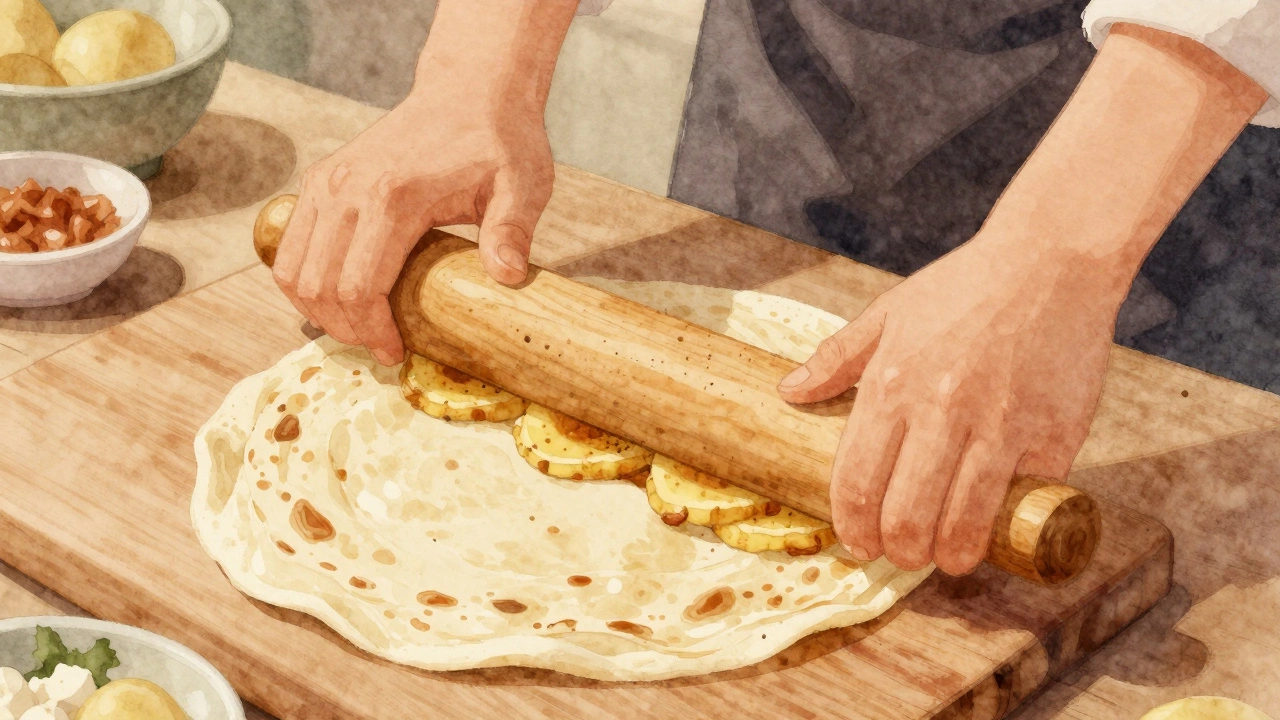
- Paratha: 4-5mm. Thicker to hold the layers and any fillings like potatoes or paneer.
- Stuffed rotis (like aloo paratha): 5-6mm. Extra thickness to prevent tearing when filling is added.
- Rumali roti: less than 1mm. Paper-thin for delicate textures, often used for wraps.
These measurements aren't rigid rules, but they're great starting points. Always adjust based on your dough consistency and cooking surface.
Common Mistakes When Rolling Roti
Even experienced cooks make these rolling errors:
- Using too much flour: Excess flour on the rolling surface makes the roti dry and tough. Use just enough to prevent sticking.
- Rolling unevenly: Not rotating the dough while rolling creates thick and thin spots. Rotate 45 degrees after each roll for even thickness.
- Pressing too hard: Heavy pressure flattens the dough too quickly, making it hard to control thickness. Use light, even pressure.
- Skipping the resting step: Dough that hasn't rested after kneading will spring back when rolled. Let it rest for 15-20 minutes before rolling.
These mistakes often lead to rotis that don't puff properly or tear during cooking. Fixing them is simple with practice.
How to Roll Roti to Perfection
Follow these steps for consistent thickness:
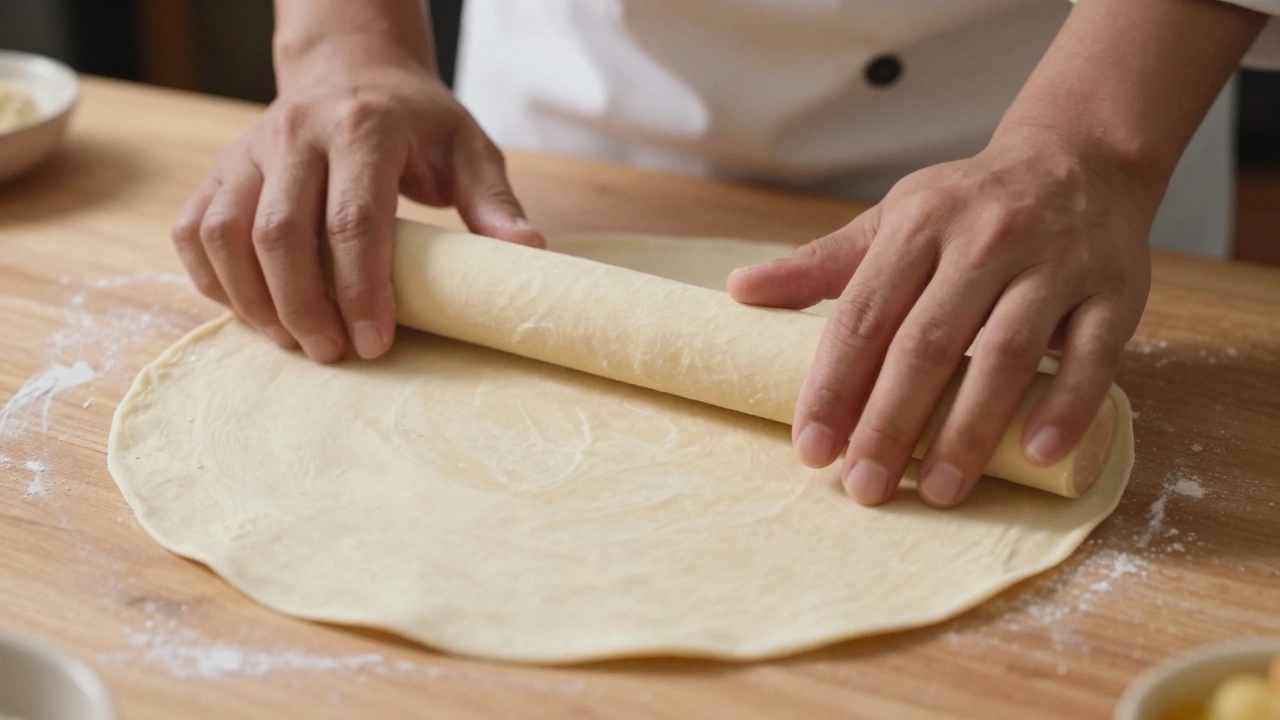
- Take a small dough ball (about the size of a golf ball) and flatten it slightly with your palm.
- Place it on a lightly floured surface. Sprinkle atta (whole wheat flour) only if needed to prevent sticking.
- Roll from the center outwards in all directions. After each roll, rotate the dough 45 degrees to keep it round.
- Check thickness by pressing gently with your finger. It should leave a slight indentation without tearing.
- Flip the roti over and roll again to ensure even thickness on both sides.
Pro tip: Use a rolling pin that's smooth and well-balanced. Wooden or marble rolling pins work best for roti.
Tools That Make Rolling Easier
Good tools can simplify the process:
- Rolling mat: A silicone or cloth mat prevents sticking and helps maintain shape.
- Measuring guide: A small ruler or even a coin (like a quarter) can help check thickness.
- Non-stick surface: A granite or marble slab provides a cool surface that prevents dough from warming up too much.
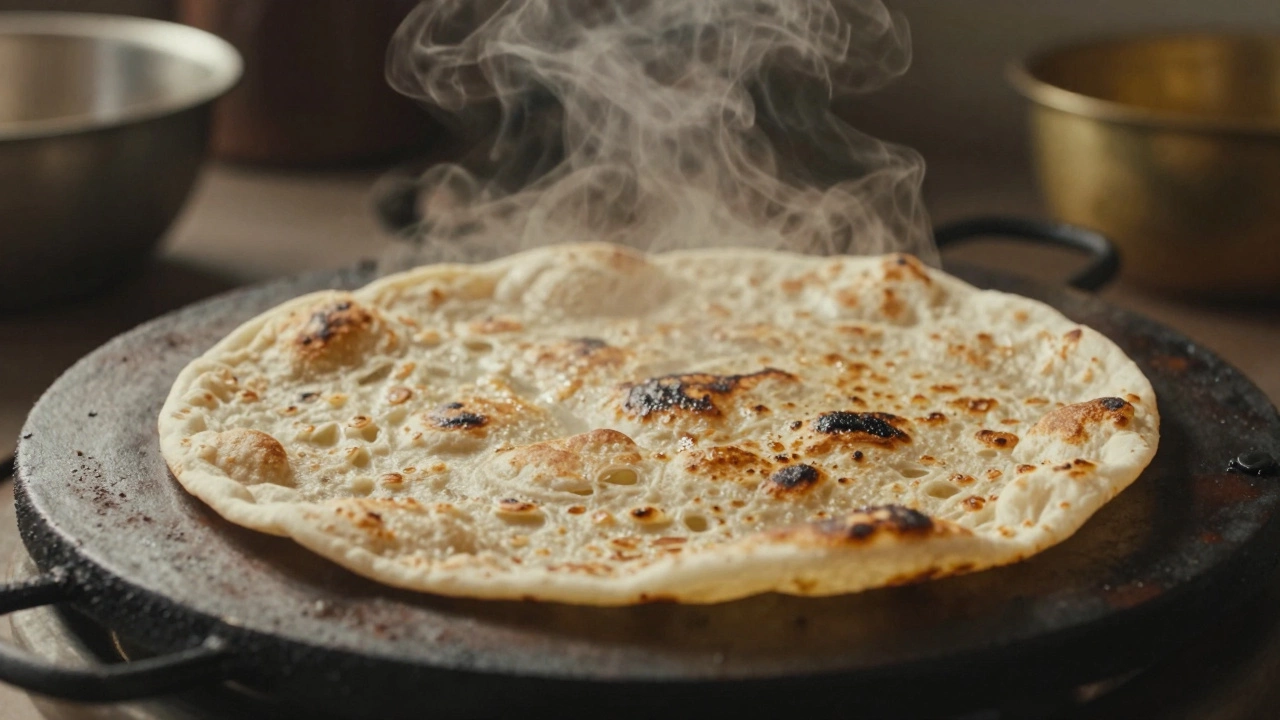
- Hot tawa: A flat griddle heated to medium-high ensures even cooking. Preheat it properly before placing the roti.
For paratha, a tawa with ridges can help create crispy layers. But for chapati, a flat tawa is ideal.
Troubleshooting Your Roti
Here’s how to fix common issues:
- Doughy center: Roll thinner next time. Ensure the tawa is hot enough to cook through quickly.
- Roti tears: The dough might be too dry. Add a few drops of water while kneading. Also, avoid over-flouring the surface.
- Not puffing up: Check your tawa temperature. It should be hot but not smoking. Also, ensure the roti is rolled evenly.
- Too crispy: Roll thicker and cook on lower heat. For chapati, avoid overcooking-flip once and remove when lightly browned.
Remember, practice makes perfect. Every batch of dough is slightly different, so adjust your technique as needed.
What is the ideal thickness for chapati?
The ideal thickness for chapati is about 2-3 millimeters. This allows the roti to puff up evenly when cooked on a hot tawa without burning or remaining doughy inside.
Can I use a rolling mat for roti?
Yes, a silicone or cloth rolling mat is excellent for roti. It prevents sticking, keeps the dough from drying out, and helps maintain a consistent shape. Just make sure the mat is clean and dry before use.
Why does my roti tear when rolling?
Tearing usually happens when the dough is too dry or over-floured. Add a few drops of water while kneading to make it more pliable. Also, avoid pressing too hard-use light, even pressure when rolling.
Should I use ghee on roti?
ghee is optional but recommended for paratha or when serving with meals. It adds flavor and keeps roti soft. For plain chapati, many prefer to skip ghee and eat it fresh off the tawa.
How to store leftover roti dough?
Wrap the dough tightly in plastic wrap or a damp cloth and refrigerate for up to 24 hours. For longer storage, freeze the dough in portions. Thaw in the fridge before rolling.
- Poplular Tags
- roti thickness
- how to roll roti
- chapati thickness
- paratha making
- roti tips