Indian Meat Consumption Guide
Select Your Context
Meat Status
Select region and religion to see meat consumption patterns
India doesn’t have one single rule about meat-but it has thousands of them. You can’t just say "Indians don’t eat meat" and call it done. The truth is more layered, more personal, and more deeply tied to religion, region, and family than any generalization can capture. So if you’re asking what meat isn’t eaten in India, the real answer isn’t a list of forbidden meats-it’s a map of choices shaped by centuries of belief, tradition, and daily life.
Beef: The Most Controversial Meat
In many parts of India, beef isn’t just avoided-it’s legally restricted. Cows are sacred in Hinduism, which is followed by about 80% of the population. For Hindus, the cow isn’t just an animal; it’s a symbol of life, motherhood, and non-violence. Many temples, villages, and even entire states ban cow slaughter. States like Uttar Pradesh, Gujarat, and Maharashtra have strict laws against it. Even in places where it’s not illegal, eating beef is socially unthinkable for millions. This isn’t about taste-it’s about identity. A single bite of beef can feel like a betrayal to someone raised in a Hindu household.
Buffalo Meat: The Gray Area
Buffalo meat, often sold as "beef" abroad, is a different story. In India, buffalo is not considered sacred like the cow. Many Muslims, Christians, and lower-caste Hindu communities eat buffalo meat regularly. It’s cheaper than goat or chicken in places like Uttar Pradesh and West Bengal. But here’s the twist: because buffalo meat looks like beef, some people avoid it out of fear of accidentally eating cow meat. Others avoid it because of social pressure-even if the law allows it. So buffalo meat isn’t banned, but it’s often quietly avoided in Hindu-majority areas. It’s not the meat itself-it’s the association.
Pork: Avoided by Some, Loved by Others
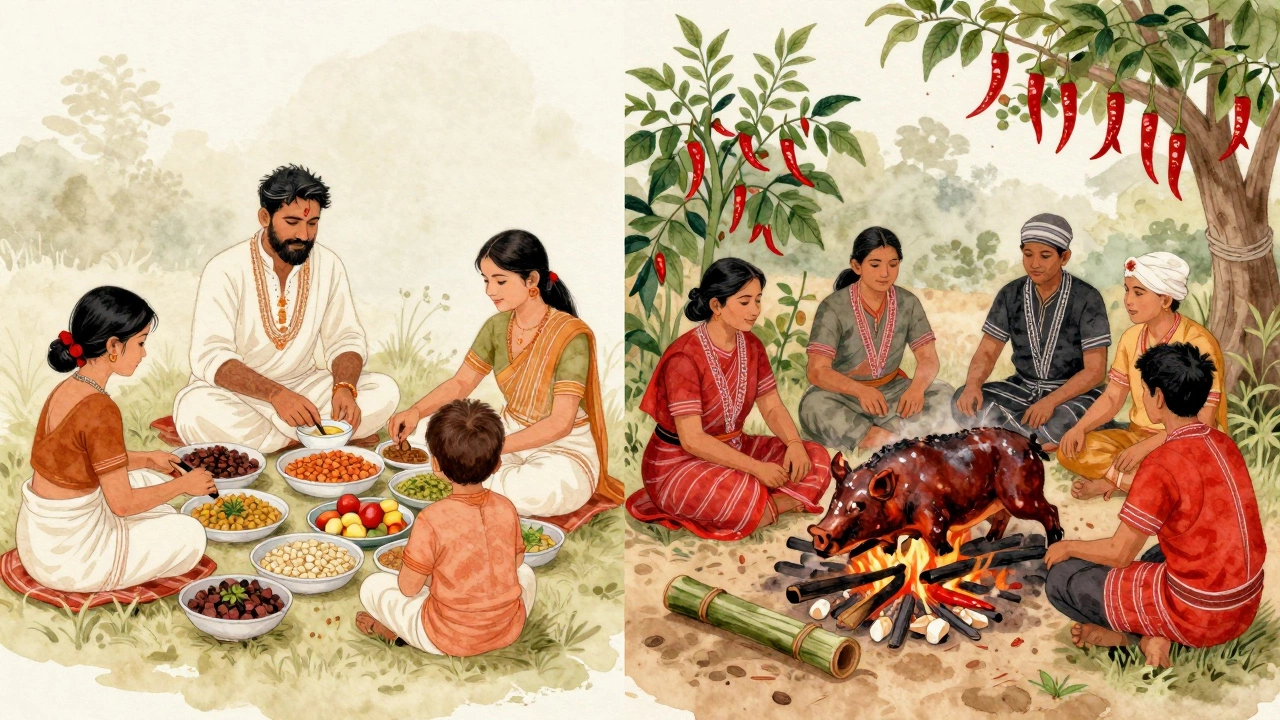
Pork is another meat with a split personality in India. Muslims avoid it because of Islamic dietary laws. But in the northeast-states like Nagaland, Mizoram, and Meghalaya-pork is a staple. It’s roasted, fermented, smoked, and served with rice and chili. In Goa, pork vindaloo is a national dish with Portuguese roots. In Kerala, pork curry is common in Christian homes. But in North India, pork is rare. Supermarkets rarely stock it. Restaurants don’t list it. It’s not because it’s illegal-it’s because demand is low, and cultural norms keep it out of sight. So pork isn’t forbidden everywhere-it’s just invisible in most places.
Chicken and Goat: The Most Common Meats
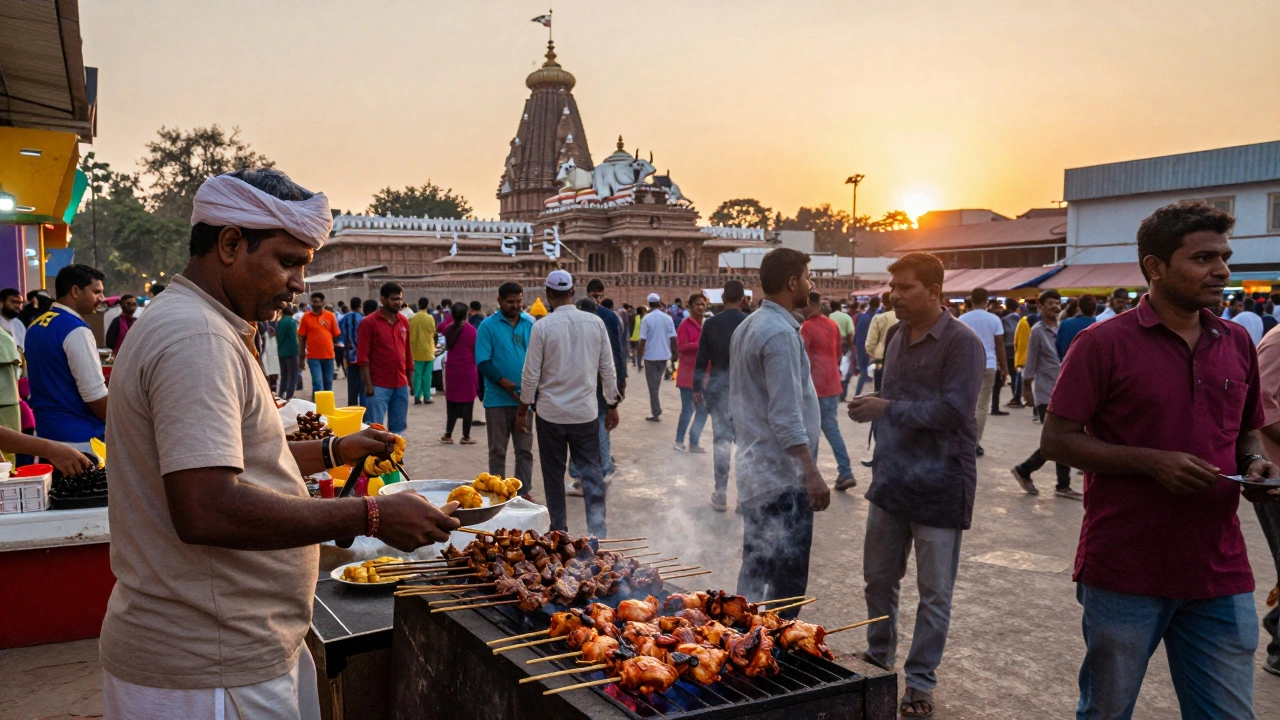
Now, here’s where things get clear: chicken and goat are the two meats most Indians eat. Chicken is everywhere-from roadside stalls in Delhi to fine dining in Bangalore. Goat meat, called "mutton" in India, is the heart of biryani, kebabs, and curries across the country. Even in families that avoid beef or pork, chicken and goat are perfectly acceptable. They’re not tied to religious taboos. They’re practical: affordable, widely available, and easy to cook. If you’re trying to understand Indian meat culture, start here. These two meats aren’t just eaten-they’re celebrated.
Why Some Communities Avoid All Meat
Not all meat avoidance is about religion. In Jainism, which has about 4 million followers in India, the principle of ahimsa-non-violence-extends to all living beings. Jains don’t eat meat, eggs, or even root vegetables like onions and potatoes because harvesting them kills microorganisms in the soil. Many Jains are vegetarian by birth and stay that way for life. In some Brahmin communities, especially in South India, vegetarianism is tied to ritual purity. They avoid meat not because it’s sinful, but because it’s seen as disruptive to spiritual discipline. For them, eating meat isn’t wrong-it’s just not aligned with their daily practice.
Regional Differences: The Real Story
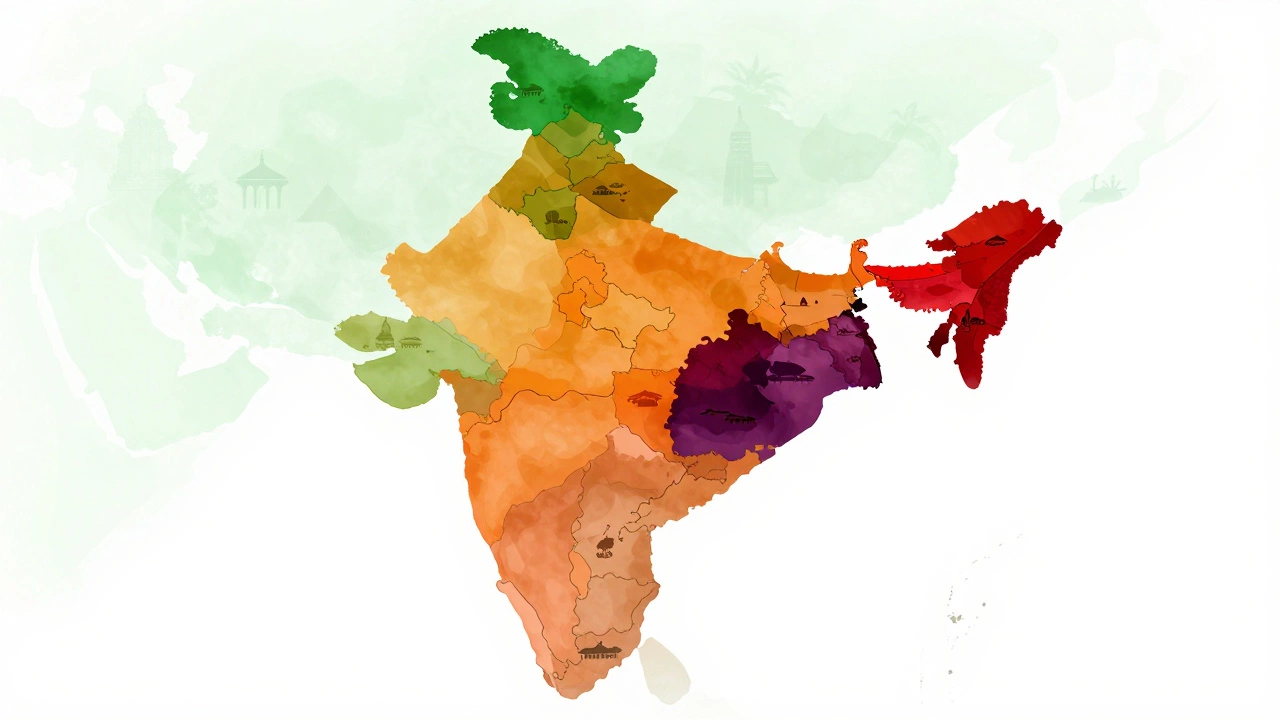
Look at a map of India, and you’ll see meat patterns change every few hundred kilometers. In the south, chicken and fish dominate. In the northeast, pork and beef are common. In Gujarat, almost everyone is vegetarian. In Kerala, Christians eat pork, Muslims eat goat, and Hindus eat chicken. In Rajasthan, desert conditions mean fewer livestock, so goat and camel meat are traditional. In Punjab, butter chicken and tandoori goat are everyday meals. There’s no "Indian" way to eat meat-only local ways. What you eat depends on where your grandparents lived, what their temple or mosque taught them, and what the market could supply.
What’s Left on the Plate
So what meat isn’t eaten in India? The short answer: cow meat, almost everywhere. Buffalo meat, in many Hindu areas. Pork, in most of North and Central India. But even those aren’t absolute. In Mumbai, you’ll find beef tacos in hidden eateries. In Nagaland, you’ll eat fermented pork with rice. In Kerala, pork curry is as normal as sambar. The only consistent rule? Meat avoidance in India isn’t about the animal-it’s about the person. It’s shaped by faith, family, and place. If you’re looking for a simple list of forbidden meats, you won’t find one. But if you want to understand why millions choose not to eat certain meats, you’re looking at a culture where food is never just about hunger.
Do all Indians avoid meat?
No. About 38% of Indians are vegetarian, according to government surveys. That means over 60% eat meat-mostly chicken and goat. Vegetarianism is common in certain communities and regions, but it’s far from universal. Even in vegetarian households, many people eat eggs or dairy, which some strict vegetarians avoid.
Is it illegal to eat beef in India?
It depends on the state. In states like Uttar Pradesh, Gujarat, and Haryana, cow slaughter is illegal and punishable by jail time. In others like West Bengal, Kerala, and Arunachal Pradesh, it’s legal. There’s no national ban. But even where it’s legal, social stigma makes beef hard to find. Most restaurants won’t serve it. Supermarkets won’t stock it. The law isn’t the only barrier-culture is stronger.
Why do Jains avoid all root vegetables?
Jains believe that pulling up root vegetables like potatoes, onions, or garlic kills the entire plant and harms tiny organisms in the soil. This goes against their core belief in ahimsa, or non-violence toward all life forms. They eat fruits, leaves, grains, and legumes instead. This makes Jain vegetarianism stricter than most other types in India.
Do Muslims in India eat pork?
No. Islam strictly forbids pork, and Indian Muslims follow this rule. Pork is not sold in halal markets, and most Muslim families avoid it completely. Even in areas where pork is common, like Goa, Muslim communities don’t consume it. This is a religious boundary, not a cultural one.
Can I find beef in Indian restaurants?
In most parts of India, no. Even in cities like Delhi or Mumbai, beef is rarely on menus. In some places, especially in the northeast or among expat communities, you might find it-but it’s usually hidden under names like "buffalo steak" or "dark meat." Most restaurants that serve it don’t advertise it openly. If you’re looking for beef, you’ll need to ask directly-and be prepared for silence or refusal.