Round Roti: The Simple Bread That Powers Indian Meals
When you think of Indian food, you probably picture spicy curries, fragrant rice, or crispy samosas—but none of it would feel complete without a warm, soft round roti, a basic, unleavened flatbread made from whole wheat flour, water, and salt. Also known as chapati, it’s the silent backbone of countless Indian meals, used to scoop, wrap, and soak up flavors without overpowering them. Unlike naan, which is leavened and baked in a tandoor, or paratha, which is layered with ghee, round roti stays humble. It doesn’t need yeast, oil, or fancy tools. Just flour, water, a rolling pin, and a hot griddle.
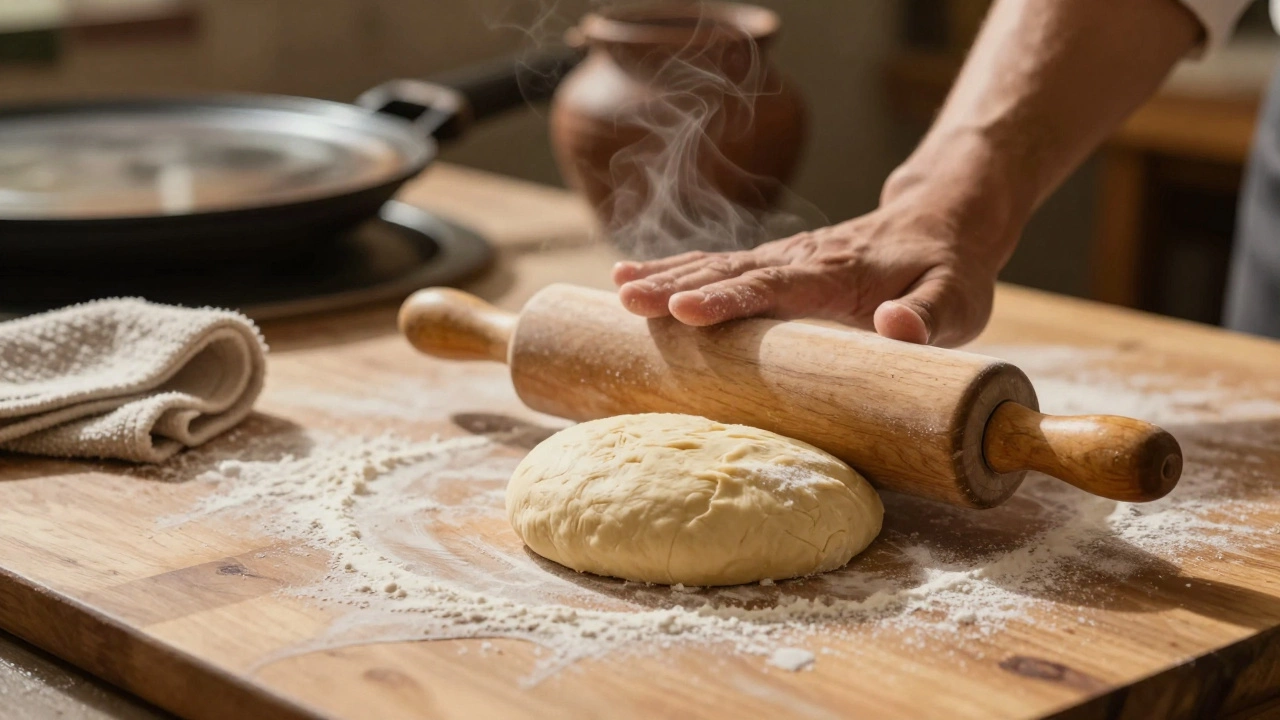
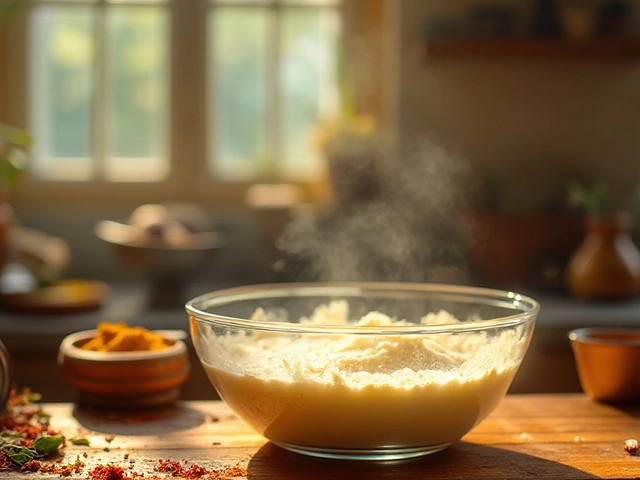
This isn’t just bread—it’s tradition. In homes across North and Central India, roti is made daily, often by hand, using a chakla (rolling board) and belan (rolling pin). The dough is mixed, rested, divided into balls, rolled into perfect circles, and cooked until it puffs up like a balloon over an open flame. That puff? That’s the sign of good roti. It means the dough was well-kneaded, the heat was right, and the maker knew what they were doing. It’s not complicated, but it’s not easy either. Getting it just right takes practice, patience, and a little bit of love.
Round roti isn’t just food—it’s a tool. It’s used to eat dal tadka, to wrap around spicy aloo gobi, to dip into creamy paneer butter masala, or to hold together a simple meal of yogurt and pickle. It’s the bridge between flavors, the neutral canvas that lets the rest of the meal shine. And because it’s made from whole wheat, it’s packed with fiber, slow-releasing carbs, and nutrients that keep you full longer than white bread or naan. No sugar. No dairy. No frying. Just pure, simple nutrition.
Some people think roti is just a side dish. But if you’ve ever eaten a meal without it, you know it’s more than that. It’s the part of the meal you reach for first. The part you tear off to scoop up the last bit of curry. The part you save for the end because it’s so good with a spoonful of ghee. It’s the bread that doesn’t ask for attention—but gets it anyway.
Below, you’ll find real recipes, common mistakes, and expert tips from people who make roti every day. Whether you’re struggling to get yours to puff, wondering if you can use whole wheat flour, or just trying to understand why your roti turns out tough, you’ll find answers here. No fluff. No fancy terms. Just what works.