Roti Texture: How to Get Perfect Soft, Puffy Indian Flatbread Every Time
When you pull a fresh roti, a simple, unleavened Indian flatbread made from whole wheat flour, water, and salt. Also known as chapati, it's the backbone of countless Indian meals. But not all rotis are the same. The difference between a roti that’s chewy and one that puffs up like a cloud? It’s all about roti texture. Too dry? It cracks. Too thick? It stays flat. Too thin? It tears. Getting it right isn’t luck—it’s technique.
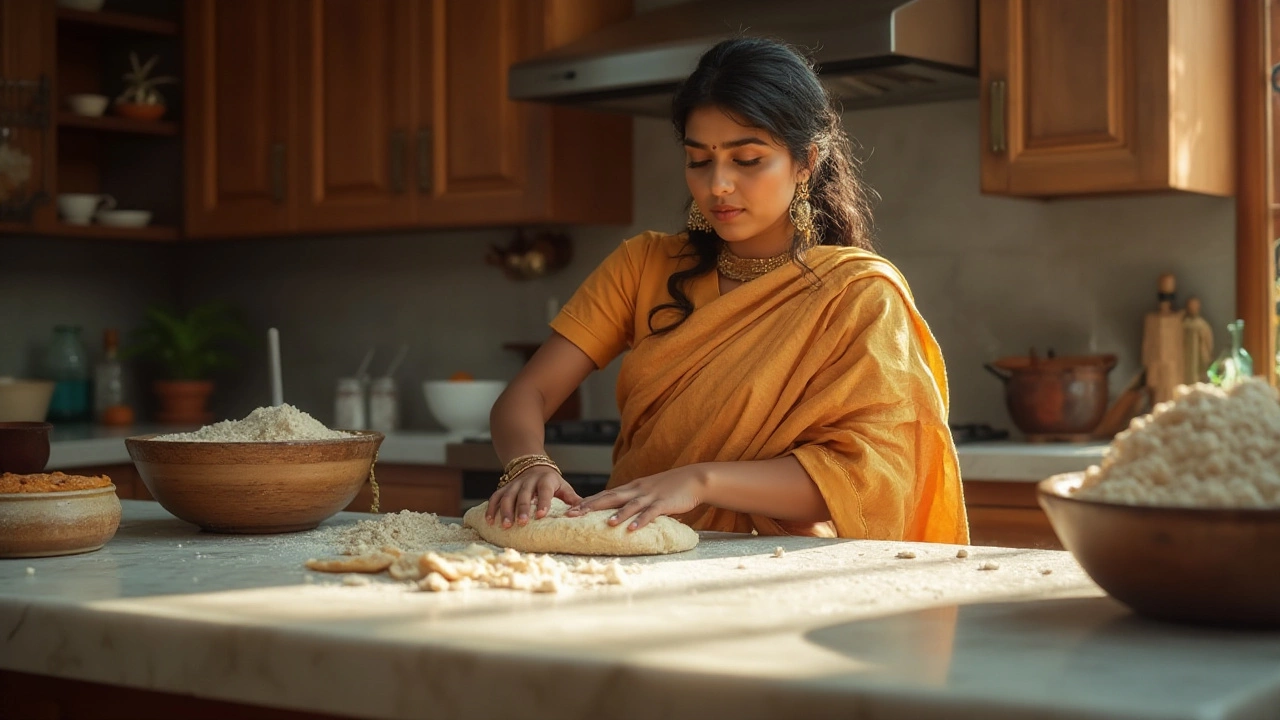
Texture starts with the dough. You need the right mix of flour and water—too little water and the roti becomes hard; too much and it sticks everywhere. Kneading matters too. You’re not just mixing—you’re developing gluten, which gives the roti its stretch. Let it rest for at least 30 minutes. That’s when the flour fully hydrates and the gluten relaxes, making rolling easier and puffing possible. The rolling pin, a cylindrical tool used to flatten dough evenly needs to be smooth and used with light, even pressure. Don’t press too hard in the center—leave a slightly thicker edge so the roti can puff properly.
Heat is the next big factor. Your tawa or skillet must be hot enough. Test it with a drop of water—it should sizzle and vanish fast. If it’s too cold, the roti will dry out before it puffs. Too hot? It burns before it softens. Flip the roti once it starts drying on the bottom, then press gently with a cloth or spatula. That’s when the steam inside pushes it into a balloon. If it doesn’t puff, the dough was too dry, the heat was wrong, or you didn’t rest it long enough. And don’t skip the final touch—brushing it with a little ghee or oil right after cooking keeps it soft for hours.
People think roti texture is about tradition. It’s not. It’s physics. The steam trapped under the dough expands when heated, and the gluten network holds it open. That’s why round rotis puff—because the shape distributes heat evenly. Square or irregular shapes? They’ll dry out unevenly. And no, you don’t need a tandoor. A regular stove and a good tawa work just fine. What you need is consistency: same flour, same water ratio, same resting time, same heat.
There’s a reason why every Indian household has its own roti ritual. It’s not just bread—it’s the foundation of the meal. You tear it to scoop up dal, wrap it around aloo sabzi, or use it to soak up gravy. If the texture’s off, the whole experience breaks. That’s why so many of the posts here focus on the details: how to roll it right, why resting matters, what happens when you skip the oil, and how to fix rubbery roti. You’ll find real fixes from people who’ve made hundreds—some with cracked hands, some with tired arms, all who learned that perfect roti texture isn’t magic. It’s practice.