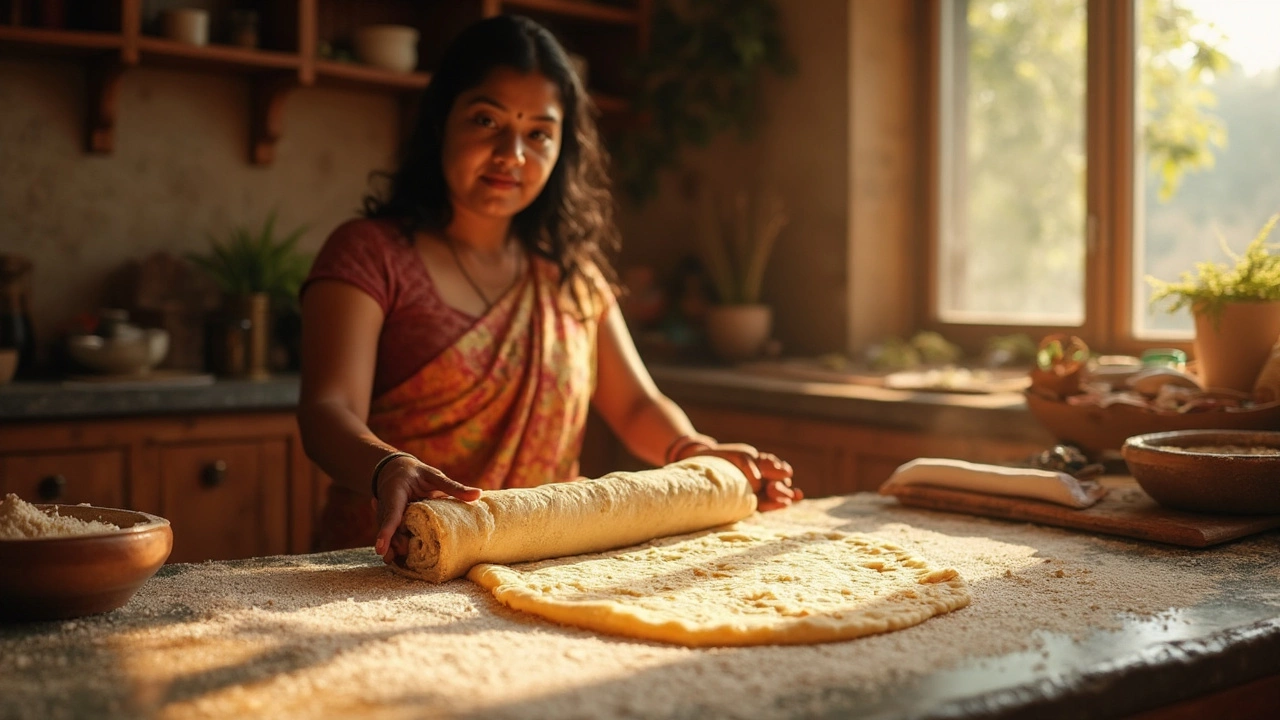
Roti Soft: How to Make Perfectly Soft Indian Flatbread Every Time
When you think of roti soft, a simple, everyday Indian flatbread made from whole wheat flour and water. Also known as chapati, it's the backbone of countless Indian meals—from dal and sabzi to curries and pickles. But if your roti comes out hard, dry, or stubbornly flat, you're not alone. Most people think it’s about rolling thin or cooking fast. It’s not. It’s about moisture, temperature, and time—and most recipes skip the real secrets.
The difference between a tough roti and a pillowy one comes down to three things: how you knead the dough, how long you let it rest, and the heat on your stove. You don’t need a tandoor. You don’t need fancy tools. You just need to understand that whole wheat flour, a coarse, fibrous grain rich in bran and gluten absorbs water slowly. If you roll it too soon, it cracks. If you cook it too hot, it burns before it puffs. And if you skip the resting time, the gluten stays tight, and your roti turns into a board.
That’s why the best roti makers let their dough sit for at least 30 minutes—sometimes longer. That’s when the flour fully hydrates, the gluten relaxes, and the dough becomes pliable. Then, when you roll it, it doesn’t snap back. When you press it on the tawa, it doesn’t stick. And when the heat hits the moisture inside, it turns to steam—and that’s what makes it puff up like a cloud. It’s physics, not magic.
And it’s not just about the dough. The tawa, a flat, heavy griddle used for cooking Indian breads matters too. A thin pan heats unevenly. A cast iron or thick steel one holds heat steady, giving you that perfect golden-brown spot on one side and a soft, airy interior on the other. You can even use a gas flame to finish it—just hold it over the flame for a few seconds until it balloons. No oil needed.
Some people add milk or yogurt to make roti soft. Others use ghee after cooking. Those tricks help, but they’re band-aids. The real fix is in the dough. If you’re getting hard roti every time, it’s because you’re rushing the basics. Skip the shortcuts. Let the flour do its job. Let the dough rest. Heat the tawa slowly. And don’t press the roti down with the spatula—that’s how you kill the puff.
What you’ll find in these posts isn’t just recipes. It’s the why behind the how. Why does roti have to be round? Why does it puff only when it’s rolled just right? Why do some people swear by a cloth cover while others use plastic? You’ll see how the same principles that make roti soft also apply to naan, paratha, and even dosa batter. And you’ll learn what not to do—like using cold water, skipping the knead, or cooking on a flame that’s too high.
This isn’t about tradition for tradition’s sake. It’s about getting results. Soft roti that doesn’t crack when you fold it. Roti that stays warm for hours. Roti that pairs perfectly with your dal tadka or paneer butter masala. You don’t need to be an expert. You just need to know the rules—and then break them the right way.