Should You Rinse Yogurt Marinade Before Cooking Tandoori Chicken?
Learn why rinsing a yogurt marinade before cooking tandoori chicken is usually a bad idea, and get step‑by‑step tips for juicy, flavorful results.
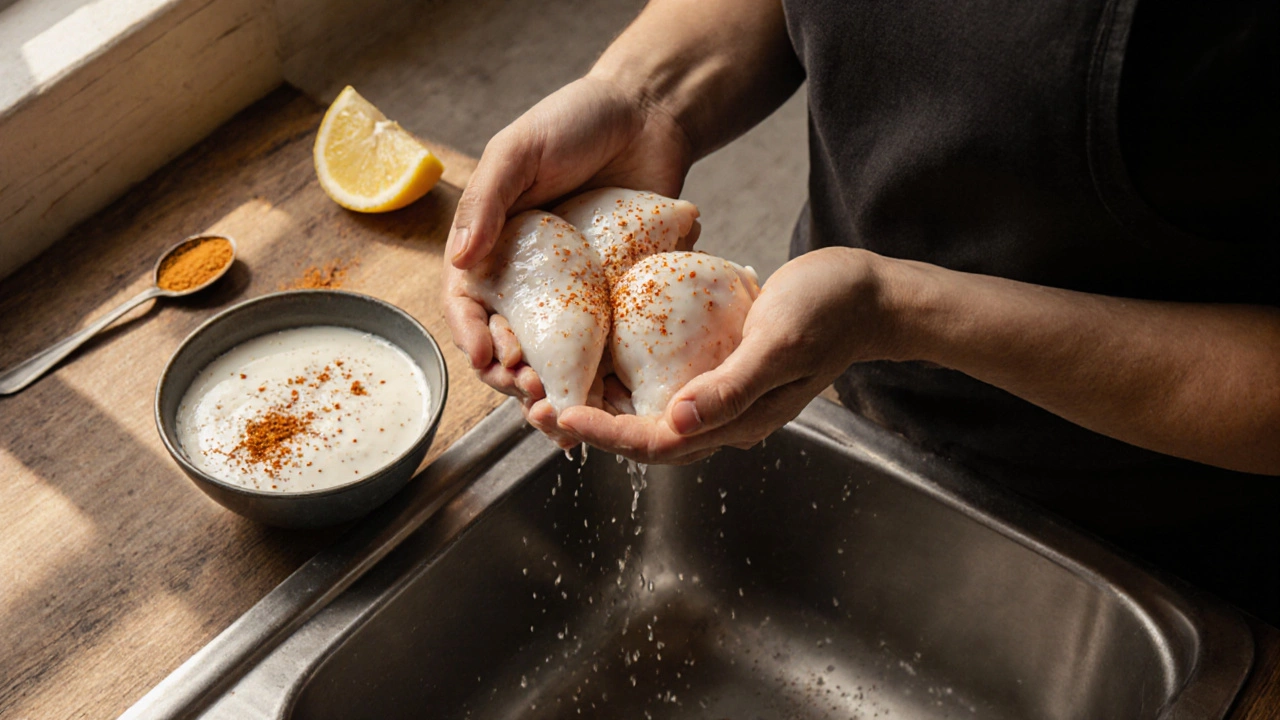
When you buy raw chicken, it’s natural to reach for the sink. You see the surface, feel the stickiness, and think: rinse chicken to clean it. But here’s the truth—washing raw chicken doesn’t make it safer. In fact, it spreads harmful bacteria like salmonella and campylobacter across your sink, counters, and even your clothes. The CDC, WHO, and India’s Food Safety and Standards Authority (FSSAI) all agree: rinse chicken, the act of washing raw poultry under running water before cooking is a dangerous myth. The only thing that kills bacteria is proper cooking to an internal temperature of 74°C (165°F).
So why do so many people still do it? Tradition. Memory. Maybe your grandmother always rinsed chicken before frying it for Sunday lunch. But Indian home kitchens have adapted over time. You don’t need to rinse chicken to remove marinade—pat it dry with paper towels instead. You don’t need to rinse it to get rid of slime—that’s just natural moisture from packaging. And you definitely don’t need to rinse it to make it taste better. The real flavor comes from spices, yogurt, and heat—not water. food safety India, the set of practices followed by households and restaurants to prevent foodborne illness is evolving. More cooks now understand that handling chicken with clean hands, using separate cutting boards, and cooking it thoroughly does far more than rinsing ever could.
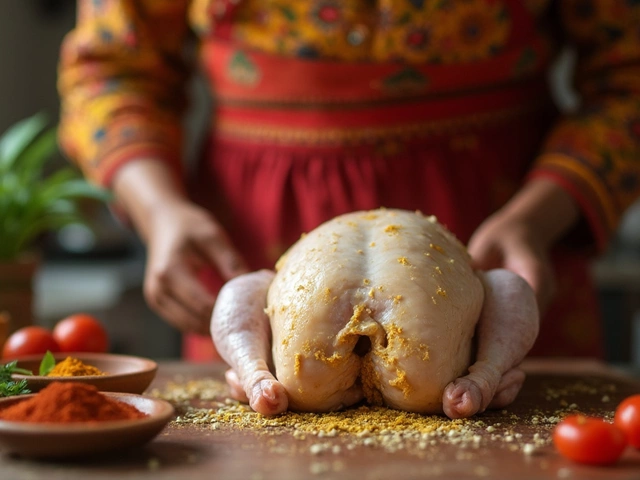
Think about the dishes you love: tandoori chicken, chicken tikka, butter chicken—all start with raw chicken that never touched the tap. The marinade clings better when the surface is dry. The spice paste sticks. The char forms. The flavor locks in. If you rinse it, you’re just making it harder to get that perfect sear. And if you’re worried about blood or residue, remember: commercial chicken is already cleaned during processing. What you’re washing off isn’t dirt—it’s potential contamination waiting to splash.
What you should do instead? Keep your workspace clean. Wash your hands before and after handling raw chicken. Sanitize your cutting board with hot soapy water. Use one board for meat and another for veggies. Store chicken on the bottom shelf of your fridge so drips don’t contaminate other food. And when you cook it? Use a meat thermometer. Don’t guess. Don’t cut into it to check. Just trust the numbers. That’s how you eat safely, not by rinsing.
You’ll find plenty of posts below that dive into chicken prep, from how to marinate it right to why tandoori chicken turns black inside without being burnt. These aren’t just recipes—they’re lessons in smart, safe cooking. No rinsing needed. Just clean hands, good heat, and the right spices.
Learn why rinsing a yogurt marinade before cooking tandoori chicken is usually a bad idea, and get step‑by‑step tips for juicy, flavorful results.