Is Dal a Carb or Protein? Unpacking the Nutrition of Indian Lentils
Discover if dal is a carb or protein, see macro breakdowns for common varieties, and learn cooking tips to maximize its nutrition.
When you think of lentils, a small, nutrient-dense legume that’s a staple in Indian kitchens and one of the oldest cultivated crops in the world. Also known as dal, it’s not just comfort food—it’s a powerhouse of plant-based protein and fiber that keeps you full, stabilizes blood sugar, and supports gut health. In India, lentils show up in almost every home, from simple dal tadka to rich dal makhani. But how much protein do they really have? And why does soaking them make such a difference?
Lentils, a type of pulse that includes red, green, brown, and black varieties pack about 18 grams of protein per cooked cup—more than an egg, and without the cholesterol. They also deliver 15 grams of fiber, which is nearly half your daily need. That’s not just good for digestion—it helps lower bad cholesterol and keeps you from snacking between meals. Unlike meat, lentils come with zero saturated fat and are loaded with iron, folate, and magnesium. But here’s the catch: if you skip soaking, your body can’t absorb half of those nutrients. The phytic acid in raw lentils blocks mineral uptake, and that’s why recipes like dal tadka always start with soaking.
Macronutrient balance, the ratio of protein, carbs, and fat in your food matters more than calories when you’re eating lentils daily. A cup of cooked lentils has around 230 calories, with 40 grams of carbs—but 15 of those are fiber, so only 25 are digestible. That low glycemic load means no sugar spikes. Pair them with rice or roti, and you get a complete protein profile—something vegetarians in India have known for centuries. You don’t need supplements if your plate includes lentils, whole grains, and greens.
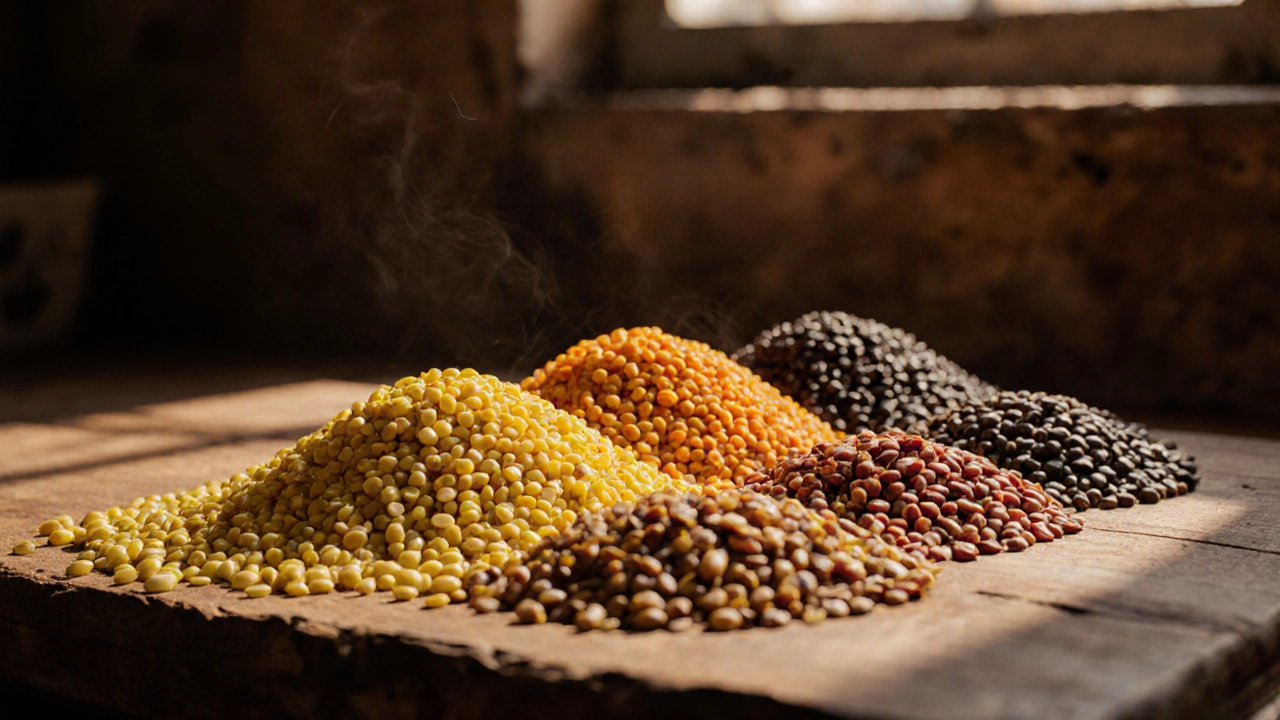
Not all lentils are the same. Red lentils cook fast and turn creamy—perfect for soups and dals. Green and brown ones hold shape better, great for salads or side dishes. Black lentils, or urad dal, are the richest in protein and often used in dosa batter. Each type has slightly different macro numbers, but all are winners for health. And when you cook them with turmeric and cumin, like in traditional dal tadka, you’re not just adding flavor—you’re boosting anti-inflammatory benefits.
So why do so many people still think lentils are just bland, boring food? Probably because they’ve eaten them undercooked, overcooked, or drowned in ghee. The truth? When done right, lentils are creamy, satisfying, and packed with energy. Whether you’re cooking for weight loss, muscle gain, or just feeling better, lentils are one of the easiest, cheapest, and most effective foods you can eat.
Below, you’ll find real recipes and facts from people who cook lentils every day—not just the theory, but what actually works in an Indian kitchen. From soaking times that cut cooking time in half, to how much milk you need to make paneer (yes, it’s related), to why some dals cause bloating and how to fix it—you’ll see why lentils aren’t just a side dish. They’re the foundation.
Discover if dal is a carb or protein, see macro breakdowns for common varieties, and learn cooking tips to maximize its nutrition.